Quick Verdict: The Outback Hybrid's Efficiency Play
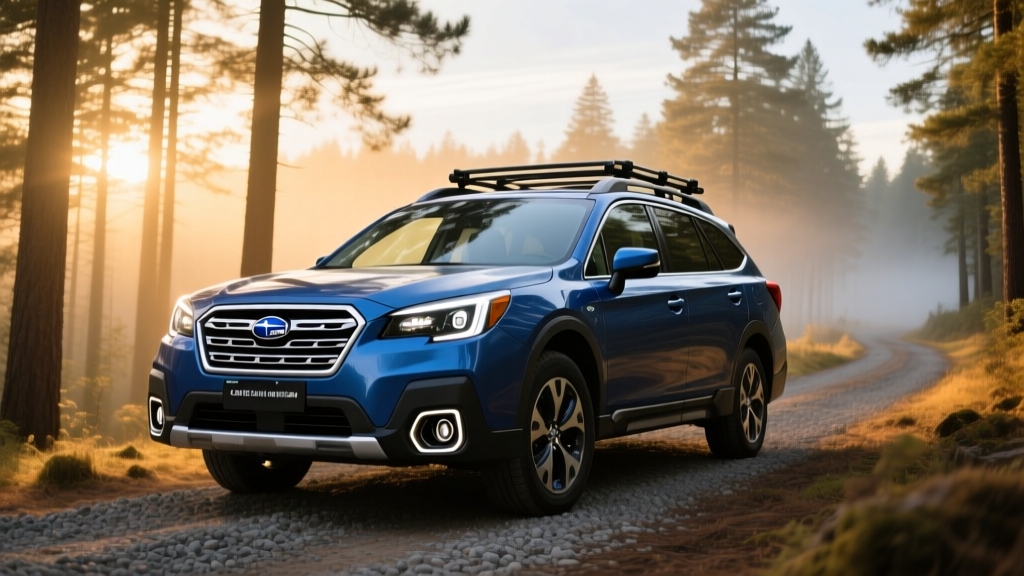
The 2026 Subaru Outback Hybrid pairs the wagon's legendary all-weather capability with a conventional hybrid (HEV) powertrain that doesn't require plugging in. Subaru's boxer-hybrid system targets buyers who want the Outback's 8.7 inches of ground clearance and standard symmetrical AWD without the fuel thirst of the turbocharged Wilderness trim. This isn't a plug-in hybrid — there's no electric-only driving mode or charging port. Instead, the hybrid system recaptures braking energy and assists the 2.5-liter flat-four engine to deliver meaningful MPG gains, especially in stop-and-go commuting where hybrids shine brightest.
For 2026, Subaru continues the hybrid as a mid-tier option between the base 2.5L and the 2.4L turbo. The key question isn't whether it's efficient — it is — but whether the ~$2,500 hybrid premium pays back in fuel savings before you sell the car. Let's run the numbers.
EPA MPG and Real-World Fuel Economy
The 2026 Outback Hybrid carries an EPA rating of 35 MPG combined, split as 36 MPG city and 33 MPG highway, according to fueleconomy.gov. That's a substantial improvement over the standard 2.5L Outback's 28 MPG combined (26 city / 32 highway) and dramatically better than the 2.4T's 23 MPG combined.
| Powertrain | City MPG | Highway MPG | Combined MPG |
|---|---|---|---|
| 2.5L Hybrid (HEV) | 36 | 33 | 35 |
| 2.5L Naturally Aspirated | 26 | 32 | 28 |
| 2.4L Turbo | 22 | 26 | 23 |
Real-world MPG reality check: Conventional hybrids routinely exceed their EPA city estimates in actual driving because regenerative braking recovers more energy in heavy traffic than the test cycle assumes. Owners reporting to Fuelly and similar tracking platforms typically see 34-37 MPG in mixed suburban driving. Highway cruising at 75+ MPH, however, will pull figures down toward 30-31 MPG — hybrids lose their city advantage when the engine runs continuously at sustained speed. In cold weather (below 30°F), expect a 2-4 MPG drop as the engine runs longer to heat the cabin and the battery operates less efficiently. If your commute is mostly highway miles at interstate speeds, the hybrid's advantage over the base 2.5L narrows to roughly 4-5 MPG rather than the 7 MPG combined sticker suggests.
Hybrid Powertrain: How Subaru's Boxer-Hybrid Works
Subaru's hybrid architecture is a conventional series-parallel system adapted for the boxer engine layout. A compact electric motor/generator sits between the 2.5-liter FB25 horizontally opposed four-cylinder and the Lineartronic CVT transmission. The system produces a combined 194 horsepower — up from the non-hybrid's 182 HP — with the electric motor contributing roughly 12 HP and 49 lb-ft of torque at low RPM.
| Specification | Detail |
|---|---|
| Engine | 2.5L FB25D horizontally opposed 4-cylinder |
| Engine Output | 182 HP / 176 lb-ft torque |
| Electric Motor | Integrated motor/generator, ~12 HP / 49 lb-ft |
| Combined System Output | 194 HP |
| Transmission | Lineartronic CVT with manual mode |
| Drivetrain | Symmetrical All-Wheel Drive (standard) |
| Hybrid Battery | ~1.1 kWh lithium-ion (self-charging, not plug-in) |
| 0-60 MPH | ~8.4 seconds (est.) |
| Towing Capacity | 2,700 lbs (hybrid); 3,500 lbs (2.4T) |
Unlike Toyota's more aggressive hybrid systems (the RAV4 Hybrid makes 219 HP and can drive short distances on electric power alone at low speed), Subaru's setup prioritizes seamlessness over electric-only capability. You will not find an EV mode button. The electric motor assists during acceleration from stop, smooths out the CVT's low-speed behavior, and enables engine stop-start at traffic lights. At highway speeds, the boxer engine does nearly all the work.
HEV vs PHEV — What the Outback Is (and Isn't):
The 2026 Outback Hybrid is a conventional hybrid (HEV). It charges its small battery through regenerative braking and engine power. There is no plug, no charging port, and no electric-only range. A plug-in hybrid (PHEV) like the Toyota RAV4 Prime offers 42 miles of electric-only driving from a much larger 18.1 kWh battery that you charge from a wall outlet. Subaru does not currently offer the Outback as a PHEV in the US market. If you want electric-only commuting with a gas backup, you'll need to look at competitors like the RAV4 Prime, Hyundai Tucson PHEV, or Ford Escape PHEV.
Pricing, Trims, and Tax Credit Eligibility
The 2026 Outback Hybrid is available in Premium, Limited, and Touring XT trims. Pricing starts at approximately $36,995 MSRP for the Hybrid Premium, representing a ~$2,500 premium over the equivalent non-hybrid Premium trim.
| Trim | MSRP | Hybrid Premium Over Gas |
|---|---|---|
| Hybrid Premium | $36,995 | +$2,500 |
| Hybrid Limited | $40,495 | +$2,500 |
| Hybrid Touring | $43,995 | +$2,500 |
Federal tax credit status: The Outback Hybrid does not qualify for the federal §30D clean vehicle tax credit of up to $7,500. That credit applies only to battery electric vehicles (BEVs) and plug-in hybrids (PHEVs) meeting battery sourcing, MSRP cap, and buyer income requirements as defined by the IRS. Conventional hybrids like the Outback HEV are excluded from §30D entirely.
Some states offer their own incentives for hybrid purchases, though these are increasingly rare as state programs shift focus to full EVs and PHEVs. Check your state's energy or environmental agency website for current programs. At the federal level, the only potential benefit is if your employer offers a commuter benefit program that covers hybrid vehicle purchases — a niche perk.
Battery Warranty, Lifespan, and Replacement Cost
Hybrid battery anxiety is the number-one concern for first-time hybrid buyers. Here's what the data shows:
2026 Outback Hybrid Battery Warranty:
Subaru covers the hybrid battery for 8 years / 100,000 miles (whichever comes first) under its hybrid system warranty. In California-emission states (CARB states including CA, NY, MA, WA, and others), the warranty extends to 10 years / 150,000 miles. This covers defects and capacity loss below a functional threshold.
Real-world battery lifespan: Subaru's hybrid battery is a compact ~1.1 kWh lithium-ion pack that operates in a narrow state-of-charge window (roughly 40-60% SoC) managed by the vehicle's battery management system. This shallow cycling dramatically extends cell life compared to full EVs that regularly cycle from 10-90%. Based on data from Toyota's similar hybrid systems (which have been in service for over 25 years), hybrid batteries routinely last 150,000-200,000+ miles before significant degradation. Out-of-warranty failures in the first 10 years are uncommon.
| Scenario | Estimated Cost |
|---|---|
| Full battery pack replacement (dealer) | $3,000 – $4,500 |
| Refurbished/remanufactured pack | $1,500 – $2,500 |
| Individual cell module replacement | $500 – $1,200 |
Because the Outback's hybrid battery is small (~1.1 kWh vs. 75+ kWh in a full EV), replacement costs are a fraction of what EV owners face. A complete pack swap at a Subaru dealer runs $3,000-$4,500 including labor — roughly the cost of a major transmission service on a conventional car. Independent hybrid specialists can often replace individual cell modules for $500-$1,200 if only a few cells degrade. For context, the IIHS has historically rated the Outback as a Top Safety Pick, and Subaru's hybrid system carries the same reliability reputation as the rest of the powertrain.
Who Should Buy the Outback Hybrid (and Who Shouldn't)
Choose the 2026 Outback Hybrid if:
- Your commute involves significant stop-and-go or suburban driving where the hybrid's 36 MPG city rating delivers real savings
- You need AWD and ground clearance for snow, dirt roads, or outdoor activities but want to reduce fuel costs
- You cannot charge at home or work and a plug-in hybrid or EV isn't practical for your living situation
- You plan to keep the vehicle 5+ years, allowing the hybrid premium to pay back through fuel savings
- You value a smooth, quiet powertrain over raw acceleration
Look elsewhere if:
- Your driving is almost entirely highway at 75+ MPH — the hybrid's advantage shrinks, and the base 2.5L may offer better value
- You need maximum towing capacity — the hybrid drops to 2,700 lbs vs. the 2.4T's 3,500 lbs
- You want electric-only commuting — consider a PHEV like the RAV4 Prime or Tucson PHEV instead
- You qualify for the full $7,500 federal EV tax credit and have home charging — a BEV like the Hyundai Ioniq 5 or Tesla Model Y may have a lower total cost of ownership
- You prioritize acceleration — the hybrid's 8.4-second 0-60 time trails the 2.4T's 6.1 seconds
Hybrid vs PHEV vs EV: Where the Outback Fits
The Outback Hybrid occupies a specific niche in the electrified vehicle spectrum. Here's how it compares to the alternatives for a buyer cross-shopping efficiency:
| Factor | Outback Hybrid (HEV) | RAV4 Prime (PHEV) | Tesla Model Y (BEV) |
|---|---|---|---|
| Powertrain | 2.5L hybrid, no plug | 2.5L PHEV, plug-in | Full electric |
| City Efficiency | 36 MPG | 94 MPGe (electric) / 40 MPG (gas) | 123 MPGe |
| Electric-Only Range | None | 42 miles | 310 miles (EPA) |
| Home Charging Needed? | No | Recommended (Level 2) | Essential |
| AWD Capability | Excellent (Symmetrical AWD) | Good (E-AWD) | Good (Dual Motor) |
| Ground Clearance | 8.7 inches | 8.1 inches | 6.6 inches |
| Federal Tax Credit | None | Up to $7,500* | Up to $7,500* |
| Starting MSRP | ~$36,995 | ~$44,500 | ~$44,990 |
* Tax credit eligibility subject to IRS §30D income caps, MSRP limits, and battery sourcing requirements. Verify at irs.gov before purchase.
The Outback Hybrid wins for buyers who prioritize ground clearance, proven AWD in severe weather, and zero charging hassle. The RAV4 Prime wins for commuters with home charging who want electric-only weekday driving with gas-engine flexibility for road trips. The Model Y wins for buyers ready to go fully electric who can install a Level 2 home charger and want the lowest per-mile energy cost.
Frequently Asked Questions
How many MPG does the 2026 Outback Hybrid get?
The EPA rates the 2026 Outback Hybrid at 36 MPG city, 33 MPG highway, and 35 MPG combined. Real-world mixed driving typically yields 34-37 MPG, with city-heavy commutes potentially exceeding the EPA city figure thanks to regenerative braking. Highway-only driving at 75+ MPH will return closer to 30-31 MPG.
Does the Outback Hybrid need to be plugged in?
No. The Outback Hybrid is a conventional hybrid (HEV), not a plug-in hybrid. It charges its small battery entirely through regenerative braking and the gasoline engine. There is no charging port and no electric-only driving mode. You fuel it like any other gas car.
How far can the Outback Hybrid drive on electric power alone?
It cannot. Unlike plug-in hybrids (PHEVs) such as the Toyota RAV4 Prime, the Outback Hybrid has no meaningful electric-only range. The electric motor assists the gas engine during acceleration and enables stop-start at lights, but the gasoline engine is always engaged when the vehicle is moving above very low speeds.
Is the Outback Hybrid reliable? What does battery replacement cost?
Subaru's hybrid system is proven and conservative. The hybrid battery carries an 8-year/100,000-mile warranty (10 years/150,000 miles in CARB states). Based on decades of data from similar hybrid systems, the battery should last 150,000-200,000+ miles. If replacement is needed out of warranty, expect $3,000-$4,500 at a dealer or $1,500-$2,500 for a refurbished pack — far less than EV battery replacement.
Does the 2026 Outback Hybrid qualify for any tax credit?
No. The federal §30D clean vehicle credit applies only to plug-in hybrids (PHEVs) and battery electric vehicles (BEVs). Conventional hybrids like the Outback HEV do not qualify. Some states may offer small hybrid incentives, but these are increasingly rare. Check your state's energy department for current programs.
How long does it take the hybrid premium to pay back in fuel savings?
At $3.50/gallon gas and 15,000 miles per year, the Outback Hybrid saves roughly $370/year over the base 2.5L (35 MPG vs 28 MPG). The ~$2,500 hybrid premium pays back in approximately 6.5-7 years. If gas prices rise or you drive more than average, payback accelerates. If you drive mostly highway or fewer than 10,000 miles annually, payback may not occur before a typical ownership cycle.