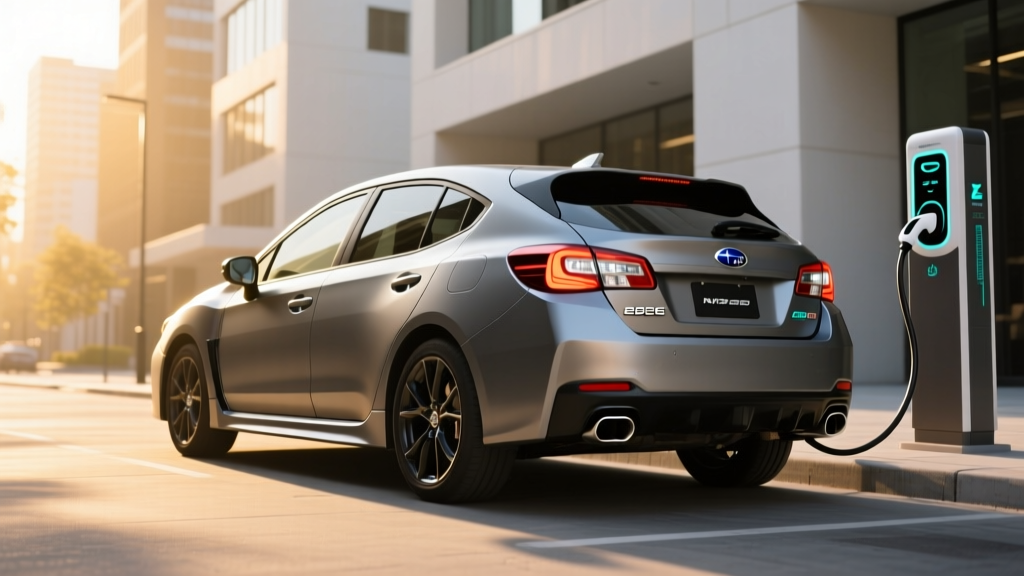
Subaru's compact lineup has long been defined by standard all-wheel drive, practicality, and a loyal following among outdoor-oriented buyers. With the 2026 Subaru Impreza Hybrid, the brand extends its hybrid strategy — already proven in the Crosstrek Hybrid — into its most affordable nameplate. For buyers navigating the choice between a conventional gas car, a hybrid, a plug-in hybrid, and a full battery-electric vehicle, the Impreza Hybrid occupies a specific niche: a no-plug-needed, AWD-equipped compact that squeezes more miles from every gallon without altering your daily routine.
This guide breaks down everything that matters for a hybrid purchase decision: real-world MPG versus EPA estimates, the powertrain under the hood, battery longevity and warranty coverage, pricing, tax credit eligibility, and how the Impreza Hybrid stacks up against PHEV and full-EV alternatives. All figures reflect the 2026 model year.
HEV vs. PHEV: What the Impreza Hybrid Actually Is
Before diving into specs, it's critical to understand what kind of hybrid Subaru is selling here. The 2026 Impreza Hybrid is a conventional hybrid electric vehicle (HEV), not a plug-in hybrid (PHEV). That distinction changes everything about how you own it.
HEV vs. PHEV — Key Differences
| Feature | HEV (Impreza Hybrid) | PHEV (e.g., Crosstrek PHEV) |
|---|---|---|
| Plugs in to charge? | No — self-charging via regen & engine | Yes — has a larger battery you plug in |
| Electric-only range | None (EV assist only at low speeds) | Typically 17–30 miles on battery alone |
| Battery size | ~1.1 kWh (small, assists engine) | 8–18 kWh (enables EV driving) |
| Federal tax credit (§30D) | Not eligible | Eligible (up to $7,500 if requirements met) |
| Driving routine change | None — fill up with gas as usual | Plug in at home for max savings |
If you want electric-only commuting without range anxiety, a PHEV is the play. If you want better MPG with zero lifestyle changes, the Impreza HEV delivers that.
Fuel Economy: EPA Ratings and Real-World MPG
The headline number for any hybrid buyer is fuel economy. The 2026 Subaru Impreza Hybrid pairs a 2.0-liter horizontally opposed (Boxer) four-cylinder engine with an electric motor integrated into Subaru's Lineartronic CVT. The system prioritizes efficiency without sacrificing the AWD traction the brand is known for.
| Metric | Impreza Hybrid (HEV) | Impreza Gas (2.0L AWD) |
|---|---|---|
| EPA City | 36 MPG | 28 MPG |
| EPA Highway | 38 MPG | 36 MPG |
| EPA Combined | 37 MPG | 31 MPG |
| Fuel tank (gal) | 13.2 | 13.2 |
| Total range (mi) | ~488 | ~409 |
Source: EPA Fuel Economy
Real-World MPG: What to Actually Expect
Subaru hybrids tend to deliver on their EPA promises in mixed driving, and in some conditions they exceed them. Here's how real-world results typically break down:
- City driving: Hybrids shine here. Expect 37–40 MPG in stop-and-go traffic, where regenerative braking recaptures energy the gas-only Impreza wastes as heat. Some owners report touching 42 MPG in dense urban commutes.
- Highway cruising: The hybrid advantage narrows at sustained speeds. Expect 34–37 MPG at 70–75 mph, slightly below the EPA highway sticker. The AWD system's mechanical drag and the Boxer engine's characteristics mean highway efficiency isn't quite as strong as front-wheel-drive hybrid competitors like the Toyota Corolla Hybrid (which posts up to 50 MPG combined but lacks AWD).
- Cold weather: Expect a 5–10% drop in winter months (roughly 33–35 MPG combined). The engine runs more frequently to provide cabin heat and warm the catalytic converter, reducing the hybrid system's electric-assist opportunities.
Powertrain and Performance Specs
| Specification | 2026 Impreza Hybrid |
|---|---|
| Engine | 2.0L Boxer 4-cylinder + electric motor |
| Combined system horsepower | ~154 hp |
| Engine output | ~137 hp / 134 lb-ft torque |
| Electric motor output | ~17 hp (assist & regen) |
| Transmission | Lineartronic CVT |
| Drivetrain | Symmetrical AWD (standard) |
| Hybrid battery | ~1.1 kWh lithium-ion (self-charging) |
| 0–60 mph (est.) | ~8.5 seconds |
| Towing capacity | Not rated for towing |
The electric motor in the Impreza Hybrid isn't designed for EV-mode driving. Instead, it fills in torque gaps during acceleration (reducing the CVT drone common to non-hybrid Subarus), enables engine stop-start at lights, and powers low-speed creep in traffic without the engine running. The result is a noticeably smoother and quieter driving experience in urban conditions compared to the gas-only model.
Hybrid Battery Warranty and Longevity
Hybrid battery lifespan is the single biggest concern for first-time hybrid buyers. Here's what Subaru covers and what the data shows:
Subaru Hybrid Battery Warranty
- Coverage: 8 years / 100,000 miles (nationwide)
- CARB states: 10 years / 150,000 miles in states that follow California Air Resources Board emissions rules (CA, NY, MA, WA, OR, CT, and others)
- What's covered: Hybrid battery pack, hybrid control module, and related hybrid-system components
- Capacity threshold: Subaru warrants against defects and abnormal degradation; unlike PHEVs/EVs, there is no published minimum capacity-retention percentage for HEVs since the battery is small and cycles minimally
How Long Will the Battery Actually Last?
Conventional hybrid batteries face far less stress than PHEV or EV batteries. The Impreza Hybrid's ~1.1 kWh pack operates in a narrow state-of-charge window (roughly 40–80%), managed by the hybrid control system to minimize degradation. It never fully charges or fully depletes, which dramatically extends cell life.
Based on data from Toyota's two decades of hybrid deployments and Subaru's own hybrid track record with the Crosstrek Hybrid (introduced in 2014), most HEV battery packs last 12–15 years or 150,000–200,000+ miles before needing replacement. Many original Prius batteries are still in service past 200,000 miles.
Replacement cost if out of warranty: A Subaru HEV battery pack replacement runs approximately $2,000–$3,500 including labor at a dealership. Third-party hybrid battery specialists may offer refurbished packs for $1,200–$2,000. This is significantly cheaper than PHEV or EV battery replacements, which can exceed $8,000–$15,000, because the HEV pack is far smaller.
Pricing, Trims, and Tax Credit Eligibility
The 2026 Impreza Hybrid is available in select trims, typically positioned above the base and mid-level gas models. Pricing reflects the hybrid powertrain premium:
| Trim | MSRP | Key Features |
|---|---|---|
| Sport Hybrid | $27,995 | SI-Drive, 10" touchscreen, wireless CarPlay/Android Auto |
| Limited Hybrid | $30,495 | Leather, Harman Kardon audio, power moonroof |
Prices exclude $1,120 destination charge. Source: Subaru.com
Does the Impreza Hybrid Qualify for a Tax Credit?
No. Under current IRS §30D Clean Vehicle Credit rules, the federal tax credit of up to $7,500 applies only to plug-in electric vehicles — battery-electric vehicles (BEVs) and plug-in hybrids (PHEVs) with a minimum battery capacity of 7 kWh. The Impreza Hybrid's ~1.1 kWh battery does not meet this threshold.
Conventional HEVs are not eligible for the §30D federal credit, the point-of-sale transfer, or most state EV rebates. A few states (e.g., Colorado) offer modest credits for hybrids, but these are exceptions and amounts vary. Check your state's energy office or department of revenue for current local incentives.
Hybrid vs. PHEV vs. Full EV: Which Is Right for You?
The Impreza Hybrid competes not just with other gas cars, but with PHEVs and full EVs in the compact segment. Here's a practical decision framework:
Choose the Impreza Hybrid (HEV) If:
- You can't charge at home (apartment, street parking, no garage)
- You want AWD standard and don't want a crossover
- You want better MPG without changing your fueling routine
- You drive 12,000–15,000 miles/year in mixed city/highway
- You want lower upfront cost than a PHEV or EV
Consider a PHEV or Full EV Instead If:
- You have home Level 2 charging and a short commute (<30 mi)
- You want to drive on electricity daily and save $1,000+/year on fuel
- You want access to the $7,500 federal tax credit (PHEV/BEV)
- You're willing to pay $5,000–$10,000 more upfront for greater long-term savings
- You want one-pedal driving and instant electric torque
For Subaru loyalists specifically: if you want a plug-in Subaru, the Crosstrek PHEV (where available) offers ~17 miles of electric-only range but costs roughly $8,000 more than the Impreza Hybrid. If you're open to leaving Subaru, the Toyota Prius AWD (50+ MPG combined, conventional hybrid) delivers better efficiency but with a different design language and Toyota's AWD system rather than Subaru's symmetrical setup.
Reliability and Ownership Costs
Subaru's hybrid system is relatively simple compared to PHEV and EV powertrains. There's no charging port, no large high-voltage battery requiring active thermal management, and no complex multi-mode clutch system. The electric motor assists the engine; it doesn't replace it.
Key reliability considerations:
- CVT longevity: Subaru's Lineartronic CVT has improved significantly since early-generation complaints. The hybrid version sees reduced engine load during acceleration (the electric motor fills torque gaps), which may reduce transmission wear over time.
- Brake life: Regenerative braking means the friction brakes are used less frequently. Expect brake pad life of 60,000–80,000+ miles — significantly longer than the gas model.
- Maintenance schedule: Identical to the gas Impreza for oil changes, filters, and fluids. No hybrid-specific maintenance items beyond the battery system check during scheduled service.
- Insurance: Hybrid variants typically carry a 3–7% insurance premium over gas models due to higher repair costs for hybrid components. Get a quote before purchasing.
Subaru's overall reliability ratings from IIHS and owner surveys place the brand in the mid-to-upper tier among mainstream manufacturers. The Impreza has historically scored well in IIHS crash testing, and the hybrid variant carries the same structural safety ratings.
Frequently Asked Questions
How many MPG does the Subaru Impreza Hybrid get?
The 2026 Impreza Hybrid is EPA-rated at 36 city / 38 highway / 37 combined MPG. In real-world city driving, many owners see 37–40 MPG thanks to regenerative braking. Highway driving at 70+ mph typically yields 34–37 MPG. Cold weather can drop combined figures to the low-to-mid 30s.
Does the Impreza Hybrid need to be plugged in?
No. The Impreza Hybrid is a conventional HEV. Its small battery charges through regenerative braking and the gasoline engine. You fuel it exactly like a regular car — no charging cable, no outlet, no change in routine.
Can the Impreza Hybrid drive on electric power alone?
Only at very low speeds (under ~15 mph) for short distances, such as creeping through a parking lot or in stop-and-go traffic. It does not have a meaningful electric-only range like a PHEV. The electric motor primarily assists the gas engine during acceleration.
Is the Subaru Impreza Hybrid reliable? What about battery replacement cost?
Subaru's hybrid system is proven and relatively low-stress. The hybrid battery is covered for 8 years/100,000 miles (10 years/150,000 miles in CARB states). Based on industry data, HEV batteries routinely last 150,000–200,000+ miles. Out-of-warranty replacement costs approximately $2,000–$3,500 at a dealer.
Does the Impreza Hybrid qualify for any federal tax credit?
No. The IRS §30D Clean Vehicle Credit requires a minimum 7 kWh battery and plug-in capability. The Impreza Hybrid's ~1.1 kWh self-charging battery does not qualify. It is also ineligible for most state EV rebates. A few states may offer small hybrid incentives — check your local rules.
How does the Impreza Hybrid compare to the Toyota Prius AWD?
The Prius AWD delivers significantly better fuel economy (50+ MPG combined) and is a FWD-biased system with a rear electric motor for traction. The Impreza Hybrid trades ~13 MPG for Subaru's full-time symmetrical AWD (better in deep snow and off-pavement), a hatchback cargo area, and Subaru's EyeSight safety suite. If maximum MPG is your priority, the Prius wins. If AWD capability and Subaru's driving dynamics matter more, the Impreza Hybrid holds its ground.
What's the total cost of ownership over 5 years?
Assuming 15,000 miles/year, $3.40/gallon gas, and the Sport Hybrid trim at $27,995:
- Fuel cost (5 years): ~$6,880 (vs. ~$8,175 for the gas Impreza)
- Maintenance (5 years): ~$2,200 (comparable to gas; longer brake life offsets hybrid-system checks)
- Insurance (5 years): ~$7,500–$8,500 (varies by driver and state)
- Depreciation (5 years): ~$12,000–$14,000 (Subarus hold value well; hybrid variants may retain slightly better)
Total estimated 5-year cost: ~$28,500–$31,500. The fuel savings versus the gas model recover roughly $1,300 over that period — not enough to fully offset the ~$2,500 hybrid premium, but the gap narrows if gas prices rise.