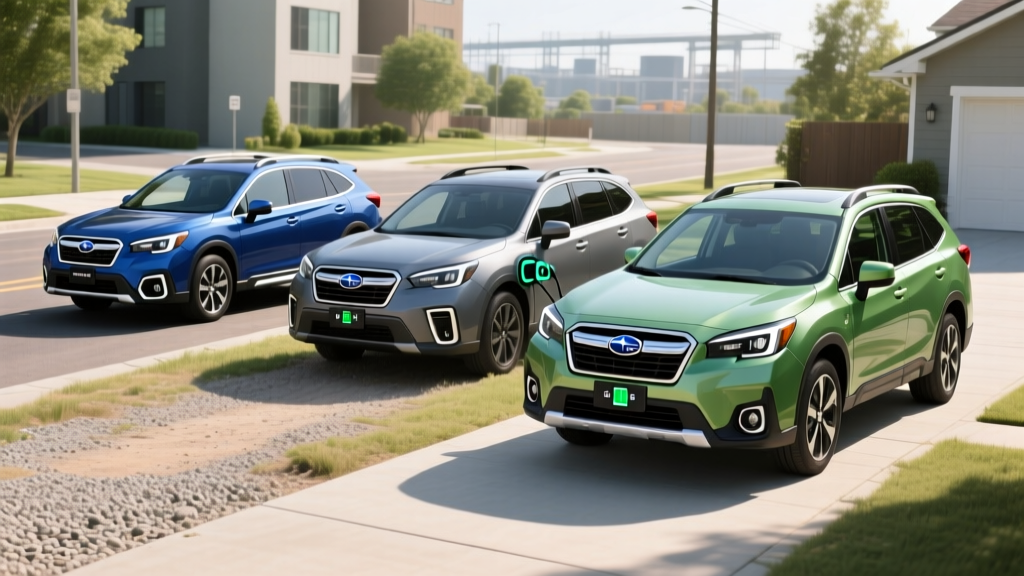
Subaru's electrified lineup has expanded significantly for the 2026 model year, giving buyers three distinct paths to better fuel economy without abandoning the brand's signature all-wheel-drive capability. Whether you're eyeing the compact Crosstrek Hybrid, the midsize Forester Hybrid, or the plug-in Outback PHEV, the numbers tell very different stories. This guide breaks down every Subaru hybrid's EPA mileage, real-world efficiency, battery specs, and tax-credit eligibility so you can pick the right one.
Subaru Hybrid Mileage at a Glance: 2026 EPA Numbers
Before we dig into each model, here's the side-by-side fuel economy data from the EPA. Note that Subaru offers two conventional hybrids (HEVs) and one plug-in hybrid (PHEV) for 2026.
| Model | Type | City MPG | Highway MPG | Combined MPG | Electric-Only (mi) | MPGe (PHEV) |
|---|---|---|---|---|---|---|
| 2026 Crosstrek Hybrid | HEV | 38 | 34 | 36 | — | — |
| 2026 Forester Hybrid | HEV | 37 | 33 | 35 | — | — |
| 2026 Outback PHEV | PHEV | 30 (gas only) | 28 (gas only) | 29 (gas only) | 33 | 94 |
Source: fueleconomy.gov, EPA estimates for 2026 model year.
HEV vs PHEV: Which Subaru Hybrid Architecture Fits You?
Subaru sells two fundamentally different hybrid systems in 2026, and confusing them is the most common mistake buyers make at the dealership.
Conventional Hybrid (HEV) — Crosstrek Hybrid & Forester Hybrid
- No plug required. The battery recharges through regenerative braking and the gasoline engine.
- Small battery: ~1.1 kWh lithium-ion pack — enough to assist the engine and enable brief electric-only driving at low speeds.
- Best for: Drivers who want better MPG without changing their fueling habits or installing a home charger.
Plug-In Hybrid (PHEV) — Outback PHEV
- Plugs in to charge. Uses a J1772 connector for Level 1 (120V) or Level 2 (240V) AC charging.
- Larger battery: 18.1 kWh usable lithium-ion pack, delivering 33 miles of electric-only range.
- Best for: Drivers with short commutes (under 33 miles) who can charge at home and want to run mostly on electricity most days.
- No DC fast charging. Like most PHEVs, the Outback PHEV does not support DC fast charging — AC Level 2 is the maximum.
2026 Subaru Crosstrek Hybrid: 36 MPG Combined in a Compact AWD
The Crosstrek Hybrid pairs Subaru's 2.0-liter flat-four engine with a 20 kW electric motor integrated into the Lineartronic CVT. Combined output is 194 horsepower, a meaningful bump over the gas-only Crosstrek's 152 hp. The hybrid system's electric torque fill makes the Crosstrek feel noticeably quicker off the line in city driving.
| Spec | 2026 Crosstrek Hybrid |
|---|---|
| Powertrain | 2.0L flat-4 + 20 kW electric motor |
| Combined HP | 194 hp |
| Transmission | Lineartronic CVT |
| Drivetrain | Symmetrical AWD |
| Battery | ~1.1 kWh lithium-ion |
| EPA Combined MPG | 36 |
| 0-60 mph | ~8.2 sec |
| Base MSRP | $31,495 |
Real-World MPG: City vs Highway
Like most hybrids, the Crosstrek Hybrid's regenerative braking system shines in stop-and-go traffic. In real-world city driving, owners consistently report 38-41 MPG — sometimes exceeding the EPA city estimate. Highway driving is a different story: at sustained 70-75 mph speeds, expect 31-33 MPG due to the boxy crossover profile and AWD drivetrain losses. Cold weather (below 30°F) typically reduces hybrid efficiency by 5-8%, bringing combined figures closer to 33 MPG in winter months.
2026 Subaru Forester Hybrid: Midsize Space at 35 MPG
The redesigned Forester Hybrid uses a similar architecture but with the larger 2.5-liter flat-four producing 210 combined horsepower when paired with its electric motor. It's the practical choice for families who need more cargo room (30.9 cu ft behind the rear seats) but still want hybrid efficiency.
| Spec | 2026 Forester Hybrid |
|---|---|
| Powertrain | 2.5L flat-4 + electric motor |
| Combined HP | 210 hp |
| Transmission | Lineartronic CVT |
| Drivetrain | Symmetrical AWD |
| Battery | ~1.1 kWh lithium-ion |
| EPA Combined MPG | 35 |
| 0-60 mph | ~7.8 sec |
| Base MSRP | $36,995 |
The Forester Hybrid's real-world fuel economy mirrors the Crosstrek's pattern: 36-39 MPG in the city, dropping to 30-32 MPG on the highway. On a 400-mile road trip at interstate speeds, plan for roughly one fuel stop — the 13.2-gallon tank provides about 430 miles of total range at highway rates.
2026 Subaru Outback PHEV: 33 Miles Electric, Then 29 MPG on Gas
The Outback PHEV is Subaru's most electrified offering for 2026 and the only plug-in model in the lineup. It pairs a 2.5-liter flat-four with a more powerful 88 kW electric motor and an 18.1 kWh usable battery pack. Combined system output is 235 horsepower, making it the quickest Outback variant.
| Spec | 2026 Outback PHEV |
|---|---|
| Powertrain | 2.5L flat-4 + 88 kW electric motor |
| Combined HP | 235 hp |
| Battery (usable) | 18.1 kWh lithium-ion (NMC) |
| Electric-Only Range | 33 miles (EPA) |
| Total Range (gas + electric) | ~530 miles |
| MPGe (electric + gas) | 94 MPGe |
| Gas-Only Combined MPG | 29 |
| Level 2 Charge Time (0-100%) | ~3.0 hours at 6.6 kW |
| DC Fast Charging | Not supported |
| 0-60 mph | ~6.8 sec |
| Base MSRP | $43,995 |
Charging the Outback PHEV: What to Expect
The Outback PHEV charges via a J1772 connector at up to 6.6 kW on Level 2 (240V). A full charge from empty takes roughly 3 hours — easily achievable overnight or during a workday. On a standard 120V household outlet (Level 1), expect about 8-9 hours for a full charge.
Real-world electric range caveat: The EPA's 33-mile electric-only figure assumes moderate temperatures and mixed driving. In practice, expect 27-30 miles in summer highway driving and as low as 22-25 miles in cold weather (below 30°F), since the battery's energy capacity drops and cabin heating draws additional power. Preconditioning the cabin while plugged in helps preserve range.
Tax Credits and Pricing: What You'll Actually Pay
Federal tax credit eligibility varies significantly across Subaru's hybrid lineup under the current IRS §30D Clean Vehicle Credit rules:
- Crosstrek Hybrid (HEV): Does NOT qualify for the federal §30D credit. Conventional hybrids are excluded — the credit applies only to plug-in vehicles with ≥7 kWh battery capacity.
- Forester Hybrid (HEV): Does NOT qualify for the federal §30D credit for the same reason.
- Outback PHEV: May qualify for up to $3,750 (partial credit) depending on battery-component and critical-mineral sourcing compliance. The full $7,500 requires meeting both sourcing thresholds. Buyer income caps apply ($150K single / $300K joint AGI), and the vehicle MSRP must be under $80,000 (SUVs/vans). Point-of-sale transfer is available through participating dealers.
Always verify current-year eligibility on IRS.gov and consult a tax professional before purchasing. Sourcing requirements tighten annually.
Battery Warranty, Reliability, and Replacement Costs
Subaru Hybrid Battery Coverage
All 2026 Subaru hybrid and PHEV models come with a hybrid battery warranty of 8 years / 100,000 miles (whichever comes first), covering defects and capacity loss below a defined threshold. In California Air Resources Board (CARB) states, that extends to 10 years / 150,000 miles.
Longevity and Replacement
Subaru's hybrid batteries are designed to last the life of the vehicle under normal use. The small 1.1 kWh packs in the Crosstrek and Forester HEVs experience relatively shallow charge-discharge cycles, which is gentle on cell longevity. Real-world data from Toyota's similar hybrid systems (Subaru's hybrid technology shares engineering principles with Toyota's THS) shows hybrid batteries commonly lasting 150,000-200,000+ miles before significant degradation.
If replacement is needed out of warranty:
- HEV battery (Crosstrek/Forester): Estimated $2,500-$4,000 for the small pack, plus labor.
- PHEV battery (Outback): Estimated $6,000-$9,000 for the larger 18.1 kWh pack, plus labor.
These are ballpark figures based on current parts pricing; actual costs vary by dealer and region. Subaru's official warranty page details full coverage terms.
Subaru Hybrid vs Full EV vs Gas: Decision Framework
Choose a Subaru HEV (Crosstrek or Forester Hybrid) if:
- You can't charge at home (apartment, street parking, no garage).
- You want 35-36 MPG combined with zero behavior change — just fill up with gas.
- You drive a mix of city and highway and value AWD for snow or dirt roads.
- You want a lower purchase price ($31K-$37K) and don't need electric-only driving.
Choose the Subaru Outback PHEV if:
- Your daily commute is under 30 miles round-trip and you can charge at home.
- You want to drive mostly on electricity most days but need gas flexibility for road trips.
- You want the quickest Subaru in the lineup (235 hp, ~6.8 sec 0-60).
- You're willing to pay a premium ($43,995+) for plug-in capability and may qualify for a partial tax credit.
Choose a Full EV (e.g., Subaru Solterra or competitor) if:
- You have reliable home Level 2 charging and your daily driving is under 200 miles.
- You want the lowest per-mile fuel cost (electricity at $0.04-$0.05/mile vs gas at $0.12-$0.15/mile).
- You qualify for the full $7,500 federal tax credit and want maximum incentive benefit.
- You're ready to plan around DC fast charging on road trips.
Pros and Cons: Subaru's 2026 Hybrid Lineup
Pros
- Standard Symmetrical AWD across all hybrid models — no FWD-only compromise
- HEV models exceed EPA city MPG in real-world stop-and-go driving
- Outback PHEV's 33-mile electric range covers most daily commutes
- 8-year/100,000-mile hybrid battery warranty (10 years in CARB states)
- Strong resale value — Subaru hybrids hold value well in snow-belt markets
- No range anxiety — HEVs refuel at any gas station, PHEV has gas backup
Cons
- HEV models do NOT qualify for the federal §30D tax credit
- Outback PHEV lacks DC fast charging — Level 2 only at 6.6 kW
- Highway MPG drops noticeably (30-32 real-world) due to AWD and aero
- PHEV price premium ($43,995+) takes years to recoup through fuel savings alone
- Small HEV batteries limit electric-only driving to brief low-speed bursts
- PHEV electric range drops 20-30% in cold weather
Frequently Asked Questions
How many MPG does the Subaru hybrid get?
The 2026 Crosstrek Hybrid achieves 38 city / 34 highway / 36 combined MPG. The Forester Hybrid gets 37 city / 33 highway / 35 combined. The Outback PHEV achieves 94 MPGe when using its electric range, and 29 MPG combined on gasoline alone after the battery is depleted.
How far can the Outback PHEV go on electric only?
The EPA rates the 2026 Outback PHEV at 33 miles of electric-only range. In real-world conditions, expect 27-30 miles in warm weather and 22-25 miles in cold weather (below 30°F). Once the battery depletes, the gas engine takes over seamlessly and you get 29 MPG combined.
Do Subaru hybrids need to be plugged in?
No — the Crosstrek Hybrid and Forester Hybrid are conventional hybrids (HEVs) that never need to be plugged in. They recharge their small batteries through regenerative braking and the gasoline engine. Only the Outback PHEV requires plugging in to access its 33-mile electric range; it still operates as a regular hybrid if you don't charge it.
Is the Subaru hybrid battery reliable and what does replacement cost?
Subaru's hybrid batteries are covered by an 8-year/100,000-mile warranty (10 years/150,000 miles in CARB states). Based on data from similar hybrid systems, these batteries commonly last 150,000-200,000+ miles. Out-of-warranty replacement runs approximately $2,500-$4,000 for HEV models and $6,000-$9,000 for the Outback PHEV.
Does the Subaru hybrid qualify for a tax credit?
The Crosstrek Hybrid and Forester Hybrid do not qualify for the federal §30D Clean Vehicle Credit because they are conventional hybrids, not plug-in vehicles. The Outback PHEV may qualify for up to $3,750 depending on battery sourcing compliance, buyer income limits, and MSRP caps. Check IRS.gov for current eligibility.
Subaru hybrid vs full EV — which should I buy?
If you can charge at home and your daily driving is under 200 miles, a full EV like the Subaru Solterra (222-mile range) offers lower operating costs and qualifies for the full $7,500 federal credit. If you lack home charging, frequently drive long distances, or need maximum flexibility in rural areas, a Subaru hybrid (HEV or PHEV) is the more practical choice with no charging infrastructure dependency.