Quick Verdict: The 2026 Subaru Hybrid Forester
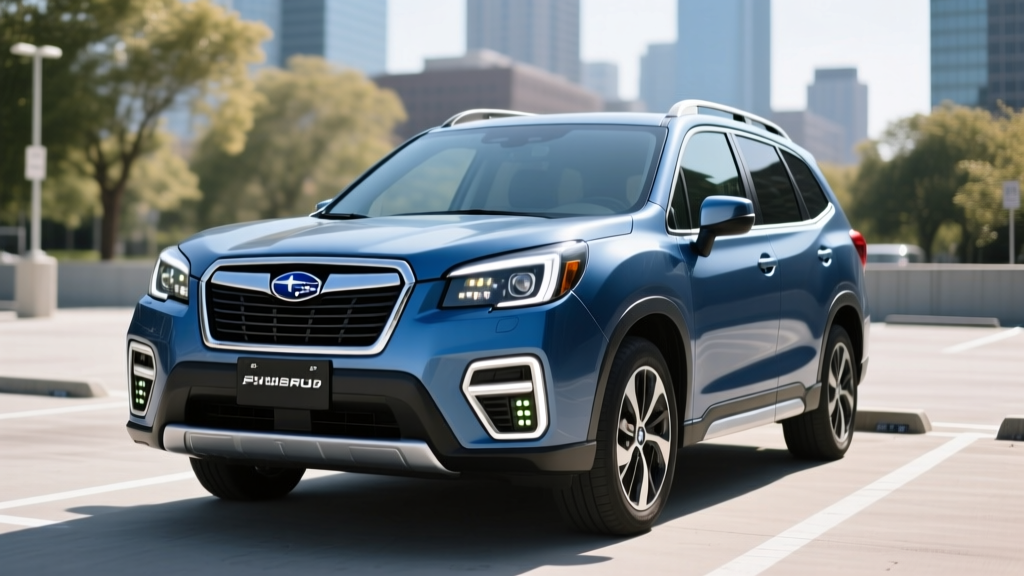
The 2026 Subaru Hybrid Forester arrives as a conventional hybrid (HEV) — not a plug-in — pairing Subaru's proven all-wheel-drive system with a fuel-sipping electric assist. For buyers who want the utility and safety of a compact SUV without ever plugging in, the Forester Hybrid delivers an EPA-estimated 36 MPG combined, standard symmetrical AWD, and Subaru's latest EyeSight driver-assist suite. It's a pragmatic choice for those not ready for a full EV or PHEV but who want meaningful fuel savings over the gas-only Forester.
Fuel Economy: EPA Ratings and Real-World MPG
Fuel economy is the headline reason buyers cross-shop the Forester Hybrid against the gas model. Here's how the numbers break down according to EPA estimates at fueleconomy.gov:
| Metric | Forester Hybrid (HEV) | Forester Gas (2.5L) |
|---|---|---|
| City MPG | 35 MPG | 26 MPG |
| Highway MPG | 34 MPG | 33 MPG |
| Combined MPG | 36 MPG | 29 MPG |
Real-World MPG: What to Actually Expect
Conventional hybrids like the Forester Hybrid tend to exceed EPA city estimates in stop-and-go traffic because regenerative braking recaptures energy constantly. In mixed suburban driving, expect 35–38 MPG. On long highway trips at 75+ MPH, the hybrid advantage narrows — expect 31–33 MPG, as the electric motor contributes less at sustained high speeds. In cold weather (below 30°F), fuel economy dips 3–5 MPG due to increased engine runtime for cabin heat and reduced battery efficiency. Overall, real-world combined driving lands most owners between 33–37 MPG, which is a significant improvement over the gas Forester's real-world ~27–29 MPG combined.
Powertrain: Engine, Motor, and Combined Horsepower
The 2026 Forester Hybrid uses a revised version of Subaru's hybrid system:
| Specification | Detail |
|---|---|
| Engine | 2.5L flat-4 (Boxer), Atkinson cycle |
| Engine Output | 169 hp / 166 lb-ft torque |
| Electric Motor | AC synchronous, integrated in transaxle |
| Motor Output | 26 hp (19 kW) / 49 lb-ft torque |
| Combined System Output | 194 hp |
| Transmission | Lineartronic CVT with electric motor integration |
| Drivetrain | Symmetrical All-Wheel Drive (standard) |
| Hybrid Battery | ~1.1 kWh lithium-ion (self-charging) |
| 0–60 MPH | ~8.0 seconds (est.) |
The electric motor primarily assists during acceleration from stops and enables brief low-speed electric-only movement (under ~1 mile at very low speeds, such as in a parking lot). This is not a PHEV — the motor's role is efficiency optimization, not replacing the engine.
HEV vs PHEV vs EV: Which Powertrain Fits You?
Choose the Forester Hybrid (HEV) If:
- You have no home charging access (apartment, street parking)
- You want better MPG without changing any habits
- You take frequent road trips and don't want to plan around chargers
- You need AWD for snow/rain but want lower fuel costs
- Your budget is under $38,000
Look at a PHEV or Full EV Instead If:
- You have home Level 2 charging and a short commute (<30 mi)
- You want electric-only daily driving with zero tailpipe emissions on commutes
- You qualify for the §30D federal tax credit (up to $7,500 for eligible PHEVs/EVs)
- You want one-pedal driving and instant torque
- You drive mostly in the city and want maximum efficiency
Subaru does not currently offer a Forester PHEV in the US market. If plug-in capability is a priority, cross-shop the Toyota RAV4 Prime (42 mi EV range, 38 MPG hybrid), the Mitsubishi Outlander PHEV (38 mi EV range), or fully electric options like the Hyundai Ioniq 5 or Tesla Model Y.
Pricing, Trims, and Tax Credit Eligibility
The 2026 Forester Hybrid is offered across three trims, positioned at a modest premium over the gas-only Forester:
| Trim | MSRP | Key Features |
|---|---|---|
| Sport Hybrid | $34,995 | 18" wheels, SI-DRIVE, EyeSight, 8" Starlink display |
| Limited Hybrid | $37,495 | Leather, power liftgate, Blind-Spot Detection, heated seats |
| Touring Hybrid | $40,495 | Nappa leather, Harman Kardon audio, 11.6" display, DriverFocus |
Federal Tax Credit: Does the Forester Hybrid Qualify?
No. The 2026 Subaru Forester Hybrid is a conventional HEV — it does not plug in and does not meet the battery capacity threshold required under IRS §30D. The federal Clean Vehicle Credit applies only to plug-in vehicles (PHEVs and BEVs) with a battery capacity of at least 7 kWh. The Forester Hybrid's ~1.1 kWh battery does not qualify.
Some states offer separate incentives for conventional hybrids (e.g., HOV lane access in certain states, or small rebates), but these vary widely by jurisdiction. Check your state's energy office or DMV for current programs.
Reliability, Battery Warranty, and Replacement Cost
How Long Will the Hybrid Battery Last?
Conventional hybrid batteries experience far less stress than EV batteries because they operate within a narrow state-of-charge window (typically 40–80% SoC) and are much smaller. Based on data from similar Toyota and Subaru hybrid systems, expect the Forester Hybrid battery to last 12–15 years or 150,000–200,000 miles before significant degradation. Many first-generation Toyota hybrid batteries (Prius, Camry Hybrid) have exceeded 200,000 miles on the original pack.
Battery Replacement Cost
If replacement is needed outside warranty, a Subaru hybrid battery pack typically costs $2,500–$4,000 including labor. Third-party reconditioned packs may be available for $1,500–$2,500. This is far lower than a full EV battery replacement ($8,000–$20,000+) because the pack is small (~1.1 kWh).
Overall Reliability Outlook
Subaru's hybrid system leverages Toyota-derived hybrid technology (a result of the Toyota-Subaru partnership). The 2.5L Boxer engine is a carryover with known reliability. The CVT has been refined over multiple generations. Subaru's standard 5-year/60,000-mile powertrain warranty and 3-year/36,000-mile bumper-to-bumper coverage are industry-average. The Forester consistently earns top marks from IIHS, and the EyeSight 4.0 system provides robust Level 2 driver assistance (adaptive cruise, lane centering, pre-collision braking).
Pros and Cons
Pros
- 36 MPG combined — 7 MPG better than gas Forester
- Standard symmetrical AWD (no FWD compromise)
- No plug-in required — zero lifestyle change
- Top IIHS safety ratings with EyeSight 4.0
- 8 yr/100k mi hybrid battery warranty
- Excellent visibility and cargo space (30.5 cu ft)
Cons
- No federal tax credit (HEV, not PHEV/EV)
- Modest electric assist — not a performance hybrid
- CVT drone under hard acceleration
- $2,000–$3,000 premium over gas Forester trims
- No EV-only commuting capability
- Infotainment lags behind rivals in responsiveness
Frequently Asked Questions
How many MPG does the Subaru Hybrid Forester get?
The 2026 Subaru Forester Hybrid is EPA-rated at 35 city / 34 highway / 36 combined MPG. In real-world mixed driving, most owners report 33–37 MPG combined. City driving often yields even higher numbers due to regenerative braking, while sustained highway speeds above 75 MPH reduce the hybrid advantage.
Does the Subaru Forester Hybrid need to be plugged in?
No. The Forester Hybrid is a conventional hybrid (HEV). It charges its small battery entirely through regenerative braking and the gasoline engine. You fuel it like a normal car — there is no plug, no charging cable, and no electric-only range to manage.
How far can the Forester Hybrid go on electric only?
Effectively less than one mile at very low speeds (parking lots, creeping traffic). The ~1.1 kWh battery and 26-hp electric motor are designed for engine assist, not standalone propulsion. If you want meaningful electric-only range, you need a PHEV (30–45 miles) or a full EV (250–350+ miles).
Is the Subaru Forester Hybrid reliable?
Yes, the outlook is strong. Subaru's hybrid system benefits from the Toyota partnership and proven hybrid architecture. The hybrid battery is warranted for 8 years/100,000 miles (10/150k in CARB states), and similar hybrid systems from Toyota have demonstrated 200,000+ mile lifespans. The 2.5L Boxer engine and CVT are well-established components.
Does the 2026 Forester Hybrid qualify for a tax credit?
It does not qualify for the federal §30D Clean Vehicle Credit, which requires a plug-in vehicle with at least 7 kWh of battery capacity. The Forester Hybrid is a self-charging HEV with a ~1.1 kWh pack. Some state-level hybrid incentives or HOV lane access may apply depending on your jurisdiction — check your state's energy office for details.
What is the hybrid battery replacement cost?
Outside warranty, expect $2,500–$4,000 for a new OEM hybrid battery pack including labor. Reconditioned packs may be available for $1,500–$2,500. Given the 8–10 year warranty and typical 12–15 year battery lifespan, most owners will never face this expense during their ownership.
Should I buy the Forester Hybrid or the gas Forester?
If you drive 12,000+ miles per year and keep vehicles 5+ years, the hybrid's $2,000–$3,000 premium pays for itself in fuel savings at roughly $600–$800/year saved (at 15,000 miles/year and $3.50/gallon). If you drive mostly highway miles at high speeds, the MPG gap narrows and the payback period extends. For city-heavy commuters, the hybrid is the clear winner.