Quick Verdict: The Hybrid Crosstrek Fills a Real Gap
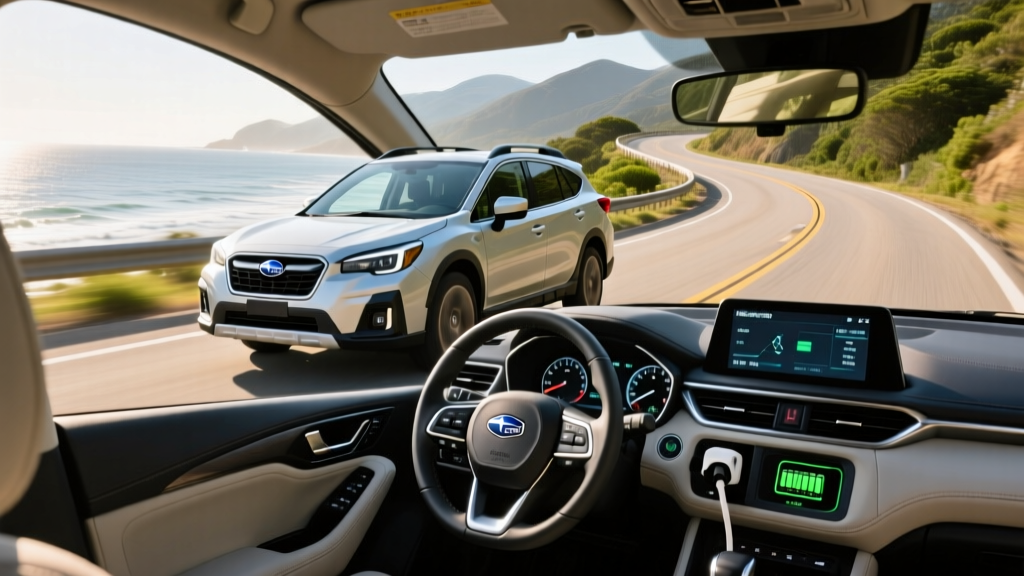
The 2026 Subaru Crosstrek Hybrid arrives at a moment when compact crossover buyers want better fuel economy without surrendering all-weather capability or taking on range anxiety. Subaru's answer is a conventional hybrid (HEV) powertrain paired with its trademark symmetrical all-wheel drive — no plug required, no lifestyle compromise. For shoppers who commute in stop-and-go traffic, tackle snowy back roads, or simply want to visit gas stations less often, the hybrid Crosstrek makes a compelling case without the price premium of a full EV or the plug-in complexity of a PHEV.
This guide covers everything you need to evaluate the Subaru hybrid Crosstrek: EPA and real-world MPG, powertrain specs, hybrid battery longevity, pricing across trims, tax credit eligibility, and whether a hybrid, PHEV, or full EV better suits your daily driving.
HEV vs PHEV: Which Crosstrek Hybrid Are We Talking About?
Before diving into specs, it's critical to distinguish between the two hybrid architectures Subaru has historically offered:
| Feature | Conventional Hybrid (HEV) | Plug-In Hybrid (PHEV) |
|---|---|---|
| Plug-in charging | No — refuels with gasoline only | Yes — plugs into Level 1 or Level 2 charger |
| Battery size | ~1.1 kWh (small buffer) | Typically 8–18 kWh |
| Electric-only range | Very short (under 1 mi at low speed) | 17–35 mi typical for compact crossovers |
| Primary efficiency gain | Regen braking, engine assist, idle stop | Electric-only commuting + hybrid on longer trips |
| Tax credit (federal) | Not eligible under §30D | May qualify (up to $7,500, subject to rules) |
| Price premium over gas model | ~$1,500–$2,500 | ~$5,000–$8,000+ |
The 2026 Subaru Crosstrek Hybrid is a conventional HEV. It does not plug in, does not offer meaningful electric-only range, and does not qualify for the federal §30D EV tax credit. Subaru previously sold a Crosstrek PHEV (badged the Crosstrek Hybrid in some markets through 2023), but that model was discontinued due to low uptake and the transition to newer hybrid platforms. If you're searching for a "Subaru hybrid Crosstrek" in 2026, you're looking at the HEV.
Fuel Economy: EPA Ratings and Real-World MPG
Fuel efficiency is the headline reason buyers cross-shop the hybrid Crosstrek against the standard gas-powered version. Here's how the numbers stack up, per fueleconomy.gov:
| Model | City MPG | Highway MPG | Combined MPG |
|---|---|---|---|
| 2026 Crosstrek Hybrid (HEV, AWD) | 38 | 40 | 39 |
| 2026 Crosstrek (Gas, 2.5L, AWD) | 27 | 34 | 29 |
| 2026 Crosstrek (Gas, 2.0L, AWD) | 28 | 35 | 30 |
The hybrid's combined 39 MPG represents a roughly 30–34% improvement over the gas-only Crosstrek, which translates directly into fewer fuel stops and lower annual fuel costs.
Real-World MPG: What to Actually Expect
Conventional hybrids tend to exceed their EPA city rating in real-world stop-and-go driving because regenerative braking recaptures energy that gas-only vehicles waste as heat. On the flip side, steady-state highway driving at 75+ mph narrows the hybrid's advantage because the electric motor contributes less at sustained high speeds.
Real-World Fuel Economy Expectations:
- City / suburban commute: 38–44 MPG (hybrids shine here; expect to meet or beat EPA)
- Mixed driving: 36–40 MPG
- Highway (70–80 mph): 34–38 MPG (aerodynamic drag reduces hybrid advantage)
- Cold weather (below 30°F): Expect a 5–10% drop due to cabin heating load and reduced battery efficiency
For a driver covering 12,000 miles per year with mixed driving, the hybrid Crosstrek would consume roughly 308 gallons annually versus 414 gallons for the 2.5L gas model — a savings of about 106 gallons, or roughly $370–$420 per year at $3.50–$4.00 per gallon.
Powertrain: What's Under the Hood
The 2026 Crosstrek Hybrid pairs Subaru's 2.0-liter horizontally opposed (Boxer) four-cylinder engine with an integrated electric motor-generator and a compact lithium-ion battery pack. Power flows through a Lineartronic CVT (continuously variable transmission) to Subaru's symmetrical all-wheel-drive system.
| Specification | 2026 Crosstrek Hybrid |
|---|---|
| Engine | 2.0L Boxer 4-cylinder |
| Electric motor | Integrated motor-generator (e-Boxer system) |
| Combined system horsepower | ~194 hp (est.) |
| Transmission | Lineartronic CVT |
| Drivetrain | Symmetrical AWD (standard) |
| Hybrid battery | ~1.1 kWh lithium-ion |
| 0–60 mph | ~7.5 seconds (est.) |
| Ground clearance | 8.7 inches |
| Towing capacity | 1,000 lbs |
The e-Boxer hybrid system uses the electric motor primarily for low-speed torque fill, regenerative braking, and engine start-stop smoothing. Unlike Toyota's more aggressive hybrid system (as found in the RAV4 Hybrid), Subaru's setup prioritizes seamless integration with its AWD system over maximum electric-only operation. You'll notice the electric assist most during initial acceleration from a stop and during gentle cruising, where the engine can shut off entirely for brief coasting periods.
Pricing, Trims, and Tax Credit Eligibility
The 2026 Subaru Crosstrek Hybrid is offered across multiple trim levels, with the hybrid powertrain available as an upgrade over the standard gas engine.
| Trim | Estimated MSRP |
|---|---|
| Hybrid Premium | $30,995 |
| Hybrid Sport | $33,495 |
| Hybrid Limited | $36,495 |
Pricing includes destination charge. Verify with your local Subaru dealer as MSRP may vary.
Federal Tax Credit: What You Need to Know
Because the 2026 Crosstrek Hybrid is a conventional HEV (not a plug-in), it does not qualify for the IRS §30D Clean Vehicle Credit, which is reserved for battery-electric vehicles (BEVs) and plug-in hybrids (PHEVs) that meet battery sourcing, MSRP caps, and buyer income requirements.
§30D Credit Eligibility Checklist (for reference):
- Vehicle must be a BEV or PHEV with ≥ 7 kWh battery capacity
- MSRP cap: $80,000 (SUVs/trucks), $55,000 (sedans)
- Buyer income cap: $150K single / $300K joint (modified AGI)
- Battery components and critical minerals must meet phased-in sourcing thresholds
- Credit can be transferred to the dealer at point of sale for an upfront price reduction
The Crosstrek Hybrid (HEV) clears none of these thresholds because it is not a plug-in vehicle. For full rules, see the IRS §30D guidance page.
Some states and utilities offer separate rebates or incentives for conventional hybrids — check your state energy office or local utility for programs. These vary widely by jurisdiction and change frequently.
Hybrid Battery Warranty, Reliability, and Replacement Cost
Hybrid battery longevity remains one of the most common concerns among first-time hybrid buyers. Here's what Subaru provides:
Subaru Hybrid Battery Warranty:
- Hybrid system warranty: 8 years / 100,000 miles (whichever comes first)
- CARB states: 10 years / 150,000 miles in states that follow California Air Resources Board emissions standards (includes CA, NY, MA, WA, OR, and others)
- What's covered: Hybrid battery pack, inverter, electric motor, and related control modules
How Long Do Hybrid Batteries Actually Last?
Modern hybrid battery packs are engineered for the life of the vehicle. Toyota's hybrid batteries — which share similar lithium-ion chemistry and thermal management strategies — routinely exceed 150,000–200,000 miles without significant degradation. Subaru's hybrid system uses a relatively small (~1.1 kWh) battery that operates within a narrow state-of-charge window (typically 40–80%), which dramatically reduces stress on the cells compared to a full EV battery that cycles between 10–90% or more.
The narrow SoC buffer is the key longevity factor: shallow cycling causes far less chemical wear than deep discharge cycles. Based on industry data from millions of hybrid vehicles on the road, battery failure before 150,000 miles is uncommon.
Battery Replacement Cost
If the hybrid battery does require replacement outside of warranty:
- OEM replacement: $2,000–$4,000 (parts + labor at a Subaru dealer)
- Refurbished/aftermarket: $1,200–$2,500
- Individual cell module replacement: Some independent hybrid specialists can replace only the degraded modules for $500–$1,500
For context, this is substantially less than EV battery replacement ($5,000–$20,000+) because the hybrid pack is far smaller.
Overall Reliability
Subaru's hybrid system adds complexity (electric motor, inverter, additional cooling circuits) but eliminates the traditional starter motor and reduces brake wear through regenerative braking. The CVT transmission has improved significantly in recent generations, though it remains a component to monitor at higher mileages. Based on IIHS data and owner surveys, the Crosstrek platform earns strong marks for crash safety and build quality.
Who Should Buy the Hybrid Crosstrek — And Who Shouldn't
The hybrid Crosstrek isn't the right electrified vehicle for every buyer. Here's a practical decision framework:
Choose the Hybrid Crosstrek (HEV) if:
- You want 35+ MPG without plugging in or changing your refueling habits
- You live in a cold/snowy climate and need reliable AWD year-round
- You don't have access to home or workplace charging (apartment, street parking)
- You want a modest price premium (~$2,000) over the gas model with meaningful fuel savings
- You drive 10,000–15,000 miles per year and want lower operating costs without a $40K+ EV
Consider a full EV (like the Hyundai Ioniq 5 or Tesla Model Y) if:
- You have reliable Level 2 home charging
- Your daily commute is under 60 miles round-trip
- You want the lowest per-mile fuel cost (electricity vs. gasoline)
- You want to qualify for the §30D federal tax credit (up to $7,500)
- You're ready to plan around DC fast charging for road trips
Stick with the gas Crosstrek if:
- You drive fewer than 8,000 miles per year (hybrid premium won't pay back quickly)
- You prioritize the lowest possible purchase price
- You plan to keep the vehicle under 3 years
Pros and Cons at a Glance
Pros
- 39 MPG combined — a 30%+ improvement over the gas Crosstrek
- Standard symmetrical AWD with 8.7 inches of ground clearance
- No plug-in required — works with existing gas-station infrastructure
- Strong hybrid battery warranty (8yr/100K mi; 10yr/150K in CARB states)
- Lower brake wear thanks to regenerative braking
- Subaru's EyeSight driver-assist suite standard (pre-collision braking, adaptive cruise, lane centering)
Cons
- Not eligible for the §30D federal tax credit
- ~$2,000 premium over equivalent gas trim
- Towing limited to 1,000 lbs (same as gas model)
- CVT can feel sluggish under hard acceleration compared to geared transmissions
- No meaningful electric-only driving — this is a fuel-saving hybrid, not an EV substitute
- Cargo space slightly reduced due to hybrid battery placement
Frequently Asked Questions
How many MPG does the Subaru hybrid Crosstrek get?
The 2026 Subaru Crosstrek Hybrid is EPA-rated at 38 city / 40 highway / 39 combined MPG. In real-world city driving, owners often report 38–44 MPG thanks to regenerative braking. Highway driving at speeds above 70 mph typically yields 34–38 MPG.
Does the Subaru Crosstrek Hybrid need to be plugged in?
No. The 2026 Crosstrek Hybrid is a conventional hybrid (HEV). It charges its small battery pack through regenerative braking and the gasoline engine. You refuel it exclusively at gas stations — no plug, no home charger, no public charging required.
Is there a plug-in hybrid (PHEV) version of the Crosstrek?
Subaru discontinued the previous-generation Crosstrek PHEV after the 2023 model year. The 2026 Crosstrek Hybrid is HEV-only. If you need plug-in capability from Subaru, the Solterra (all-electric) is the current electrified option, though it's a different vehicle class entirely.
Is the hybrid Crosstrek reliable, and what does battery replacement cost?
Subaru's hybrid system is backed by an 8-year/100,000-mile warranty (10 years/150,000 miles in CARB states). Modern hybrid batteries operating within a narrow charge window routinely last 150,000+ miles. If replacement is needed out of warranty, expect $2,000–$4,000 for an OEM pack — far less than an EV battery replacement.
Does the Subaru hybrid Crosstrek qualify for any tax credit?
The 2026 Crosstrek Hybrid does not qualify for the federal §30D Clean Vehicle Credit because it is a conventional hybrid, not a plug-in vehicle. Some state and utility programs may offer incentives for hybrids — check your local jurisdiction. The IRS §30D page details which vehicle types qualify for federal credits.
How does the hybrid Crosstrek compare to the Toyota RAV4 Hybrid?
The RAV4 Hybrid offers slightly more interior space and a more powerful hybrid system (219 hp combined, EPA 41 MPG combined). However, the Crosstrek Hybrid is more compact, easier to park in urban settings, and offers 8.7 inches of ground clearance versus the RAV4's 8.1 inches. If you need a larger cargo area and don't mind a bigger footprint, the RAV4 Hybrid is a strong alternative. If you prioritize nimble size, Subaru's AWD reputation, and off-road trail capability, the Crosstrek Hybrid wins.
How long will it take the hybrid premium to pay for itself in fuel savings?
At 12,000 miles per year, $3.75/gallon gas, and the hybrid's ~39 MPG versus the gas model's ~29 MPG, you'd save roughly $390–$420 annually. A $2,000 hybrid premium would pay back in approximately 5 years. Higher annual mileage or higher local gas prices shorten that timeline; lower mileage extends it.
Sources: EPA fuel economy data via fueleconomy.gov; IRS Clean Vehicle Credit rules at irs.gov; safety ratings via IIHS. Specifications and pricing are based on manufacturer-published data for the 2026 model year and are subject to change. Verify all figures with your local Subaru dealer and a qualified tax professional before purchasing.