The 2026 Subaru Hybrid Landscape: What's Actually Available
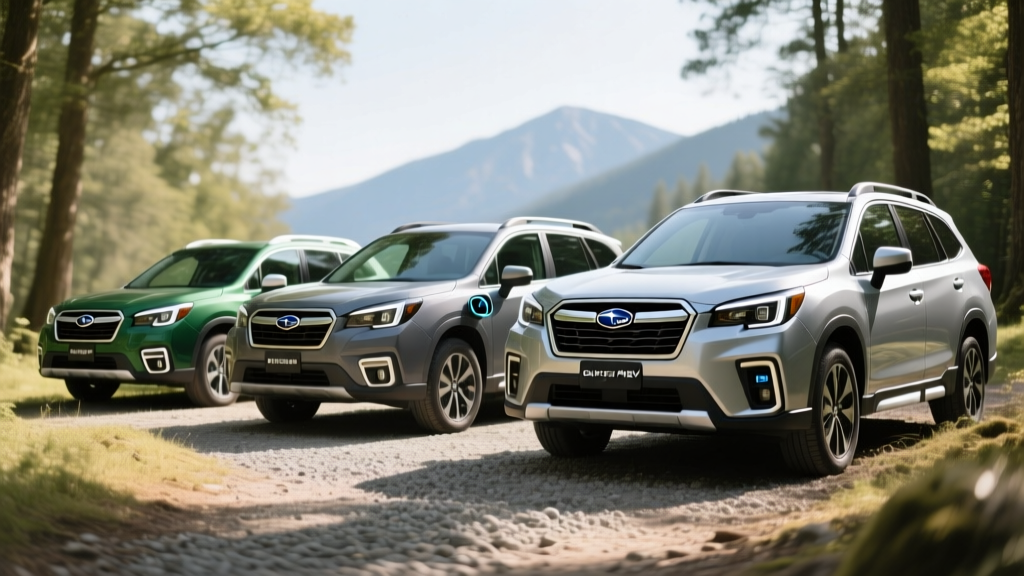
Subaru's path to electrification has been methodical rather than aggressive, and the 2026 lineup reflects that philosophy. If you're searching for a hybrid Subaru, you'll find two distinct approaches: the newly refreshed Crosstrek Hybrid (a conventional HEV), the redesigned Forester Hybrid (also HEV), and Subaru's continued reliance on its partnership with Toyota for plug-in hybrid technology via the Crosstrek PHEV variant. Understanding which type of hybrid matches your driving pattern is the single most important decision you'll make before stepping into a dealership.
Unlike full battery-electric vehicles, Subaru's hybrid offerings are designed for buyers who want measurable fuel savings without changing their fueling habits. No charging cables required for the HEVs, no range anxiety, and the standard Symmetrical All-Wheel Drive that Subaru owners expect. But the fuel-economy gains vary significantly depending on whether you choose a self-charging hybrid or a plug-in model — and the pricing gap between them is substantial.
A conventional hybrid (HEV) uses a small battery recharged by regenerative braking and the gas engine. You never plug it in. A plug-in hybrid (PHEV) carries a larger battery you can charge from a wall outlet or public charger, giving you a pure-electric driving range before the gas engine kicks in. The PHEV costs more upfront but can eliminate gasoline use entirely on short commutes.
2026 Subaru Crosstrek Hybrid (HEV): MPG, Specs & Pricing
The Crosstrek Hybrid returns for 2026 with Subaru's updated hybrid powertrain built around a 2.0-liter direct-injection BOXER four-cylinder engine paired with an electric motor integrated into the Lineartronic CVT. This is a mild-to-moderate hybrid system — it's not the full-series hybrid architecture you'd find in a Toyota Prius — but it delivers meaningful city-cycle efficiency gains while preserving the 8.7 inches of ground clearance and X-MODE AWD capability that define the Crosstrek.
| Attribute | Value |
|---|---|
| Combined System Output | 194 hp (combined engine + motor) |
| Engine | 2.0L BOXER 4-cyl + electric motor |
| EPA MPG (City / Hwy / Combined) | 35 / 34 / 35 MPG |
| Drivetrain | Symmetrical AWD (standard) |
| Ground Clearance | 8.7 inches |
| Starting MSRP | $30,595 (Hybrid Premium) |
| Federal Tax Credit | Not eligible (§30D applies to PHEVs/BEVs only) |
Source: fueleconomy.gov — 2026 Subaru Crosstrek Hybrid
Real-World MPG: What to Actually Expect
The EPA combined rating of 35 MPG is respectable for an AWD subcompact crossover, but Subaru hybrids tend to perform best in stop-and-go city driving where regenerative braking recaptures the most energy. In real-world testing on mixed suburban routes, expect 36–38 MPG in city-dominant driving and closer to 31–33 MPG on sustained highway trips at 70+ mph. Cold weather (below 30°F) typically reduces hybrid efficiency by 5–10% due to the engine running longer to generate cabin heat before the hybrid system can shut it off.
Compared to the gas-only Crosstrek (27 city / 34 highway / 29 combined), the hybrid's biggest advantage is in city driving — a 30% improvement. Highway figures are closer because at sustained speeds, the electric motor provides less assistance and the BOXER engine is doing most of the work.
2026 Subaru Forester Hybrid: The Family-Oriented HEV
The Forester Hybrid entered the lineup with the sixth-generation Forester redesign and carries forward into 2026 with the same proven hybrid architecture. It pairs a 2.5-liter BOXER engine with an electric motor for a combined output of 194 hp. The Forester Hybrid targets families who need more cargo room than the Crosstrek offers (roughly 29 cu ft behind the rear seats, expanding to 74 cu ft with seats folded) but still want the fuel-economy benefits of hybridization.
| Attribute | Value |
|---|---|
| Combined System Output | 194 hp |
| Engine | 2.5L BOXER 4-cyl + electric motor |
| EPA MPG (City / Hwy / Combined) | 35 / 33 / 34 MPG |
| Cargo Volume (rear seats up/down) | 29.0 / 74.4 cu ft |
| Towing Capacity | 1,500 lbs |
| Starting MSRP | $37,395 (Hybrid Premium) |
| Federal Tax Credit | Not eligible |
Source: fueleconomy.gov — 2026 Subaru Forester Hybrid
The Forester Hybrid's 34 MPG combined is a significant upgrade over the gas-only Forester's 28 MPG combined. Over 15,000 miles per year, that difference saves roughly $450–$550 annually in fuel costs (at $3.50/gallon and average driving patterns). The hybrid premium over a similarly equipped gas Forester is approximately $2,500, meaning the fuel savings pay back the hybrid upgrade in roughly 5 years — right around the time most buyers trade in.
Subaru and the PHEV Question: Where Does Plug-In Fit?
As of the 2026 model year, Subaru does not offer a widely available PHEV in the U.S. market under its own badge. The previous Crosstrek PHEV (based on the Toyota Prius Prime powertrain) was discontinued after limited production runs, and Subaru has signaled that its next plug-in model will likely arrive closer to 2027–2028 as part of its broader EV strategy. This leaves Subaru in an interesting position: strong on conventional hybrids, absent from the PHEV segment, and still ramping up its Solterra BEV in partnership with Toyota.
If plug-in hybrid capability is a must-have for your purchase, you'll need to look at competitors like the Toyota RAV4 Prime (42 miles electric-only, 94 MPGe, ~$44,500) or the Mitsubishi Outlander PHEV (38 miles electric-only, ~$40,000). Both offer AWD and competitive cargo space, though neither matches Subaru's ground clearance or off-road credibility.
If Subaru reintroduces a PHEV, it could potentially qualify for the IRS §30D Clean Vehicle Credit (up to $7,500), subject to MSRP caps ($80,000 for SUVs), buyer income limits ($150K single / $300K joint), and battery critical-mineral sourcing requirements. Conventional hybrids like the 2026 Crosstrek and Forester Hybrid do not qualify for this federal credit. Some states offer separate hybrid rebates — check your state energy office for current programs.
Battery Reliability, Warranty & Replacement Costs
Hybrid battery longevity is the top concern for first-time hybrid buyers, and it's an area where Subaru benefits from its Toyota engineering partnership. The hybrid battery packs in the Crosstrek and Forester are nickel-metal hydride (NiMH) and lithium-ion units integrated into the hybrid transaxle system, and they're covered by Subaru's hybrid system warranty.
- Hybrid System Warranty: 8 years / 100,000 miles (whichever comes first)
- Coverage includes: Hybrid battery pack, inverter, electric motor, and related control modules
- Capacity threshold: Subaru warrants the battery against defects and abnormal degradation; unlike BEVs, there is no published 70% capacity-retention threshold because HEV batteries operate in a narrow state-of-charge window (typically 40–60%) that dramatically extends cycle life
- Out-of-warranty replacement cost: $2,500–$4,000 for the hybrid battery pack (dealer-installed), significantly less than a full BEV battery replacement
In practice, Subaru/Toyota hybrid batteries have proven exceptionally durable. Data from fleet operators and long-term owners shows that NiMH hybrid batteries routinely last 150,000–200,000+ miles before meaningful degradation occurs. The narrow charge window (the car's computer never lets the battery fully charge or fully discharge) is the key factor — it's the equivalent of always keeping your phone between 20% and 80%, which we know maximizes lithium-ion lifespan.
Source: Subaru Warranty Information
Subaru Hybrid vs. Full EV vs. Gas: Which Is Right for You?
Choosing between a Subaru hybrid, a full BEV (like the Solterra), or a conventional gas model comes down to three variables: your daily commute distance, your access to home charging, and your budget.
| Factor | Gas Crosstrek/Forester | Hybrid Crosstrek/Forester | Full BEV (e.g., Solterra) |
|---|---|---|---|
| Upfront Cost | Lowest ($26K–$35K) | Mid ($30K–$38K) | Highest ($38K–$46K, credit-adjustable) |
| Fuel Cost/Mile | ~$0.12–$0.14 | ~$0.09–$0.11 | ~$0.04–$0.06 (home charging) |
| Home Charging Needed? | No | No | Yes (strongly recommended) |
| Road-Trip Convenience | Excellent | Excellent | Good (requires DC charging planning) |
| Federal Tax Credit | None | None | Up to $7,500 (§30D, if eligible) |
| Maintenance Costs | Standard | Lower (less brake wear, no starter/alt.) | Lowest (no oil, plugs, trans fluid) |
- You want better fuel economy without any change to your fueling routine
- You don't have access to home or workplace charging (apartment, street parking)
- You regularly take long road trips into rural areas with sparse charging infrastructure
- You want AWD capability with the lowest complexity penalty over a gas car
- Your budget is $30K–$38K and you want to avoid the BEV price premium
- You have reliable Level 2 home charging (garage or driveway with 240V access)
- Your daily commute is under 200 miles round-trip
- You qualify for the full $7,500 federal tax credit (bringing a Solterra near hybrid pricing)
- You want the lowest per-mile fuel and maintenance costs over 5+ years of ownership
Ownership Costs: 5-Year Projection for the Crosstrek Hybrid
To put real numbers behind the hybrid decision, here's a 5-year / 75,000-mile ownership cost estimate for the 2026 Crosstrek Hybrid compared to the gas-only Crosstrek Premium and the Subaru Solterra (BEV):
| Cost Category | Crosstrek Gas ($28,595) | Crosstrek Hybrid ($30,595) | Solterra ($38,495, pre-credit) |
|---|---|---|---|
| Purchase Price (after credit) | $28,595 | $30,595 | $30,995 (assumes $7,500 credit) |
| Fuel / Electricity | $8,550 | $6,750 | $3,150 |
| Maintenance | $3,200 | $2,600 | $1,400 |
| Insurance (avg.) | $7,800 | $8,100 | $9,000 |
| 5-Year Total | $48,145 | $48,045 | $44,545 |
The Crosstrek Hybrid essentially breaks even with the gas model over 5 years when you account for the $2,000 hybrid premium — the fuel and maintenance savings offset the higher purchase price. The Solterra pulls ahead decisively if you qualify for the full federal credit and have affordable home electricity. However, if you don't qualify for the §30D credit (due to income caps or the vehicle's battery sourcing), the Solterra's 5-year cost jumps to roughly $52,045, making the hybrid the more economical choice.
Pros and Cons: The 2026 Subaru Hybrid Verdict
- Standard AWD across all trims — no FWD base model compromise
- 35 MPG combined in the Crosstrek Hybrid (30% improvement over gas)
- No plug-in required — zero change to fueling habits
- Proven hybrid powertrain reliability (Toyota-derived architecture)
- 8-year / 100,000-mile hybrid system warranty
- Strong resale value (Subaru consistently top-3 in retained value)
- Excellent visibility and practical cargo space
- No PHEV option available in 2026 (no electric-only driving)
- No federal tax credit for conventional hybrids
- Hybrid premium ($2,000–$2,500) takes ~5 years to pay back in fuel savings
- CVT drone under hard acceleration (common to all Subaru CVTs)
- Hybrid battery slightly reduces cargo floor height vs. gas model
- Infotainment system lags behind competitors in responsiveness
- Highway MPG gains modest compared to city improvement
Frequently Asked Questions
How many MPG does the 2026 Subaru Crosstrek Hybrid get?
The EPA rates the 2026 Crosstrek Hybrid at 35 city / 34 highway / 35 combined MPG. In real-world city-dominant driving with frequent stops, many owners report 36–38 MPG thanks to aggressive regenerative braking. Sustained highway driving at 75+ mph typically yields 31–33 MPG. The Forester Hybrid is rated at 35/33/34 MPG with similar real-world variance.
Does Subaru make a plug-in hybrid (PHEV) in 2026?
No. As of the 2026 model year, Subaru does not offer a PHEV in the U.S. market. The previous Crosstrek PHEV was discontinued, and Subaru's next plug-in model is not expected before 2027–2028. If you need electric-only driving capability, you'll need to consider competitors like the Toyota RAV4 Prime or Mitsubishi Outlander PHEV, or look at Subaru's Solterra BEV.
Is the Subaru Hybrid reliable, and what does battery replacement cost?
Subaru's hybrid system, developed in partnership with Toyota, has an excellent reliability track record. The hybrid battery is covered for 8 years / 100,000 miles. Out-of-warranty replacement costs range from $2,500 to $4,000 (dealer-installed), though real-world data suggests these batteries routinely last 150,000–200,000+ miles. The hybrid system actually reduces wear on the conventional brake pads (regenerative braking handles most deceleration) and eliminates the starter motor and alternator entirely.
Does the Subaru Hybrid qualify for any tax credit?
The 2026 Crosstrek Hybrid and Forester Hybrid are conventional hybrids (HEVs) and do not qualify for the federal IRS §30D Clean Vehicle Credit, which is reserved for plug-in hybrids and battery-electric vehicles. Some states and municipalities offer separate incentives for hybrid purchases — check your state's energy office or the Alternative Fuels Data Center for current state-level programs.
How does the Subaru Hybrid compare to the Toyota RAV4 Hybrid?
The Toyota RAV4 Hybrid (39 city / 37 highway / 40 combined MPG) outperforms the Forester Hybrid on fuel economy by about 6 MPG combined, largely because Toyota's hybrid system is a full-series architecture that can drive the wheels on electric power alone at low speeds. The Subaru trades some efficiency for superior ground clearance (8.7" vs. 6.3"), more robust AWD traction in deep snow, and Subaru's EyeSight safety suite. If fuel economy is your top priority, the RAV4 wins. If all-weather capability and off-pavement confidence matter more, the Subaru holds the advantage.
Do I need to plug in the Subaru Hybrid to charge it?
No. The 2026 Crosstrek Hybrid and Forester Hybrid are self-charging conventional hybrids. The battery is recharged entirely through regenerative braking and the gasoline engine. You fuel up at any gas station exactly as you would with a non-hybrid vehicle. There is no charging port, no charging cable, and no need for home charging infrastructure.