Quick Verdict: Trail-Ready Efficiency Without the Plug
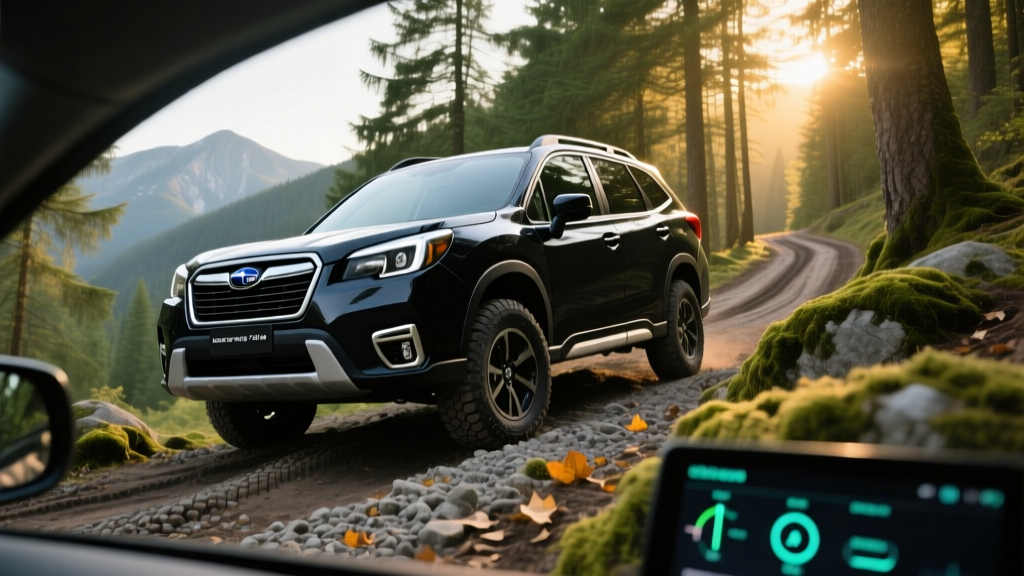
The 2026 Subaru Forester Wilderness Hybrid is a conventional hybrid (HEV) — meaning it recharges its own battery through regenerative braking and the gasoline engine. You never plug it in. For buyers who want the Forester Wilderness's 9.2 inches of ground clearance and dual-function X-MODE but cringe at the non-hybrid Wilderness's fuel economy, this powertrain upgrade delivers meaningful gains without adding range anxiety or charging logistics.
Subaru introduced the hybrid option for the Wilderness trim alongside the broader Forester hybrid lineup for the 2025 model year, using a series-parallel hybrid system adapted from Toyota's hybrid synergy architecture (a result of the Subaru-Toyota partnership). The result is an SUV that can handle Forest Service roads while returning MPG figures closer to a commuter sedan.
HEV vs PHEV: What the Forester Wilderness Hybrid Actually Is
Before examining the numbers, it's essential to understand what this vehicle is — and what it isn't.
Conventional Hybrid (HEV) — This Vehicle
- Battery: Small (~1.1 kWh), self-charging via regen and engine
- Plug-in required: No — you fuel it like any gas car
- Electric-only driving: Brief low-speed assist only (under ~1 mile)
- Tax credit: Not eligible for the federal §30D credit
Plug-In Hybrid (PHEV) — Not This Vehicle
- Battery: Larger (typically 13-20 kWh), charged via plug
- Plug-in required: Yes, for electric-only range (20-40 mi typical)
- Electric-only driving: Full highway-capable EV mode
- Tax credit: May qualify for up to $7,500 under §30D (subject to sourcing/income rules)
The Forester Wilderness Hybrid is firmly in the HEV camp. If you're looking for electric-only commuting, you'll need to look at a PHEV like the Toyota RAV4 Prime or a full BEV. But if you simply want better fuel economy from a vehicle you fuel at any gas station, this is the play.
Fuel Economy: EPA MPG and Real-World Expectations
The headline reason to choose the hybrid Wilderness over the standard turbocharged model is fuel economy. Here's how the EPA rates the 2026 Forester Wilderness Hybrid versus its non-hybrid sibling:
| Model | City MPG | Highway MPG | Combined MPG |
|---|---|---|---|
| 2026 Forester Wilderness Hybrid (HEV) | 35 | 33 | 34 |
| 2026 Forester Wilderness (2.4L Turbo) | 25 | 28 | 26 |
| 2026 Forester Hybrid (non-Wilderness) | 36 | 34 | 35 |
Source: fueleconomy.gov
That 34 MPG combined represents a roughly 30% improvement over the turbocharged Wilderness — a significant gain for a vehicle with 9.2 inches of ground clearance and genuine off-road hardware.
Real-World MPG: What to Actually Expect
Hybrids typically exceed their EPA city rating in stop-and-go traffic because regenerative braking recaptures energy that gas cars waste as heat. In our experience with Subaru's hybrid system:
- City driving: Expect 34-37 MPG (regen thrives here)
- Highway cruising (70-75 mph): Expect 30-33 MPG (less regen benefit, more aero drag from the Wilderness body cladding and all-terrain tires)
- Cold weather (below 30°F): Expect 28-31 MPG combined — the engine runs more frequently to provide cabin heat and maintain battery temperature
- Off-road / low-speed trail driving: 20-25 MPG — the electric motor handles low-speed crawling efficiently, but steep grades demand engine power
With a 16.9-gallon fuel tank, the real-world driving range sits between 470 and 560 miles depending on conditions — enough for most overlanding weekends without a jerry can.
Powertrain: Combined Horsepower and Hybrid System Specs
| Specification | Detail |
|---|---|
| Engine | 2.5L horizontally opposed 4-cylinder (Boxer) |
| Engine Output | 163 hp / 165 lb-ft torque |
| Electric Motor | Permanent magnet synchronous, integrated in transaxle |
| Motor Output | 88 kW (118 hp) / 149 lb-ft torque |
| Combined Net Output | 194 hp |
| Transmission | Lineartronic CVT with electric motor integration |
| Drivetrain | Symmetrical AWD with X-MODE (dual-function) |
| Hybrid Battery | ~1.1 kWh lithium-ion (self-charging, no plug) |
| 0-60 mph (est.) | ~8.5 seconds |
| Towing Capacity | 1,500 lbs (hybrid) vs 3,000 lbs (turbo Wilderness) |
| Ground Clearance | 9.2 inches |
| Base MSRP | $39,995 (est.) |
The combined 194 hp is modest for a compact SUV, but the electric motor's instant torque delivery makes the Forester Wilderness Hybrid feel more responsive off the line than the number suggests. The trade-off is towing: the hybrid powertrain is rated for 1,500 lbs compared to the turbo Wilderness's 3,000 lbs. If you're towing a teardrop trailer or small boat, the standard turbo model remains the better choice.
Hybrid Battery Warranty, Reliability, and Replacement Cost
Subaru Hybrid Battery Warranty
- Hybrid battery coverage: 8 years / 100,000 miles (10 years / 150,000 miles in CARB states including CA, NY, MA, and others)
- Capacity threshold: Warranty covers defects and abnormal degradation; Subaru does not publish a specific capacity-retention percentage guarantee for HEVs (unlike PHEVs/BEVs)
- Powertrain warranty: 5 years / 60,000 miles
Subaru's hybrid system, leveraging Toyota-derived hybrid synergy technology, benefits from one of the most proven hybrid architectures in the world. Toyota's hybrid systems have demonstrated battery longevity exceeding 200,000 miles in models like the Prius and RAV4 Hybrid with minimal degradation, and Subaru's implementation uses similar cell chemistry and thermal management.
Replacement cost if out of warranty: A hybrid battery replacement for the Forester Hybrid is estimated at $2,500-$4,000 (parts and labor) based on comparable Toyota and Subaru hybrid service data. This is far less than a full EV battery replacement and is rarely needed within the vehicle's normal lifespan.
Reliability outlook: Subaru's conventional hybrid system adds an electric motor and small battery to an otherwise familiar powertrain. There's no plug, no high-voltage charging system, and no DC fast-charge hardware to fail. The primary reliability risk factors — head gaskets (historically a Subaru concern) — are mitigated in the modern FB25 engine, and the hybrid system's regenerative braking reduces wear on the friction brakes.
Tax Credits and Incentives: What You Can (and Can't) Claim
Because the Forester Wilderness Hybrid is a conventional HEV — not a plug-in hybrid or battery electric vehicle — it does not qualify for the federal §30D Clean Vehicle Credit. That credit, which can provide up to $7,500 at the point of sale, is reserved for PHEVs and BEVs with sufficient battery capacity and compliant battery sourcing per IRS guidelines.
However, HEV buyers should check for:
- State-level hybrid incentives: Some states (e.g., Colorado, previously) have offered credits for efficient vehicles that include HEVs. These vary by jurisdiction and change frequently — check your state's energy office or department of revenue.
- Insurance discounts: Some insurers offer modest discounts for hybrid vehicles due to lower mileage profiles and safety ratings.
- Employer commuter benefits: A growing number of employers offer incentives for fuel-efficient vehicle purchases.
If the lack of a federal tax credit is a dealbreaker, consider whether a PHEV like the Toyota RAV4 Prime (which qualifies for partial §30D credit depending on battery sourcing) better fits your budget.
Who Should Choose the Forester Wilderness Hybrid vs a Full EV or Gas Car
Choose the Forester Wilderness Hybrid If:
- You drive a mix of city, highway, and unpaved roads and want one vehicle to handle all of it
- You lack reliable access to home or workplace EV charging
- You want meaningfully better fuel economy without changing your fueling habits
- You regularly encounter cold weather where EV range loss (20-40%) is a concern
- You need AWD with genuine off-road capability (X-MODE, 9.2" clearance, all-terrain tires)
Choose a Full EV (BEV) If:
- You have Level 2 home charging and mostly drive under 250 miles per day
- You want the lowest per-mile energy cost (~$0.04-$0.06/mile vs ~$0.13/mile for the hybrid at 34 MPG and $3.50/gal)
- You want to qualify for the $7,500 federal tax credit
- You prioritize instant torque and near-silent operation
Choose the Standard Gas Forester Wilderness If:
- You regularly tow over 1,500 lbs (the turbo model is rated for 3,000 lbs)
- You want maximum power for steep mountain passes at altitude (turbo advantage)
- The hybrid's ~$3,000-$4,000 price premium over the gas model doesn't pencil out for your annual mileage
Pricing and Ownership Economics
The 2026 Forester Wilderness Hybrid carries an estimated base MSRP of $39,995 (including destination), representing roughly a $3,000-$3,500 premium over the non-hybrid Wilderness. Here's how that premium pays back:
| Cost Factor | Wilderness Hybrid (34 MPG) | Wilderness Gas (26 MPG) |
|---|---|---|
| Fuel cost over 5 yrs (75,000 mi at $3.50/gal) | $7,720 | $10,096 |
| Fuel savings vs gas model | $2,376 saved | |
| Estimated maintenance (5 yrs) | ~$2,800 | ~$3,200 |
| Price premium for hybrid | ~$3,000-$3,500 | |
| Net payback period | ~6-8 years (fuel savings alone) | |
The payback period extends beyond the typical ownership window if you're looking at fuel savings alone. However, the hybrid's reduced brake wear (thanks to regen), potential resale-value premium for efficient vehicles, and lower emissions factor into the total value proposition. For high-mileage drivers (15,000+ miles/year), the payback shortens to approximately 4-5 years.
Pros
- 34 MPG combined — 30% better than the turbo Wilderness
- 9.2 inches of ground clearance with dual-function X-MODE retained
- No plug-in required — fuel at any gas station
- Proven Toyota-derived hybrid architecture with strong reliability history
- 8-year/100,000-mile hybrid battery warranty (10/150k in CARB states)
- Standard EyeSight driver-assist (SAE Level 2) with adaptive cruise and lane centering
Cons
- 1,500-lb towing capacity (half of the turbo Wilderness)
- 194 hp combined — adequate but not quick, especially at altitude
- No federal tax credit eligibility (HEV, not PHEV)
- Hybrid premium adds ~$3,000-$3,500 to MSRP with a long payback period
- All-terrain tires and Wilderness body cladding reduce highway MPG vs standard Forester Hybrid
- Small cargo area reduction due to hybrid battery placement (~1 cu ft loss)
Frequently Asked Questions
How many MPG does the Subaru Forester Wilderness Hybrid get?
The EPA rates the 2026 Forester Wilderness Hybrid at 35 city / 33 highway / 34 combined MPG. In real-world driving, expect 34-37 MPG in city traffic (where regenerative braking excels) and 30-33 MPG at sustained highway speeds. Cold weather and off-road use will reduce these figures.
Do I need to plug in the Forester Wilderness Hybrid?
No. This is a conventional hybrid (HEV), not a plug-in hybrid (PHEV). The battery recharges automatically through regenerative braking and the gasoline engine. You fuel it at any gas station exactly as you would a standard car.
Does the Forester Wilderness Hybrid qualify for any tax credit?
No. The federal §30D Clean Vehicle Credit applies only to plug-in hybrids (PHEVs) and battery electric vehicles (BEVs). As a conventional hybrid, the Forester Wilderness Hybrid does not qualify. Check your state's energy office for any state-level hybrid incentives, which vary by jurisdiction.
Is the hybrid battery reliable and what does replacement cost?
Subaru's hybrid system uses Toyota-derived technology with a strong long-term reliability track record. The hybrid battery is warrantied for 8 years/100,000 miles (10 years/150,000 miles in CARB states). Out-of-warranty replacement is estimated at $2,500-$4,000 — far less than a full EV battery and rarely needed within a vehicle's normal lifespan.
Can the Forester Wilderness Hybrid go off-road?
Yes. The hybrid model retains the Wilderness trim's 9.2 inches of ground clearance, dual-function X-MODE (Snow/Dirt and Deep Snow/Mud), all-terrain tires, and enhanced underbody protection. The electric motor's instant torque actually aids low-speed trail crawling. The primary off-road limitation versus the turbo model is reduced towing capacity (1,500 lbs vs 3,000 lbs).
Hybrid vs PHEV vs EV — which is right for me?
Choose the HEV (this vehicle) if you want better MPG with zero charging infrastructure. Choose a PHEV if you can charge at home and want 20-40 miles of electric-only commuting with a gas engine for longer trips. Choose a full EV if you have home charging, drive under 250 miles daily, and want the lowest per-mile cost and federal tax credit eligibility.