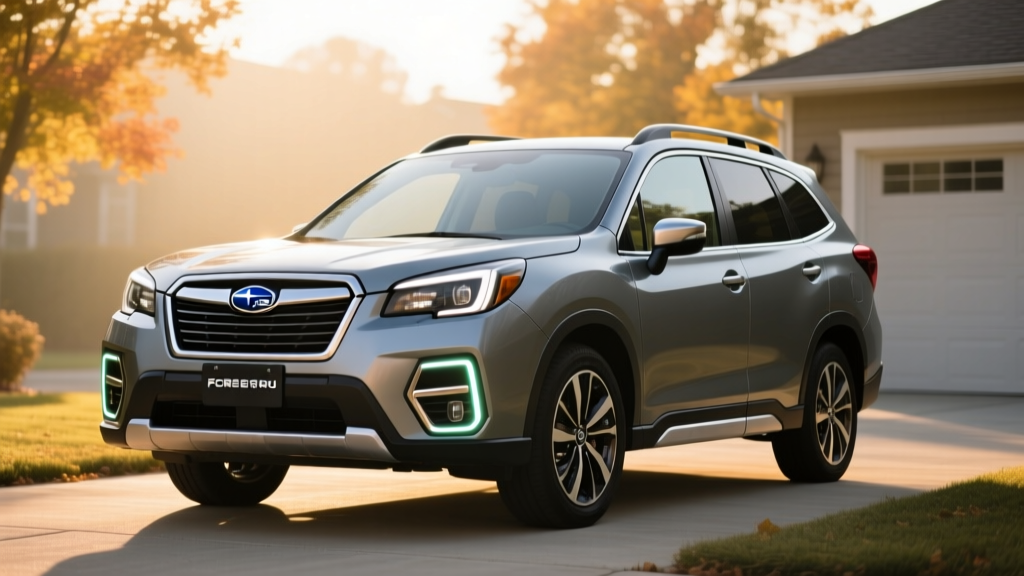
The Reality of the Subaru Forester Hybrid
For buyers searching for Subaru Forester Hybrid problems, the search results can be confusing, often mixing up the older, discontinued Plug-in Hybrid (PHEV) with the modern conventional Hybrid (HEV). As of the 2026 model year, Subaru has leaned heavily into its hybrid strategy to meet CAFE standards, offering a new generation of hybrid powertrains across the lineup. However, early adopters and long-term Subaru owners have raised concerns about battery longevity, transmission behavior, and electrical gremlins.
This guide separates the marketing from the mechanical reality. We analyze the 2026 Subaru Forester Hybrid (HEV)—the model you actually buy at a dealership today without a charging cable—to determine if the fuel savings justify the potential reliability risks.
HEV vs. PHEV: Clearing the Confusion
Many reliability complaints found online stem from the 2019–2023 Forester PHEV (sold in limited states), which had a small 8.8 kWh battery and a complex plug-in system. The current 2026 Forester is a conventional hybrid (HEV).
Conventional Hybrid (HEV)
- Source: Gas engine + regenerative braking.
- Plug-in: No. You only visit gas stations.
- Electric Range: Less than 1 mile (assist only).
Plug-in Hybrid (PHEV)
- Source: Grid electricity + gas engine.
- Plug-in: Yes. Requires Level 2 charging for max benefit.
- Electric Range: Typically 20–40 miles.
If you are looking for a car you can drive on electricity alone for your daily commute, the 2026 Forester Hybrid is not it. It is designed for seamless fuel efficiency, not EV-like behavior.
Fuel Economy: EPA vs. Real-World MPG
The primary reason to choose the Forester Hybrid over the standard gas model is fuel economy. Subaru's 2026 hybrid system pairs a 2.5-liter Boxer engine with an electric motor integrated into the transmission housing.
| Model | City MPG | Highway MPG | Combined MPG |
|---|---|---|---|
| 2026 Forester Hybrid (HEV) | 35 | 33 | 34 |
| 2026 Forester (Gas) | 26 | 33 | 29 |
Real-World Reality: According to data from fueleconomy.gov, hybrid vehicles often exceed their EPA city ratings in stop-and-go traffic because the electric motor handles low-speed propulsion. However, highway MPG may dip below the sticker if you drive aggressively or carry heavy cargo, as the 2.5L engine must work harder to recharge the battery at sustained speeds.
Common Subaru Forester Hybrid Problems
While the 2026 model is relatively new, we can identify potential failure points based on Subaru's recent hybrid history and platform architecture.
1. 12V Battery Drain
Modern Subarus are notorious for 12V auxiliary battery issues. In a hybrid, the 12V battery still powers the computers and accessories. If the car sits for several weeks, the 12V can die, preventing the high-voltage system from engaging. This is a "brick" scenario that requires a jump-start or a specialized reset procedure.
2. Lineartronic CVT Behavior
Subaru uses a modified Lineartronic CVT for its hybrids. Some owners report a "rubber-band" sensation or hesitation during initial acceleration as the system decides whether to use battery power or engine power. While not a mechanical failure, this software tuning is a frequent complaint among drivers used to traditional geared transmissions.
3. Regenerative Braking Feel
The transition between regenerative braking (using the motor to slow down) and friction braking (using the brake pads) can feel inconsistent. In cold weather, when the battery is less receptive to a charge, the brake pedal feel may become firmer or more abrupt than expected.
Battery Lifespan and Replacement Costs
The most significant concern for any hybrid buyer is the high-voltage battery. The 2026 Forester Hybrid uses a lithium-ion pack, typically located under the rear seat or cargo area to preserve interior space.
Battery Warranty Coverage
Subaru provides a hybrid battery warranty of 8 years or 100,000 miles (whichever comes first). In states that follow California Air Resources Board (CARB) regulations, this coverage may extend to 10 years or 150,000 miles.
Replacement Cost: If the battery fails out of warranty, expect a replacement cost between $2,500 and $4,500, including labor. Unlike full EVs with massive 80+ kWh packs, hybrid batteries are much smaller (usually 1–2 kWh usable), making them significantly cheaper to replace.
Powertrain and Performance Specs
| Attribute | 2026 Forester Hybrid Spec |
|---|---|
| Engine | 2.5L 4-Cyl Boxer + Electric Motor |
| Total System Horsepower | ~194 hp |
| Drivetrain | Standard Symmetrical AWD |
| 0-60 MPH | ~7.8 seconds |
| Towing Capacity | 1,500 lbs (Hybrid trims) |
Note that the hybrid system adds weight. While the electric motor provides instant torque for city driving, the 0-60 time is only marginally faster than the gas-only model. The primary benefit is efficiency, not performance.
Pricing and Tax Credit Eligibility
The 2026 Forester Hybrid typically carries a $1,500 to $2,000 premium over equivalent gas trims. With a starting MSRP around $34,000, it remains one of the more affordable AWD hybrids on the market.
Tax Credit Status: Under current IRS §30D rules, conventional hybrids (HEVs) do not qualify for the $7,500 federal Clean Vehicle Credit. That credit is reserved for plug-in vehicles (PHEVs and BEVs) with sufficient battery capacity and critical mineral sourcing. Some local utilities may offer rebates for "efficient vehicles," but buyers should not expect federal tax incentives for this purchase.
Decision Framework: Is It Right for You?
Choose the Forester Hybrid If:
- You drive 15,000+ miles per year and want to reduce fuel stops.
- You live in a hilly area where regenerative braking can shine.
- You need AWD but want better city MPG than a gas SUV.
Consider a Full EV or Gas Car If:
- You want to drive on electricity alone (look at the RAV4 Prime or a BEV).
- You plan to keep the car for 15+ years and fear battery replacement costs.
- You primarily drive long highway routes where hybrid benefits are minimized.
Frequently Asked Questions
Does the Subaru Forester Hybrid need to be plugged in?
No. The 2026 Forester Hybrid is a conventional HEV. It charges its own battery through the gas engine and regenerative braking. You cannot plug it in.
How long does the hybrid battery last?
Most modern lithium-ion hybrid batteries are designed to last 12–15 years or 150,000+ miles before significant degradation occurs. Subaru's warranty covers it for at least 8 years/100,000 miles.
Are there any known issues with the 2026 model year?
Early reports suggest the 12V auxiliary battery remains a weak point in the Subaru ecosystem. Additionally, some owners note that the infotainment system can be slow to respond during the initial "boot-up" of the hybrid system.
Is the Forester Hybrid good in snow?
Yes. Subaru's Symmetrical AWD is standard on all hybrid trims. The instant torque from the electric motor can actually provide slightly better traction control in low-grip scenarios compared to the gas-only model.