The Subaru Crosstrek — known globally and historically as the Hybrid XV — has carved out a loyal following among outdoorsy buyers who want standard all-wheel drive, rugged ground clearance, and decent fuel economy without committing to a full battery-electric vehicle. For 2026, Subaru continues to offer the Crosstrek in both conventional hybrid (HEV) and plug-in hybrid (PHEV) configurations, each serving a distinctly different buyer. This guide breaks down exactly what the Hybrid XV lineup delivers in real-world efficiency, electric-only range, powertrain output, and ownership costs — with the numbers you need to decide whether it belongs in your driveway.
What Is the Hybrid XV? HEV vs PHEV Explained
Before diving into specs, it's critical to understand the two flavors of electrified Crosstrek available:
Conventional Hybrid (HEV)
The Crosstrek Hybrid HEV pairs Subaru's 2.0-liter BOXER engine with a small electric motor integrated into the transmission. It never needs to be plugged in — the battery recharges through regenerative braking and engine operation. Think of it as a more efficient gas car.
Plug-In Hybrid (PHEV)
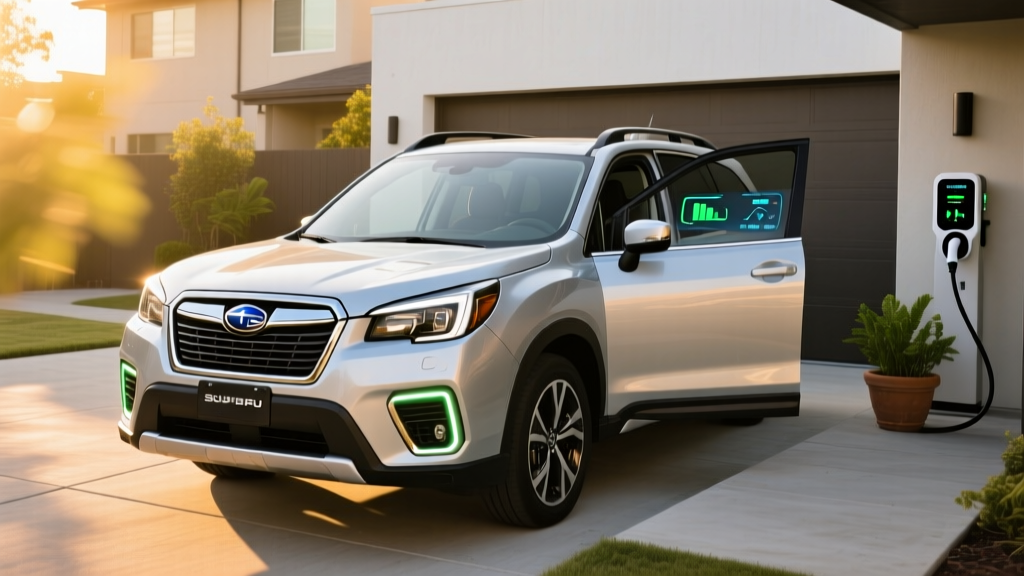
The Crosstrek Hybrid PHEV uses a larger battery pack (8.8 kWh usable) that you can charge from a wall outlet or public charger. It delivers a meaningful electric-only driving range before the gasoline engine kicks in, functioning as an EV for short commutes and a hybrid for longer trips.
If you don't have access to home or workplace charging, the HEV is the practical pick. If you can plug in overnight and your daily commute is under 20 miles, the PHEV unlocks serious fuel savings.
Fuel Economy: EPA MPG and Real-World Results
Efficiency is the headline reason buyers cross-shop the Hybrid XV against competitors like the Toyota RAV4 Hybrid or Honda CR-V Hybrid. Here's how the 2026 Crosstrek Hybrid trims stack up according to EPA data on fueleconomy.gov:
| Powertrain | City MPG | Highway MPG | Combined MPG | MPGe (PHEV EV Mode) |
|---|---|---|---|---|
| Crosstrek Hybrid HEV (AWD) | 34 | 38 | 36 | N/A |
| Crosstrek Hybrid PHEV (AWD) | 33 (hybrid mode) | 36 (hybrid mode) | 35 (hybrid mode) | 90 MPGe |
Real-world note: Subaru's e-BOXER hybrid system, like most Toyota- and Subaru-derived hybrid architectures, tends to exceed EPA city estimates in stop-and-go driving, where regenerative braking recaptures the most energy. Owners consistently report 37–40 MPG in urban commuting with the HEV. Highway cruising at 75+ mph, however, often drops to 32–34 MPG due to the Crosstrek's boxy aerodynamics and 8.7 inches of ground clearance creating drag. In cold weather (below 30°F), expect a 5–10% efficiency penalty as the engine runs more frequently to heat the cabin.
Electric-Only Range and Total Range (PHEV)
For PHEV buyers, the electric-only range is the number that determines daily usability. The 2026 Crosstrek Hybrid PHEV delivers:
- EPA-rated electric-only range: 17 miles
- Total combined range (electric + gasoline): approximately 440 miles
- Usable battery capacity: 8.8 kWh (lithium-ion)
- Top speed in EV mode: 65 mph
Seventeen miles of electric range is modest compared to segment leaders like the Toyota RAV4 Prime (42 miles) or the Hyundai Tucson PHEV (33 miles). It's best suited for short errands, school drop-offs, and commutes under 15 miles round-trip. Anything beyond that, and the gasoline engine takes over seamlessly — you'll never be stranded, but you also won't be doing most of your driving on electrons alone.
PHEV Charging Times
Level 1 (120V household outlet): ~5 hours from empty to full
Level 2 (240V home charger or public station): ~2 hours from empty to full
DC fast charging: Not supported. The Crosstrek PHEV does not have a DC fast-charge port, which is typical for PHEVs in this price class.
Powertrain Output and Performance
Subaru's hybrid systems prioritize efficiency over performance thrills, but the added electric torque does make the Crosstrek Hybrid feel more responsive around town than the base gasoline model.
| Specification | HEV | PHEV |
|---|---|---|
| Engine | 2.0L BOXER 4-cyl | 2.0L BOXER 4-cyl |
| Electric Motor | Integrated (13 HP assist) | Integrated (118 HP) |
| Combined System Output | 154 HP | 148 HP (net combined) |
| Transmission | Lineartronic CVT | Lineartronic CVT |
| Drivetrain | Symmetrical AWD | Symmetrical AWD |
| 0–60 mph | ~8.8 sec | ~9.2 sec |
| Towing Capacity | 1,500 lbs | 1,500 lbs |
| Ground Clearance | 8.7 in | 8.7 in |
The PHEV's slightly lower net horsepower figure versus the HEV may seem counterintuitive, but it reflects how Subaru tunes the powertrain for maximum electric-mode efficiency rather than peak combined output. In practice, the PHEV's instant electric torque makes it feel peppier in city driving, while the HEV has a slight edge in sustained highway passing power.
Pricing, Trims, and Tax Credit Eligibility
The 2026 Crosstrek Hybrid lineup starts at a reasonable premium over the gasoline-only trims:
- Crosstrek Hybrid HEV (Sport trim): $32,495 MSRP
- Crosstrek Hybrid PHEV (Limited trim): $38,495 MSRP
Destination charges add approximately $1,295.
Federal Tax Credit (§30D)
Under current IRS §30D rules, the Crosstrek Hybrid PHEV may qualify for up to $7,500 in federal tax credits — but eligibility is far from guaranteed. Key requirements include:
- MSRP cap: The vehicle must be under $80,000 (SUVs/vans). The Crosstrek PHEV clears this easily.
- Buyer income cap: Modified AGI must not exceed $150,000 (single) or $300,000 (joint).
- Battery sourcing: Critical minerals and battery components must meet escalating domestic-sourcing thresholds. Subaru's supply chain has historically relied on Japanese-sourced battery cells, which may limit the credit to $3,750 or disqualify it entirely depending on current-year sourcing percentages.
- Point-of-sale transfer: Eligible buyers can now apply the credit as an upfront discount at the dealer rather than waiting for tax filing.
The conventional HEV does not qualify for the §30D credit, as it is not a plug-in vehicle. Always verify current eligibility on the IRS Clean Vehicle portal before purchasing.
Battery Warranty, Reliability, and Replacement Cost
Hybrid battery longevity remains a top concern for buyers switching from a conventional gas car. Here's what Subaru covers:
| Component | Warranty |
|---|---|
| Hybrid battery (HEV) | 8 years / 100,000 miles |
| Hybrid battery (PHEV) | 8 years / 100,000 miles (min. 70% capacity retention) |
| Hybrid system components | 8 years / 100,000 miles |
| Powertrain (engine, transmission) | 5 years / 60,000 miles |
Subaru's hybrid battery track record is solid, though it lacks the sheer volume of long-term data that Toyota has accumulated. The e-BOXER system has been in global-market XV/Crosstrek models since 2019, and widespread battery failures have not emerged as a pattern. If a replacement is needed out of warranty, expect a dealer-quoted price of $3,500–$5,500 for the HEV pack and $6,000–$9,000 for the larger PHEV pack — though third-party refurbishment options may reduce that cost by 30–40%.
For reliability data, IIHS ratings and Consumer Reports predicted reliability scores are worth checking closer to your purchase date, as Subaru has made running changes to the hybrid control software.
Who Should Buy the Hybrid XV?
Choose the Crosstrek Hybrid HEV if:
- You don't have access to home or workplace charging
- You want better fuel economy without changing your habits
- You regularly drive in hilly or mountainous terrain where regenerative braking shines
- Your budget is under $35,000
Choose the Crosstrek Hybrid PHEV if:
- Your daily commute is under 20 miles round-trip and you can charge at home
- You want to drive mostly on electricity during the week but need gas flexibility for weekend trips
- You qualify for at least a partial federal or state tax credit
- You value the quiet, smooth EV-mode driving experience
Choose a Full EV (BEV) instead if:
- You have reliable home Level 2 charging and rarely drive more than 250 miles in a single day
- You want to eliminate gasoline costs and maintenance entirely
- You're eligible for the full $7,500 federal credit on a BEV with longer range (e.g., Hyundai Ioniq 5, Tesla Model Y)
Pros
- Standard symmetrical AWD — rare in this segment
- 8.7 inches of ground clearance for trail access
- HEV exceeds EPA city MPG in real-world stop-and-go
- Subaru's EyeSight safety suite is standard
- PHEV offers true EV-mode commuting without range anxiety
Cons
- PHEV electric-only range (17 mi) trails competitors
- No DC fast charging on PHEV
- CVT drones under hard acceleration
- Tax credit eligibility uncertain due to battery sourcing rules
- Cargo space slightly reduced in PHEV due to battery placement
Frequently Asked Questions
How many MPG does the Hybrid XV get?
The 2026 Crosstrek Hybrid HEV achieves an EPA-rated 36 MPG combined (34 city / 38 highway). Real-world city driving often yields 37–40 MPG thanks to regenerative braking. The PHEV returns 35 MPG combined in hybrid mode and 90 MPGe when factoring in electric-only operation.
How far can the Crosstrek PHEV go on electric only?
The EPA rates the 2026 Crosstrek Hybrid PHEV at 17 miles of electric-only range. In mild weather at city speeds, some owners stretch this to 19–20 miles; highway driving at 70 mph or cold-weather operation can reduce it to 13–15 miles.
Hybrid vs PHEV vs EV — which fits my lifestyle?
If you can't charge at home, the HEV is the simplest upgrade from a gas car. If you can charge at home and commute under 20 miles daily, the PHEV gives you EV-like running costs on weekdays and gas flexibility on weekends. If you have home charging, drive under 250 miles daily, and want to eliminate gas entirely, a full BEV offers lower long-term operating costs and stronger tax incentives.
Is the Hybrid XV reliable and what does battery replacement cost?
Subaru's e-BOXER hybrid system has proven reliable since its 2019 global introduction, with no widespread battery failure patterns. The hybrid battery is warranted for 8 years/100,000 miles. Out-of-warranty replacement runs $3,500–$5,500 for the HEV and $6,000–$9,000 for the PHEV, with refurbished options available at lower cost.
Does the Hybrid XV qualify for any tax credit?
The PHEV version may qualify for up to $7,500 under the federal §30D Clean Vehicle Credit, subject to buyer income limits, MSRP caps, and battery-sourcing requirements. The HEV does not qualify for the federal credit. Some states offer additional rebates for PHEVs — check your state energy office or the AFDC state incentives database for current programs.
Can I tow with the Crosstrek Hybrid?
Yes. Both the HEV and PHEV are rated for 1,500 pounds of towing capacity — adequate for a small utility trailer, kayak rack, or lightweight camper, but not suited for larger boat or travel trailers.