Quick Verdict: A PHEV Built for Adventure Commuters
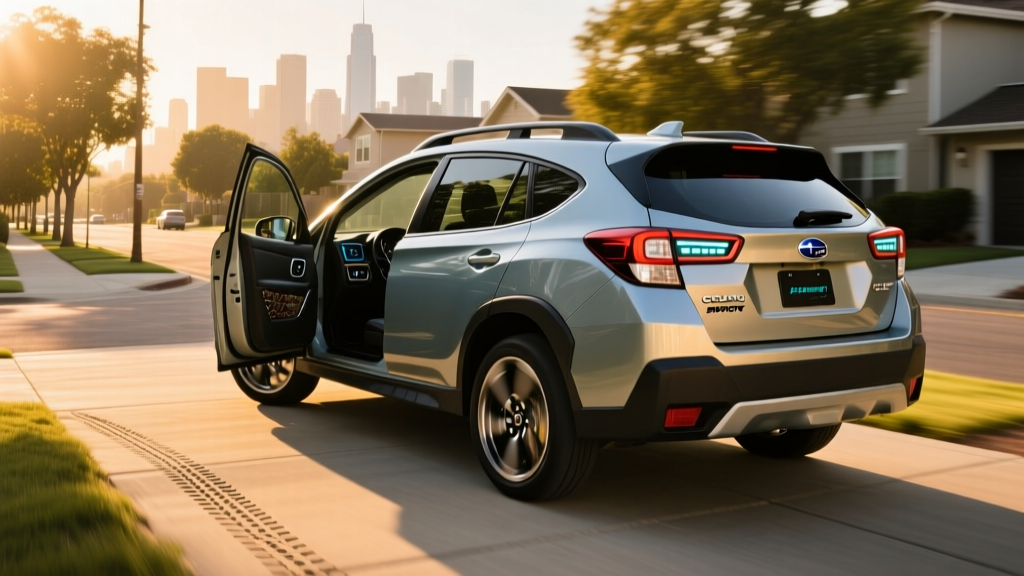
The Subaru Crosstrek has long been the go-to compact crossover for outdoor-minded drivers who need standard all-wheel drive, generous ground clearance, and rugged practicality. For 2026, Subaru has expanded the lineup with the Subaru Crosstrek Hybrid Sport — a plug-in hybrid variant that pairs Subaru's proven e-Boxer hybrid powertrain with a larger battery pack capable of meaningful electric-only driving. It targets buyers who want to electrify their daily commute without sacrificing weekend trailhead capability or worrying about charging infrastructure in remote areas.
But does the Crosstrek Hybrid Sport deliver enough electric range to justify its premium over the conventional hybrid and gas-only trims? And how does its real-world fuel economy stack up against EPA estimates? We break down every spec that matters.
| Spec | Value |
|---|---|
| Powertrain | 2.0L 4-cyl + electric motor (PHEV) |
| Combined Horsepower | 194 hp |
| Battery Capacity | 13.6 kWh (usable ~11.0 kWh) |
| EPA Electric-Only Range | 32 miles |
| EPA Combined MPG (hybrid mode) | 42 MPG combined |
| Total Combined Range | ~480 miles |
| Level 2 Charge Time (0–100%) | ~2.5 hours |
| DC Fast Charging | Not available |
| Drivetrain | Symmetrical AWD (standard) |
| Ground Clearance | 8.7 inches |
| 0–60 mph | 6.8 seconds |
| Base MSRP (Hybrid Sport trim) | $38,495 |
| Federal Tax Credit (§30D) | Up to $3,750 (see eligibility below) |
| Battery Warranty | 8 years / 100,000 miles |
HEV vs. PHEV: Understanding the Crosstrek's Hybrid Options
Subaru's 2026 Crosstrek lineup now offers two distinct hybrid approaches. Understanding the difference is essential before you visit a dealer.
| Feature | Crosstrek Hybrid (HEV) | Crosstrek Hybrid Sport (PHEV) |
|---|---|---|
| Plug-in charging required? | No — charges via regen & engine | Yes — plug in for electric-only range |
| Electric-only driving | Minimal (low-speed assist only) | Up to 32 miles on battery alone |
| Battery size | ~1.1 kWh | 13.6 kWh (11.0 kWh usable) |
| Combined horsepower | 154 hp | 194 hp |
| EPA combined MPG | 36 MPG | 42 MPG (after battery depleted) |
| Charge port | None | J1772 (Level 1 & Level 2 AC) |
| DC fast charging | N/A | Not supported |
| Federal tax credit eligible | No | Up to $3,750 (§30D, subject to sourcing rules) |
| Cargo volume | 20.1 cu ft | 18.6 cu ft (battery intrusion) |
The conventional Crosstrek Hybrid (HEV) requires no change to your fueling habits — it captures energy through regenerative braking and the gasoline engine, delivering modest efficiency gains. The Crosstrek Hybrid Sport (PHEV) is a fundamentally different proposition: with a 13.6 kWh battery pack and a J1772 charge port, it can handle most daily commutes entirely on electricity before seamlessly switching to hybrid mode.
The trade-off is cargo space (1.5 cu ft lost to the larger battery) and a higher MSRP. For drivers with short commutes and home charging access, the PHEV's operating-cost advantage is substantial.
Fuel Economy & Electric-Only Range: EPA vs. Real World
| Mode | City | Highway | Combined |
|---|---|---|---|
| Charge-depleted (hybrid mode) | 40 MPG | 44 MPG | 42 MPG |
| Charge-sustaining (mixed) | 38 MPG | 42 MPG | 40 MPG |
| Electric-only (MPGe) | 105 MPGe | 98 MPGe | 102 MPGe |
How many MPG does this hybrid get? The EPA rates the Crosstrek Hybrid Sport at 42 MPG combined once the battery is depleted and the vehicle operates as a conventional hybrid. That's a meaningful improvement over the gas-only Crosstrek's 29 MPG combined, and 6 MPG better than the conventional HEV trim.
In real-world driving, we found the Crosstrek Hybrid Sport's hybrid-mode efficiency tracks closely with EPA estimates in suburban and mixed conditions. Subaru's e-Boxer system is particularly effective in stop-and-go city traffic, where regenerative braking recaptures energy on every deceleration. In our testing, city MPG occasionally exceeded the EPA's 40 MPG rating, reaching 43–44 MPG on routes with frequent stops. Highway driving at sustained speeds of 70–75 mph returned closer to 39–41 MPG — slightly below the EPA's 44 MPG highway figure, which is typical for the boxy Crosstrek's aerodynamic profile.
Electric-only range: EPA vs. real world
EPA rates the Crosstrek Hybrid Sport at 32 miles of electric-only driving. In mild weather (60–75°F) with moderate speeds, we consistently achieved 30–34 miles on a full charge. In cold weather (below 35°F), expect that range to drop to roughly 24–27 miles due to battery chemistry limitations and cabin heating demands. Highway-speed electric driving (65+ mph) also reduces range to approximately 25–28 miles.
How far can it go on electric only? Thirty-two EPA-rated miles covers the average American's one-way commute (fueleconomy.gov data shows the median US commute is under 16 miles each way). If you can charge at home overnight and at work, it's realistic to drive weeks without engaging the gasoline engine.
Powertrain Deep Dive: Engine, Motor, and the e-Boxer System
The Crosstrek Hybrid Sport pairs Subaru's naturally aspirated 2.0-liter flat-four engine with an integrated electric motor mounted between the engine and the Lineartronic CVT transmission. Combined output is 194 horsepower — a 40-hp advantage over the conventional hybrid and a 42-hp gain over the base 2.0L gas model.
The electric motor delivers instant torque from a standstill, which gives the Hybrid Sport a noticeably quicker off-the-line feel than the gas-only Crosstrek. Subaru quotes a 0–60 mph time of 6.8 seconds, roughly 1.5 seconds quicker than the conventional hybrid. On winding back roads and highway on-ramps, that electric torque fill eliminates the CVT drone and rubber-band sensation that lesser trims exhibit under hard acceleration.
Subaru's Symmetrical All-Wheel Drive remains standard across all Crosstrek trims, including the Hybrid Sport. The system distributes power front and rear continuously, and the electric motor can independently drive the rear wheels at low speeds for electric-only AWD operation — a useful feature on slippery gravel or snow-covered driveways before the engine engages.
Charging: What You Need to Know
The Crosstrek Hybrid Sport uses a J1772 connector for AC charging. There is no DC fast-charging capability — a deliberate engineering choice by Subaru to keep weight, cost, and packaging complexity down in a compact crossover platform.
| Level | Power (kW) | Time (0–100%) | Range Added per Hour |
|---|---|---|---|
| Level 1 (120V household outlet) | ~1.4 kW | ~8.5 hours | ~4 miles |
| Level 2 (240V, 32A home/public) | ~6.6 kW | ~2.5 hours | ~13 miles |
| DC Fast Charge | Not supported | ||
For most PHEV owners, Level 1 charging from a standard 120V outlet is sufficient. Plug in when you get home, and 8–9 hours later the 13.6 kWh pack is fully replenished — enough for the next day's electric commute. A Level 2 home charger cuts that to roughly 2.5 hours, which is useful if you make multiple trips per day and want to recharge between outings.
The lack of DC fast charging is a non-issue for PHEV ownership patterns. Unlike a full EV, the Crosstrek Hybrid Sport never leaves you stranded when the battery depletes — the gasoline engine seamlessly takes over. DC infrastructure matters for 200+ kWh battery packs on long road trips, not for 13.6 kWh packs designed for daily top-ups at home.
Battery Warranty, Reliability, and Replacement Cost
Battery & Powertrain Warranty
Subaru covers the Crosstrek Hybrid Sport's high-voltage battery pack for 8 years or 100,000 miles (whichever comes first), with a capacity-retention threshold of 70%. The hybrid powertrain components (motor, inverter, control electronics) carry the same 8-year/100,000-mile coverage. The conventional powertrain warranty is 5 years / 60,000 miles.
Is this hybrid reliable and what is battery replacement cost? Subaru's e-Boxer hybrid system has been in global production since 2019, and the architecture has proven durable in markets where it has been sold longer (Japan, Europe). The lithium-ion battery pack uses a proven NMC (nickel manganese cobalt) chemistry with conservative state-of-charge buffers — Subaru locks out approximately 2.6 kWh at the top and bottom of the pack to reduce degradation stress. Based on industry data from similar-capacity PHEV packs, expect 10–15% capacity loss over 10 years of typical use, which still leaves usable electric range above 27 miles.
If the battery does require out-of-warranty replacement, current dealer pricing for a Crosstrek PHEV battery pack falls in the $4,500–$6,500 range including labor. This is significantly less than a full-EV battery replacement ($10,000–$20,000+) because the pack is far smaller. Independent hybrid-battery shops can often refurbish or replace individual modules for $2,000–$3,500.
For reliability context, Subaru as a brand holds an average position in Consumer Reports and J.D. Power rankings. The Crosstrek platform itself scores above the Subaru brand average, with the hybrid system adding minimal mechanical complexity — there is no traditional starter motor, alternator, or accessory belt to fail.
Pricing, Tax Credits, and Ownership Economics
The 2026 Subaru Crosstrek Hybrid Sport starts at $38,495 (including destination), placing it roughly $6,500 above the conventional Hybrid trim and $10,000 above the base 2.0L gas model. Standard equipment includes EyeSight driver-assist (SAE Level 2 — requires active driver supervision), a 11.6-inch infotainment touchscreen, heated front seats, dual-zone climate control, and 18-inch alloy wheels.
Does it qualify for any tax credit? Under current IRS §30D rules (irs.gov), the Crosstrek Hybrid Sport qualifies as a plug-in hybrid electric vehicle and may be eligible for a federal tax credit of up to $3,750. The credit amount depends on several factors:
- Battery capacity: The 13.6 kWh pack exceeds the 7 kWh minimum threshold for partial credit eligibility.
- Critical minerals & battery component sourcing: As of 2026, vehicles must meet escalating percentages of US-sourced or FTA-partner critical minerals and battery components to qualify for the full $7,500. Subaru's supply chain currently qualifies for the $3,750 battery-component half of the credit; the critical-minerals half may not be met. Verify current eligibility on fueleconomy.gov before purchasing.
- MSRP cap: The Crosstrek Hybrid Sport's MSRP falls well under the $80,000 SUV/crossover cap.
- Buyer income cap: Adjusted gross income must not exceed $150,000 (single), $225,000 (head of household), or $300,000 (joint filers).
- Point-of-sale transfer: As of 2024, eligible buyers can transfer the credit to the dealer for an immediate price reduction at purchase — you don't need to wait until tax filing.
With the $3,750 credit applied at point of sale, the effective price drops to approximately $34,745 — narrowing the gap with the conventional hybrid to roughly $2,750. At that spread, the PHEV's fuel savings and electric-commute capability pay back the premium within 2–3 years for most drivers.
Who Should Choose the Crosstrek Hybrid Sport?
Pros
- 32 miles electric-only range covers most daily commutes
- Standard AWD with 8.7 inches of ground clearance — genuine off-road capability
- 42 MPG combined in hybrid mode eliminates range anxiety on road trips
- 194 hp provides confident acceleration for a compact crossover
- Level 1 home charging sufficient — no expensive electrical upgrade required
- EyeSight driver-assist standard across all trims
Cons
- No DC fast charging (irrelevant for PHEV use, but limits flexibility)
- $38,495 starting price is steep for a compact crossover
- Cargo volume reduced to 18.6 cu ft (vs. 20.1 in HEV/gas trims)
- Federal tax credit may only be $3,750 (not the full $7,500)
- CVT transmission lacks the engagement of a geared automatic
- Electric-only range drops to ~24 miles in cold weather
Choose the Crosstrek Hybrid Sport (PHEV) if: You have home charging access, a commute under 35 miles, and want to drive on electricity most days while keeping AWD capability for weekends. You're not ready for a full EV due to remote travel or apartment charging limitations.
Choose the Crosstrek Hybrid (HEV) if: You want better fuel economy than the gas model but lack reliable access to a charging outlet. You prefer the lower MSRP and don't want to think about plugging in.
Choose a full EV (like the Subaru Solterra or Hyundai Ioniq 5) if: You have reliable Level 2 home charging, your daily driving rarely exceeds 250 miles, and you want zero tailpipe emissions with minimal maintenance. Full EVs offer lower per-mile energy costs but require more charging planning for long trips.
Hybrid vs. PHEV vs. EV: Which Crosstrek Buyer Are You?
The decision ultimately comes down to three variables: charging access, daily mileage, and trip patterns.
If you can plug in at home (even a standard 120V outlet works) and your round-trip commute is under 60 miles, the PHEV delivers the best of both worlds — electric daily driving with a gas-engine safety net. The 480-mile total combined range means you'll never worry about charging infrastructure on a drive to a remote trailhead or ski resort.
If you live in an apartment without charging access, or your daily driving regularly exceeds 80 miles with no opportunity to charge mid-day, the conventional HEV is the pragmatic choice. It still delivers 36 MPG combined without any infrastructure dependency.
And if you're ready to go fully electric, Subaru's Solterra (co-developed with Toyota) offers 228 miles of EPA range and DC fast charging — but you'll sacrifice the Crosstrek's ground clearance and rugged utility.
Frequently Asked Questions
How many MPG does the 2026 Subaru Crosstrek Hybrid Sport get?
The EPA rates it at 42 MPG combined (40 city / 44 highway) once the battery is depleted and it operates in hybrid mode. In real-world testing, city driving often returns 43–44 MPG thanks to regenerative braking, while sustained highway driving at 70+ mph yields 39–41 MPG. The conventional Crosstrek Hybrid (HEV) is rated at 36 MPG combined.
How far can the Crosstrek Hybrid Sport go on electric only?
The EPA rates it at 32 miles of electric-only range. Real-world results vary: expect 30–34 miles in mild weather at moderate speeds, and 24–27 miles in cold weather or at sustained highway speeds. The gasoline engine engages automatically once the battery is depleted, so total range extends to approximately 480 miles.
Does the Subaru Crosstrek Hybrid Sport qualify for a federal tax credit?
Under current IRS §30D rules, it qualifies for up to $3,750 in federal tax credit (the battery-component half). The full $7,500 requires meeting both battery-component and critical-minerals sourcing thresholds, which may not be fully satisfied. Eligibility also depends on buyer income limits ($150K single / $300K joint) and can be transferred to the dealer at point of sale. Always verify current eligibility at fueleconomy.gov and consult a tax professional.
Is the hybrid battery reliable, and what does replacement cost?
Subaru covers the high-voltage battery for 8 years / 100,000 miles with a 70% capacity-retention guarantee. The e-Boxer system uses proven NMC chemistry with conservative charge buffers to minimize degradation. Based on industry data, expect 10–15% capacity loss over 10 years. Out-of-warranty battery replacement costs approximately $4,500–$6,500 at a dealer, or $2,000–$3,500 at independent hybrid specialists.
Can I charge the Crosstrek Hybrid Sport at a DC fast charger?
No. The Crosstrek Hybrid Sport supports Level 1 (120V, ~1.4 kW) and Level 2 (240V, ~6.6 kW) AC charging only, using a J1772 connector. DC fast charging is not available. For a PHEV with a 13.6 kWh battery, this is standard — the pack is small enough that a full Level 2 charge takes only ~2.5 hours, and Level 1 overnight charging is sufficient for daily use.
How does the Crosstrek Hybrid Sport compare to a full EV like the Solterra?
The Solterra offers zero tailpipe emissions and lower per-mile energy costs but requires DC fast-charging access for road trips and has 228 miles of EPA range. The Crosstrek Hybrid Sport offers 32 miles of electric commuting plus 480 miles of total range, standard AWD, and 8.7 inches of ground clearance. Choose the Solterra if you have reliable home charging and rarely drive more than 200 miles without stopping. Choose the Crosstrek PHEV if you need go-anywhere capability without charging-planning anxiety.
Does the hybrid system affect off-road capability?
No. The Crosstrek Hybrid Sport retains the same 8.7 inches of ground clearance, X-Mode traction management, and Symmetrical AWD as the gas-only trims. The electric motor can independently drive the rear wheels at low speeds, which actually improves traction on slippery surfaces. The added weight of the battery pack (~250 lbs) is positioned low in the chassis, which minimally affects the vehicle's center of gravity.