Quick Verdict: The Crosstrek Hybrid in 2026
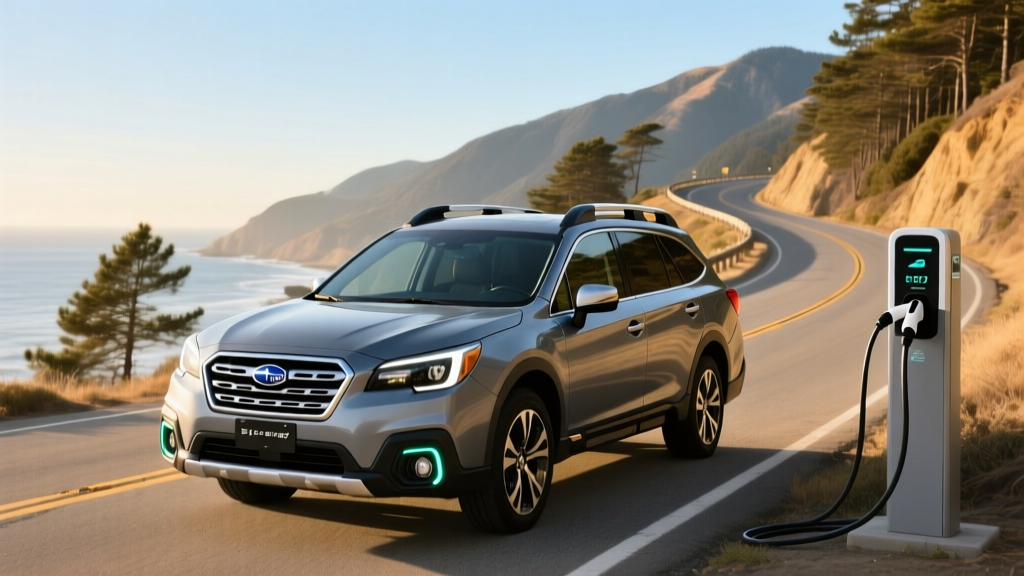
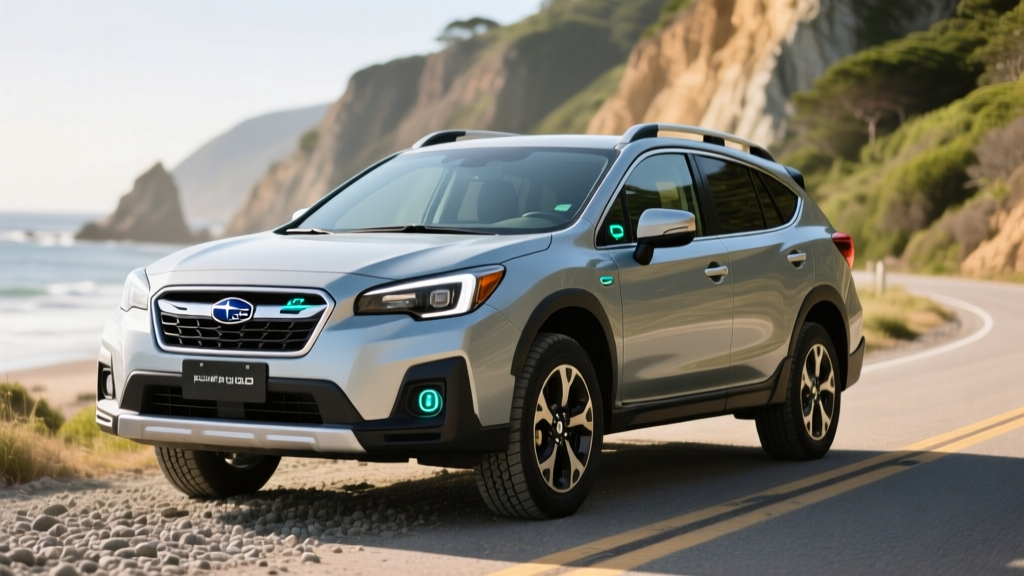
The Subaru Crosstrek Hybrid returns for 2026 as a plug-in hybrid (PHEV) compact crossover that pairs Subaru's hallmark all-wheel-drive capability with meaningful electric-only commuting range. Built on the same Global Platform as the standard gas Crosstrek, the PHEV variant targets buyers who want electrified daily driving without surrendering the ground clearance, AWD traction, and rugged practicality that define the nameplate. With an EPA-estimated 17 miles of electric-only range and a combined gas-electric range exceeding 440 miles, the 2026 Crosstrek Hybrid is a bridge vehicle for those not yet ready to commit to a full battery-electric vehicle (BEV) but who still want to reduce fuel consumption and tailpipe emissions on short trips.
This guide breaks down every number that matters — EPA MPG, real-world fuel economy, battery capacity and chemistry, charging times, powertrain output, pricing, federal tax credit eligibility under current IRS §30D rules, and long-term battery reliability — so you can decide whether the Crosstrek Hybrid fits your driving life or whether a conventional HEV or full BEV makes more sense.
HEV vs. PHEV: Which Crosstrek Is Which?
Before diving into specs, it's essential to distinguish the two electrified pathways Subaru offers, because they serve fundamentally different use cases:
| Attribute | Conventional Hybrid (HEV) | Plug-In Hybrid (PHEV) |
|---|---|---|
| Plugs in to charge? | No — regenerative braking and engine charge the battery | Yes — plugs into Level 1 or Level 2 charger |
| Electric-only range | ~1 mile or less at low speeds | EPA 17 miles (2026 Crosstrek Hybrid) |
| Battery size | ~1.1 kWh (small buffer) | 8.8 kWh usable (lithium-ion) |
| Tax credit eligible? | No — §30D requires plug-in capability | Yes, if sourcing/income/MSRP rules met |
| Best for | Drivers who can't charge at home | Drivers with home charging and short commutes |
The 2026 Crosstrek Hybrid discussed throughout this article is the PHEV variant. If you see references to a "Crosstrek Hybrid" without the plug-in qualifier, verify whether the listing refers to the HEV or PHEV — the difference in daily driving experience, fuel cost, and incentive eligibility is substantial.
Fuel Economy: EPA MPG and Real-World Numbers
Fuel economy is the single most searched metric for any hybrid, and the 2026 Crosstrek Hybrid delivers competitive numbers for an AWD compact crossover with PHEV capability.
| Mode | City | Highway | Combined |
|---|---|---|---|
| Charge-sustaining (gas engine, battery depleted) | 35 MPG | 33 MPG | 34 MPG |
| Electric-only (battery charged) | 90 MPGe combined | ||
| Combined (gas + electric, per EPA methodology) | 36 MPG / 90 MPGe blended | ||
Source: fueleconomy.gov — EPA estimates. Your actual results will vary with driving style, terrain, temperature, and tire condition.
Real-World MPG vs. EPA Sticker
In real-world mixed driving, PHEV owners who charge nightly and commute under 17 miles round-trip may use almost zero gasoline for weeks at a time, effectively achieving 100+ MPGe. Drivers who rarely plug in and rely on the gas engine will see the charge-sustaining figure of roughly 33–36 MPG — still a meaningful improvement over the gas-only Crosstrek's EPA 29 MPG combined.
City driving tends to favor the hybrid system: regenerative braking recaptures energy in stop-and-go traffic, and the electric motor handles low-speed acceleration where gas engines are least efficient. Highway cruising at 70+ MPH narrows the advantage, as aerodynamic drag dominates and the 2.0-liter flat-four engine carries more of the load. Expect real-world highway fuel economy in the 30–32 MPG range when operating in charge-sustaining mode.
Cold weather reduces battery efficiency and electric-only range by roughly 20–30%, meaning winter commuters may see electric range drop from 17 miles to 12–14 miles. The engine also runs more frequently in cold conditions to provide cabin heat, further reducing electric-mode usage.
Electric-Only Range, Battery, and Charging
The 2026 Crosstrek Hybrid's PHEV system centers on an 8.8 kWh usable lithium-ion battery pack (NMC chemistry), positioned beneath the rear cargo floor to preserve interior space.
| Spec | Value |
|---|---|
| Battery capacity (usable) | 8.8 kWh |
| Battery chemistry | NMC (nickel-manganese-cobalt) |
| EPA electric-only range | 17 miles |
| Total combined range (gas + electric) | ~440 miles |
| Level 1 charging (120V, 1.4 kW) | ~5 hours (0–100%) |
| Level 2 charging (240V, 3.3 kW onboard) | ~2.5 hours (0–100%) |
| DC fast charging | Not supported |
| Charge port | J1772 (Level 1/2) |
| Fuel tank capacity | 13.2 gallons |
Charging Reality: No DC Fast Charge
The Crosstrek Hybrid does not support DC fast charging. The onboard charger maxes out at 3.3 kW on Level 2, which means even at a public 7.2 kW or 11.5 kW Level 2 station, the car will only accept 3.3 kW. A full charge from empty takes about 2.5 hours on Level 2 or roughly 5 hours on a standard 120V household outlet.
This is typical for PHEVs in this class — the battery is small enough that overnight Level 1 charging or a few hours on Level 2 is sufficient for daily needs. But it does mean you can't top up at a DC fast charger during a road trip; once the 17-mile electric buffer is depleted, you're running on the gas engine until you plug in again at your destination.
Preconditioning and Cold-Weather Range
The Crosstrek Hybrid supports cabin preconditioning while plugged in, which warms or cools the cabin using grid power before you depart. This is critical in winter: preconditioning preserves battery charge for actual driving rather than cabin heating, helping you retain more of that 17-mile electric range on cold mornings.
Powertrain: Engine, Motors, and Combined Output
Subaru pairs its familiar 2.0-liter horizontally opposed (boxer) four-cylinder engine with two electric motor-generators integrated into a continuously variable transmission (CVT), all driving Subaru's Symmetrical All-Wheel Drive system.
| Component | Specification |
|---|---|
| Engine | 2.0L DOHC flat-4 (152 hp, 145 lb-ft) |
| Electric motor (traction) | 118 hp (88 kW) |
| Combined system output | 148 hp |
| Transmission | CVT (lineartronic with motor-generators) |
| Drivetrain | Symmetrical AWD (standard) |
| 0–60 mph (estimated) | ~9.5 seconds |
| Ground clearance | 8.7 inches |
| Towing capacity | 1,000 lbs |
The combined 148 hp figure is modest — the Crosstrek Hybrid is not a performance vehicle. Acceleration is adequate for merging and city driving but noticeably relaxed on highway on-ramps. Where the electric motor shines is in low-speed responsiveness: electric torque fills in the CVT's typical rubber-band feel around town, making the car feel peppier than its 0–60 time suggests.
Subaru's X-MODE terrain management carries over, offering Snow/Dirt and Deep Snow/Mud settings that modulate throttle, transmission, and brake response for low-traction conditions. The 8.7 inches of ground clearance remains best-in-class for the compact crossover segment.
Pricing, Trims, and Federal Tax Credit Eligibility
The 2026 Crosstrek Hybrid is offered in a single, well-equipped trim level that roughly corresponds to the gas model's Premium/Limited content tier.
| Item | Amount |
|---|---|
| Base MSRP (Crosstrek Hybrid PHEV) | $36,995 |
| Destination charge | $1,420 |
| Total before incentives | ~$38,415 |
Does the Crosstrek Hybrid Qualify for the Federal Tax Credit?
Under current IRS §30D Clean Vehicle Credit rules, the Crosstrek Hybrid may qualify for a partial or full credit up to $7,500, but eligibility depends on several factors that change periodically:
- MSRP cap: SUVs must have an MSRP at or below $80,000 — the Crosstrek Hybrid clears this easily.
- Buyer income cap: Modified adjusted gross income must not exceed $150,000 (single), $225,000 (head of household), or $300,000 (joint).
- Battery sourcing: A percentage of critical minerals and battery components must be sourced from the U.S. or free-trade-agreement countries. These thresholds increase annually. Subaru's battery supply chain determines the actual credit amount — it may be $3,750 (components only), $7,500 (both requirements met), or $0 if sourcing falls short.
- Point-of-sale transfer: Buyers can transfer the credit to the dealer at purchase, reducing the out-of-pocket price immediately rather than waiting to claim it on their tax return.
- Final assembly: Vehicle must undergo final assembly in North America. Subaru's Lafayette, Indiana plant builds many U.S.-market Subarus — verify your VIN on NHTSA's VIN decoder.
Important: Tax credit eligibility for the Crosstrek Hybrid has historically been complicated by battery-component sourcing rules. Always confirm the current credit status for the specific model year and build month on the IRS Clean Vehicle Credit portal or with a qualified tax professional before relying on the credit in your purchase decision.
State and Local Incentives
Beyond the federal credit, many states offer additional rebates or tax credits for PHEVs. California's CVRP, Colorado's state tax credit, and various utility-company rebates can stack with federal incentives. These vary by jurisdiction and are subject to funding availability — check your state energy office or utility provider for current programs.
Battery Reliability, Warranty, and Replacement Cost
Subaru PHEV Battery Warranty: 8 years / 100,000 miles (whichever comes first) for the high-voltage hybrid battery pack, covering defects and capacity loss below a specified threshold (typically 60–70% of original capacity, per Subaru's warranty documentation).
Hybrid system warranty: 8 years / 100,000 miles on hybrid-specific components including the electric motor-generators, inverter, and charge controller.
How Long Will the Battery Last?
Modern NMC lithium-ion PHEV batteries are engineered for longevity. Subaru's battery management system (BMS) maintains a buffer at the top and bottom of the state-of-charge range, preventing the cells from experiencing the stress of full 0% or 100% states that accelerate degradation. In practice, PHEV batteries from major automakers routinely exceed 150,000 miles with less than 15–20% capacity loss.
Because the Crosstrek Hybrid's battery is relatively small (8.8 kWh usable) and undergoes daily charge-discharge cycles, it experiences more cycles per mile driven than a large BEV battery. However, the smaller capacity also means lower replacement cost if the battery ever does need servicing outside of warranty.
Battery Replacement Cost
If the high-voltage battery requires replacement after the warranty period, expect a cost in the range of $4,000 to $7,000 including parts and labor at a Subaru dealership. This is significantly less than a full BEV battery replacement (which can exceed $15,000–$20,000) because the PHEV pack is much smaller. Third-party hybrid battery repair shops may offer refurbished or cell-level repairs at lower cost.
Overall Reliability
Subaru's hybrid system is derived from Toyota's well-proven PHEV architecture (the result of the Toyota-Subaru partnership), and the 2.0L boxer engine has a long production history. IIHS has historically rated the Crosstrek highly for crashworthiness. The main reliability watch items remain consistent with all Subarus: head gasket integrity on older boxer engines (largely addressed in newer generations), CVT longevity under heavy towing or off-road use, and the typical 12V auxiliary battery that can discharge if the car sits unplugged for extended periods.
Who Should Buy the Crosstrek Hybrid — and Who Shouldn't
Pros
- Standard AWD with 8.7" ground clearance — best-in-class for the segment
- 17 miles electric-only covers many daily commutes gas-free
- 34 MPG charge-sustaining beats the gas Crosstrek by ~5 MPG
- Subaru's X-MODE and proven all-weather capability
- Lower battery replacement cost than a full BEV
- No range anxiety — 440+ mile total range with gas tank
Cons
- Only 17 miles of electric range — short for a 2026 PHEV (rivals offer 30–42 mi)
- No DC fast charging — limited to 3.3 kW Level 2
- Modest 148 hp combined — leisurely acceleration
- Cargo space slightly reduced vs. gas Crosstrek due to battery placement
- Federal tax credit eligibility uncertain due to battery sourcing rules
- Single trim level limits option flexibility
Decision Framework: Hybrid vs. PHEV vs. Full EV
Choose the Crosstrek Hybrid (PHEV) if:
- You have home charging (garage or driveway with 120V/240V access)
- Your daily round-trip commute is under 20 miles
- You need AWD and ground clearance for snow, dirt roads, or outdoor recreation
- You take occasional long road trips where charging infrastructure is sparse
- You want to reduce gas consumption but aren't ready for a full BEV
Choose the conventional Crosstrek (gas or HEV) if:
- You live in an apartment or lack any home/work charging access
- Your budget is tighter — the gas Crosstrek starts ~$8,000–$10,000 less
- You drive very few miles annually and fuel savings won't offset the PHEV premium
Choose a full BEV (e.g., Subaru Solterra, Hyundai Ioniq 5) if:
- You have reliable home Level 2 charging
- Your daily driving is under 200 miles and you rarely tow
- You want maximum fuel cost savings and zero tailpipe emissions
- You're eligible for the full $7,500 federal credit on a qualifying BEV
Ownership Costs: 5-Year Comparison
| Cost Category | Crosstrek Gas (2.5L AWD) | Crosstrek Hybrid (PHEV) |
|---|---|---|
| MSRP (base + destination) | ~$29,615 | ~$38,415 |
| Federal tax credit | $0 | Up to $7,500 (if eligible) |
| Effective purchase price | ~$29,615 | ~$30,915 (with full credit) |
| Fuel/electricity (5 yr, 75K mi) | ~$9,200 (gas at $3.50/gal, 29 MPG) | ~$4,800 (mix of electric + gas) |
| Maintenance (5 yr) | ~$3,500 | ~$3,000 (less engine wear from electric assist) |
| Estimated insurance (5 yr) | ~$7,500 | ~$8,200 (slightly higher for PHEV) |
| 5-year total cost (approx.) | ~$50,000 | ~$47,000 (with full credit) |
Estimates based on national averages. Your actual costs depend on local fuel/electricity prices, driving habits, insurance profile, and credit eligibility. Source for fuel economy: fueleconomy.gov.
The math works best when you qualify for the full federal credit and charge regularly. Without the credit, the PHEV's price premium takes significantly longer to recoup through fuel savings alone.
Frequently Asked Questions
How many MPG does the Crosstrek Hybrid get?
The 2026 Crosstrek Hybrid achieves an EPA-estimated 35 MPG city, 33 MPG highway, and 34 MPG combined when operating on gasoline after the battery is depleted. In electric-only mode, it earns 90 MPGe combined. Real-world results vary: city drivers who charge nightly may use very little gasoline, while highway-heavy drivers who rarely plug in will see 30–34 MPG.
How far can the Crosstrek Hybrid go on electric only?
The EPA rates the 2026 Crosstrek Hybrid at 17 miles of electric-only range. In warm weather with gentle driving, you may see 19–20 miles. In cold weather or at highway speeds, expect 12–15 miles. This is shorter than class-leading PHEVs like the Toyota RAV4 Prime (42 miles) or the Ford Escape PHEV (37 miles).
Is the Crosstrek Hybrid reliable, and what does battery replacement cost?
Subaru's hybrid system benefits from Toyota-derived engineering with a strong reliability track record. The high-voltage battery is warranted for 8 years/100,000 miles. If replacement is needed out of warranty, expect $4,000–$7,000 at a dealership — significantly less than a full BEV battery swap. Routine hybrid-system maintenance is minimal; the main service items remain tires, brakes (which last longer due to regenerative braking), and standard fluid changes.
Does the 2026 Crosstrek Hybrid qualify for a tax credit?
It may qualify for up to $7,500 under the IRS §30D Clean Vehicle Credit, but eligibility depends on battery-component and critical-mineral sourcing requirements that tighten annually, plus buyer income limits ($150K single / $300K joint) and the $80,000 MSRP cap for SUVs. The point-of-sale transfer option lets you apply the credit at purchase. Always verify current eligibility on the IRS Clean Vehicle portal before finalizing your purchase.
Do I have to plug in the Crosstrek Hybrid?
As a PHEV, the Crosstrek Hybrid benefits most when plugged in — that's how you access the 17-mile electric range and maximize fuel savings. However, you are not required to plug it in. If you never charge it, the car operates as a conventional hybrid, delivering approximately 34 MPG combined from the gas engine and regenerative braking. You'll just miss out on the electric-only driving and the fuel cost savings that come with it.
Can the Crosstrek Hybrid DC fast charge?
No. The 2026 Crosstrek Hybrid only supports Level 1 (120V, 1.4 kW) and Level 2 (240V, 3.3 kW) AC charging via a J1772 connector. There is no DC fast-charge port. A full Level 2 charge takes approximately 2.5 hours.
How does the Crosstrek Hybrid compare to the Toyota RAV4 Prime?
The RAV4 Prime offers significantly more electric range (42 miles EPA), more combined horsepower (302 hp), and DC fast-charge capability on higher trims. However, it's also larger, heavier, and often carries a higher price with limited dealer availability. The Crosstrek Hybrid wins on compact size, lower starting price, and Subaru's off-road-oriented AWD system with X-MODE and 8.7 inches of ground clearance. If electric-only range is your top priority, the RAV4 Prime is the stronger PHEV. If trail capability and compact dimensions matter more, the Crosstrek Hybrid has the edge.