2026 Subaru Crosstrek Hybrid: The Compact SUV for Electrified-Curious Drivers
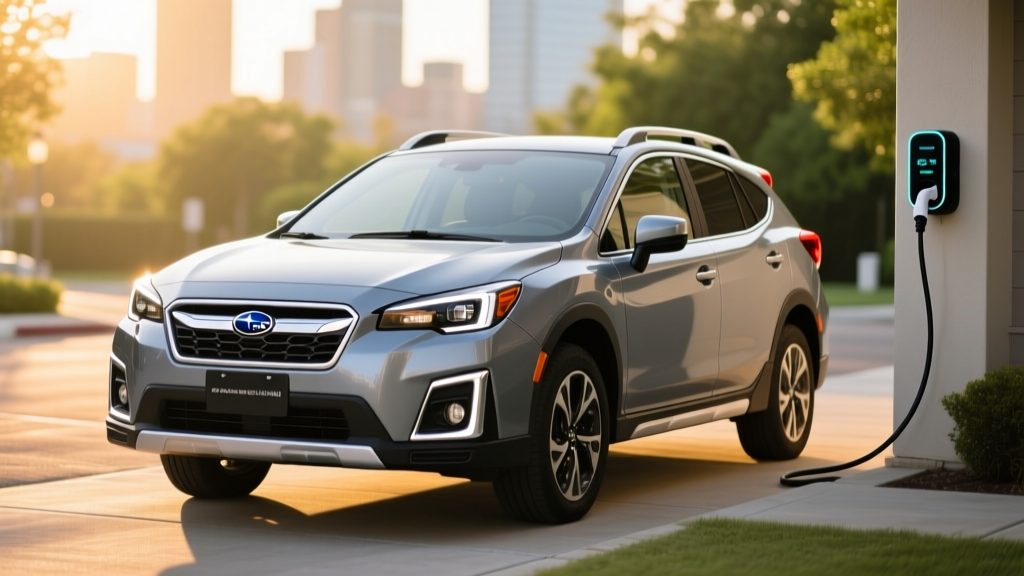
The Subaru Crosstrek has long been the default compact crossover for outdoorsy drivers who want standard all-wheel drive and real ground clearance. For 2026, Subaru continues to offer the Crosstrek in a plug-in hybrid (PHEV) variant that pairs a 2.0-liter Boxer engine with a battery pack and electric motors — delivering limited electric-only driving alongside the fuel-sipping efficiency of a hybrid. If you've been searching for a Subaru Crosstrek Hybrid 2026 review that goes beyond the brochure, this guide breaks down exact MPG figures, real-world electric range, charging logistics, battery longevity, and whether the federal tax credit applies.
Before we get into the numbers, one critical distinction: the Crosstrek Hybrid is a plug-in hybrid (PHEV), not a conventional hybrid (HEV). That means it has a larger battery you can charge from a wall outlet for short electric-only trips — but it also has a gas engine for longer drives. If you're unfamiliar with the difference, the comparison below clarifies what each powertrain type means for your daily driving.
HEV vs PHEV: What's the Difference?
| Feature | Conventional Hybrid (HEV) | Plug-In Hybrid (PHEV) |
|---|---|---|
| Plugs in? | No — charges via regenerative braking and engine | Yes — charges via outlet/charger and regen |
| Battery size | ~1–2 kWh | ~8–20 kWh |
| Electric-only range | None (electric assist only) | 17–40+ miles typical |
| Federal tax credit | Not eligible under §30D | Potentially eligible (sourcing rules apply) |
| Best for | Drivers who can't charge at home | Drivers with home charging and short commutes |
2026 Crosstrek Hybrid Powertrain and Performance Specs
Subaru's PHEV system in the Crosstrek Hybrid is built around the familiar 2.0-liter horizontally opposed ("Boxer") four-cylinder engine paired with two electric motor-generators and a continuously variable transmission (CVT). This is the same Toyota-derived hybrid synergy architecture Subaru has refined across several model years. Symmetrical all-wheel drive remains standard — a Subaru hallmark that sets the Crosstrek apart from front-wheel-drive-only hybrid competitors like the Toyota RAV4 Prime's base configuration.
| Spec | Value |
|---|---|
| Powertrain | 2.0L Boxer-4 + dual electric motor-generators, CVT |
| Combined system horsepower | ~219 hp |
| Drivetrain | Symmetrical AWD (standard) |
| Battery capacity (usable) | ~13.6 kWh (lithium-ion) |
| EPA electric-only range | ~17 miles |
| EPA total range (gas + electric) | ~430 miles |
| EPA MPGe (electric + gas combined) | ~92 MPGe |
| EPA MPG (charge-sustaining / gas mode) | ~35 MPG combined |
| 0–60 mph | ~6.9 seconds |
| Ground clearance | 8.7 inches |
| Towing capacity | 1,000 lbs |
The 0–60 time of roughly 6.9 seconds makes the Crosstrek Hybrid noticeably quicker than the gas-only Crosstrek (which runs closer to 9 seconds). The instant torque from the electric motors fills in the low-end response gap that the naturally aspirated Boxer engine alone can't deliver. It's not sports-car fast, but highway merging and mountain-grade climbing feel confident.
Fuel Economy: EPA MPG and Real-World Efficiency
Fuel economy is where hybrid buyers focus, so let's break down the EPA numbers and what you can actually expect on the road. According to fueleconomy.gov, the Crosstrek Hybrid delivers approximately 92 MPGe when operating in blended electric-gas mode and about 35 MPG combined when the battery is depleted and the gas engine runs solo (charge-sustaining mode).
| Mode | City | Highway | Combined |
|---|---|---|---|
| Charge-sustaining (gas only) | ~37 MPG | ~34 MPG | ~35 MPG |
| Blended EV + gas (MPGe) | ~92 MPGe combined | ||
Real-world MPG reality check: In mixed suburban driving with regular plug-in charging, owners frequently report achieving effective fuel consumption well below what the gas-only MPG suggests — because many short trips burn zero gasoline. However, on a long highway road trip where the battery depletes within the first 17 miles, expect the charge-sustaining figure of roughly 34–36 MPG at 70 mph. Cold weather (below 40°F) will reduce both electric-only range (by 20–30%) and gas-mode efficiency. The Crosstrek Hybrid's relatively modest electric range means its advantage shrinks on long trips compared to PHEVs with 35+ miles of EV range.
Electric-Only Range and Charging: What to Expect
The 2026 Crosstrek Hybrid's ~17 miles of EPA-rated electric-only range is the most honest limitation to understand before buying. That figure covers many daily commutes — the average American one-way commute is roughly 16 miles, per Census Bureau data — but it trails competitors significantly. The Toyota RAV4 Prime delivers 42 miles of electric range, and the Hyundai Tucson PHEV offers around 33 miles.
Charging the Crosstrek Hybrid
The Crosstrek Hybrid uses a standard J1772 connector for Level 1 (120V household outlet) and Level 2 (240V) AC charging. It does not support DC fast charging — this is common among PHEVs, as the smaller battery packs don't justify the added cost and weight of DC hardware. Here's what charging looks like in practice:
| Charging Level | Power | 0–100% Time |
|---|---|---|
| Level 1 (120V standard outlet) | ~1.4 kW | ~9–10 hours |
| Level 2 (240V home/public) | ~3.3 kW | ~4–5 hours |
| DC Fast Charging | N/A — not supported | — |
With a ~13.6 kWh battery, overnight Level 1 charging from a standard outlet is sufficient for most owners. Plug in when you get home, and by morning you'll have a full charge ready for your commute. A Level 2 home charger speeds this up but isn't strictly necessary given the small battery. The onboard charger maxes out at approximately 3.3 kW, so installing a 48-amp Level 2 circuit won't charge the Crosstrek Hybrid any faster than a 16-amp unit.
Pricing, Trims, and Federal Tax Credit Eligibility
The 2026 Subaru Crosstrek Hybrid is offered in a single well-equipped trim, typically starting around $37,000–$38,500 MSRP (including destination). This positions it at a meaningful premium over the gas-only Crosstrek, which starts around $26,000. Standard equipment includes EyeSight driver-assist technology (SAE Level 2 — Subaru's adaptive cruise, lane-centering, and pre-collision braking), an 11.6-inch infotainment touchscreen, heated front seats, and X-MODE AWD management.
Does the 2026 Crosstrek Hybrid Qualify for a Federal Tax Credit?
This is where the picture gets complicated. Under the current IRS §30D Clean Vehicle Credit rules, a PHEV can qualify for up to $7,500 — but only if it meets all of the following requirements:
- Battery capacity: At least 7 kWh — the Crosstrek Hybrid's ~13.6 kWh pack clears this bar.
- Final assembly in North America: Verify via the VIN on the DOE's qualifying vehicle list.
- MSRP cap: SUVs/vans/pickups must be under $80,000 — the Crosstrek Hybrid qualifies.
- Buyer income cap: Modified AGI must not exceed $150,000 (single) or $300,000 (joint).
- Battery component sourcing: A percentage of battery components must be manufactured or assembled in North America, and critical minerals must meet sourcing thresholds. These percentages increase annually.
At the state level, incentives vary widely. Some states (California, Colorado, New York, among others) offer additional rebates for PHEVs, while many offer nothing. Consult your state energy office or a tax professional for specifics.
Battery Warranty, Reliability, and Long-Term Ownership Costs
Hybrid battery longevity is consistently the top concern among first-time hybrid buyers. Subaru backs the Crosstrek Hybrid's battery pack with an 8-year / 100,000-mile warranty (10 years / 150,000 miles in California Air Resources Board states and those that follow CARB standards). This warranty covers battery capacity falling below a specified threshold — typically around 60–70% of original capacity — as well as defects in the hybrid system components including the inverter, electric motors, and associated control electronics.
- Hybrid battery: 8 years / 100,000 miles (10 yr / 150k in CARB states)
- Hybrid system components: 8 years / 100,000 miles
- Bumper-to-bumper: 3 years / 36,000 miles
- Powertrain (engine, transmission): 5 years / 60,000 miles
Battery replacement cost: If the battery pack fails outside warranty, replacement typically ranges from $3,000 to $5,000 including parts and labor at a Subaru dealer. However, real-world data from Toyota and Subaru PHEV platforms (which share architecture) shows that hybrid battery packs routinely last 150,000–200,000+ miles with minimal degradation. The Crosstrek Hybrid's relatively small battery is less stressed than a full EV pack — it operates in a narrower state-of-charge window, which extends cycle life.
Subaru's overall reliability reputation is solid, though not class-leading. IIHS has historically rated the Crosstrek as a Top Safety Pick when equipped with EyeSight, and the PHEV variant shares the same structural platform. Common long-term concerns across the Crosstrek lineup include CVT longevity (improved in recent generations) and infotainment software responsiveness.
Who Should Buy the Crosstrek Hybrid — and Who Should Look Elsewhere?
The Crosstrek Hybrid occupies a narrow but real sweet spot. Here's a decision framework to determine if it fits your life:
Choose the 2026 Crosstrek Hybrid if:
- Your daily round-trip commute is under 20 miles and you can charge at home overnight
- You need standard AWD and 8.7 inches of ground clearance for snow, dirt roads, or trailheads
- You want to reduce gas consumption without committing to full EV range limitations
- You frequently drive in areas with sparse public charging infrastructure
Choose a full EV (like the Hyundai Ioniq 5 or Subaru Solterra) if:
- You want zero tailpipe emissions and minimal maintenance
- Your daily driving is under 250 miles and you have reliable home charging
- You want the full $7,500 federal tax credit (more EVs currently qualify than PHEVs)
Choose the gas-only Crosstrek if:
- You can't charge at home or at work
- The ~$11,000+ price premium of the Hybrid over the gas model doesn't pencil out for your mileage
- You drive mostly long highway trips where PHEV advantage is minimal
Pros
- Standard AWD with 8.7" ground clearance — best-in-class for PHEV crossovers
- Quick 0–60 for the segment (~6.9 sec)
- Can commute on electricity alone for short trips
- No range anxiety — gas engine covers long trips seamlessly
- EyeSight safety suite standard
Cons
- Only ~17 miles electric range — trails RAV4 Prime (42 mi) and Tucson PHEV (33 mi)
- No DC fast charging
- Significant price premium over gas Crosstrek
- Modest cargo space reduction vs gas model (battery packaging)
- Federal tax credit eligibility uncertain due to sourcing rules
2026 Crosstrek Hybrid vs Key Competitors
The compact PHEV crossover segment is competitive. Here's how the Crosstrek Hybrid stacks up against its closest rivals on the specs that matter most:
| Spec | Subaru Crosstrek Hybrid | Toyota RAV4 Prime | Hyundai Tucson PHEV |
|---|---|---|---|
| Electric-only range | ~17 mi | 42 mi | ~33 mi |
| Combined HP | ~219 hp | 302 hp | 261 hp |
| AWD standard? | Yes | Yes | Yes |
| Ground clearance | 8.7 in | 8.1 in | 7.1 in |
| Charge-sustaining MPG | ~35 | ~38 | ~35 |
| Starting MSRP (est.) | ~$37,500 | ~$44,500 | ~$39,000 |
The RAV4 Prime dominates on electric range and power but commands a higher price and has been plagued by limited dealer availability. The Tucson PHEV offers a middle ground on range and price. The Crosstrek Hybrid's unique advantage is its combination of ground clearance, compact dimensions, and a lower starting price — making it ideal for drivers who prioritize off-pavement capability and urban maneuverability over maximum EV range.
Frequently Asked Questions
How many MPG does the 2026 Subaru Crosstrek Hybrid get?
The EPA rates the Crosstrek Hybrid at approximately 35 MPG combined (37 city / 34 highway) when running on gasoline alone after the battery is depleted. When factoring in electric-only driving, it achieves roughly 92 MPGe combined. Real-world results depend heavily on how often you plug in — drivers who charge daily and commute under 17 miles may use very little gasoline for weeks at a time.
How far can the Crosstrek Hybrid drive on electric only?
The EPA rates it at approximately 17 miles of electric-only range. In real-world conditions — mild weather, moderate speeds, flat roads — expect 15–18 miles. Highway driving and cold weather reduce this to roughly 10–13 miles. This is the Crosstrek Hybrid's most significant competitive weakness; rivals offer 33–42 miles of EV range.
Hybrid vs PHEV vs EV — which is right for me?
A conventional hybrid (HEV) requires no plug-in charging and delivers modest fuel savings — ideal if you lack home charging. A plug-in hybrid (PHEV) like the Crosstrek Hybrid offers short electric-only commutes plus a gas engine for long trips — best for drivers who can charge at home but also take road trips. A full EV (BEV) eliminates gasoline entirely with 250–350+ miles of range — best if you have reliable home charging and want minimal maintenance and zero tailpipe emissions.
Is the Crosstrek Hybrid reliable, and what does a battery replacement cost?
Subaru's hybrid system (derived from Toyota's proven architecture) has a strong reliability track record. The hybrid battery is warrantied for 8 years/100,000 miles (10 years/150,000 miles in CARB states). Out-of-warranty battery replacement costs approximately $3,000–$5,000, though real-world data suggests these packs routinely last 150,000+ miles with minimal degradation.
Does the 2026 Crosstrek Hybrid qualify for a federal tax credit?
It may qualify for up to $7,500 under IRS §30D, but eligibility depends on battery component sourcing, critical mineral requirements, your income, and final assembly location. These rules have tightened annually, and many PHEVs that previously qualified no longer do. Always verify current eligibility on the IRS Clean Vehicle Credit page before purchasing. The credit can be transferred to the dealer at point of sale as a purchase-price reduction if you qualify.
Can the Crosstrek Hybrid charge at a DC fast charger?
No. The Crosstrek Hybrid only supports AC charging — Level 1 (120V, ~1.4 kW) and Level 2 (240V, ~3.3 kW) via a J1772 connector. This is typical for PHEVs, as the smaller battery doesn't justify DC fast-charge hardware. A full overnight charge on a standard 120V outlet is sufficient for most owners.
How long does it take to charge the Crosstrek Hybrid at home?
On a standard 120V household outlet (Level 1), a full charge takes approximately 9–10 hours. On a 240V Level 2 charger, it takes roughly 4–5 hours. Because the battery is relatively small (~13.6 kWh usable), most owners find overnight Level 1 charging completely adequate.