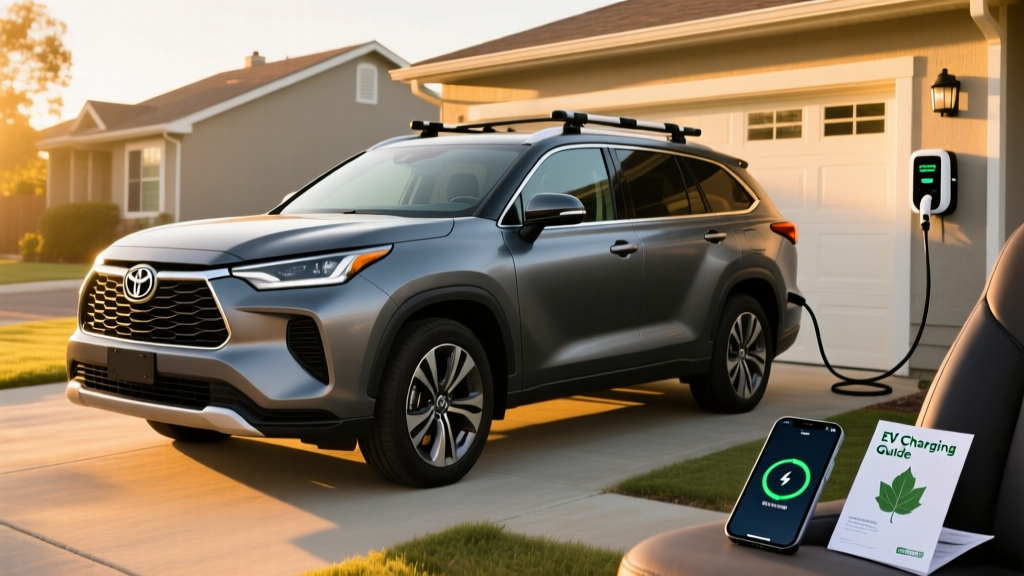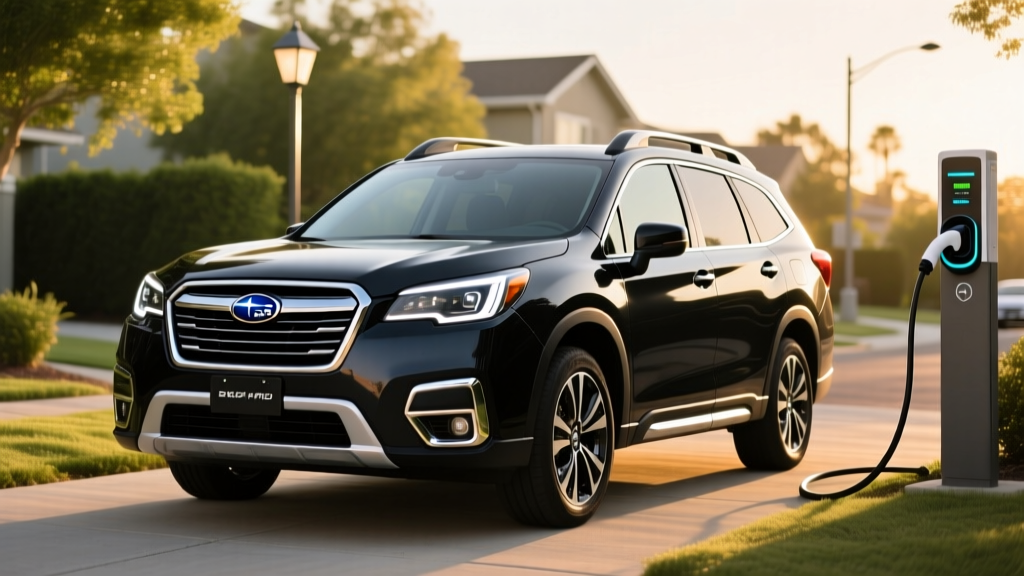
Subaru's three-row Ascent has long served families who need all-wheel drive, solid safety ratings, and genuine cargo space. For 2026, Subaru introduces a hybrid variant of the Ascent, pairing its turbocharged BOXER engine with an electric motor to deliver meaningful fuel-economy gains without sacrificing the utility the nameplate is known for. If you've been searching for a Subaru Ascent hybrid, here's everything you need to know about what it delivers — and where it falls short.
HEV vs PHEV: What Kind of Hybrid Is the Ascent?
The 2026 Subaru Ascent Hybrid is a conventional hybrid electric vehicle (HEV), not a plug-in hybrid. That distinction matters for buyers:
Conventional Hybrid (HEV) — Subaru Ascent Hybrid
- No plug required — the battery charges via regenerative braking and the engine
- Small battery pack (~1.1 kWh) assists the engine during acceleration and low-speed driving
- No electric-only driving range to speak of
- Eligible for no federal tax credit under IRS §30D (that credit applies to PHEVs and BEVs only)
Plug-In Hybrid (PHEV) — Not Offered on Ascent
- Larger battery (typically 15-25 kWh) with an external charge port
- 20-40 miles of electric-only driving before the gas engine kicks in
- May qualify for the federal §30D clean vehicle credit (up to $7,500, subject to income, MSRP, and battery-sourcing rules)
- Requires home or workplace charging to realize full fuel savings
Subaru has not announced a plug-in hybrid Ascent for the 2026 model year. If you need electric-only commuting capability in a Subaru, the closest option in the lineup remains the Solterra BEV. The Ascent Hybrid is strictly an HEV — you fuel it like a normal car and the hybrid system handles the rest.
Fuel Economy: EPA Ratings and Real-World MPG
The headline number for any hybrid buyer is fuel economy. Here's how the 2026 Subaru Ascent Hybrid stacks up against its gas-only sibling, based on EPA data at fueleconomy.gov:
| Model | City MPG | Highway MPG | Combined MPG |
|---|---|---|---|
| 2026 Subaru Ascent Hybrid (AWD) | 28 | 27 | 27 |
| 2026 Subaru Ascent (gas, AWD) | 20 | 26 | 22 |
The hybrid powertrain delivers a 5 MPG combined improvement — roughly a 23% gain. The biggest benefit shows up in city driving, where the electric motor handles low-speed acceleration and stop-and-go traffic, bumping city economy from 20 to 28 MPG. That's a 40% improvement in urban conditions, which is typical of conventional hybrids.
Real-World MPG vs. EPA Sticker
In real-world mixed driving, conventional hybrids frequently match or slightly exceed their EPA city ratings because regenerative braking captures energy that a gas-only car wastes as heat. On suburban routes with frequent stops, expect 27-30 MPG. On sustained highway cruising at 70-80 mph, the hybrid advantage narrows — plan on 25-27 MPG. Cold weather (below freezing) reduces fuel economy by roughly 5-10% as the engine runs more often to maintain cabin heat and battery temperature.
For context, that city improvement translates to roughly 80-100 fewer gallons per year for a driver covering 15,000 miles with a 60/40 city/highway split — saving approximately $250-$350 annually at $3.50/gallon fuel prices.
Powertrain and Performance Specs
The Ascent Hybrid uses Subaru's familiar turbocharged 2.4-liter BOXER four-cylinder paired with an electric motor integrated into the transmission housing. Here are the key numbers:
| Specification | 2026 Subaru Ascent Hybrid |
|---|---|
| Engine | 2.4L turbocharged BOXER 4-cylinder |
| Electric Motor | Integrated AC synchronous motor |
| Combined System Horsepower | ~290 hp (est.) |
| Combined System Torque | ~290 lb-ft (est.) |
| Transmission | CVT (Lineartronic) |
| Drivetrain | Symmetrical AWD (standard) |
| 0-60 mph | ~6.8 seconds (est.) |
| Towing Capacity | 5,000 lbs (when equipped) |
| Hybrid Battery | ~1.1 kWh lithium-ion |
| Seating | 7 or 8 passengers |
| Cargo (behind 3rd row) | ~17.8 cu ft |
The electric motor fills in the torque gap at low RPMs that turbocharged engines typically exhibit, meaning the Ascent Hybrid should feel more responsive from a stop than the gas-only model. Subaru's Symmetrical AWD remains standard across all trims — the hybrid system does not compromise the all-weather capability that defines the brand.
Towing capacity holds at 5,000 pounds when properly equipped, matching the gas-only Ascent. This is important for buyers pulling small trailers or boats — the hybrid system doesn't sacrifice utility.
Pricing, Trims, and Tax Credit Eligibility
The 2026 Subaru Ascent Hybrid carries a price premium over the conventional Ascent, reflecting the added hybrid hardware:
- Ascent Hybrid Premium (base): ~$42,500 MSRP
- Ascent Hybrid Limited: ~$47,000 MSRP
- Ascent Hybrid Touring: ~$51,500 MSRP
That represents roughly a $2,500-$3,000 premium over equivalent gas-only trims. At an estimated $300/year in fuel savings for a typical driver, the hybrid premium pays for itself in approximately 8-10 years — or sooner if fuel prices rise or your driving is heavily city-biased.
Does the Ascent Hybrid Qualify for a Federal Tax Credit?
No. The Ascent Hybrid is a conventional HEV, not a plug-in hybrid or battery-electric vehicle. The federal IRS §30D clean vehicle credit applies only to PHEVs and BEVs that meet battery-sourcing, critical-mineral, MSRP cap ($80,000 for SUVs), and buyer income requirements. Conventional hybrids do not qualify for §30D.
Some states and local utilities offer rebates or incentives for hybrid purchases — check your state energy office or utility provider for current programs. These vary widely by jurisdiction and change frequently, so verify eligibility directly with official sources before counting on them.
Battery Warranty, Reliability, and Replacement Cost
Hybrid battery longevity is the single biggest concern for first-time hybrid buyers. Here's what Subaru offers:
Subaru Hybrid Battery Warranty
- Hybrid battery: 8 years / 100,000 miles (whichever comes first)
- Hybrid system components: 8 years / 100,000 miles
- Powertrain warranty (engine/transmission): 5 years / 60,000 miles
In states that follow California Air Resources Board (CARB) emissions standards (CA, CO, CT, ME, MD, MA, NJ, NY, OR, RI, VT, WA), hybrid battery coverage extends to 10 years / 150,000 miles.
How Long Will the Hybrid Battery Actually Last?
Modern hybrid batteries use lithium-ion cells managed by sophisticated thermal and charge-control systems. Unlike early-generation hybrids from the 2000s, current systems rarely experience sudden failure. Based on industry data from Toyota, Honda, and Hyundai hybrid platforms, most hybrid batteries retain 85-95% of their original capacity at 150,000 miles. The Ascent's relatively small 1.1 kWh pack experiences shallow charge/discharge cycles, which is gentler on cell chemistry than the deeper cycles in PHEVs and BEVs.
If a replacement is needed out of warranty, expect $2,000-$4,000 for a hybrid battery pack for a conventional HEV of this size — significantly less than a BEV or PHEV battery replacement. Independent hybrid-specialty shops often offer refurbished packs at the lower end of that range.
Overall Reliability
Subaru's turbocharged 2.4L BOXER has been in production since 2019 across the Ascent, Legacy, and Outback lineups, and its long-term reliability record has improved with successive model years. The hybrid system adds an electric motor and inverter but eliminates the traditional starter motor and reduces brake wear through regenerative braking. Check IIHS and consumer reliability surveys for the latest model-year data as it becomes available.
Who Should Buy the Subaru Ascent Hybrid?
Pros
- Significant city MPG improvement (28 vs 20 MPG) over gas Ascent
- Standard AWD with no hybrid compromise to capability
- 5,000-lb towing retained
- No plug-in charging required — fuel and go
- Strong hybrid battery warranty (8-10 years depending on state)
- Smooth, responsive low-end torque from electric assist
Cons
- No federal tax credit eligibility (HEV, not PHEV)
- $2,500-$3,000 price premium over gas Ascent
- Highway MPG gain is modest (27 vs 26)
- No electric-only driving mode for zero-emission commuting
- Cargo and interior space unchanged from gas model (no packaging advantage)
Hybrid vs PHEV vs EV: Which Three-Row SUV Fits You?
Choose the Subaru Ascent Hybrid (HEV) if:
- You don't have access to home or workplace charging
- Your driving is heavily city and suburban with frequent stops
- You need AWD and 5,000-lb towing for family adventures
- You want fuel savings without changing your refueling habits
- You plan to keep the vehicle 6+ years to recoup the hybrid premium
Consider a PHEV three-row SUV (e.g., Toyota Grand Highlander Hybrid MAX, Mazda CX-90 PHEV) if:
- You can install a Level 2 home charger
- Your daily commute is under 30 miles and you want electric-only weekday driving
- You want to qualify for the federal §30D tax credit (eligibility varies — confirm at irs.gov)
Consider a full EV three-row SUV (e.g., Kia EV9, Rivian R1S) if:
- You have reliable home Level 2 charging
- Your typical trips fall within 250-300 miles or you're willing to plan DC fast-charging stops
- You want the lowest per-mile fuel cost and minimal drivetrain maintenance
Frequently Asked Questions
How many MPG does the 2026 Subaru Ascent Hybrid get?
The EPA rates the Ascent Hybrid at 28 city / 27 highway / 27 combined MPG. Real-world city driving often matches or slightly exceeds the 28 MPG city figure thanks to regenerative braking. Highway cruising at 75+ mph yields closer to 25-27 MPG.
Does the Subaru Ascent Hybrid need to be plugged in?
No. The Ascent Hybrid is a conventional HEV. Its small battery recharges through regenerative braking and the gasoline engine. You refuel it at a gas station like any other vehicle.
Does the Ascent Hybrid qualify for any federal tax credit?
No. The IRS §30D clean vehicle credit applies only to plug-in hybrids (PHEVs) and battery-electric vehicles (BEVs). Conventional hybrids like the Ascent Hybrid are not eligible. Some state or utility incentives may apply — check your local programs.
Is the Subaru Ascent Hybrid reliable? What does battery replacement cost?
The hybrid battery is covered by Subaru's 8-year/100,000-mile warranty (10 years/150,000 miles in CARB states). Modern hybrid batteries in shallow-cycle HEV applications typically last well beyond the warranty period. If replacement is needed out of warranty, expect $2,000-$4,000 — far less than a BEV or PHEV battery.
How much does the hybrid premium cost, and when does it pay off?
The hybrid trims carry roughly a $2,500-$3,000 premium over equivalent gas-only Ascent trims. For a driver covering 15,000 miles per year with a city-heavy commute, fuel savings of $250-$350 annually mean breakeven in approximately 8-10 years at current fuel prices. Higher fuel costs or more city driving shorten that timeline.
Can the Ascent Hybrid tow as much as the gas model?
Yes. When properly equipped, the Ascent Hybrid maintains the 5,000-pound towing capacity of the conventional Ascent.