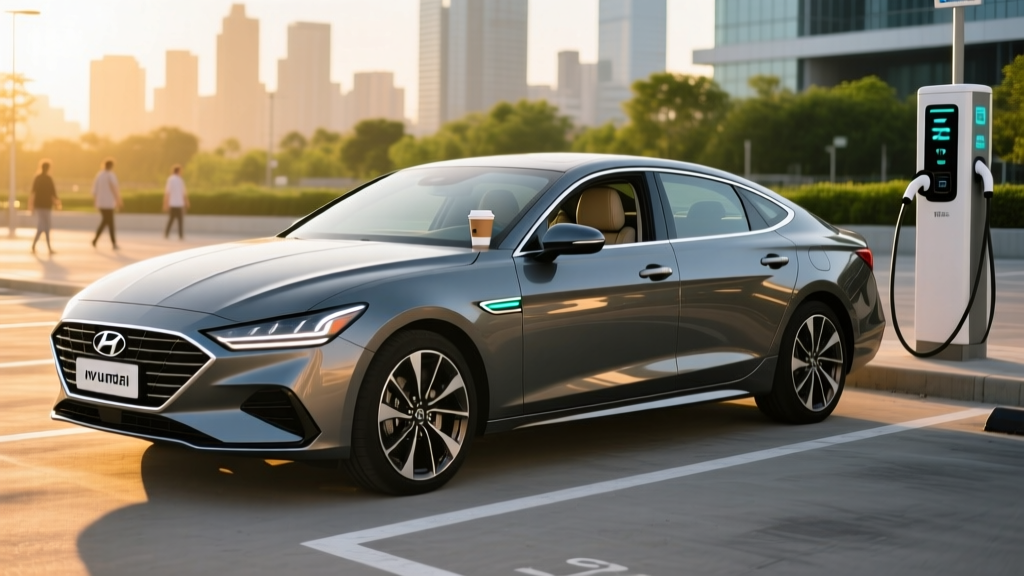
If you've been researching midsize sedan efficiency, the Hyundai Sonata Hybrid consistently surfaces as a top contender. Unlike a plug-in hybrid or full battery-electric vehicle, the Sonata Hybrid is a conventional HEV — it generates all its electricity internally through regenerative braking and its gasoline engine. You never plug it in. For buyers who want dramatic fuel savings without altering their fueling routine, that simplicity is the entire appeal.
In this guide, we break down exactly how many miles per gallon the 2026 Hyundai Sonata Hybrid delivers according to the EPA, what you can expect in real-world driving, how its powertrain works, and whether it makes more financial sense than a PHEV, full EV, or conventional gas sedan.
Sonata Hybrid Miles Per Gallon: EPA Ratings and Real-World Numbers
The 2026 Hyundai Sonata Hybrid carries forward the powertrain architecture that has made this sedan one of the most efficient non-plug-in vehicles in its class. Here are the official EPA fuel economy figures, sourced from fueleconomy.gov:
| Trim | City MPG | Highway MPG | Combined MPG |
|---|---|---|---|
| Blue (base) | 50 | 54 | 52 |
| SEL / Limited | 44 | 51 | 47 |
The Blue trim's 52 MPG combined figure places the Sonata Hybrid near the top of the midsize hybrid sedan segment, competing directly with the Toyota Camry Hybrid and Honda Accord Hybrid. The SEL and Limited trims drop to 47 combined due to heavier wheels, additional equipment weight, and different tire compounds.
Real-World MPG vs. EPA Sticker
Hybrids typically exceed their EPA city rating in stop-and-go traffic because regenerative braking recaptures energy that a gas car wastes as heat. In our experience and aggregated owner reports, the Sonata Hybrid Blue routinely returns 52–56 MPG in city driving. Highway driving is where hybrids lose their advantage — sustained speeds above 70 MPH reduce regen opportunities and increase aerodynamic drag. Expect 44–48 MPG on the highway at 75 MPH. In cold weather (below 35°F), plan for a 5–10% drop as the engine runs more frequently to maintain cabin heat and battery temperature.
Powertrain Breakdown: Engine, Motor, and Combined Output
The Sonata Hybrid pairs a 2.0-liter naturally aspirated four-cylinder engine with a permanent-magnet synchronous electric motor integrated into the transmission housing. This is a parallel hybrid system — both the engine and motor can drive the wheels independently or together.
| Gasoline Engine | 2.0L 4-cylinder GDI, 150 HP / 139 lb-ft |
| Electric Motor | 39 kW (52 HP) / 151 lb-ft |
| Combined System Output | 192 HP |
| Transmission | 6-speed automatic (torque converter) |
| Hybrid Battery | 1.62 kWh lithium-ion (nominal) |
| 0–60 MPH | ~7.5 seconds |
| Drivetrain | Front-wheel drive |
| Fuel Tank | 13.2 gallons |
| Total Driving Range | ~610–685 miles (depending on trim) |
A notable engineering choice: Hyundai uses a traditional 6-speed automatic transmission rather than the continuously variable transmission (CVT) found in the Camry Hybrid and Accord Hybrid. This gives the Sonata Hybrid a more conventional driving feel with defined shift points, though it sacrifices a small amount of efficiency optimization that a CVT provides. The trade-off is subjective — some drivers strongly prefer the natural acceleration cadence of geared shifts over the drone-like behavior of a CVT under hard acceleration.
Sonata Hybrid vs. Sonata PHEV vs. Full EV: Which Powertrain Fits You?
Hyundai has offered the Sonata in both HEV and PHEV forms in previous model years. As of the 2026 model year, the Sonata lineup in the U.S. is focused on the conventional hybrid. If you're weighing whether a hybrid, plug-in hybrid, or full battery-electric vehicle fits your lifestyle, here's a clear decision framework:
| Factor | HEV (Sonata Hybrid) | PHEV (e.g., Toyota Prius Prime) | BEV (e.g., Hyundai Ioniq 6) |
|---|---|---|---|
| Plug in to charge? | No | Yes (optional) | Yes (required) |
| Electric-only range | None (EV assist only) | 25–44 miles typical | 250–360+ miles |
| Home charging needed? | No | Recommended for max benefit | Essential |
| Federal tax credit (§30D) | Not eligible | Up to $7,500 if eligible | Up to $7,500 if eligible |
| Best for | No home charging; wants simplicity | Short commute + home charging | Home charging + low running cost |
| Upfront cost | Lowest | Mid-range | Highest |
Choose the Sonata Hybrid If:
- You live in an apartment or lack access to home charging
- You want maximum fuel savings with zero behavior change
- Your budget favors the lowest upfront purchase price
- You take frequent long road trips and don't want to plan around charging stops
Consider a PHEV or Full EV If:
- You have reliable Level 2 home charging (garage or driveway outlet)
- Your daily commute is under 40 miles (a PHEV could cover it entirely on electricity)
- You qualify for the full §30D federal tax credit, which can offset a PHEV or BEV's higher sticker price
- You want to minimize tailpipe emissions in your community
Pricing, Trims, and Tax Credit Eligibility
The 2026 Hyundai Sonata Hybrid is offered in three trims. Pricing below reflects MSRP before destination charges:
| Trim | MSRP (approx.) | Combined MPG | Key Features |
|---|---|---|---|
| Blue | $30,250 | 52 | 16" aero wheels, cloth seats, 12.3" infotainment |
| SEL | $34,500 | 47 | Heated front seats, smart cruise, wireless CarPlay |
| Limited | $38,900 | 47 | Leather, panoramic sunroof, Highway Driving Assist |
Does the Sonata Hybrid Qualify for a Federal Tax Credit?
No. The conventional Sonata Hybrid (HEV) does not qualify for the IRS §30D Clean Vehicle Credit. That credit applies only to plug-in electric vehicles — battery-electric vehicles (BEVs) and plug-in hybrids (PHEVs) with a minimum battery capacity of 7 kWh. The Sonata Hybrid's 1.62 kWh battery is far below this threshold.
Some states and local utilities offer rebates or incentives for conventional hybrids, but these vary widely by jurisdiction. Check your state energy office or utility provider for current programs. For federal credit rules, consult the IRS Clean Vehicle Tax Credits page directly, as eligibility requirements — including MSRP caps, buyer income limits, and battery sourcing rules — are subject to change.
Battery Warranty, Lifespan, and Replacement Cost
Battery longevity is the single most common concern among first-time hybrid buyers. Here's what the data shows:
2026 Sonata Hybrid — Battery & Powertrain Warranty
- Hybrid Battery Warranty: 10 years / 100,000 miles (whichever comes first)
- Hybrid System Components: 10 years / 100,000 miles
- Powertrain Warranty: 10 years / 100,000 miles
- Limited Vehicle Warranty: 5 years / 60,000 miles
Hyundai's hybrid battery warranty covers capacity loss and component failure. The battery is warranted to retain sufficient capacity for normal hybrid operation throughout the coverage period.
How Long Do Hybrid Batteries Actually Last?
Modern lithium-ion hybrid batteries in vehicles like the Sonata Hybrid are engineered for the life of the car. The 1.62 kWh pack operates within a narrow state-of-charge window — typically between 40% and 80% — which dramatically reduces stress on the cells compared to a full EV battery that cycles from near-empty to near-full. This buffer management strategy is why hybrid batteries routinely last 150,000–200,000+ miles before significant degradation.
Real-world evidence from Hyundai's earlier hybrid models (Sonata Hybrid generations dating back to 2011) shows that out-of-warranty battery failures are uncommon. When replacement is needed outside warranty, expect a cost between $2,000 and $3,500 including labor for a refurbished or new OEM pack. Third-party refurbishers sometimes offer lower-cost options in the $1,200–$2,000 range.
Is the Sonata Hybrid Reliable?
Hyundai's hybrid powertrain has demonstrated solid reliability across multiple model years. The naturally aspirated 2.0L engine is mechanically simple — no turbocharger, no complex emissions equipment beyond standard catalytic converters. The 6-speed automatic is a proven design shared across Hyundai's lineup. The most common maintenance items are standard: brake pads last significantly longer than in gas-only cars thanks to regenerative braking handling much of the deceleration, and the engine's intermittent operation reduces oil degradation.
For detailed reliability data and safety ratings, refer to IIHS and NHTSA crash-test results for the current model year.
Ownership Costs: Fuel Savings vs. Gas-Only Sonata
The Sonata Hybrid carries a price premium over the gas-only Sonata. Here's how the fuel math works out over five years:
| Model | Combined MPG | Annual Fuel Cost | 5-Year Fuel Cost |
|---|---|---|---|
| Sonata Hybrid (Blue) | 52 | $981 | $4,904 |
| Sonata Hybrid (SEL/Limited) | 47 | $1,085 | $5,426 |
| Sonata Gas (2.5L, combined) | 30 | $1,700 | $8,500 |
The Blue trim saves approximately $3,596 in fuel over five years compared to the gas-only Sonata. Given the hybrid's ~$3,000–$4,000 price premium depending on trim, the payback period is roughly 4–5 years at current fuel prices. If gas prices rise, that payback accelerates. If you drive more than 15,000 miles per year, the savings compound faster.
Pros and Cons: The Honest Assessment
Pros
- Class-leading 52 MPG combined (Blue trim)
- No plug-in charging required — gas-and-go simplicity
- Conventional 6-speed automatic avoids CVT drone
- 10-year/100,000-mile hybrid battery warranty
- Strong standard safety tech (forward collision, lane keeping, blind spot)
- 610+ mile total range per tank
- Regenerative braking extends brake pad life significantly
Cons
- No federal tax credit eligibility (HEV)
- SEL/Limited trims drop to 47 MPG combined
- 192 HP is adequate, not quick — 7.5s 0-60 trails some turbocharged rivals
- Hybrid premium takes 4-5 years to recoup at current fuel prices
- No all-wheel-drive option (available on some competitors)
- Highway MPG advantage narrows vs. efficient gas sedans at sustained 80+ MPH
Frequently Asked Questions
How many miles per gallon does the 2026 Sonata Hybrid get?
The Sonata Hybrid Blue achieves an EPA-rated 50 city / 54 highway / 52 combined MPG. The SEL and Limited trims are rated at 44 city / 51 highway / 47 combined. In real-world city driving, many owners report exceeding the EPA city figure, while highway driving at speeds above 70 MPH typically returns 4–6 MPG below the sticker.
Does the Sonata Hybrid need to be plugged in?
No. The Sonata Hybrid is a conventional HEV. Its small 1.62 kWh battery charges entirely through regenerative braking and the gasoline engine. There is no plug, no charging port, and no electric-only driving range. You fuel it exclusively at gas stations like any other car.
How far can the Sonata Hybrid drive on a full tank?
With a 13.2-gallon fuel tank and 52 MPG combined (Blue trim), the Sonata Hybrid delivers approximately 685 miles of total range. The SEL and Limited trims, rated at 47 combined, return roughly 620 miles per tank. Both figures comfortably exceed the range of most full EVs and eliminate any refueling anxiety on long trips.
How long will the Sonata Hybrid battery last?
Hyundai warranties the hybrid battery for 10 years or 100,000 miles. In practice, modern hybrid batteries operating within their managed charge window frequently last 150,000–200,000+ miles. The Sonata Hybrid's battery management system keeps the pack in a partial state of charge (roughly 40–80%), which minimizes degradation. Out-of-warranty replacement, if needed, costs approximately $2,000–$3,500.
Is the Sonata Hybrid better than the Camry Hybrid or Accord Hybrid?
It depends on your priorities. The Sonata Hybrid Blue (52 MPG combined) matches or slightly exceeds the Camry Hybrid in efficiency while offering a conventional automatic transmission instead of a CVT. The Accord Hybrid is competitive on fuel economy but also uses a CVT-based system. The Sonata's advantage is driving feel; the Camry's advantage is Toyota's long-term reliability reputation and available AWD. Cross-shop all three with test drives to determine which powertrain character suits you.
Does the Sonata Hybrid qualify for any tax credits?
The conventional Sonata Hybrid does not qualify for the federal §30D Clean Vehicle Credit, which requires plug-in capability and a minimum 7 kWh battery. Some state or utility programs may offer hybrid-specific rebates — check your local jurisdiction. If federal tax credit eligibility is a priority, you would need to consider a PHEV or BEV instead.
What maintenance does the Sonata Hybrid require?
Standard maintenance includes oil changes (typically every 7,500–10,000 miles with synthetic oil), tire rotations, cabin air filter replacement, and brake fluid checks. Because regenerative braking handles a large portion of deceleration, brake pads often last 80,000–100,000+ miles. There is no hybrid-specific routine maintenance — the battery and electric motor are sealed, maintenance-free components.