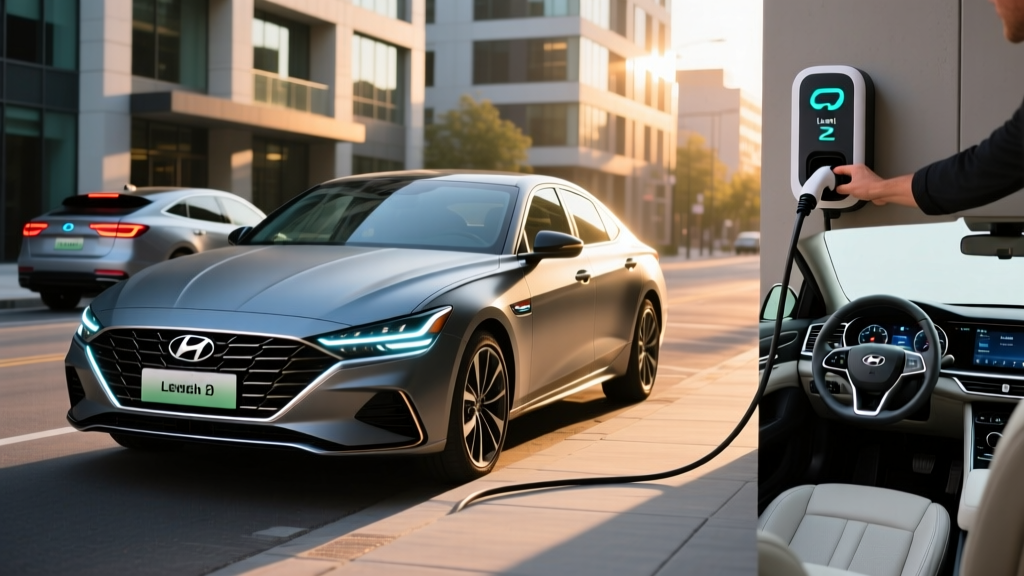
The Hyundai Sonata has long been a midsize sedan benchmark, and the 2025 Sonata Hybrid continues that tradition with a compelling blend of efficiency, comfort, and technology. Unlike its plug-in hybrid predecessor (discontinued after 2022), the 2025 model is offered exclusively as a conventional hybrid (HEV)—meaning no plug, no range anxiety, and no need to think about charging infrastructure. For buyers who want dramatically better fuel economy without changing their refueling habits, this is one of the most rational choices in the segment.
After examining EPA data, real-world driving reports, and Hyundai's current powertrain specs, here's everything you need to know about the 2025 Sonata Hybrid before you sign on the dotted line.
2025 Sonata Hybrid at a Glance: Key Specs
| Attribute | Specification |
|---|---|
| Powertrain Type | Conventional Hybrid (HEV) — no plug-in |
| Engine | 2.0L inline-4 GDI + electric motor |
| Combined Horsepower | 192 hp |
| Transmission | 6-speed automatic |
| EPA Fuel Economy (Blue trim) | 50 city / 54 highway / 52 combined MPG |
| EPA Fuel Economy (SEL / Limited) | 44 city / 51 highway / 47 combined MPG |
| Fuel Tank Capacity | 13.2 gallons |
| Total Driving Range (Blue trim) | ~686 miles |
| 0–60 mph | ~7.7 seconds (est.) |
| Battery Type | Lithium-ion polymer, ~1.6 kWh |
| Hybrid Battery Warranty | 10 years / 100,000 miles |
| Starting MSRP (Blue trim) | $31,250 |
| Top Trim MSRP (Limited) | ~$37,900 |
Sources: EPA Fueleconomy.gov, Hyundai USA specifications.
Fuel Economy Breakdown: EPA Numbers vs. Real-World MPG
The 2025 Sonata Hybrid comes in three trims—Blue, SEL, and Limited—and the fuel economy varies meaningfully between them. The Blue trim, with its lighter wheels and lower-resistance tires, achieves an outstanding 52 MPG combined (50 city / 54 highway). The SEL and Limited trims drop to 47 MPG combined (44 city / 51 highway) due to larger alloy wheels, added weight, and more equipment.
| Trim | City | Highway | Combined | Est. Total Range |
|---|---|---|---|---|
| Blue | 50 | 54 | 52 | 686 mi |
| SEL | 44 | 51 | 47 | 620 mi |
| Limited | 44 | 51 | 47 | 620 mi |
Real-World Expectations
Hybrids have a well-documented tendency to exceed their EPA city ratings in stop-and-go traffic, where regenerative braking recaptures energy that a gas-only car wastes as heat. In mixed suburban and urban driving, owners frequently report 52–56 MPG in the Blue trim during warm months. Highway-only driving at 75+ mph tends to settle closer to 46–50 MPG even in the Blue trim, as the electric motor contributes less at sustained high speeds.
In cold weather (below 30°F), expect a 5–10% reduction in fuel economy. The engine runs more frequently to provide cabin heat and maintain battery temperature, reducing the hybrid system's efficiency advantage. This is normal hybrid behavior and not a defect.
EPA Combined: 52 MPG
Expect in warm city driving: 52–56 MPG
Expect in highway cruising (70–80 mph): 46–50 MPG
Expect in cold weather (below 30°F): 45–48 MPG combined
HEV vs. PHEV vs. EV: Which Powertrain Fits You?
The 2025 Sonata is only available as a conventional hybrid. Hyundai discontinued the Sonata Plug-in Hybrid after the 2022 model year, so if you want a plug-in sedan from Hyundai, you'd need to look at the Ioniq 6 (a full EV). Here's how the three powertrain types compare for a typical buyer:
Conventional Hybrid (HEV)
Example: Sonata Hybrid Blue
Plug in? No — refuels with gas only
Electric-only range: Very short (under 1 mile at low speed)
Best for: Drivers who want better MPG without any behavior change
Plug-in Hybrid (PHEV)
Example: Toyota Prius Prime, Hyundai Tucson PHEV
Plug in? Yes — 25–44 mi electric range, then gas
Electric-only range: 25–44 miles typically
Best for: Short commuters with home charging who take occasional road trips
Full EV (BEV)
Example: Hyundai Ioniq 6, Tesla Model 3
Plug in? Yes — 100% electric, no gas
Range: 250–360+ miles
Best for: Home-charging-capable drivers ready to eliminate gas entirely
Choose the Sonata Hybrid (HEV) if: You lack reliable home or workplace charging access, you drive more than 40 miles daily, or you simply don't want to think about plugging in. The 52 MPG combined and 686-mile total range make it one of the most efficient gas-station-refueled cars available.
Look at a PHEV instead if: Your daily commute is under 35 miles round-trip, you can install a Level 2 charger at home, and you want to drive mostly on electricity during the week while keeping gas for weekend road trips.
Go full EV if: You have dependable home charging, your daily driving is under 250 miles, and you want to eliminate oil changes, gas station visits, and tailpipe emissions entirely.
Powertrain Details: How the Sonata Hybrid Drives
The 2025 Sonata Hybrid pairs a 2.0-liter naturally aspirated inline-4 engine (producing approximately 150 hp on its own) with a 39 kW (52 hp) electric motor integrated into the transmission housing. Combined system output is 192 horsepower, routed to the front wheels through a conventional 6-speed automatic transmission—not a CVT.
This is a deliberate engineering choice by Hyundai. Most competitors (Toyota Camry Hybrid, Honda Accord Hybrid) use continuously variable transmissions or e-CVTs, which can produce a droning, disconnected feel under hard acceleration. The Sonata Hybrid's 6-speed automatic delivers more familiar shift behavior, and the result is a sedan that feels more like a conventional car and less like an appliance. The tradeoff is slightly lower peak efficiency compared to e-CVT rivals, but the 52 MPG combined figure shows Hyundai has largely closed that gap.
Acceleration is adequate rather than thrilling. The 0–60 mph time of approximately 7.7 seconds puts it in line with a base Toyota Camry but behind the quicker Honda Accord Hybrid (~6.5 seconds). The electric motor fills in low-end torque smoothly, making city driving and merging feel responsive even if the car isn't fast in an absolute sense.
Hybrid Battery Warranty and Long-Term Reliability
Hybrid battery longevity is the single most common concern among first-time hybrid buyers, and Hyundai addresses it with one of the strongest warranties in the industry.
• Hybrid battery pack: 10 years / 100,000 miles (original owner)
• Hybrid system components (motor, inverter, control unit): 10 years / 100,000 miles
• Basic vehicle warranty: 5 years / 60,000 miles
• Powertrain warranty: 10 years / 100,000 miles
Note: For second and subsequent owners, Hyundai's hybrid battery warranty typically transfers but may be reduced to 10 years / 100,000 miles from original in-service date. Confirm with your dealer.
How Long Do Hybrid Batteries Actually Last?
The Sonata Hybrid's ~1.6 kWh lithium-ion polymer battery is small compared to an EV's 60–100 kWh pack, but it operates within a narrow state-of-charge window (roughly 40%–80% SoC) managed by the car's battery management system. This shallow-cycling strategy dramatically extends cell life. Based on data from Hyundai-Kia hybrid platforms and industry-wide failure rates, most hybrid batteries last 150,000–200,000+ miles before capacity degrades enough to noticeably affect fuel economy.
Should a replacement be needed out of warranty, a refurbished or new hybrid battery for the Sonata Hybrid typically costs between $2,000 and $4,000 including labor. This is far less than an EV traction battery replacement ($8,000–$20,000+) because the pack is small and relatively simple.
Reliability Track Record
Hyundai's hybrid systems have proven reliable since the introduction of the Sonata Hybrid in 2011. The current-generation system (introduced for the 2020 model year and refreshed for 2024) has accumulated strong real-world mileage data. Hyundai's hybrid-specific components—the electric motor, inverter, and battery cooling system—are covered under the 10-year powertrain warranty, which is among the longest offered by any mainstream automaker.
Pricing, Trims, and Tax Credit Eligibility
| Trim | MSRP (incl. destination) | Key Features |
|---|---|---|
| Blue | $31,250 | 52 MPG, 17" wheels, wireless CarPlay/Android Auto, Hyundai SmartSense ADAS |
| SEL | $33,850 | 18" wheels, heated seats, blind-spot cameras, Digital Key |
| Limited | $37,900 | Leather, panoramic sunroof, Bose audio, Highway Driving Assist, ventilated seats |
Does the 2025 Sonata Hybrid Qualify for a Federal Tax Credit?
No. The 2025 Sonata Hybrid is a conventional hybrid (HEV), not a plug-in vehicle. The federal IRS §30D Clean Vehicle Credit of up to $7,500 applies only to battery electric vehicles (BEVs) and plug-in hybrid electric vehicles (PHEVs) that meet battery capacity, critical mineral sourcing, MSRP caps, and buyer income requirements. Since the Sonata Hybrid cannot be plugged in and has a battery well under the 4 kWh minimum threshold, it does not qualify.
Some states and local utilities offer rebates or incentives for conventional hybrids, but these vary widely by jurisdiction. Check your state energy office or utility provider for current programs. A few states have offered modest hybrid incentives in the past, but most have shifted incentive budgets toward plug-in vehicles.
Who Should Buy the 2025 Sonata Hybrid?
✓ Reasons to Buy
- Outstanding 52 MPG combined (Blue trim) — among the best in any midsize sedan
- No plug-in required; identical refueling habits to a gas car
- 686-mile total range — fewer gas station visits than virtually any non-diesel sedan
- Industry-leading 10-year / 100,000-mile hybrid battery warranty
- 6-speed automatic avoids CVT drone; drives like a normal car
- Comprehensive Hyundai SmartSense safety suite standard on all trims
- Comfortable, spacious interior with strong infotainment
✗ Reasons to Look Elsewhere
- No plug-in option — can't drive on electric-only for commutes
- No federal tax credit eligibility (HEV, not PHEV)
- Acceleration is adequate (7.7s 0–60) but not quick; Accord Hybrid is faster
- Blue trim's 17" wheels look conservative; style-focused buyers may prefer SEL/Limited at the cost of 5 MPG
- Hyundai's dealer network is strong but not as ubiquitous as Toyota's
- Sedan market is shrinking — limited resale demand vs. SUVs
How It Compares: Sonata Hybrid vs. Key Rivals
| Spec | Hyundai Sonata Hybrid (Blue) | Toyota Camry Hybrid (LE) | Honda Accord Hybrid (Sport) |
|---|---|---|---|
| EPA Combined MPG | 52 | 52 | 44 |
| Combined HP | 192 | 225 | 204 |
| 0–60 mph (est.) | ~7.7s | ~7.2s | ~6.5s |
| Starting MSRP | $31,250 | $30,495 | $34,395 |
| Hybrid Battery Warranty | 10 yr / 100k mi | 10 yr / 150k mi | 8 yr / 100k mi (10/150k in CARB states) |
| Transmission | 6-speed auto | e-CVT | e-CVT |
| Federal Tax Credit | None | None | None |
The Camry Hybrid matches the Sonata's 52 MPG while offering more horsepower and a slightly lower starting price. The Accord Hybrid sacrifices some efficiency for genuinely quick acceleration. The Sonata Hybrid's differentiators are its conventional automatic transmission (no CVT feel), generous warranty, and strong standard tech. If you prioritize driving feel over maximum MPG, the Sonata Hybrid's 6-speed auto is a genuine advantage over its e-CVT competitors.
Frequently Asked Questions
How many MPG does the 2025 Sonata Hybrid get?
The Blue trim achieves 50 city / 54 highway / 52 combined MPG. The SEL and Limited trims are rated at 44 city / 51 highway / 47 combined MPG. In real-world city driving, many owners report exceeding the EPA city rating thanks to regenerative braking.
Does the Sonata Hybrid need to be plugged in?
No. The 2025 Sonata Hybrid is a conventional hybrid (HEV). It charges its small battery through regenerative braking and the gas engine. You refuel it exclusively at gas stations, just like a regular car.
Is there a plug-in hybrid (PHEV) version of the 2025 Sonata?
No. Hyundai discontinued the Sonata Plug-in Hybrid after the 2022 model year. The 2025 Sonata is available only as a conventional hybrid. If you want a Hyundai sedan with plug-in capability, the closest current option is the all-electric Ioniq 6.
How long will the hybrid battery last, and what does replacement cost?
Based on industry data, Hyundai hybrid batteries typically last 150,000–200,000+ miles. The battery is covered by a 10-year / 100,000-mile warranty. Out-of-warranty replacement costs typically range from $2,000 to $4,000 including labor—far less than an EV battery replacement.
Does the 2025 Sonata Hybrid qualify for any tax credits?
It does not qualify for the federal §30D Clean Vehicle Credit, which is reserved for plug-in vehicles (BEVs and PHEVs). Some state or utility-level hybrid incentives may exist depending on your location—check with your state energy office or local utility provider.
Is the Sonata Hybrid reliable?
Hyundai's hybrid powertrain has a strong reliability record since 2011. The 10-year / 100,000-mile hybrid component warranty is one of the best in the industry, and the conventional automatic transmission avoids the long-term durability questions that sometimes surround CVTs.
How does the Sonata Hybrid compare to a full EV?
A full EV like the Hyundai Ioniq 6 or Tesla Model 3 offers lower per-mile energy costs, stronger acceleration, and zero tailpipe emissions—but requires reliable home or workplace charging and involves higher upfront cost. The Sonata Hybrid makes sense if you lack charging access, frequently drive more than 300 miles between stops, or want to minimize upfront spend while still cutting fuel costs roughly in half versus a gas-only midsize sedan.
For the latest EPA data, visit fueleconomy.gov. For current federal tax credit rules, consult the IRS Clean Vehicle Credits page.