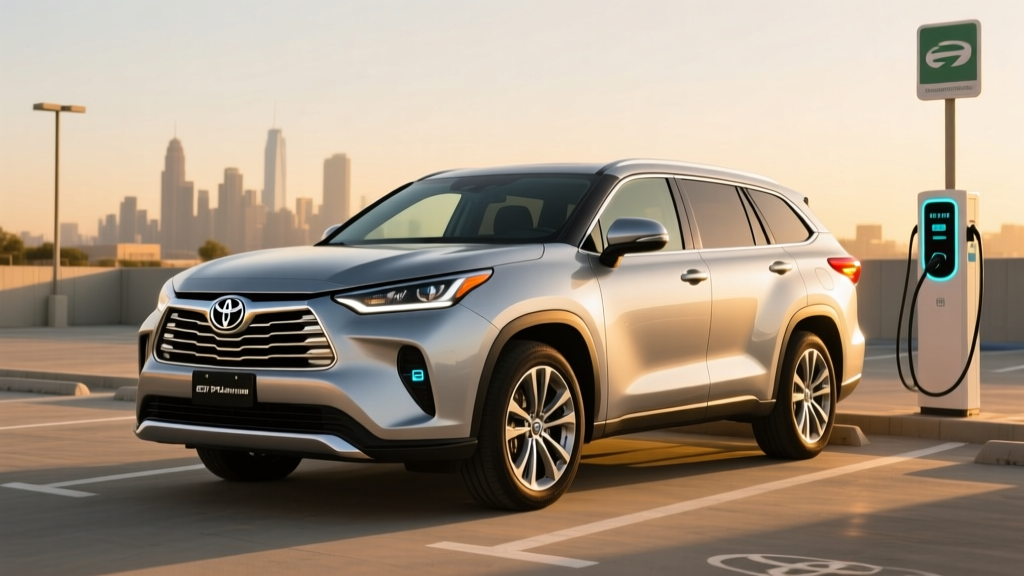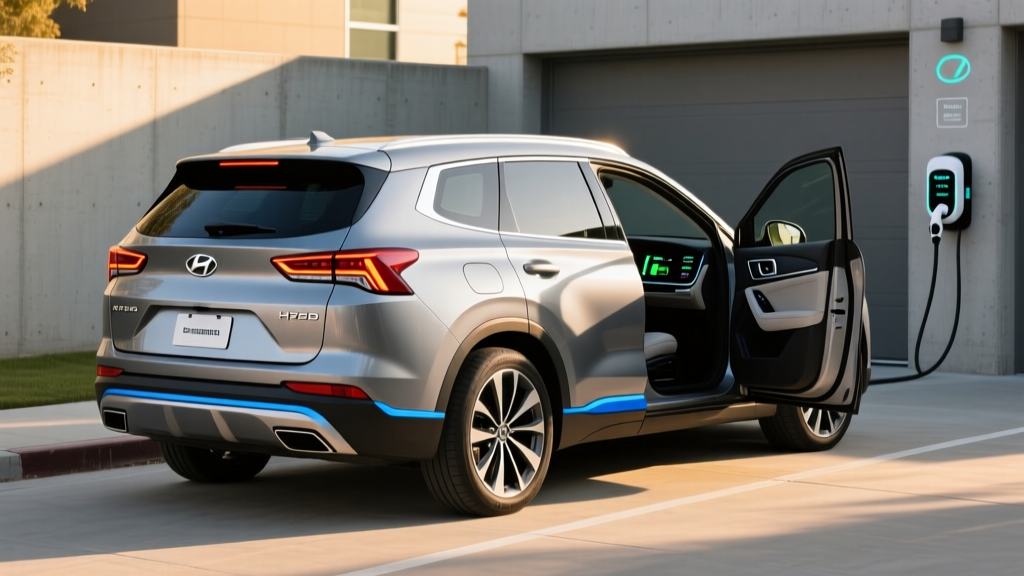
The 2025 Hyundai Santa Fe Hybrid returns with a boxy redesign, three-row seating, and a powertrain that prioritizes efficiency without demanding a plug. For midsize SUV buyers who want electrified fuel savings but aren't ready to commit to charging infrastructure, this hybrid pairs a 1.6-liter turbocharged engine with an electric motor for a combined 232 horsepower and an EPA-estimated 36 MPG combined. We've analyzed the specs, ownership costs, and real-world behavior to help you decide if the Santa Fe Hybrid — or its plug-in sibling — is the right fit.
HEV vs PHEV: Which Santa Fe Should You Consider?
Hyundai offers the 2025 Santa Fe in two electrified flavors, and confusing them is easy if you're not careful. Here's the distinction that matters:
Conventional Hybrid (HEV)
The Santa Fe Hybrid uses a small battery (roughly 1.5 kWh) that recharges through regenerative braking and the gasoline engine. You never plug it in. It operates as a seamless team between gas and electric, delivering improved MPG over the non-hybrid model with zero change to your fueling habits.
Plug-In Hybrid (PHEV)
The Santa Fe Plug-In Hybrid carries a larger 13.8 kWh battery pack that you charge via a standard outlet or Level 2 charger. It delivers an EPA-estimated 30 miles of electric-only range before the gas engine engages, then functions as a conventional hybrid. Total combined range exceeds 400 miles.
If you have reliable home charging and a short commute, the PHEV lets you drive most weekdays on electricity alone. If you lack charging access or frequently take long trips, the HEV's simplicity wins.
2025 Santa Fe Hybrid: Powertrain and Performance Specs
| Specification | Santa Fe Hybrid (HEV) | Santa Fe Plug-In Hybrid (PHEV) |
|---|---|---|
| Engine | 1.6L Turbo 4-cylinder | 1.6L Turbo 4-cylinder |
| Combined System Horsepower | 232 hp | 258 hp |
| Combined System Torque | 271 lb-ft | 271 lb-ft |
| Transmission | 6-speed automatic | 6-speed automatic |
| Drivetrain | AWD (HTRAC) | AWD (HTRAC) |
| Battery Capacity | ~1.5 kWh | 13.8 kWh (NMC) |
| Plug-In Required? | No | Yes (Level 1 or Level 2) |
| 0-60 mph (est.) | ~7.8 sec | ~7.4 sec |
| Towing Capacity | 2,000 lbs | 2,000 lbs |
Both variants use Hyundai's Smartstream 1.6-liter turbocharged four-cylinder paired with an electric motor integrated into the transmission housing. The HEV's 232 combined horsepower is a meaningful bump over the base turbocharged gas model's 277 hp but delivers it with far better efficiency. The PHEV's additional battery capacity and slightly more aggressive tuning push output to 258 hp.
Neither variant offers DC fast charging. The PHEV charges via a J1772 connector at up to 7.2 kW on Level 2, reaching a full charge in roughly 2 hours. On a standard 120V household outlet (Level 1), expect a full charge in about 11 hours — sufficient for overnight replenishment.
Fuel Economy: EPA Estimates vs Real-World MPG
| Model | City MPG | Highway MPG | Combined MPG |
|---|---|---|---|
| Santa Fe Hybrid (HEV) AWD | 35 | 36 | 36 |
| Santa Fe PHEV AWD (charge-sustaining) | 33 | 34 | 33 |
| Santa Fe PHEV AWD (electric + gas) | 79 MPGe combined | 30 mi EV range | |
| Santa Fe Gas (2.5T AWD baseline) | 20 | 28 | 23 |
Source: fueleconomy.gov, EPA estimates. Actual results vary with driving conditions, temperature, and load.
The hybrid's 36 MPG combined represents a 56% improvement over the turbocharged gas-only Santa Fe. In real-world driving, Hyundai's hybrid system — like most Toyota and Honda hybrids — tends to exceed its EPA city estimate in stop-and-go traffic, where regenerative braking recaptures the most energy. Highway cruising at 75+ mph will pull efficiency down to roughly 30-32 MPG, as the turbo engine does more of the work at sustained speed.
Real-World Expectation: With a 17.7-gallon fuel tank, the Santa Fe Hybrid delivers approximately 637 miles of combined range in mixed driving. Expect 560-590 miles on a long highway road trip and potentially 670+ miles in predominantly city driving where the hybrid system shines.
The PHEV's 30 miles of electric-only range covers most daily commutes. Once the battery depletes, the system defaults to hybrid mode at 33 MPG combined — still excellent for a three-row SUV. Total range with a full tank and full battery exceeds 430 miles.
Pricing, Trims, and Tax Credit Eligibility
The 2025 Santa Fe Hybrid starts at $38,995 for the SEL Premium trim (including destination), while the Santa Fe Plug-In Hybrid begins at $45,795 in SEL Premium and reaches $52,395 in the top Limited trim.
| Trim | HEV MSRP | PHEV MSRP |
|---|---|---|
| SEL Premium | $38,995 | $45,795 |
| Limited | $43,795 | $52,395 |
| Calligraphy (PHEV only) | — | $55,195 |
Federal Tax Credit Status
Under current IRS §30D rules, the Santa Fe Hybrid (HEV) does not qualify for any federal clean vehicle tax credit. Conventional hybrids are excluded — only fully electric vehicles and plug-in hybrids are eligible.
The Santa Fe Plug-In Hybrid's eligibility is limited and conditional. As of the current tax year, the PHEV may qualify for a partial credit (up to $3,750) depending on battery component and critical mineral sourcing requirements. Key constraints include:
- MSRP cap: SUVs must be priced at or below $80,000 (all Santa Fe PHEV trims qualify)
- Income cap: Modified AGI must not exceed $150,000 (single), $225,000 (head of household), or $300,000 (joint)
- Battery sourcing: Critical mineral and battery component percentages must meet escalating annual thresholds — verify current-year compliance with your dealer and tax professional
- Point-of-sale transfer: Eligible buyers can transfer the credit to the dealer at purchase for an immediate price reduction
Tax credit rules change frequently and depend on your individual financial situation. Consult a qualified tax professional and verify eligibility on the IRS website before making a purchase decision.
Battery Warranty, Reliability, and Replacement Costs
Hyundai Hybrid Battery Warranty
HEV: 10 years / 100,000 miles (whichever comes first)
PHEV: 10 years / 100,000 miles (whichever comes first)
Coverage includes battery capacity loss below a defined threshold and defects in hybrid system components including the electric motor and inverter.
Hyundai's 10-year/100,000-mile hybrid battery warranty is among the best in the segment, matching Kia and exceeding Toyota's 10-year/150,000-mile coverage in duration but falling slightly short on mileage. In practice, modern hybrid batteries from Hyundai have demonstrated strong longevity. The HEV's small ~1.5 kWh battery undergoes shallow charge cycles managed by the vehicle's thermal system, which significantly extends cell life. Most Hyundai and Kia hybrid batteries from the 2011-2018 era are still in service with minimal degradation.
Should a replacement become necessary out of warranty, expect the following approximate costs:
- HEV battery replacement: $2,500 - $4,000 (smaller battery, lower cost)
- PHEV battery replacement: $6,000 - $9,000 (larger 13.8 kWh pack)
These figures include parts and labor at a dealership. Independent hybrid specialists may offer refurbished pack installations for 30-40% less. Given the warranty coverage and proven track record, battery replacement is a low-probability concern for most original owners.
For broader reliability context, Hyundai's hybrid powertrain has earned strong marks from long-term owners and industry observers. The 1.6-liter turbo engine has been in Hyundai's lineup since the 2020 model year across the Sonata, Tucson, and Santa Fe families, with few widespread failure patterns reported.
Who Should Buy the Santa Fe Hybrid vs a Full EV or Gas SUV?
Choose the Santa Fe Hybrid (HEV) if:
- You lack access to home or workplace charging and don't want to rely on public infrastructure
- You want immediate fuel savings (36 MPG vs 23 MPG gas) without any behavioral changes
- You regularly take long road trips where charging stops would add inconvenience
- You need three rows and AWD under $45,000
Choose the Santa Fe Plug-In Hybrid (PHEV) if:
- You have Level 2 home charging (or can install it) and a commute under 30 miles
- You want to drive on electricity most weekdays but need gas flexibility for weekend trips
- You want the extra 26 hp (258 total) and the potential for a partial federal tax credit
Choose a Full EV (e.g., Hyundai Ioniq 5, Kia EV9) if:
- You have reliable home charging and want zero tailpipe emissions
- Your daily driving is under 250 miles and you're comfortable with DC fast charging on road trips
- You want the lowest per-mile fuel cost and minimal maintenance (no oil changes, fewer moving parts)
The Santa Fe Hybrid occupies a practical middle ground. It delivers meaningful fuel savings over the gas model, avoids the upfront cost premium and charging logistics of a full EV, and provides three-row versatility that most electric SUVs can't match at this price point. The PHEV variant is the more compelling choice for households with charging access, effectively functioning as an EV during the week and a hybrid on weekends.
Pros
- 36 MPG combined in a 3-row AWD SUV
- No plug-in required — fuel like a gas car
- 10-year/100,000-mile hybrid battery warranty
- 232 hp provides confident merging and passing
- Boxy design offers excellent cargo volume (behind 2nd row: ~40 cu ft)
Cons
- No federal tax credit for the HEV variant
- Highway MPG drops to ~30-32 at sustained 75+ mph
- 2,000-lb towing capacity trails V6 competitors
- Third row is tight for adults on longer trips
- PHEV eligibility for §30D credit is uncertain and partial
Frequently Asked Questions
How many MPG does the 2025 Santa Fe Hybrid get?
The EPA rates the Santa Fe Hybrid AWD at 35 city / 36 highway / 36 combined MPG. Real-world city driving often yields slightly higher numbers thanks to regenerative braking, while sustained highway speeds above 75 mph can reduce efficiency to the low 30s.
How far can the Santa Fe PHEV go on electric only?
The Santa Fe Plug-In Hybrid delivers an EPA-estimated 30 miles of electric-only range. After the battery depletes, it operates as a conventional hybrid at 33 MPG combined, with total range exceeding 430 miles.
Does the Santa Fe Hybrid need to be plugged in?
No. The conventional Santa Fe Hybrid (HEV) never requires plugging in. Its small battery recharges through regenerative braking and the gasoline engine. Only the Plug-In Hybrid (PHEV) variant benefits from being plugged in.
Is the Santa Fe Hybrid reliable?
Hyundai's 1.6-liter turbo hybrid powertrain has been in production since 2020 with few widespread reliability concerns. The hybrid battery is covered by a 10-year/100,000-mile warranty. Hyundai's hybrid systems have demonstrated strong long-term durability across the Sonata and Tucson lineups.
What does it cost to replace the Santa Fe Hybrid battery?
Out-of-warranty HEV battery replacement runs approximately $2,500-$4,000; PHEV battery replacement is estimated at $6,000-$9,000. Given the 10-year warranty and proven track record, most original owners will never face this expense.
Does the 2025 Santa Fe Hybrid qualify for a tax credit?
The conventional hybrid (HEV) does not qualify for any federal clean vehicle tax credit. The Plug-In Hybrid (PHEV) may qualify for a partial credit under IRS §30D rules, subject to income caps, MSRP limits, and battery sourcing requirements. Verify eligibility with a tax professional before purchasing.
How does the Santa Fe Hybrid compare to the Toyota Highlander Hybrid?
The Toyota Highlander Hybrid achieves 35 MPG combined (slightly less than the Santa Fe's 36) and offers a more established reputation for long-term reliability. The Santa Fe counters with a more modern interior, standard AWD on all hybrid trims, and a longer 10-year/100,000-mile battery warranty versus Toyota's 10-year/150,000-mile hybrid battery coverage. The Highlander offers more third-row space, while the Santa Fe's boxy design provides competitive cargo volume.
Safety ratings: Check the latest NHTSA and IIHS results for the 2025 Santa Fe, as crash-test results are updated throughout the model year.