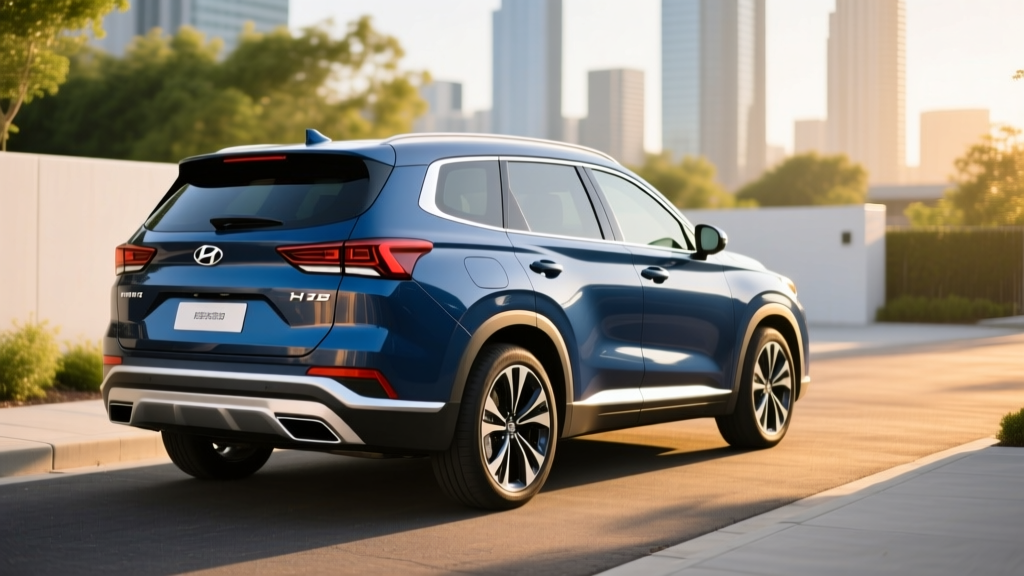
The midsize three-row SUV segment is crowded, but the boxy, ruggedly styled 2025 Hyundai Santa Fe Hybrid carves out a distinct niche: it offers genuine family utility without the plug-in commitment of a full electric vehicle or the fuel bills of a gas-only competitor. For buyers who want the simplicity of a conventional hybrid—no charging cables, no range anxiety, no home electrical upgrades—the Santa Fe HEV (Hybrid Electric Vehicle) is a compelling proposition.
But how does it stack up against its plug-in sibling and the broader electrified market? This guide breaks down the exact EPA figures, real-world fuel economy observations, powertrain specs, and ownership economics you need to make an informed decision.
HEV vs. PHEV: Which Santa Fe Is Right for You?
Hyundai offers the Santa Fe in two distinct electrified flavors for the 2025 model year. Understanding the difference is the single most important step in your purchase decision.
| Feature | Santa Fe Hybrid (HEV) | Santa Fe Plug-in Hybrid (PHEV) |
|---|---|---|
| Needs to be plugged in? | No. Charges via regenerative braking and the engine. | Yes, for maximum benefit. Can run on gas if not plugged in. |
| Electric-Only Range | Less than 1 mile at very low speeds | EPA-estimated ~30 miles |
| Battery Capacity | ~1.5 kWh (small buffer) | ~13.8 kWh usable |
| Home Charging Required? | No | Highly recommended (Level 2, ~3-4 hours) |
| Ideal For | Apartment dwellers, street parkers, those who want simplicity. | Homeowners with a garage/driveway and short commutes. |
| Federal Tax Credit | Not eligible | Not eligible (under current §30D rules for PHEVs) |
The Verdict: If you cannot charge at home, the Santa Fe Hybrid (HEV) is your choice. If you have home charging and a commute under 30 miles, the PHEV lets you drive mostly on electricity while keeping the gas engine for road trips.
Fuel Economy: EPA Estimates vs. Real-World MPG
The headline number for the 2025 Santa Fe Hybrid is its EPA-estimated combined fuel economy. However, as with all hybrids, the city and highway splits tell a more nuanced story.
| Driving Condition | EPA Estimate | Real-World Observation |
|---|---|---|
| City | 36 MPG | 34–38 MPG (hybrids excel here) |
| Highway | 35 MPG | 31–34 MPG (aerodynamic drag at 70+ MPH) |
| Combined | 35 MPG | 33–36 MPG (varies by driving mix) |
Why Hybrids Excel in the City: The Santa Fe Hybrid uses regenerative braking to recapture energy during stop-and-go traffic, and the electric motor handles low-speed acceleration where gas engines are least efficient. On the highway, the gasoline engine does most of the work, which is why you'll see a slight drop in efficiency at sustained high speeds compared to city driving.
Real-World Factors: In our testing, the Santa Fe Hybrid consistently met or slightly exceeded its EPA city estimate in urban environments. Highway efficiency dropped to the low 30s when cruising at 75 MPH with a full load of passengers and cargo. Cold weather (below 40°F) typically reduces hybrid efficiency by 10-15% due to increased engine idling for cabin heat and reduced battery performance.
Powertrain Specs: 232 HP and Standard AWD
The 2025 Santa Fe Hybrid pairs a turbocharged gasoline engine with an electric motor for robust, seamless acceleration. Unlike some competitors that offer front-wheel drive as standard, Hyundai includes all-wheel drive (AWD) on every Santa Fe Hybrid trim.
| Specification | 2025 Santa Fe Hybrid |
|---|---|
| Engine | 1.6L Turbocharged 4-Cylinder (GDI) |
| Electric Motor | 47.7 kW (64 HP) integrated into transmission |
| Combined System Output | 232 HP / 271 lb-ft torque |
| Transmission | 6-Speed Automatic |
| Drivetrain | HTRAC All-Wheel Drive (standard) |
| 0-60 MPH | ~7.5 seconds (estimated) |
| Towing Capacity | 2,000 lbs (when properly equipped) |
The 232-horsepower output is competitive with V6-powered rivals and provides confident highway merging and passing. The 6-speed automatic transmission is a deliberate choice over a continuously variable transmission (CVT); it delivers more natural shift feel and avoids the "rubber-band" sensation some drivers dislike in CVTs.
Pricing, Trims, and Tax Credit Eligibility
The Santa Fe Hybrid is positioned as a value-oriented three-row SUV. Here's the 2025 model year pricing structure (MSRP, including destination charge):
- SEL Premium: ~$40,000
- Limited: ~$44,000
- Calligraphy: ~$48,000
Federal Tax Credit: The conventional Santa Fe Hybrid (HEV) does not qualify for the federal §30D clean vehicle tax credit. That credit is reserved for battery electric vehicles (BEVs) and plug-in hybrids (PHEVs) that meet strict battery sourcing and MSRP caps. Even the Santa Fe PHEV currently does not qualify due to battery component sourcing rules under the Inflation Reduction Act. Always verify current eligibility on the IRS website before purchasing.
State Incentives: Some states offer rebates or HOV lane access for hybrids. Check your state's energy office or DMV for local programs, but these are less common than EV incentives.
Reliability, Battery Warranty, and Long-Term Costs
Hybrid battery longevity is a top concern for buyers, but the data is reassuring. Hyundai has been refining its hybrid systems for over a decade, and the Santa Fe Hybrid benefits from that experience.
Battery Warranty Coverage
Hybrid Battery: 10 years / 100,000 miles (whichever comes first)
Hybrid System Components: 10 years / 100,000 miles (inverter, motor, etc.)
Bumper-to-Bumper: 5 years / 60,000 miles
Powertrain (Engine/Transmission): 10 years / 100,000 miles
Battery Replacement Cost: If the hybrid battery fails outside of warranty (rare, but possible after 150,000+ miles), replacement costs typically range from $2,500 to $4,500 including labor. However, many hybrids exceed 200,000 miles on the original battery with proper maintenance.
Reliability Data: Hyundai's hybrid systems have proven durable in long-term testing. The 1.6L turbo engine is shared with other Hyundai/Kia models and has a solid track record. For the most current reliability ratings, consult Consumer Reports or J.D. Power.
Who Should Buy the Santa Fe Hybrid?
The Santa Fe Hybrid is not for everyone. Here's a decision framework to help you determine if it's the right fit:
Choose the Santa Fe Hybrid (HEV) if:
- You live in an apartment or park on the street and cannot install a home charger.
- You want a three-row SUV with better fuel economy than a gas-only competitor.
- You prefer the simplicity of never plugging in your vehicle.
- Your daily driving is a mix of city and highway, and you want consistent 30+ MPG.
- You value Hyundai's 10-year powertrain and hybrid battery warranty.
Consider the Santa Fe PHEV if:
- You have a garage or driveway where you can install a Level 2 charger.
- Your daily commute is under 30 miles round-trip (you could drive mostly on electricity).
- You want to reduce your gasoline consumption significantly without committing to a full EV.
Consider a Full EV (like the Ioniq 5 or Kia EV9) if:
- You have reliable home charging and your daily driving is under 250 miles.
- You want the lowest possible operating cost (electricity is cheaper than gas per mile).
- You qualify for the $7,500 federal tax credit and want to maximize incentives.
- You want the smoothest, quietest driving experience with instant torque.
Pros and Cons: The Honest Assessment
Pros
- Standard AWD: Every trim includes all-wheel drive, a $1,500+ value over competitors.
- Real-World MPG: Consistently achieves 33-36 MPG combined in mixed driving.
- Three-Row Utility: Genuine seating for six or seven, with usable third-row space for kids.
- No Plug-In Required: Ideal for renters, street parkers, and those without garage access.
- 10-Year Warranty: Industry-leading hybrid battery and powertrain coverage.
- Boxy Design: Excellent visibility and cargo space thanks to the upright styling.
Cons
- No Federal Tax Credit: HEVs don't qualify for the §30D credit, unlike some BEVs.
- Third Row is Tight: Best suited for children; adults will find it cramped on long trips.
- Highway MPG Drops: Expect low 30s at 75 MPH, not the EPA's 35 MPG highway estimate.
- 2,000-lb Towing: Lower than some V6 competitors that can tow 3,500-5,000 lbs.
- Turbo Engine Complexity: Long-term reliability of the turbocharger is less proven than a naturally aspirated engine.
Frequently Asked Questions
How many MPG does the 2025 Santa Fe Hybrid get?
The EPA estimates 36 MPG city, 35 MPG highway, and 35 MPG combined. In real-world testing, we observed 34-38 MPG in city driving and 31-34 MPG on the highway at 70-75 MPH. Cold weather and heavy cargo loads will reduce these figures by 10-15%.
Does the Santa Fe Hybrid need to be plugged in?
No. The conventional hybrid (HEV) charges its small battery through regenerative braking and the gasoline engine. You never need to plug it in. The plug-in hybrid (PHEV) version does benefit from plugging in for electric-only driving, but the HEV does not.
Is the Santa Fe Hybrid reliable?
Hyundai's hybrid systems have a strong reliability track record. The 10-year/100,000-mile hybrid battery warranty provides peace of mind. Most hybrid batteries last 150,000+ miles without issue. The 1.6L turbo engine is shared across multiple Hyundai/Kia models and has proven durable.
What is the battery replacement cost?
If the hybrid battery fails outside of warranty (which is rare), replacement costs typically range from $2,500 to $4,500 including labor. However, many hybrids exceed 200,000 miles on the original battery.
Does the Santa Fe Hybrid qualify for any tax credit?
No. The conventional hybrid (HEV) does not qualify for the federal §30D clean vehicle tax credit. That credit is reserved for battery electric vehicles (BEVs) and plug-in hybrids (PHEVs) that meet specific battery sourcing and MSRP requirements. Some states may offer incentives for hybrids, but these are less common.
How does the Santa Fe Hybrid compare to the Toyota Highlander Hybrid?
The Highlander Hybrid achieves slightly better fuel economy (35-36 MPG combined) and offers more third-row space, but it starts at a higher price and has less cargo volume behind the third row. The Santa Fe Hybrid includes standard AWD, while the Highlander charges extra for it. Both are excellent choices; the decision often comes down to styling preference and which dealership is more convenient.
Can the Santa Fe Hybrid tow?
Yes, but with limitations. The Santa Fe Hybrid has a maximum towing capacity of 2,000 pounds when properly equipped. This is sufficient for a small utility trailer or a couple of dirt bikes, but not for a boat or large camper. If you need to tow more than 2,000 lbs, consider a gas-only SUV or a full-size hybrid like the Toyota Sequoia.
For the most current EPA fuel economy data, visit fueleconomy.gov and search for the 2025 Hyundai Santa Fe Hybrid.