Quick Verdict: The RAV4 Prime Still Sets the PHEV Benchmark
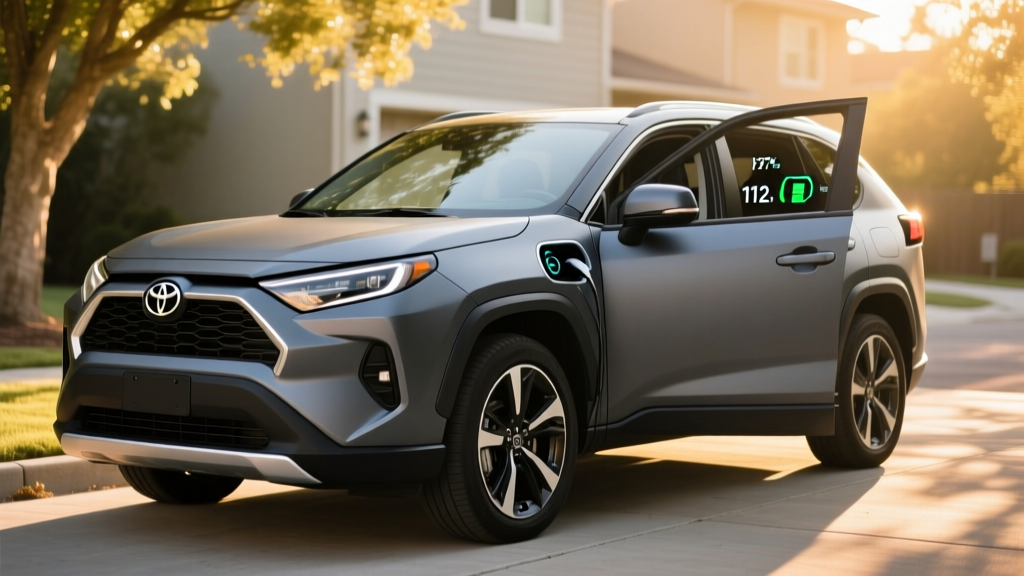
The 2025 Toyota RAV4 Plug-In Hybrid — still officially badged as the RAV4 Prime — remains one of the most compelling electrified SUVs on the market for buyers who want meaningful electric-only commuting without committing to a full battery-electric vehicle. With an EPA-estimated 42 miles of pure electric range, 302 combined horsepower, and a 0–60 mph time of 5.7 seconds, it bridges the gap between efficiency and performance in a way few competitors match.
For 2025, the RAV4 Prime carries over largely unchanged from the prior model year, which is a compliment rather than a criticism. Toyota's proven Hybrid Synergy Drive powertrain, paired with an 18.1 kWh lithium-ion battery, delivers the goods — provided you can find one at MSRP. Dealer markups have moderated from their 2022–2023 peaks, but inventory remains tight in many metro areas.
| Spec | Value |
|---|---|
| EPA Electric-Only Range | 42 miles |
| EPA Combined MPGe (EV mode) | 94 MPGe |
| EPA MPG (hybrid mode, combined) | 38 MPG |
| Total Combined Range | ~490 miles |
| Battery Capacity | 18.1 kWh (lithium-ion, NMC chemistry) |
| Combined System Horsepower | 302 hp |
| 0–60 mph | 5.7 seconds |
| Level 2 Charge Time (0–100%) | ~2.5 hours (6.6 kW onboard charger) |
| DC Fast Charging | Not supported |
| Drivetrain | AWD (eAWD with rear electric motor) |
| Base MSRP (SE trim) | $44,960 |
| XSE Trim MSRP | $48,275 |
| Federal Tax Credit (§30D) | Up to $7,500 (eligibility varies) |
| Hybrid Battery Warranty | 10 years / 150,000 miles |
HEV vs PHEV: What's the Difference in the RAV4 Lineup?
Toyota sells the RAV4 in three powertrain flavors for 2025, and buyers frequently confuse them. Here's the breakdown:
| Attribute | RAV4 Gas (ICE) | RAV4 Hybrid (HEV) | RAV4 Prime (PHEV) |
|---|---|---|---|
| Plugs in? | No | No | Yes |
| Electric-Only Range | 0 miles | ~1 mile (low-speed creep) | 42 miles |
| Combined MPG / MPGe | 30 MPG | 41 MPG | 94 MPGe / 38 MPG hybrid |
| Horsepower | 203 hp | 219 hp | 302 hp |
| 0–60 mph | 8.2 sec | 7.4 sec | 5.7 sec |
| Battery | 12V only | 1.6 kWh (NiMH) | 18.1 kWh (Li-ion NMC) |
| Base MSRP | $30,850 | $34,420 | $44,960 |
| Federal Tax Credit | None | None | Up to $7,500* |
| AWD | Optional | Standard | Standard (eAWD) |
The conventional RAV4 Hybrid (HEV) never plugs in. It uses a small 1.6 kWh nickel-metal hydride battery that recharges through regenerative braking and the gas engine. You simply drive it like any other car, and it delivers impressive 41 MPG combined without any behavior change.
The RAV4 Prime (PHEV) has a much larger 18.1 kWh lithium-ion battery and can travel 42 miles on electricity alone before the gas engine takes over. To capture its efficiency advantage, you need to plug it in — ideally at home overnight on a Level 2 charger. If you never plug it in, you're carrying 600+ pounds of extra battery weight and getting only 38 MPG hybrid mode, which is actually worse than the standard RAV4 Hybrid's 41 MPG.
Electric-Only Range and Real-World Efficiency
The EPA rates the 2025 RAV4 Prime at 42 miles of electric-only range and 94 MPGe in EV mode. In real-world driving, that 42-mile figure holds up remarkably well in mild weather (60–80°F) around town and on suburban commutes at speeds under 55 mph.
- City/suburban, mild weather: 40–44 miles (meets or slightly beats EPA)
- Highway (70+ mph), mild weather: 32–36 miles
- Cold weather (below 32°F), city: 28–34 miles (~20–30% reduction)
- Cold weather, highway: 24–30 miles
Once the battery depletes, the RAV4 Prime operates as a conventional hybrid, returning its EPA-rated 38 MPG combined. In city-heavy hybrid-mode driving, many owners report 39–42 MPG, since the hybrid system excels at low-speed stop-and-go efficiency. Highway hybrid mode drops to approximately 35–36 MPG.
The total combined range — electric plus gasoline — reaches roughly 490 miles, meaning a full charge and a full 14.5-gallon tank can carry you from Los Angeles to San Francisco and back with range to spare. Road-trip anxiety is simply not a factor here.
Charging: Level 2 Only, No DC Fast Charge
The RAV4 Prime charges exclusively via a J1772 connector for Level 1 and Level 2 AC charging. It does not support DC fast charging — a deliberate engineering choice by Toyota, since the 18.1 kWh battery is small enough that overnight Level 2 charging covers virtually all use cases.
| Charging Level | Power | Time (0–100%) | Use Case |
|---|---|---|---|
| Level 1 (120V household outlet) | 1.4 kW | ~10–12 hours | Emergency / occasional top-up |
| Level 2 (240V, 32A circuit) | 6.6 kW | ~2.5 hours | Primary home charging |
| DC Fast Charging | N/A | N/A | Not supported |
The 6.6 kW onboard charger is the key spec here. On a standard 240V/32A Level 2 home charger (such as a ChargePoint Home Flex or Wallbox Pulsar Plus), a full charge takes about 2.5 hours. This means even if you deplete the battery entirely on your morning commute, you can fully recharge during the workday if your workplace offers Level 2 outlets — or easily overnight at home.
Home charging setup cost: Expect $500–$1,500 for a quality Level 2 charger plus professional installation on an existing 240V circuit (such as a dryer outlet on a shared smart splitter like a NeoCharge). A new dedicated 240V/40A circuit with a hardwired charger typically runs $1,200–$2,500 depending on panel proximity and local labor rates. If your electrical panel needs an upgrade to 200A, add $1,500–$3,000. Always get a quote from a licensed electrician before committing.
According to fueleconomy.gov, charging the RAV4 Prime costs approximately $1.00–$1.50 per full charge at the national average residential electricity rate of ~$0.17/kWh — roughly equivalent to 30–50 cents per gallon of gasoline on a per-mile basis.
Powertrain: 302 HP and Toyota's Most Potent RAV4
The RAV4 Prime pairs a 2.5-liter Atkinson-cycle four-cylinder engine with two electric motors — one integrated into the front transaxle and one powering the rear axle. The combined system output is 302 horsepower, making it the quickest RAV4 Toyota has ever sold.
The front motor produces 134 kW (180 hp) and the rear motor adds 40 kW (54 hp), while the gas engine contributes 177 hp on its own. The hybrid system blends these sources seamlessly; you'll rarely notice the transitions. The eAWD system provides confident traction in rain and light snow without a mechanical driveshaft — the rear wheels are powered entirely by the rear electric motor.
Driving dynamics are genuinely surprising for a compact SUV. The 5.7-second 0–60 time puts the RAV4 Prime in the territory of sport sedans from a decade ago, and the instant electric torque makes passing and merging effortless. It's not a sports car, but it never feels sluggish or underpowered — a common complaint with some competing PHEVs.
Pricing, Trims, and Federal Tax Credit Eligibility
The 2025 RAV4 Prime is offered in two trims:
- SE: $44,960 MSRP — includes SofTex seats, 8-inch touchscreen, wireless Apple CarPlay/Android Auto, heated front seats, 18-inch alloy wheels
- XSE: $48,275 MSRP — adds 9-inch touchscreen, panoramic moonroof, wireless phone charging, 19-inch alloy wheels, sport-tuned suspension
Both trims include Toyota Safety Sense 2.5+ (adaptive cruise control, lane tracing assist, pre-collision system with pedestrian detection, blind-spot monitoring) as standard equipment.
The RAV4 Prime has historically qualified for the full $7,500 federal tax credit, but eligibility under current IRS rules depends on several factors that change periodically:
- Buyer income cap: Modified AGI ≤ $150,000 (single), ≤ $225,000 (head of household), ≤ $300,000 (joint)
- MSRP cap: SUVs must be ≤ $80,000 (both trims qualify easily)
- Battery sourcing: Critical minerals and battery components must meet escalating domestic-content thresholds — Toyota's supply chain has met requirements through recent model years, but the IRS updates qualifying lists periodically
- Point-of-sale transfer: As of 2024, you can transfer the credit to the dealer for an upfront price reduction at purchase rather than waiting to claim it on your tax return
Always verify current eligibility at IRS.gov's qualifying vehicle list before purchasing, and consult a tax professional for your specific situation.
With the full $7,500 credit, the effective price of the SE trim drops to approximately $37,460 — remarkably close to a well-equipped RAV4 Hybrid XLE ($36,000–$38,000). At that price point, the Prime becomes a no-brainer for anyone with home charging access.
Battery Longevity, Warranty, and Replacement Cost
Toyota covers the RAV4 Prime's 18.1 kWh traction battery for 10 years or 150,000 miles (whichever comes first) against defects and capacity loss below a defined threshold. The hybrid system components (inverter, motors, control unit) share the same 10-year/150,000-mile coverage. The standard new-vehicle warranty is 3 years/36,000 miles, and the powertrain warranty is 5 years/60,000 miles.
Toyota's hybrid battery track record is among the best in the industry. The original Prius, now over 25 years old, demonstrated that nickel-metal hydride and lithium-ion hybrid batteries can last well beyond 200,000 miles with proper thermal management. The RAV4 Prime's battery management system maintains a state-of-charge buffer — you never use the full 18.1 kWh; the usable capacity is closer to 14–15 kWh — which significantly reduces degradation stress.
Battery replacement cost: If the traction battery fails outside warranty (unlikely before 150,000+ miles based on Toyota's track record), a replacement currently costs approximately $5,000–$8,000 including parts and labor at a Toyota dealer. Third-party hybrid battery refurbishers offer rebuilt units for $2,500–$4,000. For context, this is a fraction of the cost of replacing a large BEV battery pack ($12,000–$20,000+), because the RAV4 Prime's pack is much smaller.
The conventional 12V auxiliary battery (which powers electronics, not propulsion) is a separate component and typically lasts 4–6 years, costing $200–$350 to replace — the same as any other vehicle.
RAV4 Prime vs Full EV vs Gas: Which Should You Choose?
Choose the RAV4 Prime (PHEV) if:
- Your daily commute is under 40 miles round-trip and you can charge at home
- You take road trips of 200+ miles regularly and don't want to plan around DC fast chargers
- You live in an apartment or area with unreliable public charging infrastructure
- You want EV-like commuting costs but need the flexibility of a gas engine
- You qualify for the $7,500 federal tax credit, bringing the price close to the standard hybrid
Choose the RAV4 Hybrid (HEV) if:
- You cannot install a home charger (apartment, street parking, no garage)
- Your commute exceeds 42 miles and you wouldn't benefit from the electric range daily
- You want the lowest purchase price and don't qualify for the federal tax credit
- You prefer zero behavior change — never plug in, just drive and refuel
Choose a Full EV (like the Tesla Model Y or Hyundai Ioniq 5) if:
- You have reliable home Level 2 charging and your daily driving is under 250 miles
- You want zero tailpipe emissions and the lowest per-mile fuel cost
- You want minimal maintenance (no oil changes, no gas engine to service)
- You're ready to plan road trips around DC fast-charging stops
The RAV4 Prime occupies a specific and valuable niche: it's the ideal vehicle for someone who wants to drive on electricity 90% of the time but needs the escape hatch of a gas engine for long trips, cold-weather days when range drops, or emergencies. If you can charge at home and your commute fits within 42 miles, you may go months between gas station visits while still having the freedom to drive cross-country without a second thought.
✓ Pros
- 42-mile EV range covers most daily commutes
- 302 hp / 5.7-sec 0–60 is genuinely quick
- Standard eAWD with no mechanical drivetrain penalty
- ~490-mile total range eliminates road-trip anxiety
- $7,500 federal credit makes pricing competitive with HEV
- 10-year/150,000-mile hybrid battery warranty
- Toyota's proven reliability and resale value
✗ Cons
- No DC fast charging (irrelevant for most PHEV use cases)
- Cargo space reduced vs. gas RAV4 (~33.5 cu ft vs 37.6 cu ft behind rear seats)
- 38 MPG hybrid mode trails the standard RAV4 Hybrid's 41 MPG
- Dealer markups still common in high-demand markets
- Infotainment system is functional but not class-leading
- Requires home charging to capture full value
Frequently Asked Questions
How many MPG does the 2025 RAV4 Prime get?
In hybrid mode (after the battery depletes), the RAV4 Prime returns an EPA-rated 38 MPG combined (40 city / 36 highway). In EV mode, it achieves 94 MPGe. In real-world city driving in hybrid mode, many owners report 39–42 MPG. Highway hybrid driving typically yields 35–36 MPG. If you charge daily and commute under 42 miles, your effective "MPG" is essentially infinite — you may use only a few gallons per month.
How far can the RAV4 Prime go on electric only?
The EPA rates it at 42 miles of electric-only range. In real-world conditions, expect 40–44 miles in mild weather around town, 32–36 miles at highway speeds, and 28–34 miles in freezing temperatures. Once depleted, the gas engine takes over seamlessly.
Does the RAV4 Prime qualify for the $7,500 federal tax credit?
As of current IRS guidelines, the RAV4 Prime has qualified for the full $7,500 §30D credit. However, eligibility depends on your income (AGI caps apply), battery sourcing requirements (which the IRS updates periodically), and the vehicle's MSRP (well under the $80,000 SUV cap). The credit can be transferred to the dealer at point of sale for an immediate price reduction. Verify at IRS.gov before purchasing.
Is the RAV4 Prime reliable, and what does battery replacement cost?
Toyota's hybrid systems are among the most reliable in the industry, with decades of proven durability across millions of vehicles. The hybrid battery is warranted for 10 years / 150,000 miles. Based on Toyota's track record with the Prius and RAV4 Hybrid, the battery should last well beyond 200,000 miles. Out-of-warranty replacement runs $5,000–$8,000 at a dealer or $2,500–$4,000 from a third-party refurbisher — far less than a full BEV battery swap.
Do I need to plug in the RAV4 Prime?
You don't have to — the car will operate as a conventional hybrid if you never plug it in. But you'll only get 38 MPG and forfeit the 42-mile electric range, which is the Prime's primary advantage over the standard RAV4 Hybrid. To capture the full value (and justify the higher purchase price), home Level 2 charging is strongly recommended. If you can't charge at home, the standard RAV4 Hybrid is the smarter buy.
How does the RAV4 Prime compare to a full EV like the Tesla Model Y?
The Model Y offers ~310 miles of electric range, faster DC charging (250 kW peak), lower per-mile fuel costs, and less maintenance. But it requires reliable charging access and road-trip planning. The RAV4 Prime gives you electric commuting with gas-engine freedom — ideal if charging access is uncertain or you frequently drive 300+ miles in a day. Total cost of ownership can be similar if you charge the Prime daily and rarely buy gas.
Sources: EPA fueleconomy.gov, IRS §30D qualifying vehicles, Toyota Motor North America official specifications. Pricing and tax credit rules reflect 2025 model year and are subject to change. Verify all figures with official sources before purchase.