Quick Verdict: The RAV4 Hybrid XLE at a Glance
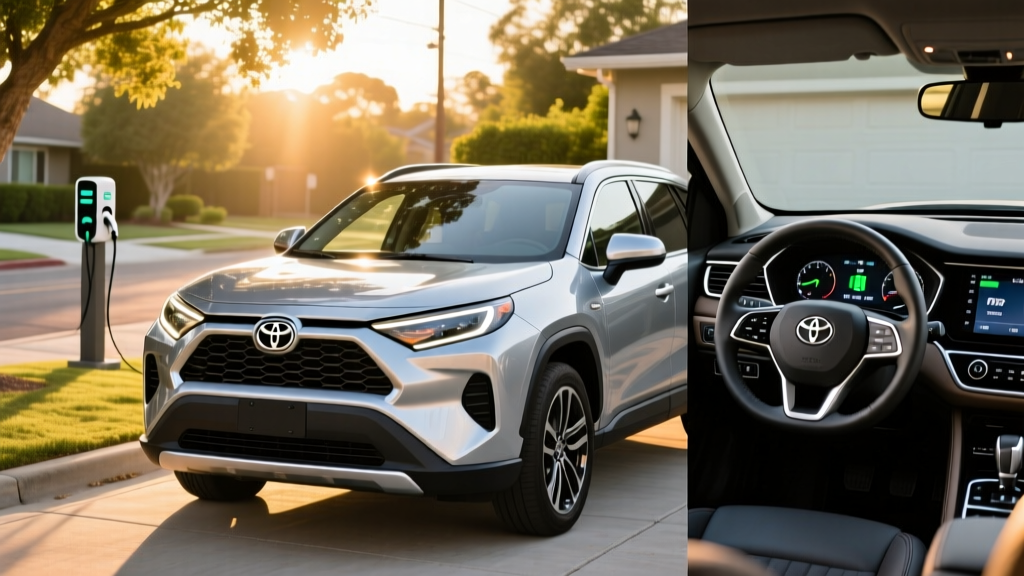
The Toyota RAV4 Hybrid XLE occupies the sweet spot of America's best-selling hybrid SUV lineup. It delivers all-wheel drive standard, a proven 219-horsepower hybrid powertrain, and an EPA-rated 41 city / 38 highway / 39 combined MPG — all without ever needing to plug in. For 2026, the XLE trim adds enough tech and comfort to satisfy most buyers without pushing into the premium pricing of the Limited or Woodland trims.
If you're cross-shopping the RAV4 Hybrid XLE against the RAV4 Prime (the plug-in hybrid variant) or a full battery-electric vehicle like the Tesla Model Y, this guide breaks down exactly where the conventional hybrid wins — and where it falls short.
| Powertrain | 2.5L 4-cyl + 3 electric motors (AWD) |
| Combined HP | 219 hp |
| EPA MPG (City/Hwy/Combined) | 41 / 38 / 39 |
| Drivetrain | Electronic AWD (eAWD) standard |
| Battery Type | Lithium-ion (sealed, self-charging) |
| 0–60 mph | ~7.4 seconds |
| Cargo Volume | 37.5 cu ft (rear seats up) |
| Base MSRP | ~$34,030 (incl. destination) |
HEV vs PHEV: Understanding the RAV4 Hybrid Lineup
Toyota sells two electrified RAV4 variants, and confusing them is the single most common mistake buyers make at the dealership:
RAV4 Hybrid (HEV)
How it works: A gasoline engine and electric motors work together. The battery recharges through regenerative braking and the engine — you never plug it in.
- 219 hp combined
- 39 MPG combined EPA
- No plug, no charging infrastructure needed
- MSRP from ~$34,030
RAV4 Prime (PHEV)
How it works: A larger battery lets you drive ~42 miles on electricity alone before the gas engine kicks in. You plug it in to recharge the battery.
- 302 hp combined
- 42 miles electric-only range
- 94 MPGe (electric + gas combined)
- MSRP from ~$44,500
The bottom line: The RAV4 Hybrid XLE is a conventional hybrid (HEV). It does not have a plug. It does not have meaningful electric-only range. If you want to drive on electricity alone for your daily commute, you need the RAV4 Prime (PHEV) or a full BEV.
Fuel Economy: EPA Ratings and Real-World MPG
The EPA rates the RAV4 Hybrid AWD at 41 city / 38 highway / 39 combined MPG. These are strong numbers for a compact SUV with standard all-wheel drive.
| Metric | City | Highway | Combined |
|---|---|---|---|
| EPA Rating | 41 MPG | 38 MPG | 39 MPG |
| Real-World Expectation | 40–44 MPG | 34–37 MPG | 37–41 MPG |
Why Hybrids Often Beat EPA in the City
Unlike gas-only vehicles, hybrids thrive in stop-and-go traffic. Every time you brake, the regenerative system recaptures energy and feeds it back into the battery. At low speeds, the electric motor handles most of the work, meaning the gasoline engine shuts off frequently. Many RAV4 Hybrid owners report 42–45 MPG in heavy urban commuting, exceeding the EPA city estimate.
Where You'll Lose MPG
Highway driving is the hybrid's weak spot relative to its city numbers. At sustained 70–80 mph speeds, the electric motor contributes less and the 2.5L engine carries the load. Expect 34–37 MPG on long highway trips. Cold weather (below 35°F) will also reduce fuel economy by roughly 5–10% as the engine runs more often to provide cabin heat and maintain battery temperature.
Powertrain and Performance: 219 HP with eAWD
The RAV4 Hybrid uses Toyota's fifth-generation hybrid system: a 2.5-liter Dynamic Force four-cylinder engine paired with two front electric motors and one rear electric motor. The rear motor provides electronic all-wheel drive (eAWD) — there's no mechanical driveshaft connecting the front and rear axles.
Total system output is 219 horsepower, which propels the RAV4 Hybrid XLE from 0–60 mph in approximately 7.4 seconds. That's competitive with turbocharged rivals like the Honda CR-V Hybrid and noticeably quicker than the non-hybrid RAV4 (which manages about 8.1 seconds).
The eAWD system engages the rear motor automatically when the front wheels slip — in rain, snow, or during hard acceleration from a stop. It's not a dedicated off-road system, but it provides confident traction in adverse weather. For more rugged capability, Toyota offers the Woodland Edition trim with a tuned suspension and all-terrain tires, though that sacrifices roughly 1 MPG.
Pricing, Trims, and Tax Credit Eligibility
The 2026 RAV4 Hybrid XLE starts at approximately $34,030 including destination charges. Key standard equipment includes:
- 8-inch touchscreen with wireless Apple CarPlay and Android Auto
- Toyota Safety Sense 3.0 (adaptive cruise, lane-keeping, automatic emergency braking, blind-spot monitoring)
- LED headlights and taillights
- Smart Key with push-button start
- Dual-zone automatic climate control
- Electronic AWD standard
Adding options like the Convenience Package (power liftgate, auto-dimming mirror) or the Weather Package (heated seats, heated steering wheel) pushes the price toward $36,000–$37,000.
Does the RAV4 Hybrid Qualify for a Federal Tax Credit?
Some states offer their own incentives for hybrid purchases, though these are increasingly rare as state programs shift focus to plug-in vehicles. Check your state's energy or environmental agency website for current programs.
Battery Warranty, Lifespan, and Replacement Cost
How Long Does the Hybrid Battery Actually Last?
Toyota's hybrid battery packs use a lithium-ion chemistry designed for longevity rather than maximum energy density. Because the battery is relatively small (roughly 1.6 kWh usable) and the hybrid system never fully charges or fully depletes it — typically operating between 40% and 80% state of charge — the cells experience minimal stress.
Real-world data from millions of Toyota hybrids on the road shows that most hybrid batteries last 150,000–200,000+ miles before significant degradation. Many first-generation Prius taxis exceeded 300,000 miles on the original battery. The RAV4 Hybrid's newer lithium-ion pack should perform at least as well.
Battery Replacement Cost
If the hybrid battery does fail outside of warranty, a replacement from Toyota typically costs between $3,000 and $5,000 including parts and labor at a dealership. Independent hybrid specialists may offer refurbished packs for $1,500–$2,500. This is dramatically less than a full EV battery replacement ($10,000–$20,000+), which is one reason conventional hybrids carry lower long-term anxiety for some buyers.
RAV4 Hybrid vs RAV4 Prime vs Full EV: Which Should You Choose?
The decision between a conventional hybrid, a plug-in hybrid, and a battery-electric vehicle depends on your driving patterns, home charging access, and budget. Here's a practical framework:
Choose the RAV4 Hybrid (HEV) if:
- You don't have access to home charging (apartment, street parking, no garage outlet)
- You want maximum simplicity — no plugs, no charging apps, no range planning
- Your budget is under $38,000
- You drive mostly in the city where the hybrid system excels
- You want AWD without the price premium of a PHEV or EV
Choose the RAV4 Prime (PHEV) if:
- You can charge at home (Level 1 or Level 2) every night
- Your daily commute is under 42 miles round-trip (you'd rarely use gas)
- You want 302 hp and the option for electric-only driving
- You may qualify for the $7,500 federal tax credit (check IRS §30D requirements for income/MSRP caps)
- Budget allows $44,500+ before incentives
Choose a Full EV (e.g., Tesla Model Y, Hyundai Ioniq 5) if:
- You have reliable Level 2 home charging
- You want zero tailpipe emissions and the lowest per-mile fuel cost
- You're willing to plan charging stops on road trips (or mostly drive under 250 miles)
- You want the lowest maintenance costs (no oil changes, no engine)
- You qualify for federal/state EV incentives
Reliability and Ownership Costs
The RAV4 Hybrid benefits from Toyota's reputation for reliability and one of the most proven hybrid powertrains in the automotive industry. The hybrid system has been refined over 25+ years since the original Prius. There are no additional maintenance items versus the gas RAV4 — no hybrid-specific fluid changes, no plug-in hardware to maintain.
Toyota Safety Sense 3.0 comes standard, which includes pre-collision braking with pedestrian detection, lane departure alert with steering assist, automatic high beams, and full-speed-range dynamic radar cruise control. The RAV4 Hybrid earns top marks from the IIHS and is expected to maintain its Top Safety Pick status for 2026.
Insurance costs for the RAV4 Hybrid are typically on par with the gas-only RAV4 — about $1,400–$1,800 per year depending on your profile and state. This is notably lower than most EVs, which carry 15–25% higher premiums on average due to repair costs.
Pros and Cons of the RAV4 Hybrid XLE
Pros
- 39 MPG combined with AWD standard — no plug required
- City MPG often exceeds EPA in real-world stop-and-go driving
- 10-year / 150,000-mile hybrid battery warranty
- Proven, reliable powertrain with 25+ years of Toyota hybrid refinement
- Competitive starting price (~$34,030) vs. PHEV and EV rivals
- Strong resale value — RAV4 Hybrids hold value exceptionally well
- Toyota Safety Sense 3.0 standard on all trims
Cons
- No federal tax credit (HEV, not a plug-in)
- Highway MPG drops to 34–37 in real-world sustained driving
- Infotainment system functional but not class-leading in responsiveness
- Engine noise is noticeable under hard acceleration (CVT drone)
- Not eligible for HOV lane access in most states (unlike PHEVs/EVs)
- Long dealer wait times — RAV4 Hybrids remain in high demand with limited inventory
Frequently Asked Questions
How many MPG does the RAV4 Hybrid XLE get?
The EPA rates it at 41 city / 38 highway / 39 combined MPG. In real-world driving, expect 40–44 MPG in city traffic and 34–37 MPG on sustained highway trips. Cold weather may reduce these figures by 5–10%.
Does the RAV4 Hybrid need to be plugged in?
No. The RAV4 Hybrid is a conventional hybrid (HEV). The battery charges itself through regenerative braking and the gasoline engine. There is no plug and no need for any charging infrastructure.
What's the difference between the RAV4 Hybrid and the RAV4 Prime?
The RAV4 Hybrid (HEV) does not plug in and gets 39 MPG combined. The RAV4 Prime (PHEV) plugs in, offers 42 miles of electric-only range, produces 302 hp, and starts around $44,500. The Prime may qualify for a federal tax credit; the Hybrid does not.
Is the RAV4 Hybrid reliable? What does a battery replacement cost?
The RAV4 Hybrid is among the most reliable compact SUVs sold today. Toyota covers the hybrid battery for 10 years / 150,000 miles. Most batteries last well beyond 150,000 miles. If replacement is needed out of warranty, expect $3,000–$5,000 at a dealer or $1,500–$2,500 from an independent hybrid specialist.
Does the RAV4 Hybrid qualify for any tax credit?
No federal tax credit applies to the conventional RAV4 Hybrid (HEV). The IRS §30D Clean Vehicle Credit is limited to plug-in vehicles (BEVs and qualifying PHEVs). Some states may offer minor hybrid incentives, but these are increasingly uncommon. Check your state energy office for details.
How does the RAV4 Hybrid compare to a full EV like the Tesla Model Y?
The RAV4 Hybrid costs roughly $10,000–$15,000 less upfront, never needs charging, and gets 39 MPG. A Model Y costs more but offers ~310 miles of electric range, lower per-mile fuel costs (electricity vs. gas), and near-zero maintenance. The right choice depends on your charging access, budget, and willingness to adapt to EV ownership. If you can charge at home and mostly drive under 250 miles daily, the EV saves more long-term. If you lack home charging or frequently drive long distances in areas with sparse charging infrastructure, the hybrid is the practical pick.