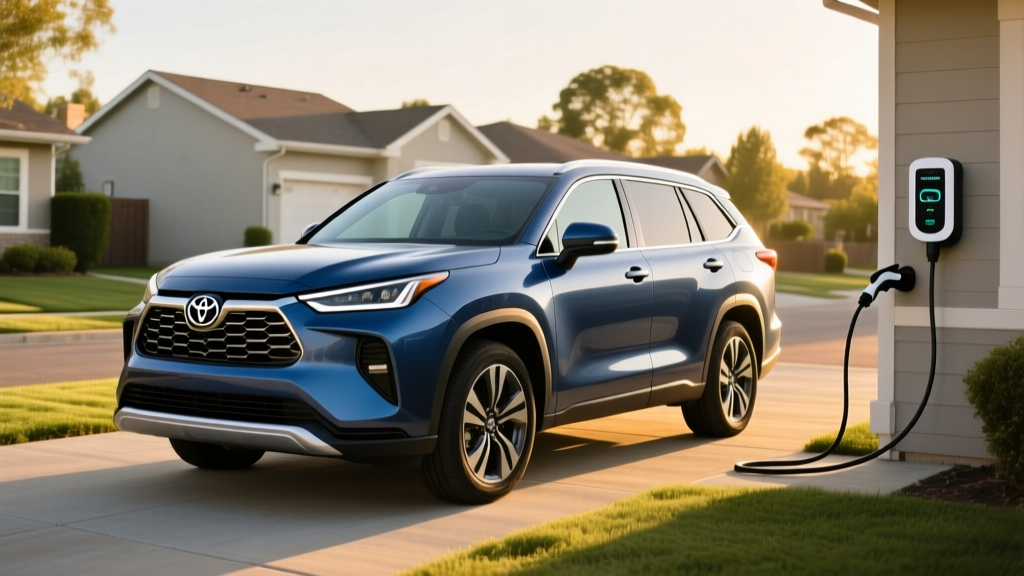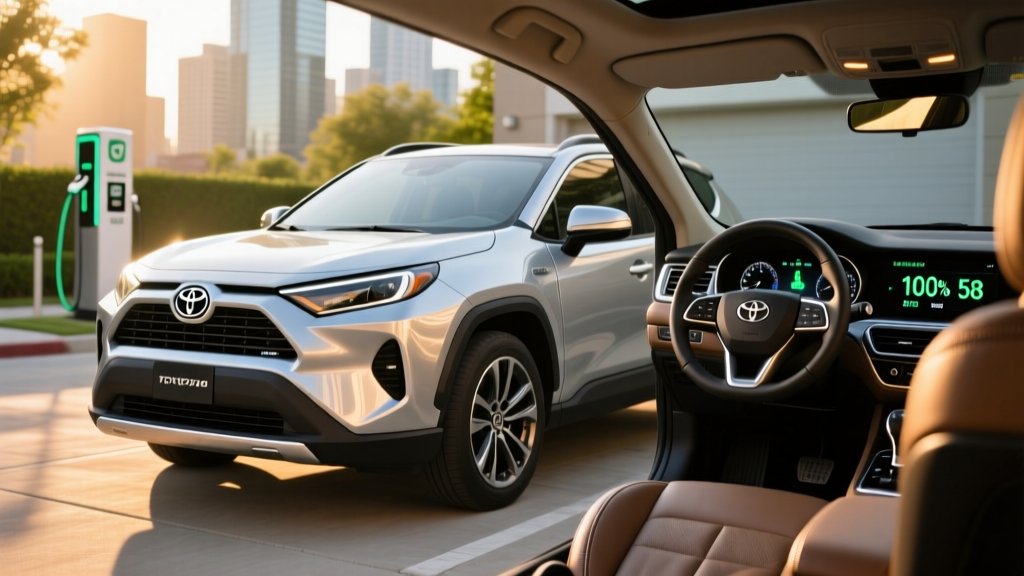
The Toyota RAV4 Hybrid has been the best-selling hybrid SUV in America for years, and for good reason: it delivers genuine fuel savings without requiring any change to your daily routine. No plugs, no charging apps, no range anxiety — just fill up with gas and go. The mid-range XLE trim sits in the sweet spot of the lineup, offering Toyota Safety Sense 3.0, an 8-inch touchscreen, and wireless smartphone integration without the premium-trim price jump.
But with the RAV4 Prime plug-in hybrid (PHEV) sitting right next to it on the showroom floor — and full EVs like the Tesla Model Y and Hyundai Ioniq 5 competing for the same buyers — where does the conventional RAV4 Hybrid XLE actually fit? This guide breaks down every number that matters.
2026 RAV4 Hybrid XLE at a Glance: Key Specs
| Specification | Value |
|---|---|
| Powertrain Type | Conventional Hybrid (HEV) — no plug-in |
| Engine | 2.5L 4-cylinder Dynamic Force + 3 electric motors |
| Combined Horsepower | 219 hp (net system) |
| Drivetrain | Electronic On-Demand AWD (standard) |
| EPA Fuel Economy (City / Hwy / Combined) | 41 / 38 / 39 MPG |
| Fuel Tank Capacity | 14.5 gallons |
| Total Driving Range | ~565 miles (EPA combined) |
| 0–60 mph | 7.4 seconds |
| Cargo Volume (behind rear seats) | 37.5 cu ft |
| Towing Capacity | 1,750 lbs |
| Base MSRP (XLE AWD) | $33,595 (est. incl. destination) |
| Federal Tax Credit (§30D) | Not eligible — HEVs excluded |
| Hybrid Battery Warranty | 10 years / 150,000 miles |
EPA MPG vs. Real-World Fuel Economy
The EPA rates the RAV4 Hybrid XLE at 41 city / 38 highway / 39 combined MPG according to fueleconomy.gov. That's the official sticker number, but real-world results often tell a slightly different story — and in the RAV4 Hybrid's case, that story is usually favorable.
Toyota's hybrid system is optimized for stop-and-go driving. The electric motors handle low-speed propulsion, the engine kicks in for higher loads, and regenerative braking recaptures energy at every stoplight. In city driving, many owners report 42–44 MPG in moderate temperatures, slightly exceeding the EPA city estimate. This is a common trait of Toyota hybrids: the city cycle plays to the system's strengths.
Highway driving is where the picture shifts. At sustained 70–80 mph speeds, the 2.5L engine does most of the work with less electric assist. Expect 35–37 MPG on the highway in real-world conditions, especially with roof rails, cargo, or headwinds. Cold weather (below 35°F) can drop combined fuel economy by 3–5 MPG due to increased engine runtime for cabin heat and reduced battery efficiency.
- City (moderate weather): 41–44 MPG
- Highway (65–75 mph): 35–37 MPG
- Combined (mixed driving): 37–40 MPG
- Cold-weather penalty: ~3–5 MPG combined reduction
For context, a comparably equipped gas-only RAV4 LE AWD returns about 30 MPG combined. The hybrid saves roughly 9 MPG, which translates to approximately 110 fewer gallons per year at 15,000 miles — about $350–$400 in annual fuel savings at $3.50/gallon.
HEV vs. PHEV: RAV4 Hybrid vs. RAV4 Prime
This is the most common cross-shopping question in Toyota showrooms. The RAV4 Hybrid is a conventional hybrid (HEV): it has a small battery that charges itself through regenerative braking and the gasoline engine. You never plug it in. The RAV4 Prime is a plug-in hybrid (PHEV): it has a much larger battery that you can charge from a wall outlet or public charger, enabling electric-only driving.
| Attribute | RAV4 Hybrid XLE (HEV) | RAV4 Prime XSE (PHEV) |
|---|---|---|
| Powertrain Type | Conventional Hybrid | Plug-in Hybrid |
| Combined Horsepower | 219 hp | 302 hp |
| EPA Combined MPG (hybrid mode) | 39 MPG | 38 MPG (after battery depletes) |
| Electric-Only Range | None (motor assists only) | 42 miles (EPA) |
| MPGe (electric + gas combined) | N/A | 94 MPGe |
| Battery Capacity | ~1.6 kWh (NiMH, self-charging) | 18.1 kWh (Li-ion, plug-in) |
| Plug-In Charging | No — never needs plugging in | Yes — Level 1 (~5.5 hrs) or Level 2 (~2.5 hrs) |
| DC Fast Charging | N/A | Not supported |
| 0–60 mph | 7.4 sec | 5.7 sec |
| Base MSRP | ~$33,595 (XLE) | ~$44,990 (SE) |
| Federal Tax Credit (§30D) | Not eligible | Up to $7,500 (subject to eligibility) |
| AWD | Standard | Standard |
The bottom line: The RAV4 Prime delivers 42 miles of electric-only range and significantly more power, but costs roughly $11,000 more before any tax credit. If you can charge at home and your daily commute is under 40 miles round-trip, the Prime can run almost entirely on electricity during the week, with the gas engine available for longer trips. If you lack home charging access or want a lower purchase price, the conventional Hybrid XLE is the more practical choice.
Powertrain Deep Dive: How the Hybrid System Works
The RAV4 Hybrid uses Toyota's fourth-generation hybrid system (THS IV). A 2.5-liter Dynamic Force 4-cylinder engine produces 176 hp and 163 lb-ft of torque on its own. Two front-mounted electric motor-generators add supplemental drive power, and a third motor on the rear axle provides electronic AWD — there's no mechanical driveshaft connecting the front and rear axles.
The combined net system output is 219 horsepower. The rear motor engages automatically when the system detects front-wheel slip or during hard acceleration from a stop. It's not a full-time AWD system in the traditional sense, but it provides confident traction in rain and light snow.
The hybrid battery in the RAV4 Hybrid is a nickel-metal hydride (NiMH) pack with approximately 1.6 kWh of capacity. It sits under the rear seats, preserving cargo space. This battery is never charged from an external source — it's replenished exclusively through regenerative braking and the gasoline engine. The system constantly manages the battery's state of charge, keeping it in a narrow operating window (roughly 40–80% SoC) to maximize longevity.
Pricing, Trims, and Tax Credit Eligibility
The 2026 RAV4 Hybrid is available in LE, XLE, XLE Premium, SE, XSE, and Limited trims. The XLE, our focus here, typically starts around $33,595 including destination charges. Key XLE features include:
- Toyota Safety Sense 3.0 (pre-collision, lane departure, dynamic radar cruise, lane tracing)
- 8-inch touchscreen with wireless Apple CarPlay and Android Auto
- Blind Spot Monitor with Rear Cross-Traffic Alert
- Dual-zone automatic climate control
- Smart Key with push-button start
- 18-inch alloy wheels
Popular options that push the price toward $36,000–$38,000 include the Convenience Package (power liftgate, auto-dimming mirror), panoramic glass roof, and heated front seats with a heated steering wheel.
Some states offer their own hybrid incentives — for example, certain utility companies provide rebates for hybrid purchases. Check your state energy office or local utility for current programs, as these vary widely by jurisdiction.
Hybrid Battery Warranty, Lifespan, and Replacement Cost
Hybrid battery longevity is consistently the top concern among first-time hybrid buyers. Here's what the data shows:
- Coverage: 10 years or 150,000 miles (whichever comes first)
- What's covered: Hybrid battery pack, hybrid control module, inverter
- Applies to: Original owner and all subsequent owners (transferable)
- Capacity threshold: Toyota covers the battery if it falls below a defined performance threshold, not a specific percentage
In practice, Toyota's hybrid batteries have an excellent longevity record. Independent data from fleet operators and owner surveys suggests most RAV4 Hybrid batteries retain functional capacity well beyond 150,000 miles. The NiMH chemistry used in the RAV4 Hybrid is less energy-dense than lithium-ion but extremely durable — it's the same chemistry Toyota has used since the original Prius in 1997.
If the battery does eventually need replacement outside of warranty, expect a cost of $2,500–$4,000 for a new OEM pack from a Toyota dealer, including labor. Refurbished or aftermarket packs are available for $1,500–$2,500. For context, this is significantly less than a full EV battery replacement and comparable to a major engine or transmission repair on a conventional vehicle.
Tips to maximize hybrid battery life:
- Drive regularly — hybrid batteries degrade faster when vehicles sit unused for weeks
- Avoid frequent full-throttle launches (the battery discharges faster under heavy load)
- In extreme heat, park in shade or a garage when possible
- Follow Toyota's scheduled maintenance intervals
Who Should Buy the RAV4 Hybrid XLE — and Who Shouldn't
Choose the RAV4 Hybrid XLE If:
- You want lower fuel costs without changing your driving or charging habits
- You lack access to home or workplace charging (apartment, street parking)
- Your budget is $33,000–$38,000 and you want AWD standard
- You drive 12,000–18,000 miles/year and want to minimize gas stops
- You value Toyota's reliability reputation and 10-year hybrid warranty
Look Elsewhere If:
- You want electric-only driving for your commute (consider the RAV4 Prime PHEV or a full BEV)
- You want to maximize federal tax credits (§30D requires a plug-in vehicle)
- You need more than 1,750 lbs of towing capacity
- You prioritize rapid acceleration (the 219 hp hybrid is adequate, not quick — the Prime at 302 hp is significantly faster)
- You want the newest EV tech like V2L (vehicle-to-load) power output
Hybrid vs. PHEV vs. Full EV — Decision Framework:
- Conventional Hybrid (RAV4 Hybrid): Best for drivers who can't charge at home, want a lower purchase price, and don't want to think about charging infrastructure. You save ~$400/year in fuel with zero behavioral change.
- Plug-in Hybrid (RAV4 Prime): Best for drivers with home charging and sub-42-mile commutes who still want gas-engine flexibility for road trips. Higher upfront cost, but the $7,500 potential tax credit narrows the gap.
- Full EV (e.g., Tesla Model Y, Hyundai Ioniq 5): Best for drivers with reliable home charging who want the lowest operating costs, strongest acceleration, and zero tailpipe emissions. Higher purchase price but lowest cost-per-mile and minimal maintenance.
Frequently Asked Questions
How many MPG does the RAV4 Hybrid XLE get?
The EPA rates it at 41 city / 38 highway / 39 combined MPG. In real-world driving, expect 37–40 MPG combined, with city driving sometimes exceeding the EPA estimate and highway driving falling slightly below it.
Does the RAV4 Hybrid need to be plugged in?
No. The RAV4 Hybrid is a conventional hybrid (HEV). Its battery charges exclusively through regenerative braking and the gasoline engine. You never plug it in — just fill up at any gas station.
How far can the RAV4 Prime go on electric only?
The RAV4 Prime PHEV has an EPA-rated 42 miles of electric-only range. After the battery depletes, it operates as a conventional hybrid at 38 MPG combined. Total range (electric + gas) exceeds 600 miles. Note: the conventional RAV4 Hybrid does not have any electric-only driving range.
Is the RAV4 Hybrid reliable, and what does a battery replacement cost?
Toyota's hybrid system is among the most proven in the industry, with decades of data from millions of vehicles. The hybrid battery is warranted for 10 years / 150,000 miles. Out-of-warranty replacement runs $2,500–$4,000 for an OEM pack, or $1,500–$2,500 for a refurbished unit.
Does the RAV4 Hybrid qualify for any federal tax credit?
No. The IRS §30D Clean Vehicle Credit applies only to plug-in electric vehicles (BEVs and PHEVs) that meet specific battery sourcing, MSRP, and buyer income requirements. The conventional RAV4 Hybrid is not a plug-in vehicle and is therefore ineligible. The RAV4 Prime PHEV may qualify, depending on your eligibility — check current rules at IRS.gov.
How does the RAV4 Hybrid XLE compare to competitors?
Key rivals include the Honda CR-V Hybrid (40 MPG combined, ~$35,395), Hyundai Tucson Hybrid (38 MPG combined, ~$34,990), and Ford Escape Hybrid (39 MPG combined, ~$34,500). The RAV4 Hybrid's advantages are its standard AWD across all trims, slightly higher cargo volume, and Toyota's long-standing hybrid reliability track record. The CR-V Hybrid edges it out by 1 MPG combined, while the Tucson Hybrid offers a longer powertrain warranty.
What's the total cost of ownership over 5 years?
At 15,000 miles/year and $3.50/gallon, the RAV4 Hybrid XLE uses approximately 385 gallons annually (~$1,347/year in fuel). A gas-only RAV4 at 30 MPG combined would use 500 gallons (~$1,750/year). That's roughly $2,000 in fuel savings over five years. Combined with Toyota's strong resale value and low maintenance costs (no timing belt, regenerative braking saves brake pads), the RAV4 Hybrid's total cost of ownership is competitive with — and often lower than — non-hybrid compact SUVs despite the higher sticker price.