RAV4 Hybrid or RAV4 Prime — Is It Hybrid?
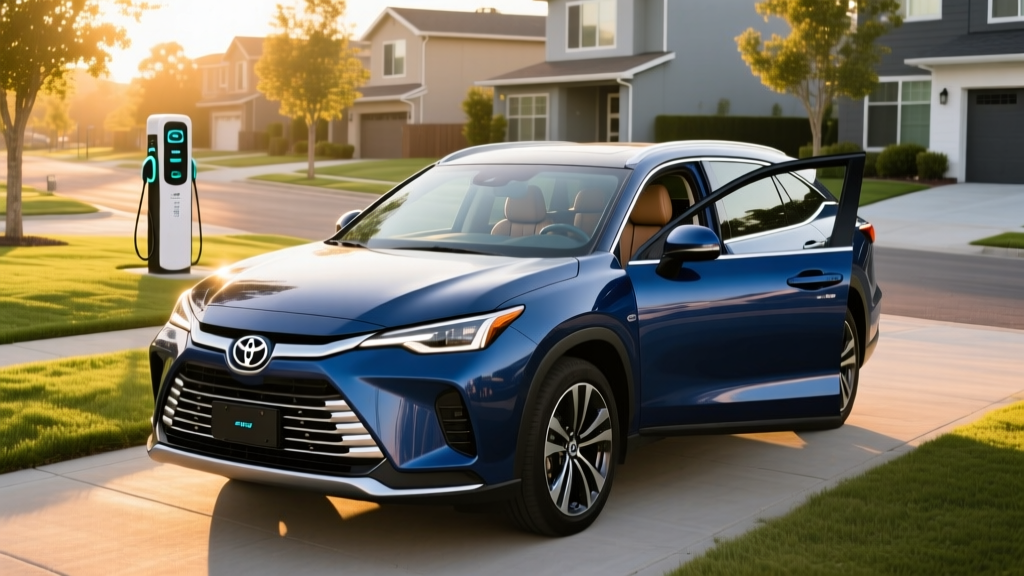
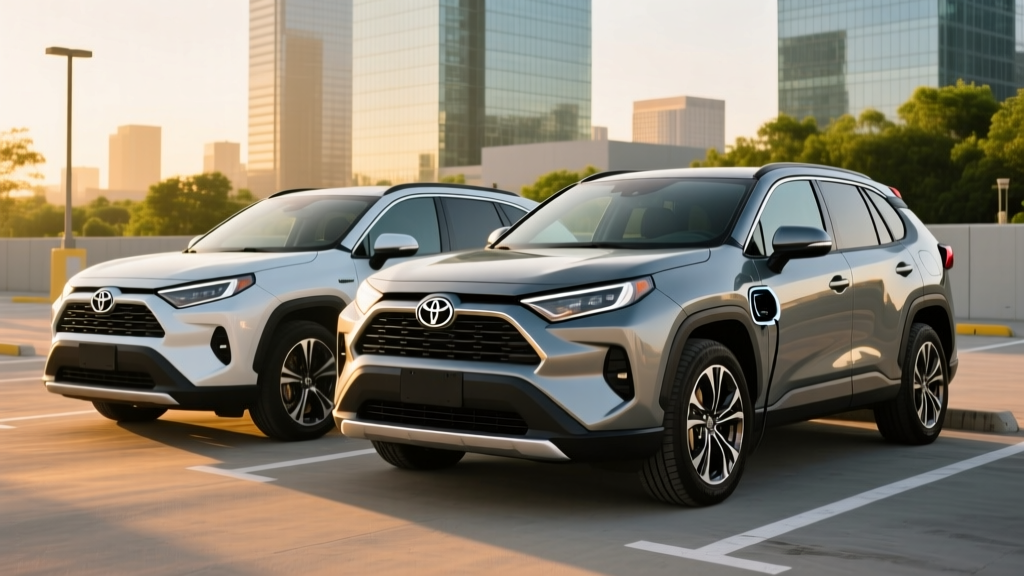
Walk into any Toyota dealership and you'll find two electrified RAV4 variants on the lot: the RAV4 Hybrid and the RAV4 Prime. Both use gasoline engines paired with electric motors, but the answer to "is it hybrid?" depends entirely on which one you're looking at. The RAV4 Hybrid is a conventional hybrid (HEV) — it never plugs in. The RAV4 Prime is a plug-in hybrid (PHEV) — it has a larger battery you charge from a wall outlet or public charger, giving it substantial electric-only driving range before the gas engine kicks in.
This distinction matters enormously for your fuel costs, daily driving routine, and whether you qualify for federal tax incentives. Below, we break down both powertrains with exact EPA figures, real-world expectations, and ownership costs so you can pick the right one.
HEV vs PHEV: What's the Actual Difference?
| Attribute | RAV4 Hybrid (HEV) | RAV4 Prime (PHEV) |
|---|---|---|
| Plugs in? | No — self-charging via regen & engine | Yes — Level 1 or Level 2 charging |
| Battery size | 1.6 kWh (NiMH) | 18.1 kWh (lithium-ion) |
| Electric-only range | ~1 mile at low speed | 42 miles (EPA) |
| Total combined range | ~580 miles | ~600 miles (EV + gas) |
| Combined horsepower | 219 hp | 302 hp |
| 0-60 mph | 7.4 seconds | 5.7 seconds |
| Federal tax credit | Not eligible (§30D) | Eligible — up to $7,500 (rules apply) |
| Base MSRP (2026) | $33,425 | $44,515 |
The conventional hybrid generates all its electricity internally. A small battery buffers energy captured from regenerative braking and the gasoline engine. You simply fill it with gas and drive — no charging cables, no home electrical work, no range planning. The PHEV's 18.1 kWh lithium-ion pack stores enough energy for genuine daily commuting on electricity alone, then operates as a conventional hybrid once the battery depletes.
Fuel Economy: EPA MPG and Real-World Numbers
| Model | City MPG | Highway MPG | Combined MPG | MPGe (EV mode) |
|---|---|---|---|---|
| RAV4 Hybrid AWD | 41 | 38 | 39 | N/A |
| RAV4 Prime AWD (gas only) | 40 | 36 | 38 | 94 MPGe |
Source: EPA fueleconomy.gov
Real-world MPG reality check: Toyota's hybrid system excels in stop-and-go city driving where regenerative braking recaptures energy constantly. Many RAV4 Hybrid owners report 42-44 MPG in urban commuting, slightly exceeding the EPA city rating. Highway driving is where hybrids lose their advantage — at sustained 70-80 mph speeds, the gasoline engine does nearly all the work, and you'll see 34-36 MPG. Cold weather reduces MPG by roughly 5-10% as the engine runs more frequently to provide cabin heat.
For the RAV4 Prime, the 38 MPG combined gas rating applies only after the 42-mile EV range depletes. If your daily commute falls within that electric window and you charge nightly, you might use gasoline only a handful of times per month.
RAV4 Prime Electric-Only Range and Charging
The RAV4 Prime's EPA-rated electric range is 42 miles — enough to cover the average American's one-way commute (roughly 16 miles each way, per Census data) with margin to spare. In real-world testing, expect 36-40 miles of EV range in warm weather at mixed speeds, dropping to 30-34 miles in freezing temperatures when the cabin heater draws significant power from the pack.
Charging the 18.1 kWh battery:
- Level 1 (120V household outlet): ~5.5 hours from empty to full using the included cordset. Fine for overnight charging if your daily driving stays under 40 miles.
- Level 2 (240V home charger, 3.3 kW onboard): ~2.5 hours to full. The RAV4 Prime's onboard charger maxes out at 3.3 kW on the base SE trim and 6.6 kW on the XSE with the Premium Package. With the 6.6 kW upgrade, charge time drops to approximately 1.5 hours.
- DC fast charging: Not available. The RAV4 Prime does not support DC fast charging — a notable limitation shared with most PHEVs in this class.
This means the Prime is optimized for home and destination charging, not road-trip rapid top-ups. On a long highway drive, you'll simply operate as a hybrid once the battery depletes, running the 2.5-liter four-cylinder engine.
Powertrain Specs: Engine, Motors, and Horsepower
| Specification | RAV4 Hybrid | RAV4 Prime |
|---|---|---|
| Engine | 2.5L 4-cyl Atkinson cycle | 2.5L 4-cyl Atkinson cycle |
| Engine output | 176 hp / 163 lb-ft | 177 hp / 165 lb-ft |
| Front electric motor | 118 hp | 174 hp |
| Rear electric motor (AWD) | 54 hp | 54 hp |
| Net combined horsepower | 219 hp | 302 hp |
| Transmission | eCVT | eCVT |
| Drivetrain | AWD (electronic rear axle) | AWD (electronic rear axle) |
| Towing capacity | 1,750 lbs | 2,500 lbs |
The Prime's larger electric motors and bigger battery deliver a meaningful performance edge: 302 combined horsepower and a 5.7-second 0-60 time make it the quickest RAV4 Toyota sells. The Hybrid's 219 hp is adequate for merging and passing but won't surprise anyone. Both use Toyota's eCVT, which is really a planetary gearset — not a belt-driven CVT — and it operates smoothly without the rubber-band feel of conventional continuously variable transmissions.
Pricing, Tax Credits, and Total Cost
Here's where the math gets interesting:
- RAV4 Hybrid LE: $33,425 MSRP (2026). No federal EV tax credit under IRS §30D because conventional hybrids do not have sufficient battery capacity or plug-in capability.
- RAV4 Prime SE: $44,515 MSRP (2026). May qualify for the federal §30D plug-in hybrid tax credit of up to $7,500, which can be transferred to the dealer at point of sale as an instant discount.
§30D tax credit eligibility for the RAV4 Prime requires:
- Buyer income below caps: $150,000 single / $300,000 married filing jointly
- Vehicle MSRP under $80,000 (SUV cap — the Prime qualifies)
- Battery components and critical minerals sourcing thresholds (per IRS §30D rules)
- Credit amount varies based on sourcing compliance — confirm the current credit amount on IRS.gov before purchasing, as battery-sourcing requirements tighten annually
If the full $7,500 credit applies, the Prime's effective price drops to roughly $37,000 — narrowing the gap with the Hybrid to under $4,000. Factor in fuel savings from electric commuting (electricity at $0.14/kWh costs roughly $2.50 to "fill" the Prime's battery vs. $15-18 for a gallon-equivalent of gas), and the Prime pays back the premium within 2-3 years for most commuters who charge at home.
Battery Warranty, Reliability, and Replacement Cost
Toyota Hybrid Battery Warranty (2026 models):
- RAV4 Hybrid: 10 years / 150,000 miles (whichever comes first) on the hybrid battery
- RAV4 Prime: 10 years / 150,000 miles on the traction battery
- Both warranties cover battery capacity below 70% of original
Toyota's hybrid reliability track record is among the strongest in the industry. The Prius, which pioneered this powertrain, has demonstrated hybrid batteries lasting 200,000+ miles routinely. The RAV4 Hybrid's 1.6 kWh NiMH pack is small, lightly stressed, and rarely the source of failures. The Prime's larger lithium-ion pack operates within conservative charge limits (Toyota buffers the top and bottom of the pack to prevent degradation) and benefits from active thermal management.
Replacement cost if out of warranty:
- RAV4 Hybrid battery: approximately $3,000-$4,000 (parts and labor)
- RAV4 Prime battery: approximately $8,000-$10,000 (larger lithium-ion pack)
These are worst-case scenarios. Data from Consumer Reports consistently ranks Toyota hybrids among the most reliable vehicles, with hybrid-specific issues being rare within the warranty period.
Who Should Choose Which?
Choose the RAV4 Hybrid if:
- You don't have access to home or workplace charging
- You want maximum simplicity — just add gas and go
- Your budget starts under $35,000
- You drive mostly city miles and want 39+ MPG without behavior change
- You plan to keep the vehicle 10+ years and value proven, low-complexity tech
Choose the RAV4 Prime if:
- You have Level 2 charging at home or work
- Your daily commute is under 40 miles round-trip
- You qualify for the §30D tax credit (income and sourcing rules)
- You want 302 hp and 5.7-second 0-60 performance
- You want to drive mostly on electricity but need gas flexibility for road trips
- You tow — the Prime's 2,500-lb capacity beats the Hybrid's 1,750 lbs
The bottom line: If you can charge at home and your commute fits within 42 electric miles, the Prime is the stronger value after the tax credit. If charging access is uncertain or your budget is firm below $35K, the conventional Hybrid delivers excellent efficiency with zero lifestyle adjustment.
Hybrid vs PHEV vs Full EV — Which Fits You?
| Factor | HEV (RAV4 Hybrid) | PHEV (RAV4 Prime) | Full EV (e.g., Tesla Model Y) |
|---|---|---|---|
| Plug-in required? | No | Optional but recommended | Yes — mandatory |
| Daily fuel cost (30-mi commute) | ~$4.50 (gas) | ~$1.25 (electric) or ~$4.50 (gas) | ~$1.25 (electric) |
| Road trip flexibility | Excellent | Excellent | Good — requires route planning |
| Maintenance | Low (no plugs, standard hybrid) | Moderate (hybrid + charging) | Lowest (no engine/oil) |
| Cold weather impact | 5-10% MPG loss | 15-20% EV range loss | 20-30% range loss |
| Best for | No-charging-access buyers | Home-charging commuters | Home-charging, 2-car households |
Frequently Asked Questions
How many MPG does the RAV4 Hybrid get?
The EPA rates the 2026 RAV4 Hybrid AWD at 41 city / 38 highway / 39 combined MPG. Real-world city driving often yields 42-44 MPG thanks to generous regenerative braking, while sustained highway speeds above 70 mph typically return 34-36 MPG.
How far can the RAV4 Prime go on electric only?
The EPA rates the RAV4 Prime at 42 miles of electric-only range. Expect 36-40 miles in warm weather at mixed speeds, and 30-34 miles in freezing temperatures where the battery is less efficient and cabin heating draws additional power.
Does the RAV4 Hybrid need to be plugged in?
No. The RAV4 Hybrid is a conventional (self-charging) hybrid. Its small 1.6 kWh battery charges through regenerative braking and the gasoline engine. You never plug it in — just fill the gas tank.
Does the RAV4 Prime qualify for a tax credit?
The RAV4 Prime may qualify for the federal §30D clean vehicle credit of up to $7,500, which can be applied at the point of sale. Eligibility depends on buyer income (under $150K single / $300K joint), MSRP (under $80K for SUVs — the Prime qualifies), and battery component/critical mineral sourcing requirements. Check IRS.gov §30D guidance before purchasing, as sourcing rules tighten annually.
Is the RAV4 hybrid battery reliable and what does replacement cost?
Toyota's hybrid batteries carry a 10-year / 150,000-mile warranty and have an excellent longevity track record, commonly lasting well beyond 200,000 miles. Out-of-warranty replacement runs $3,000-$4,000 for the Hybrid and $8,000-$10,000 for the Prime's larger lithium-ion pack.
Can the RAV4 Prime DC fast charge?
No. The RAV4 Prime supports Level 1 (120V) and Level 2 (240V) AC charging only. There is no DC fast-charge port. A full Level 2 charge takes 1.5 to 2.5 hours depending on the onboard charger option (3.3 kW or 6.6 kW).