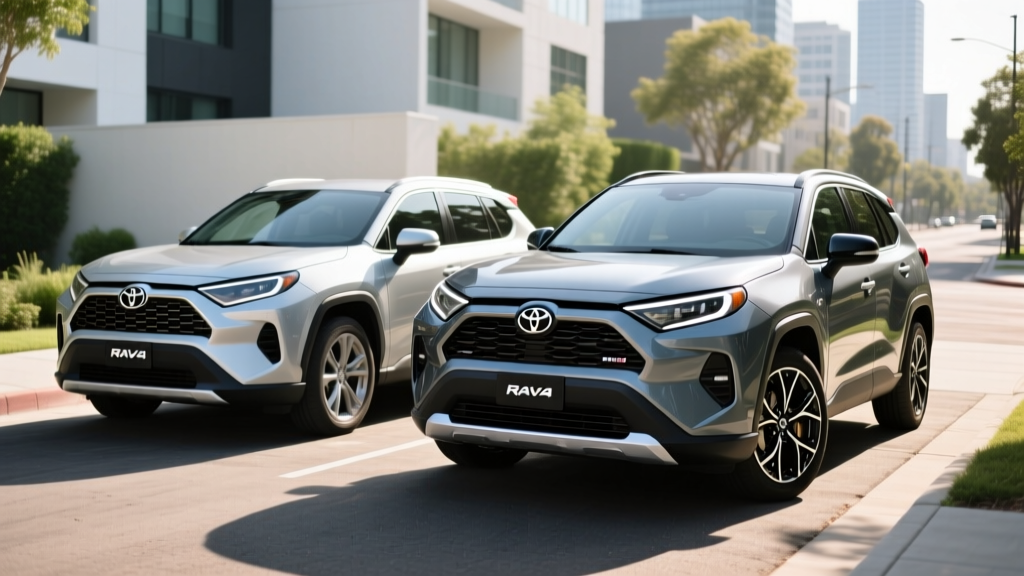
The Toyota RAV4 has dominated the compact SUV segment for years, and its two electrified variants — the conventional RAV4 Hybrid and the plug-in RAV4 Prime — represent two very different paths to efficiency. Both are legitimate hybrid superSUV contenders, combining practicality, all-wheel drive, and remarkable fuel economy. But choosing between them requires understanding exactly where each excels, where each falls short, and how your daily driving pattern should dictate your decision.
In this guide, we break down every spec that matters: EPA MPG, electric-only range, powertrain output, charging requirements, real-world efficiency, tax credit eligibility, battery longevity, and total cost of ownership. All figures reflect the current 2026 model year.
HEV vs PHEV: Understanding the Two RAV4 Flavors
Before diving into specs, the distinction between these two vehicles is fundamental — confusing them is the single most common mistake buyers make.
RAV4 Hybrid (HEV)
- Self-charging: Regenerative braking and the gasoline engine recharge the small 1.6 kWh battery. You never plug it in.
- No electric-only driving: The electric motor assists the engine and enables brief low-speed EV mode, but it cannot sustain highway speeds on electricity alone.
- Simplicity: No charging infrastructure needed. Fill up at any gas station and go.
RAV4 Prime (PHEV)
- Plug-in required for maximum benefit: An 18.1 kWh battery provides genuine electric-only range for daily commuting.
- Electric-then-gas: Drive ~42 miles on electricity, then the vehicle operates as a conventional hybrid once the battery is depleted.
- Higher upfront cost, lower operating cost: You pay more initially but can eliminate most gasoline use if your commute fits within the electric range.
If you have no access to home or workplace charging, the RAV4 Prime's advantage shrinks significantly. If you can charge overnight at home, the Prime becomes a dramatically different ownership experience.
EPA Fuel Economy: Head-to-Head MPG Numbers
| Metric | RAV4 Hybrid (AWD) | RAV4 Prime (AWD, Charge-Sustaining) | RAV4 Prime (Charge-Depleting / EV Mode) |
|---|---|---|---|
| City MPG | 41 | 40 | N/A (electric) |
| Highway MPG | 38 | 36 | N/A (electric) |
| Combined MPG | 39 | 38 | N/A |
| Combined MPGe (EV mode) | N/A | 94 MPGe | 94 MPGe |
| Electric-Only Range | N/A | 42 miles | 42 miles |
| Total Range (EV + Gas) | ~575 miles | ~600 miles | ~600 miles |
| Fuel Tank | 14.5 gal | 14.5 gal | 14.5 gal |
Source: fueleconomy.gov — EPA estimates. Your mileage will vary based on driving style, terrain, climate, and accessory use.
Real-World MPG: What to Actually Expect
Toyota's hybrid system is one of the few powertrains where real-world results frequently exceed the EPA sticker — specifically in city driving. The EPA city cycle underrepresents how aggressively Toyota's hybrid system recaptures energy during stop-and-go traffic.
- RAV4 Hybrid city driving: Expect 42–44 MPG in moderate-temperature urban conditions with normal traffic. Some owners report 45+ MPG on flat, low-speed commutes.
- RAV4 Hybrid highway driving: Expect 34–37 MPG at 70–75 mph. Aerodynamic drag hits hybrids harder at speed because the electric motor's low-speed efficiency advantage disappears.
- RAV4 Prime in hybrid mode: Nearly identical to the standard Hybrid once the battery is depleted — 36–38 combined is realistic.
- Cold-weather penalty: Both models lose 10–15% efficiency in sustained sub-freezing temperatures due to engine warm-up cycles and battery performance reduction. The Prime's electric range drops to roughly 32–36 miles in winter.
Powertrain & Performance Specs
| Specification | RAV4 Hybrid | RAV4 Prime |
|---|---|---|
| Engine | 2.5L 4-cylinder Atkinson | 2.5L 4-cylinder Atkinson |
| Engine HP | 176 hp | 177 hp |
| Front Electric Motor | 118 hp | 180 hp |
| Rear Electric Motor | 54 hp | 54 hp |
| Combined Net Output | 219 hp | 302 hp |
| 0–60 mph | 7.4 seconds | 5.7 seconds |
| Drivetrain | AWD (eAWD) | AWD (eAWD) |
| Transmission | eCVT | eCVT |
| Towing Capacity | 1,750 lbs | 2,500 lbs |
| Battery (Traction) | 1.6 kWh NiMH | 18.1 kWh Lithium-ion |
The Prime's 302 hp combined output makes it the quickest RAV4 Toyota sells — quicker than many turbocharged competitors and genuinely fun in passing maneuvers. The standard Hybrid's 219 hp is adequate for daily driving and merging but noticeably less eager.
Charging the RAV4 Prime: Times, Levels, and Limitations
The RAV4 Hybrid requires no charging whatsoever. For the Prime, here is what you need to know:
| Charging Level | Power | Time (0–100%) | Notes |
|---|---|---|---|
| Level 1 (120V household) | ~1.4 kW | ~12 hours | Trickle charge; viable only for low-mileage drivers |
| Level 2 (240V, 16A) | ~3.3 kW (onboard limit) | ~4.5 hours | Standard trim onboard charger |
| Level 2 (240V, 32A+) | ~6.6 kW (Premium trim) | ~2.5 hours | Requires Premium package with upgraded onboard charger |
| DC Fast Charge | N/A | N/A | RAV4 Prime does NOT support DC fast charging |
The absence of DC fast charging is a notable limitation. On road trips, you cannot quickly top up the battery at a public fast charger — the Prime operates as a conventional hybrid once the electric range is depleted. For a 42-mile electric range, however, overnight Level 2 charging is more than sufficient for daily commuting needs.
Home charging setup: A standard 120V outlet will work for light users, but a 240V Level 2 home charger is strongly recommended. Installation typically costs $500–$1,500 depending on your electrical panel's proximity to the parking spot and whether a panel upgrade is needed (source: typical electrician estimates for 240V/40A circuit installation).
Pricing, Trims, and Tax Credit Eligibility
| Trim / Model | MSRP (2026) | Federal Tax Credit |
|---|---|---|
| RAV4 Hybrid LE | ~$33,425 | None (HEV — not eligible for §30D) |
| RAV4 Hybrid XLE | ~$35,025 | None |
| RAV4 Hybrid XLE Premium | ~$37,500 | None |
| RAV4 Hybrid Woodland Edition | ~$37,200 | None |
| RAV4 Prime SE | ~$44,900 | Up to $7,500 (§30D — see eligibility below) |
| RAV4 Prime XSE | ~$48,800 | Up to $7,500 (§30D — see eligibility below) |
| RAV4 Prime XSE Premium | ~$52,500 | Up to $7,500 (§30D — see eligibility below) |
MSRP figures are approximate and include destination charges. Verify current pricing at Toyota.com.
Federal §30D Tax Credit: Who Qualifies for the RAV4 Prime?
The RAV4 Hybrid, as a conventional HEV, does not qualify for the federal §30D Clean Vehicle Credit. The RAV4 Prime, as a PHEV with an 18.1 kWh battery (exceeding the 7 kWh minimum), is potentially eligible — but only if you meet all current IRS requirements:
- Battery sourcing & critical minerals: The battery components and critical minerals must meet phased-in domestic-content thresholds that tighten each year through 2032. Verify current-year compliance on IRS.gov or the DOE's fueleconomy.gov credit lookup tool.
- Buyer income caps: Modified AGI must not exceed $150,000 (single), $225,000 (head of household), or $300,000 (joint).
- MSRP cap: The vehicle MSRP must not exceed $80,000 for SUVs (the RAV4 Prime clears this easily).
- Point-of-sale transfer: You may transfer the credit to the dealer at purchase to reduce your out-of-pocket cost immediately, rather than waiting to claim it on your tax return.
- North American assembly: The RAV4 Prime is assembled in Japan, which may affect eligibility depending on current-year sourcing rules — confirm before purchasing.
Important: Tax credit rules change annually and have complex sourcing requirements. Consult a tax professional and check the latest IRS guidance before relying on credit eligibility for your purchase decision.
Battery Longevity, Warranty, and Replacement Costs
Toyota Hybrid Battery Warranty
RAV4 Hybrid: 10 years / 150,000 miles (whichever comes first) for hybrid battery components.
RAV4 Prime: 10 years / 150,000 miles for the 18.1 kWh traction battery, with a capacity retention guarantee of at least 70% during the warranty period.
Hybrid system components (inverter, control module, etc.): 8 years / 100,000 miles on both models.
Real-World Battery Degradation
Toyota's hybrid battery track record is among the best in the industry. Data from long-term fleet observations and owner reports indicate:
- RAV4 Hybrid (NiMH, 1.6 kWh): The small buffer and conservative charge management mean degradation is rarely noticeable. Toyota Prius taxis routinely surpass 250,000 miles on original hybrid batteries. The RAV4 Hybrid uses the same proven architecture.
- RAV4 Prime (Li-ion, 18.1 kWh): Lithium-ion degradation typically runs 1–2% per year under normal use. Expect ~85–90% capacity retention after 5 years, meaning electric range drops from 42 to roughly 36–38 miles — still highly usable.
Battery Replacement Cost
If the worst happens outside warranty:
- RAV4 Hybrid battery replacement: $2,000–$4,000 (parts and labor at a Toyota dealer; refurbished units available for less)
- RAV4 Prime battery replacement: $8,000–$12,000 (larger lithium-ion pack; pricing expected to decrease as the supply chain matures)
Both figures are estimates based on current dealer parts pricing and may vary by region. Given Toyota's 10-year/150,000-mile warranty, most original owners will never face this cost.
RAV4 Hybrid vs Prime vs Full EV: Which Fits You?
Choose the RAV4 Hybrid If:
- You have no access to home or workplace charging
- You want maximum simplicity — no plugs, no apps, no charging planning
- Your budget is tighter ($33k–$38k range)
- You drive a mix of city and highway without a predictable short commute
- You want proven reliability with minimal new technology risk
Choose the RAV4 Prime If:
- You can install a Level 2 charger at home
- Your daily round-trip commute is under ~40 miles
- You want to eliminate most gasoline use without range-anxiety on road trips
- You value the 302 hp performance upgrade (5.7-second 0–60)
- You qualify for the federal tax credit, narrowing the price gap
Consider a Full EV (e.g., Tesla Model Y, Hyundai Ioniq 5) If:
- Your daily driving rarely exceeds 250 miles and you have reliable home charging
- You want zero gasoline purchases and minimal drivetrain maintenance
- You can access DC fast charging for road trips (250+ kW chargers for 15–20 minute stops)
- You're ready to fully commit to electric driving and accept cold-weather range loss of 20–30%
The 30-Second Decision Framework
No home charging access? → RAV4 Hybrid.
Home charging + commute under 40 miles? → RAV4 Prime.
Home charging + commute under 250 miles + comfortable with charging planning? → Full EV.
Frequently Asked Questions
How many MPG does the RAV4 Hybrid get?
The EPA rates the 2026 RAV4 Hybrid AWD at 41 city / 38 highway / 39 combined MPG. In real-world city driving, many owners see 42–44 MPG thanks to aggressive regenerative braking. Highway driving at 70+ mph typically yields 34–37 MPG.
How far can the RAV4 Prime go on electric only?
The EPA rates the RAV4 Prime at 42 miles of electric-only range. In real-world conditions, expect 38–42 miles in mild weather and 32–36 miles in sustained freezing temperatures due to battery performance reduction and cabin heating demands.
Does the RAV4 Hybrid need to be plugged in?
No. The RAV4 Hybrid is a conventional (self-charging) hybrid. Its small 1.6 kWh battery recharges through regenerative braking and the gasoline engine. You never plug it in. Only the RAV4 Prime requires plugging in to access its electric-only range.
Is the RAV4 Hybrid reliable?
Toyota's hybrid powertrain is one of the most proven in the industry, with over two decades of continuous refinement. The RAV4 Hybrid carries a 10-year/150,000-mile hybrid battery warranty. Independent reliability surveys from Consumer Reports and J.D. Power consistently rate Toyota hybrids at or near the top of their segments.
Does the RAV4 Prime qualify for a tax credit?
The RAV4 Prime may qualify for up to $7,500 under the federal §30D Clean Vehicle Credit, subject to buyer income limits ($150k single / $300k joint), battery sourcing requirements, and North American assembly rules. The standard RAV4 Hybrid does not qualify. Always verify current eligibility on IRS.gov before purchasing.
What is the battery replacement cost for a RAV4 Hybrid?
Outside of the 10-year/150,000-mile warranty, a RAV4 Hybrid battery replacement runs approximately $2,000–$4,000 at a Toyota dealer. Refurbished and aftermarket options are available for less. Given the warranty length and Toyota's track record, most owners will never need a replacement.
Can the RAV4 Prime DC fast charge?
No. The RAV4 Prime does not have a DC fast charging port. It charges via Level 1 (120V, ~12 hours) or Level 2 (240V, 2.5–4.5 hours depending on trim and onboard charger). This is typical for PHEVs with smaller batteries — the 42-mile range is designed for overnight home charging, not public fast charging.
Both the RAV4 Hybrid and RAV4 Prime are exceptional vehicles that serve different needs. The Hybrid is the default choice for buyers who want efficiency without complexity. The Prime rewards those with charging access and short commutes with near-EV daily driving and a serious performance upgrade. Either way, you're getting one of the most efficient, reliable compact SUVs on the road.