Quick Verdict: The Reliability Benchmark
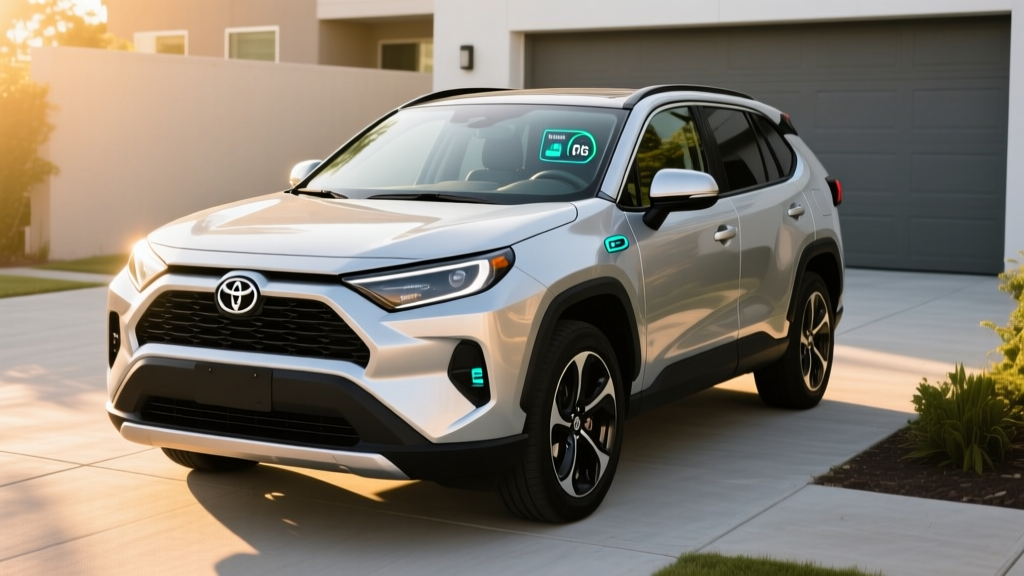
The Toyota RAV4 Hybrid remains one of the most dependable electrified vehicles on the market. With a combined EPA rating of 39 MPG, a proven 2.5-liter hybrid powertrain, and a hybrid battery warranty stretching to 10 years/150,000 miles, it offers a low-risk entry into electrified driving without the charging infrastructure concerns of a full battery-electric vehicle. For buyers researching RAV4 Hybrid reliability, the data consistently supports Toyota's reputation: this powertrain is built to outlast the vehicle around it.
| Specification | Value |
|---|---|
| Powertrain | 2.5L 4-cyl + 3 electric motors (AWD) |
| Combined Horsepower | 219 hp |
| EPA MPG (City / Hwy / Combined) | 41 / 38 / 39 MPG |
| Fuel Tank Capacity | 14.5 gallons |
| Total Range | ~565 miles |
| 0–60 mph | 7.4 seconds |
| Hybrid Battery Type | Nickel-Metal Hydride (NiMH) / Lithium-Ion (select trims) |
| Hybrid Battery Warranty | 10 years / 150,000 miles |
| Base MSRP (LE AWD) | $34,095 |
| Federal Tax Credit (§30D) | Not eligible (HEV, not a plug-in) |
RAV4 Hybrid (HEV) vs. RAV4 Prime (PHEV): What's the Difference?
A common source of confusion is the distinction between the standard RAV4 Hybrid and the RAV4 Prime. Both use Toyota's hybrid synergy drive, but they serve very different use cases.
| Feature | RAV4 Hybrid (HEV) | RAV4 Prime (PHEV) |
|---|---|---|
| Plug-in Required? | No — charges via regenerative braking and engine | Yes — plug in to access electric-only driving |
| Battery Capacity | ~1.6 kWh (small buffer) | 18.1 kWh usable |
| Electric-Only Range | None (EV assist only at low speeds) | 42 miles (EPA) |
| Total Combined Range | ~565 miles | ~600 miles (electric + gas) |
| Combined Horsepower | 219 hp | 302 hp |
| Combined MPGe (EV mode) | N/A | 94 MPGe |
| MPG (charge-depleted, gas) | 39 MPG combined | 38 MPG combined |
| Level 2 Charge Time (0–100%) | N/A | ~2.5 hours (6.6 kW onboard charger) |
| DC Fast Charging | No | No |
| Federal Tax Credit (§30D) | Not eligible | Up to $7,500 (subject to income, sourcing, and MSRP caps) |
| Base MSRP | $34,095 | $45,440 |
The conventional RAV4 Hybrid requires no change to your fueling habits — you simply fill it with gas and drive. The regenerative braking system and engine-generated electricity keep the small hybrid battery charged automatically. The RAV4 Prime, by contrast, rewards drivers who can plug in at home or work, offering 42 miles of pure electric range for daily commuting before the gasoline engine ever starts.
Real-World MPG: Does the RAV4 Hybrid Beat Its EPA Sticker?
| Driving Scenario | EPA Estimate | Real-World Expectation |
|---|---|---|
| City | 41 MPG | 38–44 MPG (hybrids excel in stop-and-go) |
| Highway (70 mph) | 38 MPG | 34–37 MPG (aero drag reduces hybrid advantage) |
| Combined | 39 MPG | 36–40 MPG |
| Cold Weather (below 32°F) | — | 32–36 MPG (engine runs more for cabin heat) |
Toyota's hybrid system is one of the few powertrains that frequently exceeds its EPA city rating in real-world driving. The reason is physics: regenerative braking recovers kinetic energy during deceleration, and the engine shuts off at stops. In urban traffic with frequent braking events, owners regularly report 40–44 MPG. However, sustained highway driving at 75+ mph erodes the hybrid advantage because the electric motor provides minimal assist at constant high speed, and the vehicle's boxy SUV aerodynamics create significant drag.
Cold weather also impacts fuel economy. The gasoline engine must run more frequently to generate cabin heat (unlike an EV with a heat pump), dropping real-world combined MPG by roughly 10–15% in freezing conditions. According to fueleconomy.gov, the RAV4 Hybrid AWD posts 41 city / 38 highway / 39 combined — figures that hold up well in moderate climates but compress in extreme conditions.
RAV4 Hybrid Reliability: Battery Lifespan and Warranty Coverage
Toyota Hybrid Battery Warranty
Coverage: 10 years or 150,000 miles (whichever comes first), applicable in all 50 states. This covers defects and capacity loss below a functional threshold. California and states adopting CARB emissions rules may extend coverage to 10 years/150,000 miles on emissions-related hybrid components as well.
Powertrain Warranty: 5 years / 60,000 miles on the engine, transaxle, and related drivetrain components.
RAV4 Hybrid reliability is anchored by the longevity of its hybrid battery pack. Toyota has refined its hybrid synergy drive over more than two decades (the Prius debuted in 1997), and field data consistently shows hybrid batteries lasting well beyond 150,000 miles with minimal degradation. The key engineering reason: Toyota intentionally limits the battery's usable state of charge (SoC) — typically keeping it between roughly 40% and 80% — which dramatically reduces stress on the cells compared to a full EV that cycles from 10% to 90%.
What does a RAV4 Hybrid battery replacement cost? If the hybrid battery fails outside of warranty, a new OEM replacement from a Toyota dealer typically runs between $3,000 and $4,500 including labor. Refurbished or reconditioned battery packs are available from third-party suppliers for $1,500 to $2,500 installed. Some independent hybrid specialists offer individual module replacement (swapping only the degraded cells within the pack) for as little as $800 to $1,200.
For context, the vast majority of RAV4 Hybrid owners will never need a battery replacement during typical ownership. Toyota's hybrid taxis and fleet vehicles routinely exceed 300,000 miles on original battery packs. The conservative NiMH chemistry used in most RAV4 Hybrid trims is less energy-dense than the NMC lithium-ion cells in full EVs, but it is extremely tolerant of temperature extremes and deep-cycle stress.
Powertrain Deep Dive: How the Hybrid System Works
The RAV4 Hybrid pairs a 2.5-liter Atkinson-cycle four-cylinder engine (176 hp, 163 lb-ft torque) with three electric motor-generators: one integrated into the transaxle for front-wheel drive, a second for the rear axle (creating electronic AWD), and a third serving as a starter-generator. Combined system output is 219 horsepower.
The electronic AWD system (which Toyota calls AWD-i) does not use a mechanical driveshaft to the rear wheels. Instead, the rear electric motor engages automatically when the system detects front-wheel slip, during hard acceleration, or at low speeds for traction. This means there is no driveline loss to the rear axle under normal cruising conditions, preserving fuel economy.
The eCVT (electronically controlled continuously variable transmission) uses a planetary gearset rather than a belt or chain, which contributes significantly to RAV4 Hybrid reliability — there are no clutch packs to wear out, no bands to burn, and no conventional transmission fluid to change at regular intervals. Toyota recommends transaxle fluid inspection at 60,000 miles but does not mandate a drain-and-fill interval under normal driving conditions.
Pricing, Trims, and Tax Credit Eligibility
The 2026 RAV4 Hybrid is available across multiple trims, all with standard AWD:
- LE: $34,095 — Toyota Safety Sense 3.0, 8-inch touchscreen, wireless Apple CarPlay/Android Auto
- XLE: $36,595 — SofTex seats, dual-zone climate, blind-spot monitoring
- XLE Premium: $38,845 — Sunroof, heated front seats, power liftgate
- Woodland Edition: $38,345 — TRD-tuned suspension, all-terrain tires, roof rails
- Limited: $41,945 — 12.3-inch display, JBL audio, panoramic moonroof
Federal tax credit status: The conventional RAV4 Hybrid does not qualify for the IRS §30D Clean Vehicle Credit. That credit is reserved for plug-in electric vehicles (BEVs and PHEVs) meeting specific battery sourcing, critical mineral, MSRP, and buyer income requirements. If you want a RAV4 that qualifies for up to $7,500 in federal tax credits, you need the RAV4 Prime PHEV — though eligibility depends on your adjusted gross income (capped at $150,000 single / $300,000 joint filers), the vehicle's MSRP (must be under $80,000 for SUVs), and battery component sourcing requirements. Current rules are detailed at irs.gov.
Some states offer additional incentives for hybrids. Check your state energy office or AFDC incentive database for local rebate programs, though most state-level incentives have also shifted toward plug-in vehicles.
RAV4 Hybrid vs. RAV4 Prime vs. Full EV: Which Is Right for You?
Choose the RAV4 Hybrid (HEV) If:
- You cannot charge at home (apartment, street parking, no garage)
- You want maximum simplicity — no plug, no charging apps, no route planning
- Your budget is under $40,000 and you need AWD
- You drive 12,000–15,000 miles/year mostly in mixed city/highway conditions
- You plan to keep the vehicle 10+ years and prioritize proven reliability
Choose the RAV4 Prime (PHEV) If:
- You can install a Level 2 charger at home (240V outlet or hardwired station)
- Your daily commute is under 40 miles round-trip (you may rarely buy gas)
- You want the performance bump (302 hp, 0–60 in 5.7 seconds)
- You qualify for the §30D federal tax credit (potentially lowering effective cost to near HEV pricing)
- You take road trips and need 600+ mile total range without charging stops
Choose a Full EV (e.g., Tesla Model Y, Hyundai Ioniq 5) If:
- You can charge at home and have access to DC fast charging for road trips
- You want zero tailpipe emissions and minimal maintenance (no oil, no spark plugs)
- You want the lowest per-mile fuel cost (electricity at $0.14/kWh ≈ $4.50/gallon equivalent)
- You're comfortable with 250–320 miles of EPA range and charging-curve planning on long trips
The honest calculus: the RAV4 Hybrid's 39 MPG combined means roughly $1,450/year in fuel at 15,000 miles and $3.75/gallon. A comparable full EV at 3.5 miles/kWh and $0.14/kWh electricity costs about $600/year. That $850 annual savings with an EV adds up to $4,250 over five years — but it requires home charging access and a higher purchase price. The RAV4 Hybrid splits the difference: significant fuel savings over a gas-only RAV4 (28 MPG combined) with zero lifestyle adjustment.
Pros and Cons at a Glance
Pros
- Proven hybrid powertrain with 20+ years of iterative refinement
- Standard AWD across all trims with no fuel-economy penalty
- City MPG exceeds EPA sticker in real-world stop-and-go driving
- 10-year / 150,000-mile hybrid battery warranty
- No charging infrastructure required — works with existing gas stations
- Strong resale value; RAV4 Hybrid holds ~55–60% of value at 5 years
- Toyota Safety Sense 3.0 standard (pre-collision, lane tracing, adaptive cruise)
Cons
- No federal tax credit eligibility (HEV, not plug-in)
- Highway MPG drops to 34–37 at 75+ mph — less efficient than some competitors on long trips
- Engine drone under hard acceleration (eCVT holds engine at high RPM)
- Rear cargo space slightly reduced vs. gas RAV4 due to hybrid battery placement
- No DC fast charging capability (not applicable for HEV, but limits PHEV variant too)
- Base price ~$4,000 premium over the gas-only RAV4 LE AWD
- RAV4 Prime (PHEV) has long dealer wait times and frequent markups
Frequently Asked Questions
How many MPG does the RAV4 Hybrid actually get in daily driving?
The EPA rates it at 41 city / 38 highway / 39 combined. In real-world driving, most owners report 36–42 MPG combined depending on climate and driving style. City driving with frequent stops tends to push the number above the EPA sticker, while sustained highway speeds above 70 mph pull it below.
Is the RAV4 Hybrid reliable long-term?
Yes. Toyota's hybrid system has been in continuous production since 1997, and the RAV4 Hybrid specifically uses a conservatively tuned powertrain with a planetary-gear eCVT that has no traditional wear items like clutch packs or torque converters. Third-party reliability data from sources including Consumer Reports and J.D. Power consistently rates the RAV4 Hybrid above average for the compact SUV segment. The hybrid battery is warrantied for 10 years/150,000 miles and field data shows most packs lasting 200,000+ miles.
What does it cost to replace a RAV4 Hybrid battery?
An OEM replacement from a Toyota dealer runs $3,000–$4,500 installed. Refurbished packs from third-party hybrid specialists cost $1,500–$2,500, and individual cell module replacement can be done for $800–$1,200. Most owners never need this service during the vehicle's normal lifespan.
Does the RAV4 Hybrid need to be plugged in?
No. The conventional RAV4 Hybrid (HEV) charges its battery entirely through regenerative braking and the gasoline engine. You never plug it in. If you want plug-in capability with electric-only range, that's the RAV4 Prime (PHEV), which is a separate model with a larger 18.1 kWh battery and 42 miles of electric range.
Does the RAV4 Hybrid qualify for any tax credits?
The standard RAV4 Hybrid (HEV) does not qualify for the federal §30D Clean Vehicle Credit because it is not a plug-in vehicle. The RAV4 Prime PHEV may qualify for up to $7,500 depending on your income, the vehicle's MSRP, and battery sourcing requirements. Check current eligibility at irs.gov. Some state or utility incentives may apply to hybrids — check your local programs.
RAV4 Hybrid vs. a full EV — which saves more money?
A full EV saves more per mile on fuel (roughly $600/year vs. $1,450/year for the RAV4 Hybrid at 15,000 miles), but EVs carry higher purchase prices, potentially higher insurance premiums, and require home charging access. The RAV4 Hybrid is the better financial choice if you cannot charge at home, drive long rural routes without charging infrastructure, or want the lowest upfront cost with no behavioral changes.
How does the RAV4 Hybrid perform in snow and winter conditions?
The electronic AWD-i system provides competent light-snow traction by independently powering the rear axle via electric motor. However, it is not a substitute for dedicated winter tires in heavy snow or ice. Cold weather reduces fuel economy by 10–15% because the engine runs more frequently to provide cabin heat. The hybrid battery itself is well-insulated and has not shown significant cold-weather reliability issues in northern climates.