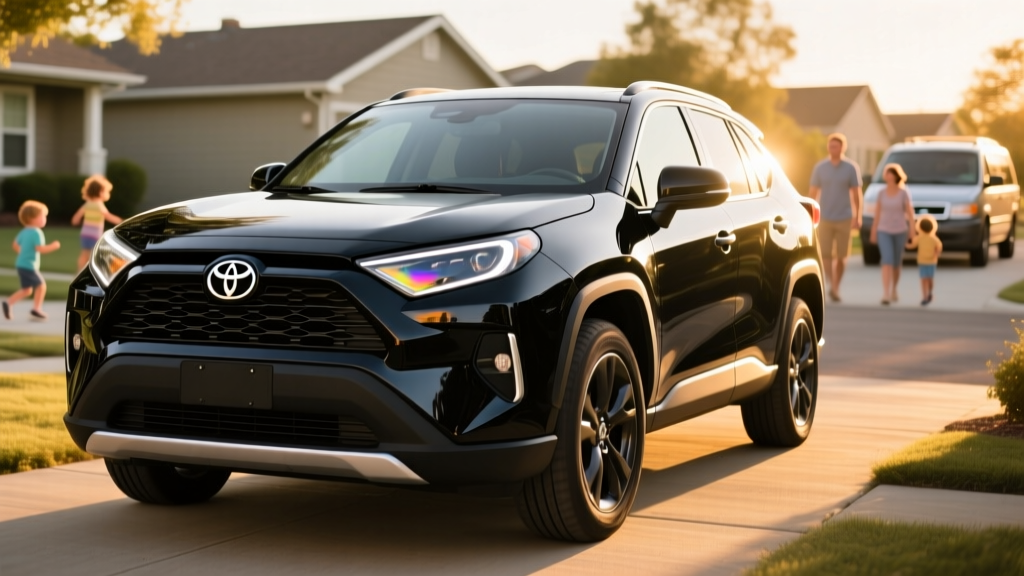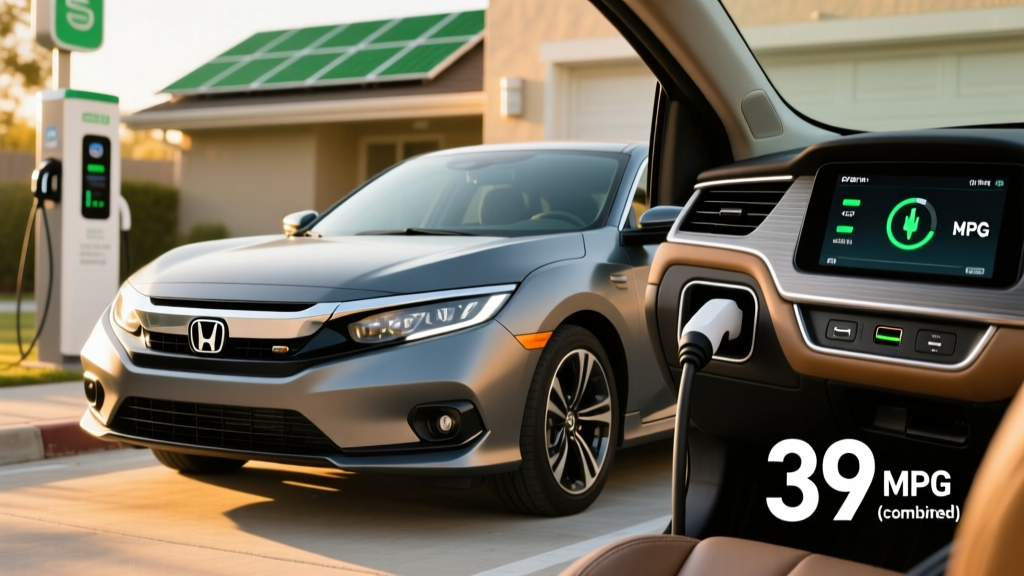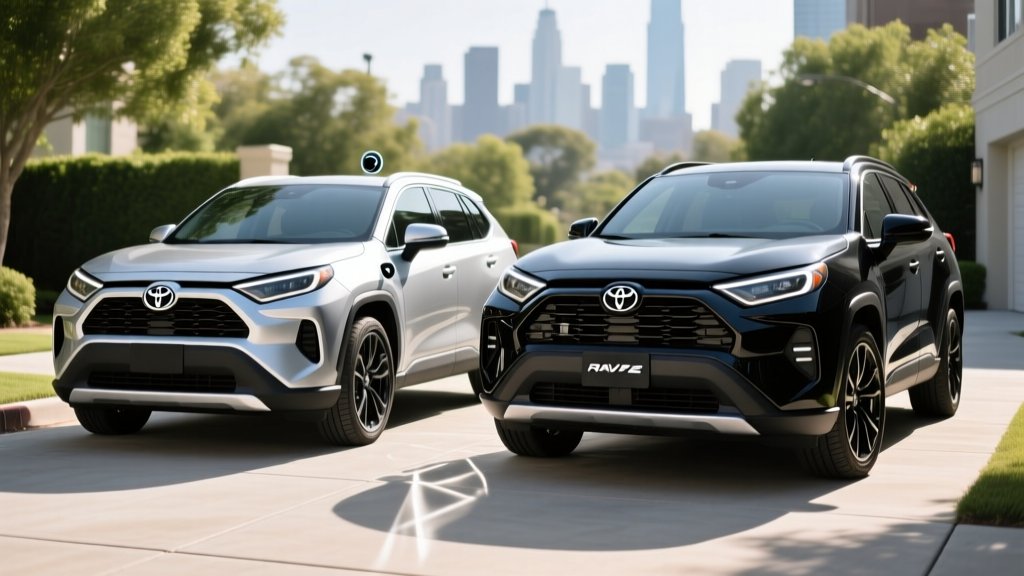
The Toyota RAV4 Hybrid remains one of the best-selling hybrid vehicles in America for a reason: it delivers genuine fuel savings in a practical, reliable compact SUV package without requiring any change in driving habits. For 2026, Toyota continues to offer the RAV4 in three flavors — the conventional gas model, the RAV4 Hybrid (HEV), and the plug-in RAV4 Prime (PHEV). This guide focuses on the electrified versions, breaking down exactly what you get for your money, how the powertrains differ, and which one fits your lifestyle.
Whether you're cross-shopping the RAV4 Hybrid against a full battery-electric vehicle (BEV) or a traditional gas crossover, the numbers below will help you make a data-driven decision. We cover EPA and real-world MPG, the Prime's electric-only range, battery longevity, warranty coverage, and current federal tax credit eligibility under IRS §30D rules.
HEV vs PHEV: Understanding the Two RAV4 Hybrid Options
Before diving into specs, it's critical to understand the difference between Toyota's two electrified RAV4 variants. They share a nameplate but operate very differently.
| Feature | RAV4 Hybrid (HEV) | RAV4 Prime (PHEV) |
|---|---|---|
| Plug-in required? | No — self-charging via regenerative braking and engine | Yes — plug in to access electric-only driving |
| Electric-only range | ~1 mile at very low speeds (not meaningful) | 42 miles EPA (electric-only) |
| Battery capacity | 1.6 kWh (nickel-metal hydride) | 18.1 kWh usable (lithium-ion) |
| Combined horsepower | 219 hp | 302 hp |
| 0-60 mph | 7.4 seconds | 5.7 seconds |
| Drivetrain | AWD (electronic rear motor) | AWD (more powerful rear motor) |
| DC fast charging | N/A | No — Level 2 AC only |
| Federal tax credit | Not eligible (§30D requires plug-in) | Eligibility varies — see §30D details below |
The conventional RAV4 Hybrid is a series-parallel hybrid. It uses a small battery and electric motor(s) to assist the gas engine, recapture energy during braking, and enable brief electric-only movement at low speeds. You never plug it in — the gasoline engine and regenerative braking keep the battery charged. Think of it as a significantly more efficient gas car.
The RAV4 Prime is a plug-in hybrid electric vehicle (PHEV). It has a much larger 18.1 kWh lithium-ion battery that you charge by plugging in (Level 1 or Level 2 AC). That battery gives you 42 miles of pure electric driving before the gas engine kicks in, effectively functioning as a short-range EV for daily commutes. Once the battery is depleted, it operates like a conventional hybrid with a combined 38 MPG.
Fuel Economy: EPA MPG and Real-World Expectations
Fuel economy is the primary reason most buyers choose the RAV4 Hybrid over the gas-only RAV4. Here's how the EPA rates each model for 2026, along with real-world observations from owner data and long-term testing.
| Model | City MPG | Highway MPG | Combined MPG | Real-World Observed |
|---|---|---|---|---|
| RAV4 Hybrid (AWD, LE/XLE) | 41 | 38 | 39 | 36-43 depending on driving mix |
| RAV4 Hybrid (AWD, Woodland Ed.) | 38 | 35 | 37 | 34-39 |
| RAV4 Prime (charge-depleting, EV mode) | 94 MPGe combined (electric + gas) | Varies with charge frequency | ||
| RAV4 Prime (charge-sustaining, hybrid mode) | 40 | 36 | 38 | 35-40 |
| Gas RAV4 (AWD, baseline) | 27 | 35 | 30 | 26-32 |
Real-world MPG note: Toyota's hybrid system excels in city driving, where the electric motor handles low-speed acceleration and regenerative braking recaptures energy at every stop. Many owners report exceeding the EPA city rating of 41 MPG in stop-and-go traffic. Conversely, sustained highway driving at 75+ mph favors the gas engine more heavily, and real-world highway MPG often dips to 34-36 MPG — slightly below the EPA's 38 MPG sticker. This is the inverse of gas-only vehicles, which typically do better on the highway.
For the RAV4 Prime, your actual fuel consumption depends entirely on your charging habits. If your commute is under 42 miles round-trip and you charge nightly, you may use almost zero gasoline for months. If you never plug in, you'll get 38 MPG combined — still excellent, but you're paying a premium for battery capacity you're not using.
RAV4 Prime: Electric-Only Range and Charging Details
The RAV4 Prime's headline feature is its 42 miles of EPA-rated electric-only range. That's enough to cover most Americans' daily commutes without burning a drop of gasoline, according to fueleconomy.gov. When the battery depletes, the 2.5-liter four-cylinder engine seamlessly takes over, and the vehicle operates as a conventional hybrid with 38 MPG combined.
Total combined range (electric + full gas tank) exceeds 600 miles, eliminating range anxiety entirely.
| Spec | RAV4 Prime Value |
|---|---|
| Battery (usable) | 18.1 kWh, lithium-ion |
| EPA electric-only range | 42 miles |
| EV top speed | ~84 mph |
| Level 1 charging (120V, 12A) | ~12 hours (0-100%) |
| Level 2 charging (240V, 32A) | ~2.5 hours (0-100%) |
| Level 2 charging (240V, 16A) | ~4.5 hours (0-100%) |
| DC fast charging | Not available (AC only) |
| Charge port | J1772 (Level 2 AC) |
| Onboard charger | 3.3 kW (standard) / 6.6 kW (Premium pkg) |
Charging reality check: The RAV4 Prime cannot DC fast charge. This is a deliberate design choice — the 18.1 kWh battery is small enough that Level 2 AC charging is practical for overnight top-ups. If you have access to a 240V Level 2 charger at home (the same setup used for full EVs), a full charge takes roughly 2.5 hours with the available 6.6 kW onboard charger, or about 4.5 hours with the standard 3.3 kW charger. On a standard 120V household outlet (Level 1), expect roughly 12 hours — fine for overnight charging if your daily driving stays under 42 miles.
Powertrain and Performance
Both RAV4 Hybrid variants use Toyota's proven series-parallel hybrid architecture centered around a 2.5-liter Atkinson-cycle four-cylinder engine paired with electric motor(s). The key difference is output and battery capacity.
RAV4 Hybrid (HEV): The 2.5L engine produces 176 hp and 163 lb-ft of torque on its own. Combined with front and rear electric motors, total system output is 219 horsepower. The electronic AWD system uses a dedicated rear electric motor (no mechanical driveshaft) to provide all-wheel traction. The 0-60 mph sprint takes 7.4 seconds — adequate for merging and passing, if unremarkable.
RAV4 Prime (PHEV): The same 2.5L engine is paired with more powerful electric motors and the larger 18.1 kWh battery, yielding a combined 302 horsepower. This makes the Prime the quickest RAV4 in the lineup, hitting 60 mph in just 5.7 seconds — genuinely quick for a compact SUV. The larger rear motor also provides more robust AWD capability in electric mode.
Both models use an electronically controlled continuously variable transmission (eCVT), which provides smooth, gearless acceleration. There's no traditional geared transmission to service or maintain.
Pricing, Trims, and Tax Credit Eligibility
The RAV4 Hybrid carries a modest price premium over the gas-only RAV4, typically paying for itself in fuel savings within 2-4 years depending on mileage and local gas prices.
| Model / Trim | 2026 MSRP (approx.) | Notes |
|---|---|---|
| RAV4 Hybrid LE | $33,550 | Entry hybrid, well-equipped |
| RAV4 Hybrid XLE | $35,050 | Popular mid-trim |
| RAV4 Hybrid XLE Premium | $37,500 | SofTex, sunroof |
| RAV4 Hybrid SE | $36,550 | Sport-tuned suspension |
| RAV4 Hybrid Woodland Edition | $37,900 | Off-road oriented, TRD wheels |
| RAV4 Hybrid Limited | $40,550 | Fully loaded hybrid |
| RAV4 Prime SE | $44,500 | Entry PHEV |
| RAV4 Prime XSE | $48,000 | Sport PHEV trim |
| RAV4 Prime XSE Premium | $51,500 | 6.6 kW charger, luxury features |
Pricing reflects approximate 2026 MSRP including destination charge. Actual dealer pricing may vary. Verify current pricing at toyota.com.
Federal Tax Credit: RAV4 Hybrid vs. RAV4 Prime
- RAV4 Hybrid (HEV): Does NOT qualify for the §30D Clean Vehicle Credit. This credit applies only to plug-in electric vehicles (PHEVs and BEVs) with ≥7 kWh of battery capacity. Conventional hybrids are excluded.
- RAV4 Prime (PHEV): May qualify for up to $7,500 under §30D, but eligibility depends on multiple factors that change annually:
- Battery sourcing: The Prime's battery must meet critical-mineral and battery-component requirements set by the IRS. Toyota's supply chain compliance varies by model year — verify current status on fueleconomy.gov.
- Buyer income caps: AGI must not exceed $150,000 (single), $225,000 (head of household), or $300,000 (joint).
- MSRP cap: SUVs/vans must have an MSRP ≤ $80,000. All RAV4 Prime trims clear this threshold.
- Point-of-sale transfer: As of 2024, the credit can be transferred to the dealer at purchase, reducing your out-of-pocket cost immediately rather than waiting for tax filing.
- State incentives: Several states (CA, CO, NY, MA, and others) offer additional rebates for PHEVs. Check your state's energy office or AFDC for current programs.
Tax credit rules are subject to change. Consult a tax professional or the IRS Clean Vehicle Credit page before purchasing.
Battery Longevity, Warranty, and Replacement Costs
Battery reliability is the single most common concern among first-time hybrid buyers. Here's what the data shows after decades of Toyota hybrid production.
Toyota Hybrid Battery Warranty
Coverage: 10 years / 150,000 miles (whichever comes first) for the hybrid battery pack on all 2026 RAV4 Hybrid and RAV4 Prime models.
What's covered: Defects and capacity loss below a specified threshold. Toyota's hybrid system warranty also covers the inverter, electric motor(s), and related powertrain control modules.
Hybrid-specific warranty: 8 years / 100,000 miles on hybrid system components beyond the battery.
Real-world longevity: Toyota has been building hybrids since the 1997 Prius, and real-world data is overwhelmingly positive. The RAV4 Hybrid's 1.6 kWh NiMH battery is small and conservatively managed — it never fully charges or fully depletes, which dramatically extends cycle life. Many Toyota hybrid owners report 150,000-250,000+ miles on the original battery pack with minimal degradation.
The RAV4 Prime's 18.1 kWh lithium-ion battery sees deeper cycling (it's drained to provide 42 miles of EV range), but Toyota's thermal management and buffer design protect longevity. Early Prime models (introduced for 2021) are showing strong capacity retention in owner surveys.
Replacement cost if out of warranty: A RAV4 Hybrid battery replacement runs approximately $3,000-$5,000 (parts and labor) at a Toyota dealer. The RAV4 Prime's larger lithium-ion pack is more expensive — estimated at $8,000-$12,000 if replacement is needed out of warranty. However, given the 10-year/150,000-mile warranty and Toyota's track record, most owners will never face this cost. Third-party refurbishers also offer rebuilt hybrid batteries at lower prices ($1,500-$3,000 for the HEV).
RAV4 Hybrid vs. RAV4 Prime vs. Full EV: Which Should You Choose?
The right choice depends on your driving patterns, charging access, and budget. Here's a practical decision framework:
Choose the RAV4 Hybrid (HEV) if:
- You want better fuel economy with zero lifestyle changes — no plug, no charging, no range planning
- Your daily driving is a mix of city and highway with no single predictable short commute
- You want the lowest upfront cost among electrified RAV4 options
- You live in an apartment or lack access to home/work charging
- You drive 12,000-15,000 miles/year and want to save ~$600-$900 annually on fuel vs. the gas RAV4
Choose the RAV4 Prime (PHEV) if:
- Your daily round-trip commute is ≤ 42 miles and you can charge at home overnight
- You want electric-only daily driving but need gas flexibility for road trips
- You value the 302 hp performance upgrade (the quickest RAV4 available)
- You qualify for the §30D federal tax credit, which can offset the $10,000+ premium over the HEV
- You want to "test drive" the EV lifestyle before committing to a full BEV
Choose a full EV (e.g., Tesla Model Y, Hyundai Ioniq 5) if:
- You have reliable home Level 2 charging and your daily driving rarely exceeds 250 miles
- You want zero gasoline expenses, minimal maintenance (no oil changes, no engine), and the lowest per-mile fuel cost
- You're ready to plan around public DC fast charging for road trips
- You want access to the full $7,500 federal tax credit (most BEVs qualify more reliably than PHEVs under current sourcing rules)
RAV4 Hybrid (HEV) Pros
- 39-41 MPG combined — among the best in its class
- No charging infrastructure required
- Proven reliability with decades of Toyota hybrid data
- Standard AWD across all trims
- Modest price premium over gas RAV4
- 10yr/150k-mile hybrid battery warranty
RAV4 Hybrid (HEV) Cons
- No electric-only driving capability
- No federal tax credit eligibility
- eCVT can drone under hard acceleration
- Highway MPG falls below EPA sticker at sustained 75+ mph
- 219 hp is adequate but not exciting
RAV4 Prime (PHEV) Pros
- 42 miles electric-only — covers most commutes gas-free
- 302 hp / 5.7-second 0-60 — quickest RAV4
- 600+ mile total range eliminates range anxiety
- Potential $7,500 federal tax credit (verify eligibility)
- 38 MPG even after battery depletion
RAV4 Prime (PHEV) Cons
- $10,000-$12,000 premium over RAV4 Hybrid
- Requires home charging to justify the cost
- No DC fast charging — AC only (2.5-12 hours)
- Reduced cargo space slightly (battery under floor)
- Tax credit eligibility depends on evolving sourcing rules
Ownership Costs: RAV4 Hybrid vs. Gas RAV4
Let's put real numbers to the fuel savings. Using national averages (15,000 miles/year, $3.50/gallon regular, 55% city / 45% highway driving mix):
| Model | Combined MPG | Annual Fuel Cost | 5-Year Fuel Cost |
|---|---|---|---|
| Gas RAV4 AWD (30 MPG) | 30 | $1,750 | $8,750 |
| RAV4 Hybrid AWD (39 MPG) | 39 | $1,346 | $6,731 |
| RAV4 Prime (charging nightly, 42-mi EV) | Mostly electric | ~$450 (elec) + ~$200 (gas) | ~$3,250 |
The RAV4 Hybrid saves approximately $404/year ($2,019 over 5 years) vs. the gas RAV4. The RAV4 Prime, charged nightly, can save over $1,100/year — but this assumes consistent charging and a commute within the 42-mile EV range.
Maintenance costs also favor the hybrid: Toyota hybrids eliminate the traditional starter motor and alternator (replaced by the motor-generator), and regenerative braking significantly extends brake pad life. Oil change intervals remain the same (10,000 miles with synthetic), but overall long-term maintenance tends to be lower.
Frequently Asked Questions
How many MPG does the RAV4 Hybrid actually get in real driving?
The EPA rates the 2026 RAV4 Hybrid at 41 city / 38 highway / 39 combined MPG (LE/XLE trims). In real-world driving, city-heavy commuters often see 40-43 MPG thanks to the hybrid system's regenerative braking and electric assist at low speeds. Highway-heavy drivers averaging 70-80 mph typically see 34-37 MPG. The sweet spot for maximum efficiency is suburban and city driving under 50 mph.
How far can the RAV4 Prime go on electric power alone?
The EPA rates the RAV4 Prime at 42 miles of electric-only range. In mild weather (60-80°F) at moderate speeds, some owners report 44-47 miles. In cold weather (below 30°F) with cabin heating, expect 32-37 miles as the battery's usable capacity temporarily shrinks and the heat pump or engine assists with climate control.
Does the RAV4 Hybrid need to be plugged in?
No. The conventional RAV4 Hybrid (HEV) never plugs in. Its small 1.6 kWh battery charges through regenerative braking and the gasoline engine. Only the RAV4 Prime (PHEV) benefits from plug-in charging. If you see marketing that says "RAV4 Hybrid," verify whether the listing refers to the HEV or the Prime before assuming plug-in capability.
Is the RAV4 Hybrid reliable, and what does a battery replacement cost?
Toyota's hybrid system is among the most proven in the industry, with over 25 years of production data. The RAV4 Hybrid battery is covered for 10 years / 150,000 miles. Real-world data shows most Toyota hybrid batteries last 150,000-250,000+ miles. If replacement is needed out of warranty, expect $3,000-$5,000 for the HEV battery and $8,000-$12,000 for the Prime's larger lithium-ion pack. Third-party rebuilt options are available at lower cost.
Does the RAV4 Hybrid qualify for any tax credit?
The conventional RAV4 Hybrid (HEV) does not qualify for the federal §30D Clean Vehicle Credit, which is limited to plug-in vehicles. The RAV4 Prime (PHEV) may qualify for up to $7,500, but eligibility depends on battery component and critical mineral sourcing requirements, buyer income limits ($150K/$225K/$300K by filing status), and the $80,000 MSRP cap for SUVs. Always verify current eligibility on fueleconomy.gov and consult a tax professional before relying on the credit.
How does the RAV4 Hybrid compare to the Honda CR-V Hybrid?
The 2026 Honda CR-V Hybrid is the closest competitor, rated at 40 city / 35 highway / 37 combined MPG with 204 hp. The RAV4 Hybrid holds a slight edge in highway MPG and horsepower (219 vs. 204), while the CR-V Hybrid offers marginally better city MPG. Both carry strong reliability reputations and similar pricing. The RAV4 Prime has no direct rival in the plug-in compact SUV segment — the closest alternatives are the Hyundai Tucson PHEV (33 miles EV) and Kia Sportage PHEV (34 miles EV), both offering less electric range and less power.
Can the RAV4 Prime use DC fast chargers on road trips?
No. The RAV4 Prime only supports AC charging (Level 1 at 120V and Level 2 at 240V) via its J1772 port. It cannot connect to DC fast chargers (CCS, NACS, or CHAdeMO). This is typical for PHEVs — the battery is small enough that AC charging is sufficient for overnight replenishment. On road trips, the Prime simply operates as a conventional hybrid at 38 MPG combined, with no need to stop and charge.