The Toyota RAV4 Hybrid remains one of the best-selling electrified vehicles in America for a reason: it delivers SUV practicality with fuel economy that undercuts most compact sedans, and it requires zero changes to how you drive or refuel. If you've been searching for RAV4 Hybrid MPG data to decide whether this is the right powertrain for your commute, this guide breaks down every official figure, real-world expectation, and the critical differences between the standard hybrid and the plug-in RAV4 Prime.
How Many MPG Does the 2026 RAV4 Hybrid Get?
The 2026 Toyota RAV4 Hybrid carries over the proven fifth-generation hybrid powertrain with minor refinements. EPA fuel economy ratings remain consistent across most trims equipped with the Electronic On-Demand All-Wheel Drive system. Here is the official breakdown:
| Trim | Drivetrain | City MPG | Highway MPG | Combined MPG |
|---|---|---|---|---|
| LE / XLE / XLE Premium | AWD (eAWD) | 41 | 38 | 39 |
| Woodland Edition | AWD (eAWD) | 38 | 35 | 37 |
| SE / XSE | AWD (eAWD) | 41 | 38 | 39 |
| Limited | AWD (eAWD) | 41 | 38 | 39 |
Source: fueleconomy.gov
A few things jump out from these numbers. First, the city MPG exceeds the highway rating — this is characteristic of Toyota's hybrid system, which leans heavily on electric motor assist at low speeds and in stop-and-go traffic where regenerative braking recovers the most energy. Second, the Woodland Edition sacrifices 2 MPG combined due to its all-terrain tires and slightly raised ride height, a worthwhile tradeoff if you need genuine trail capability.
Real-World MPG: What Owners Actually Report
EPA estimates are a starting point, not a guarantee. The RAV4 Hybrid's real-world fuel economy varies meaningfully based on driving patterns:
- City-dominant commutes (under 45 mph): Many owners report 42–45 MPG in warm weather. The hybrid system thrives here — frequent stops allow regen braking to recharge the 1.6 kWh nickel-metal hydride (NiMH) traction battery, and the engine shuts off often.
- Highway cruising (70–80 mph): Expect 33–36 MPG. Aerodynamic drag dominates at higher speeds, and the electric motor contributes less. This is where the RAV4 Hybrid's advantage over a gas-only model narrows.
- Cold weather (below 32°F): Plan for a 5–10% drop. The engine runs more frequently to generate cabin heat and maintain battery temperature, reducing electric-motor usage. Expect 35–37 MPG combined in winter.
- Mountain driving / steep grades: Short-term MPG can dip into the low 20s climbing, but regen braking on descents partially recovers energy. Net trip MPG tends to average out near EPA combined figures.
RAV4 Hybrid vs. RAV4 Prime (PHEV): Which Is Which?
Toyota sells two electrified RAV4 variants, and confusing them is one of the most common buyer mistakes. Here's the fundamental difference:
RAV4 Hybrid (HEV)
- No plug required — charges via engine and regen braking
- 1.6 kWh NiMH battery (small buffer)
- 39 MPG combined, always
- No electric-only driving beyond very low-speed creep
- Lower purchase price, no charging infrastructure needed
RAV4 Prime (PHEV)
- Plug-in capable — charges from a wall outlet or charger
- 18.1 kWh lithium-ion battery
- 42 miles EPA electric-only range, then 38 MPG combined as hybrid
- 302 combined HP — the fastest RAV4 you can buy
- Higher price, but eligible for federal tax credit (see below)
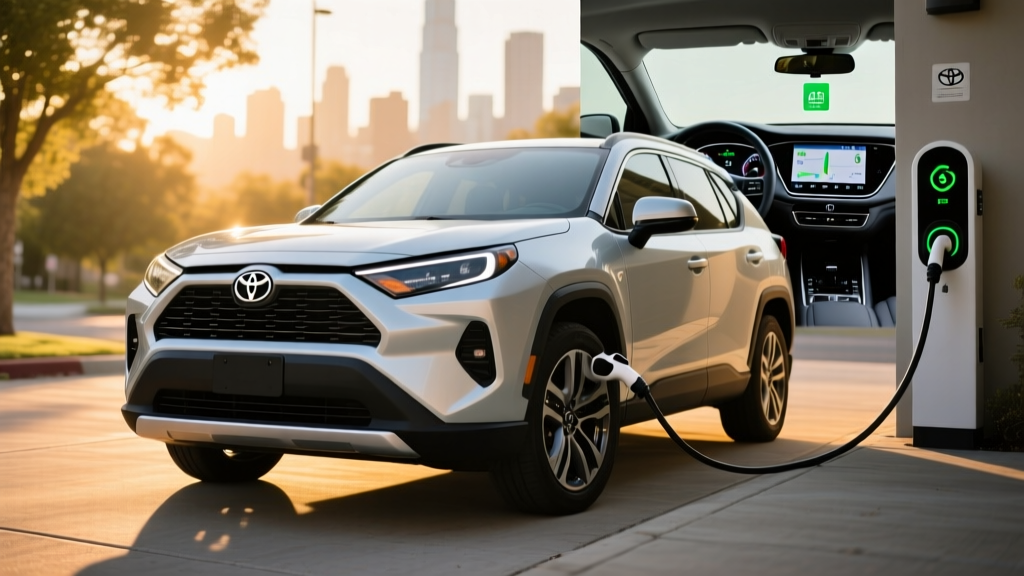
The conventional RAV4 Hybrid is a self-charging system. You fill it with gas and drive — the hybrid system optimizes when to use the engine versus the electric motor automatically. The RAV4 Prime adds a much larger battery and a charge port, letting you drive up to 42 miles on electricity alone before the hybrid system takes over.
| Specification | RAV4 Hybrid (HEV) | RAV4 Prime (PHEV) |
|---|---|---|
| Combined Horsepower | 219 HP | 302 HP |
| Engine | 2.5L 4-cyl + 2 electric motors | 2.5L 4-cyl + 2 electric motors (higher output) |
| Traction Battery | 1.6 kWh NiMH | 18.1 kWh Lithium-Ion |
| Electric-Only Range | N/A (self-charging) | 42 miles (EPA) |
| Total Range (Full Tank + Charge) | ~580 miles | ~600 miles (gas + electric) |
| MPG (Gas, Combined) | 39 MPG | 38 MPG (after EV range depleted) |
| MPGe (Electric + Gas Combined) | N/A | 94 MPGe |
| Level 2 Charge Time (0–100%) | N/A | ~2.5 hours (6.6 kW onboard charger) |
| DC Fast Charging | N/A | Not available |
| 0–60 mph | 7.4 seconds | 5.7 seconds |
| Starting MSRP (2026) | ~$33,500 | ~$44,500 |
Powertrain Deep Dive: How the Hybrid System Works
The 2026 RAV4 Hybrid pairs a 2.5-liter Dynamic Force four-cylinder engine (176 HP, 163 lb-ft) with Toyota's Hybrid Synergy Drive system. Two electric motor-generators work through a planetary gearset that acts as a continuously variable transmission (eCVT). A third electric motor powers the rear axle on AWD models, providing torque to the rear wheels without a mechanical driveshaft.
Combined system output is 219 horsepower. The electric motors fill in torque instantly from a stop, which is why the RAV4 Hybrid feels more responsive in city driving than its 0–60 time of 7.4 seconds might suggest. The transition between electric and gas power is seamless — most drivers won't notice when the engine engages.
For the RAV4 Prime, Toyota uses a higher-output version of the same system. The larger 18.1 kWh lithium-ion battery enables sustained electric-only driving at speeds up to 84 mph, and the more powerful electric motors push combined output to 302 HP — making the Prime the quickest RAV4 in the lineup, quicker than the gas-only turbo models of previous generations.
Battery Warranty, Lifespan, and Replacement Cost
Battery longevity is the single most common concern among first-time hybrid buyers, and the data is reassuring. Toyota's NiMH hybrid batteries in the RAV4 Hybrid have proven exceptionally durable. Real-world reports from high-mileage owners, taxi fleets, and independent surveys show these batteries frequently lasting 150,000–200,000+ miles before needing attention. The NiMH chemistry is less energy-dense than lithium-ion but extremely stable and tolerant of daily shallow charge cycles — exactly what a conventional hybrid demands.
The RAV4 Prime's 18.1 kWh lithium-ion battery operates within a managed state-of-charge window (it never charges to true 100% or drains to true 0%), which significantly reduces degradation stress. Toyota's warranty threshold guarantees the battery will retain sufficient capacity for the stated EV range within the warranty period.
If replacement is needed out of warranty:
- RAV4 Hybrid (NiMH): $2,000–$3,500 for a new OEM battery; refurbished units available for $1,000–$1,800
- RAV4 Prime (lithium-ion): $5,000–$8,000 for a new OEM battery pack
For context, the vast majority of RAV4 Hybrid owners will sell or trade the vehicle long before the battery requires replacement. The 10-year/150,000-mile warranty provides coverage well beyond the average ownership period.
Pricing, Trims, and Tax Credit Eligibility
The 2026 RAV4 Hybrid lineup starts at approximately $33,500 for the LE trim and climbs to roughly $42,000 for a fully equipped Limited. The RAV4 Prime begins around $44,500 (SE) and reaches approximately $48,000 (XSE Premium).
| Model | Trim | MSRP (approx.) |
|---|---|---|
| Hybrid | LE | $33,500 |
| Hybrid | XLE | $35,000 |
| Hybrid | XLE Premium | $37,000 |
| Hybrid | Woodland Edition | $36,500 |
| Hybrid | SE | $38,000 |
| Hybrid | XSE | $39,500 |
| Hybrid | Limited | $42,000 |
| Prime | SE | $44,500 |
| Prime | XSE | $47,500 |
| Prime | XSE Premium | $48,000 |
Federal Tax Credit: Who Qualifies?
The conventional RAV4 Hybrid (HEV) does not qualify for the federal §30D Clean Vehicle Credit — that incentive is reserved for plug-in electric vehicles and fuel-cell vehicles. No federal tax credit applies to the standard hybrid.
The RAV4 Prime (PHEV) has historically qualified for up to $7,500 under §30D, but eligibility under current 2026 IRS rules depends on several factors that change frequently:
- MSRP cap: SUVs must be under $80,000 MSRP — the RAV4 Prime clears this easily.
- Buyer income cap: Modified adjusted gross income must not exceed $150,000 (single), $225,000 (head of household), or $300,000 (joint filing).
- Battery sourcing requirements: Critical minerals and battery components must meet escalating domestic/free-trade-partner sourcing thresholds. Toyota's supply chain compliance determines the credit amount ($3,750 or $7,500).
- Point-of-sale transfer: Buyers can transfer the credit to the dealer at purchase, reducing the purchase price directly rather than waiting for a tax refund.
- Final assembly: Must occur in North America — the RAV4 Prime is assembled in Japan, which has periodically affected eligibility.
Important: Because the RAV4 Prime is built in Japan, its §30D eligibility has been inconsistent under the North American final-assembly requirement. Always verify current eligibility at fueleconomy.gov and consult a tax professional before relying on the credit. Some states offer additional PHEV rebates that stack with federal incentives — check your state's energy office for current programs.
Hybrid vs. PHEV vs. Full EV: Which RAV4 Fits You?
- You don't have access to home or workplace charging
- You want maximum fuel savings with zero lifestyle changes
- Your budget is under $40,000
- You drive a mix of city and highway and want 39+ MPG everywhere
- You can charge at home (even a standard 120V outlet works overnight)
- Your daily commute is under 42 miles round-trip (you could rarely buy gas)
- You want 302 HP and the quickest RAV4 available
- You want EV-like daily driving with gas-engine freedom for road trips
- You have reliable Level 2 home charging
- You want zero tailpipe emissions and minimal maintenance
- Your road trips are infrequent or along well-served DC fast-charging corridors
- You want the maximum available tax credits and lowest per-mile fuel cost
The RAV4 Hybrid occupies a practical sweet spot: it requires no charging infrastructure, delivers strong fuel economy, and costs meaningfully less than the Prime or a comparable BEV. The Prime makes the most sense for households with a short commute and reliable home charging — you'll drive on electricity most days and only use gas for longer trips. A full EV eliminates gas entirely but demands charging access and some route planning for road trips.
Pros and Cons at a Glance
Pros
- 39 MPG combined — excellent for an AWD SUV
- City MPG exceeds highway — ideal for commuters
- No plug-in required, no charging anxiety
- Standard AWD across all trims
- Proven reliability; 10-year/150k-mile battery warranty
- Strong resale value
- Practical cargo space (37.6 cu ft behind rear seats)
Cons
- Highway MPG drops to 33–36 in real-world driving
- No DC fast charging (Prime PHEV only, and it lacks DC)
- 219 HP is adequate, not exciting (Prime fixes this)
- No federal tax credit for the conventional hybrid
- eCVT drone under hard acceleration
- Cold weather reduces MPG by 5–10%
Frequently Asked Questions
How many MPG does the RAV4 Hybrid get in real-world driving?
The EPA rates most 2026 RAV4 Hybrid trims at 41 city / 38 highway / 39 combined. In real-world city-dominant driving, many owners see 42–45 MPG. Highway-heavy trips at 75+ mph typically yield 33–36 MPG. Cold weather reduces combined figures by roughly 5–10%.
Does the RAV4 Hybrid need to be plugged in?
No. The conventional RAV4 Hybrid (HEV) charges its 1.6 kWh battery entirely through regenerative braking and the gasoline engine. You simply fill it with gas and drive. Only the RAV4 Prime (PHEV) has a charge port and benefits from plugging in.
How far can the RAV4 Prime go on electric only?
The 2026 RAV4 Prime delivers an EPA-rated 42 miles of electric-only range on a full charge. At speeds under 84 mph, you can complete most daily commutes without the engine starting. After the battery depletes, it operates as a conventional hybrid at 38 MPG combined, giving a total range of approximately 600 miles.
Is the RAV4 Hybrid reliable? What about battery replacement cost?
Toyota's hybrid system is among the most proven in the industry, with decades of real-world data from millions of vehicles. The hybrid battery is warrantied for 10 years/150,000 miles. Out-of-warranty NiMH battery replacement for the standard hybrid runs $2,000–$3,500 (new OEM) or $1,000–$1,800 (refurbished). Most owners never need a replacement.
Does the RAV4 Hybrid qualify for any tax credit?
The conventional RAV4 Hybrid (HEV) does not qualify for the federal §30D Clean Vehicle Credit, which is limited to plug-in EVs and PHEVs. The RAV4 Prime (PHEV) may qualify for up to $7,500, but eligibility depends on current IRS sourcing rules, the North American final-assembly requirement (the Prime is built in Japan), and buyer income limits. Verify at IRS.gov before purchasing.
Can the RAV4 Prime DC fast charge?
No. The RAV4 Prime charges via its J1772 port on Level 1 (120V, ~12 hours for a full charge) or Level 2 (240V at 6.6 kW, approximately 2.5 hours). It does not have a DC fast-charging port. For a PHEV with a 42-mile battery, overnight Level 2 charging is sufficient for most owners.