Quick Verdict: The RAV4 Hybrid Still Sets the Compact SUV Efficiency Bar
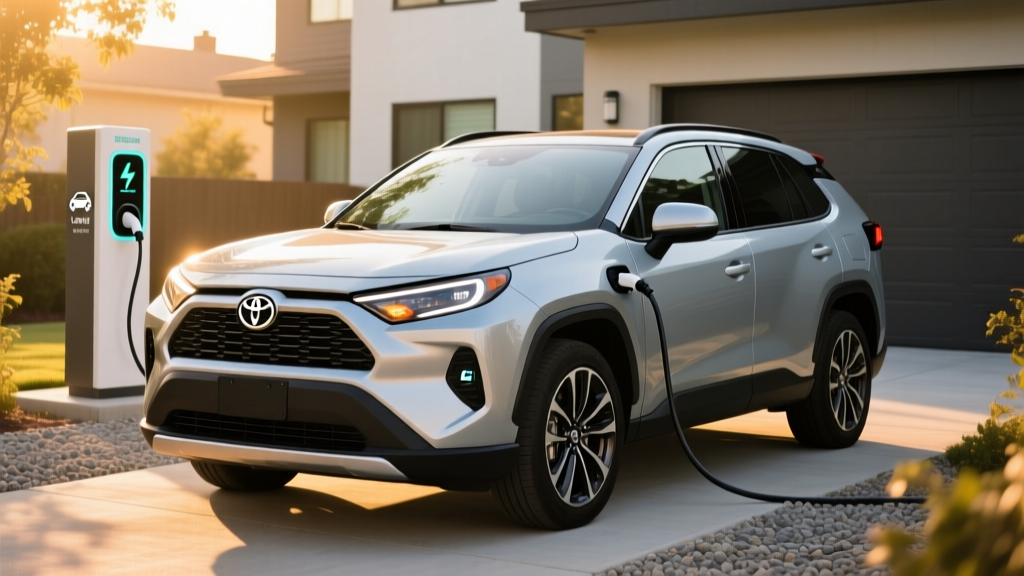
The Toyota RAV4 Hybrid remains the best-selling hybrid SUV in America for a reason: it delivers crossover practicality with sedan-like fuel consumption. The 2026 RAV4 Hybrid carries an EPA rating of 41 MPG city / 38 MPG highway / 39 MPG combined, while the plug-in RAV4 Prime variant pushes up to 42 miles of electric-only range before the gas engine kicks in. For buyers weighing the RAV4 Hybrid's fuel economy against a full EV or a conventional gas model, the numbers tell a nuanced story — one where real-world driving habits, climate, and daily commute distance determine which powertrain actually saves the most money.
This guide breaks down every efficiency figure, powertrain spec, and ownership cost you need to make an informed decision on the 2026 RAV4 lineup.
HEV vs PHEV: Which RAV4 Are We Talking About?
Toyota sells two electrified RAV4 variants, and confusing them is the single most common buyer mistake. Here's the fundamental difference:
RAV4 Hybrid (HEV)
- No plug required. The battery recharges through regenerative braking and the gas engine.
- 1.6 kWh battery (small, sealed NiMH pack).
- 219 combined horsepower from a 2.5L four-cylinder + two electric motors.
- Operates as a traditional hybrid — the electric motor assists the engine at low speeds and under acceleration, but cannot drive the vehicle on electricity alone for meaningful distances.
- Starting MSRP: approximately $33,450 (LE trim, 2026 model year).
RAV4 Prime (PHEV)
- Plug-in capable. Charge via Level 1 (120V) or Level 2 (240V) to unlock electric-only driving.
- 18.1 kWh lithium-ion battery (usable capacity ~14.5 kWh).
- 302 combined horsepower — the most powerful RAV4 in the lineup.
- Delivers up to 42 miles EPA electric-only range, then operates as a conventional hybrid.
- Starting MSRP: approximately $44,965 (SE trim, 2026 model year).
Neither variant offers DC fast charging. The RAV4 Prime tops out at 6.6 kW on Level 2, taking roughly 2.5 hours to fully charge from empty on a 240V circuit. On a standard 120V household outlet (Level 1), expect around 12 hours — feasible for overnight top-ups if your daily electric-only needs stay under 42 miles.
2026 RAV4 Hybrid Fuel Economy: EPA vs Real-World MPG
The EPA posts one set of numbers; the real world often tells a different story. Here's how the RAV4 Hybrid stacks up on paper and in practice.
| Metric | RAV4 Hybrid (HEV) | RAV4 Prime (PHEV, Hybrid Mode) | RAV4 Gas (AWD, Baseline) |
|---|---|---|---|
| EPA City | 41 MPG | 40 MPG | 27 MPG |
| EPA Highway | 38 MPG | 36 MPG | 34 MPG |
| EPA Combined | 39 MPG | 38 MPG | 30 MPG |
| MPGe (PHEV EV Mode) | N/A | 94 MPGe | N/A |
| Real-World City (observed) | 39–44 MPG | 38–42 MPG | 24–27 MPG |
| Real-World Highway (observed) | 34–37 MPG | 33–36 MPG | 29–32 MPG |
Source: fueleconomy.gov (EPA ratings). Real-world figures reflect aggregated owner reports and independent testing in moderate climates.
Why Hybrids Often Beat EPA City Estimates
The RAV4 Hybrid's city MPG frequently exceeds its EPA sticker — sometimes reaching 43 or 44 MPG in stop-and-go traffic. This isn't a data error; it's how Toyota's Hybrid Synergy Drive works. At low speeds, the electric motor handles more of the propulsion load, and frequent braking events generate more regenerative energy to recharge the battery. Highway driving is the opposite scenario: sustained high-speed operation relies more heavily on the gasoline engine, and aerodynamic drag reduces efficiency. Expect highway MPG to fall 2–4 MPG below the EPA rating, especially above 70 mph.
Cold-Weather MPG Impact
In freezing temperatures (below 32°F), the RAV4 Hybrid's fuel economy typically drops 10–15%. The engine runs more frequently to generate cabin heat and maintain battery temperature. Owners in northern climates should budget for winter combined MPG in the 33–35 range, recovering to full EPA numbers once ambient temperatures climb above 50°F.
RAV4 Prime: Electric-Only Range and Total Range
For buyers considering the plug-in variant, the critical question is how much daily driving the RAV4 Prime can handle without burning a drop of gasoline.
EPA Electric-Only Range: 42 miles
Real-World Electric Range: 36–44 miles (varies by temperature, speed, and terrain)
Total Combined Range (EV + Gas): approximately 600 miles
Battery Usable Capacity: ~14.5 kWh of the 18.1 kWh pack
On a warm day with moderate speeds (under 55 mph), some drivers report squeezing 44–46 miles from a full charge. In winter or at sustained highway speeds above 65 mph, expect the electric range to contract to roughly 34–38 miles. The RAV4 Prime does not support DC fast charging, so road-trip recharging is limited to Level 2 — meaning destination or workplace charging rather than quick highway pit stops.
Once the battery depletes, the Prime seamlessly transitions to hybrid mode, delivering 38 MPG combined — only 1 MPG less than the standard HEV. This is a critical advantage over some competing PHEVs that see steep efficiency drops once the electric range is exhausted.
Powertrain Specs: What's Under the Hood
| Specification | RAV4 Hybrid (HEV) | RAV4 Prime (PHEV) |
|---|---|---|
| Engine | 2.5L Dynamic Force 4-cylinder | 2.5L Dynamic Force 4-cylinder |
| Engine Output | 176 HP / 163 lb-ft | 177 HP / 165 lb-ft |
| Front Electric Motor | 118 HP / 149 lb-ft | 180 HP / 199 lb-ft |
| Rear Electric Motor (AWD) | 54 HP / 89 lb-ft | 54 HP / 89 lb-ft |
| Combined System HP | 219 HP | 302 HP |
| 0–60 MPH | 7.4 seconds | 5.7 seconds |
| Drivetrain | AWD (electronic rear motor) | AWD (electronic rear motor) |
| Transmission | eCVT | eCVT |
| Towing Capacity | 1,750 lbs | 2,500 lbs |
The RAV4 Prime's 302 HP makes it one of the quickest compact SUVs in its class — faster than many turbocharged gas competitors. Both models use Toyota's eCVT, which is a planetary gearset rather than a belt-driven CVT, contributing to durability and smooth power delivery.
Pricing, Trims, and Tax Credit Eligibility
| Trim | Model | MSRP (2026 est.) |
|---|---|---|
| LE | RAV4 Hybrid | $33,450 |
| XLE | RAV4 Hybrid | $35,250 |
| Woodland Edition | RAV4 Hybrid | $36,450 |
| XLE Premium | RAV4 Hybrid | $37,650 |
| SE | RAV4 Prime | $44,965 |
| XSE | RAV4 Prime | $48,515 |
Federal Tax Credit: RAV4 Hybrid vs RAV4 Prime
Under current IRS §30D rules, the RAV4 Hybrid (HEV) does not qualify for the federal clean vehicle credit. Conventional hybrids are ineligible — only plug-in vehicles with battery capacities of at least 7 kWh can qualify.
The RAV4 Prime (PHEV) has historically qualified for up to $7,500 under §30D, but eligibility depends on several factors that shift regularly:
- MSRP cap: SUVs must have an MSRP at or below $80,000 (all RAV4 Prime trims clear this).
- Buyer income limits: Modified AGI must not exceed $150,000 (single), $225,000 (head of household), or $300,000 (joint).
- Battery sourcing requirements: Critical minerals and battery components must meet phased-in domestic/FTR-partner sourcing thresholds that tighten annually. As of 2026, these requirements have become more restrictive and may reduce or eliminate the credit amount depending on Toyota's supply chain adjustments.
- Point-of-sale transfer: Eligible buyers can transfer the credit to the dealer at purchase, reducing the purchase price directly rather than waiting for a tax refund.
Always verify current eligibility on IRS.gov or consult a tax professional before purchasing. Rules change and are subject to manufacturer sourcing updates.
Battery Warranty, Reliability, and Replacement Costs
Toyota Hybrid Battery Warranty
Hybrid Battery: 10 years / 150,000 miles (whichever comes first), covering capacity loss below a defined threshold.
Hybrid System Components: 8 years / 100,000 miles (inverter, control module, motors).
Powertrain: 5 years / 60,000 miles.
Toyota's hybrid battery track record is among the best in the industry. The NiMH pack in the RAV4 Hybrid is smaller and less stressed than a full EV battery, and Toyota's hybrid system has been refined over 25+ years since the original Prius. Independent data from sources like Consumer Reports consistently rank Toyota hybrids at the top for long-term reliability.
Hybrid Battery Replacement Cost
If a RAV4 Hybrid battery fails outside warranty coverage, replacement costs typically range from $2,500 to $4,500 (parts and labor) at a dealership, or $1,500 to $3,000 through independent hybrid specialists using refurbished or aftermarket cells. The RAV4 Prime's larger lithium-ion pack is more expensive: expect $6,000 to $9,000 for a full replacement. However, complete pack failures are rare — individual cell module replacement is often possible at lower cost.
Most Toyota hybrid batteries outlast 150,000+ miles with minimal degradation. Unlike full EVs, the hybrid battery operates in a narrow state-of-charge window (roughly 40–80%), which significantly reduces calendar aging and cycle wear.
RAV4 Hybrid vs PHEV vs Full EV: Which Fits You?
Choose the RAV4 Hybrid (HEV) if:
- You don't have access to home or workplace charging.
- Your daily driving is 50+ miles with a mix of city and highway.
- You want maximum simplicity — no plugs, no charging apps, no range planning.
- Your budget starts under $35,000.
- You want the lowest total cost of ownership without lifestyle changes.
Choose the RAV4 Prime (PHEV) if:
- You can install a Level 2 charger at home or charge at work daily.
- Your daily commute is under 40 miles round-trip (covering most days on electricity alone).
- You want EV-like daily driving with gas-engine flexibility for road trips.
- You value the 302 HP performance bump and 2,500-lb towing capacity.
- You qualify for the federal tax credit, offsetting the ~$11,500 price premium over the HEV.
Choose a Full EV (like a Tesla Model Y or Hyundai Ioniq 5) if:
- You have reliable home Level 2 charging and access to DC fast-charging networks.
- You want zero tailpipe emissions and minimal drivetrain maintenance.
- Your typical trips stay within 250–300 miles or you're comfortable planning charging stops.
- You want to eliminate gasoline costs entirely.
5-Year Cost of Ownership Comparison
| Cost Factor (5 yr / 75,000 mi) | RAV4 Hybrid (HEV) | RAV4 Prime (PHEV) | RAV4 Gas AWD |
|---|---|---|---|
| Purchase Price (base MSRP) | $33,450 | $44,965 | $30,350 |
| Est. Federal Tax Credit | $0 | $0–$7,500* | $0 |
| Fuel / Electricity Cost | ~$5,400 | ~$3,200** | ~$8,800 |
| Maintenance (est.) | ~$2,800 | ~$2,500 | ~$3,600 |
| Insurance (est.) | ~$7,500 | ~$8,200 | ~$7,000 |
| 5-Year Total (before credit) | ~$49,150 | ~$58,865 | ~$49,750 |
| 5-Year Total (after max credit) | ~$49,150 | ~$51,365 | ~$49,750 |
*Tax credit eligibility varies by income, sourcing rules, and model year. **PHEV fuel cost assumes 70% of daily driving is within electric-only range and home charging at $0.14/kWh national average. Source: fueleconomy.gov cost estimates and author calculations.
The RAV4 Hybrid HEV achieves near-parity with the gas model on total cost within the first year of ownership thanks to fuel savings, then pulls ahead each subsequent year. The RAV4 Prime's economics depend heavily on the tax credit and the percentage of driving done on electricity. Without the credit, the Prime requires roughly 4–5 years of electric-commute savings to close the gap with the HEV.
RAV4 Hybrid Pros
- Best-in-class real-world city MPG (often exceeds EPA)
- No charging infrastructure needed
- Proven long-term reliability and strong resale value
- Standard AWD across all trims
- Competitive cargo space (37.6 cu ft behind rear seats)
RAV4 Hybrid Cons
- No federal tax credit eligibility (HEV)
- Engine noise under hard acceleration (eCVT drone)
- Highway MPG lags behind city by 3–4 MPG
- RAV4 Prime carries an $11,500 premium over HEV
- No DC fast charging on Prime PHEV
- Infotainment system trails competitors in responsiveness
Frequently Asked Questions
How many MPG does the 2026 RAV4 Hybrid actually get?
The EPA rates the RAV4 Hybrid at 41 city / 38 highway / 39 combined MPG. In real-world driving, city MPG frequently reaches 42–44 thanks to regenerative braking, while highway driving at 70+ mph typically yields 34–37 MPG. Cold weather reduces combined figures by roughly 10–15%.
How far can the RAV4 Prime go on electric power alone?
The EPA rates the RAV4 Prime at 42 miles of electric-only range. Real-world results vary from 34 miles (winter, highway speeds) to 46 miles (mild weather, city driving). Once the battery depletes, the vehicle operates as a conventional hybrid at 38 MPG combined.
Does the RAV4 Hybrid need to be plugged in?
No. The standard RAV4 Hybrid (HEV) charges its battery entirely through regenerative braking and the gasoline engine. You never plug it in. Only the RAV4 Prime (PHEV) benefits from plug-in charging to unlock its electric-only range.
Is the RAV4 Hybrid reliable, and what does battery replacement cost?
Toyota's hybrid system has over two decades of proven reliability. The hybrid battery is covered for 10 years / 150,000 miles. Out-of-warranty replacement costs $2,500–$4,500 for the HEV or $6,000–$9,000 for the Prime's larger lithium-ion pack. Complete failures before 150,000 miles are uncommon.
Does the RAV4 Hybrid or Prime qualify for a federal tax credit?
The conventional RAV4 Hybrid (HEV) does not qualify for the §30D federal clean vehicle credit — only plug-in vehicles are eligible. The RAV4 Prime (PHEV) may qualify for up to $7,500, depending on the buyer's income, the vehicle's battery sourcing compliance, and current IRS rules. Verify at IRS.gov before purchasing.
How does the RAV4 Hybrid compare to a full EV for daily commuting?
If your commute is under 40 miles and you can charge at home, a full EV like the Tesla Model Y or Hyundai Ioniq 5 eliminates gasoline costs entirely and offers lower per-mile energy costs (~$0.04/mile vs ~$0.10/mile for the hybrid). However, the RAV4 Hybrid requires zero infrastructure changes, carries no range anxiety for long trips, and costs significantly less upfront. For commutes over 60 miles or drivers without home charging access, the hybrid's simplicity and efficiency are hard to beat.
What is the RAV4 Prime's charging time?
On a 240V Level 2 charger at 6.6 kW, the RAV4 Prime charges from empty to full in approximately 2.5 hours. On a standard 120V Level 1 outlet, expect roughly 12 hours. The Prime does not support DC fast charging.