Quick Verdict: The Benchmark Compact Hybrid SUV
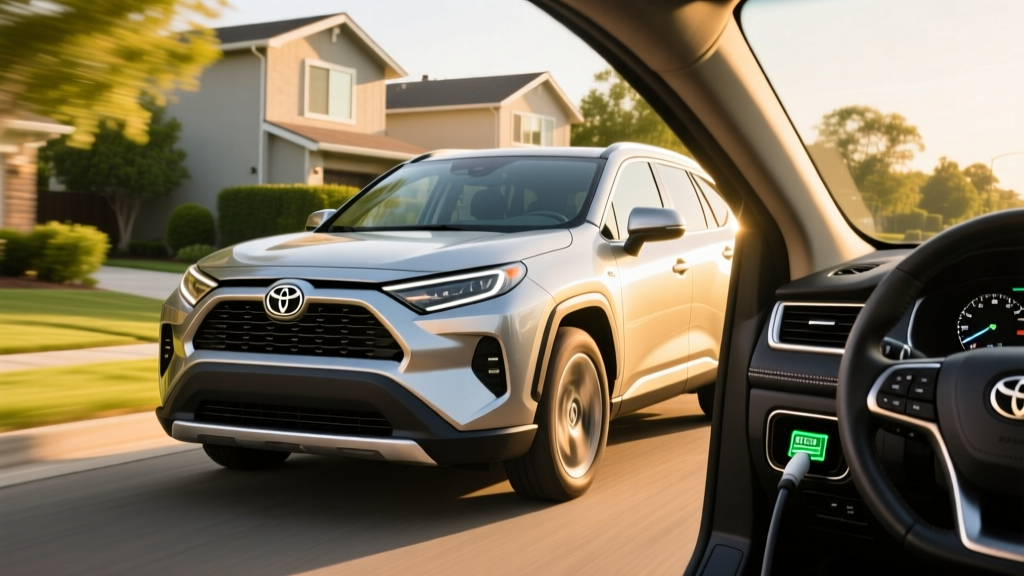
The 2023 Toyota RAV4 Hybrid remains the default choice in the compact hybrid SUV segment for buyers who want maximum fuel efficiency without ever plugging in. With an EPA-estimated 41 MPG city and 38 MPG highway across most trims, standard all-wheel drive, and a proven hybrid powertrain, it sets the bar that competitors like the Honda CR-V Hybrid and Hyundai Tucson Hybrid still chase. For 2023, Toyota refreshed the infotainment system and added the rugged Woodland Edition trim, but the mechanical formula that made this SUV a sales leader remains intact: a 2.5-liter four-cylinder paired with three electric motors producing 219 combined horsepower.
After spending time with the RAV4 Hybrid across multiple model years and driving conditions, the real-world story largely matches the EPA sticker — and in city driving, often beats it. This is a vehicle that rewards stop-and-go commuting with exceptional efficiency while offering enough cargo space and ground clearance for weekend adventures. If you're evaluating the RAV4 Hybrid 2023 model year specifically, here's every number that matters.
HEV vs PHEV: Which RAV4 Is Right for You?
Toyota sells two electrified RAV4 variants, and confusing them is the most common buyer mistake we see. Here's the critical distinction:
| Attribute | RAV4 Hybrid (HEV) | RAV4 Prime (PHEV) |
|---|---|---|
| Powertrain Type | Conventional hybrid — no plug | Plug-in hybrid — charges from outlet |
| Combined Horsepower | 219 hp | 302 hp |
| Electric-Only Range | Not applicable (EV assist only) | 42 miles (EPA) |
| Battery Capacity | 1.6 kWh (NiMH, small buffer) | 18.1 kWh (lithium-ion) |
| Plug-In Charging | No — self-charging via regen/engine | Yes — Level 1 (~12 hr) or Level 2 (~2.5 hr) |
| DC Fast Charging | No | No |
| EPA Combined MPG/MPGe | 39-40 MPG | 94 MPGe (electric) / 38 MPG (gas) |
| AWD | Standard (electronic rear motor) | Standard (electronic rear motor) |
| Starting MSRP (2023) | $30,765 | $43,440 |
| Federal Tax Credit (§30D) | Not eligible | Not eligible (PHEV battery sourcing) |
The conventional RAV4 Hybrid (HEV) generates all its electricity internally — the gasoline engine and regenerative braking charge the small battery. You never plug it in, and it operates seamlessly between electric and gas power. The RAV4 Prime (PHEV) has a much larger battery that you charge from a wall outlet, giving you 42 miles of pure electric driving before the gas engine kicks in. This guide focuses primarily on the HEV; we'll flag Prime differences where relevant.
Fuel Economy: EPA Ratings and Real-World MPG
The 2023 RAV4 Hybrid's fuel economy varies slightly by trim due to wheel size and weight. According to fueleconomy.gov, here are the official EPA numbers:
| Trim | City MPG | Highway MPG | Combined MPG |
|---|---|---|---|
| LE, XLE, XLE Premium | 41 | 38 | 40 |
| SE, XSE, Limited | 41 | 38 | 40 |
| Woodland Edition | 38 | 35 | 37 |
The Woodland Edition's lower figures come from all-terrain tires, a slightly lifted suspension, and standard roof rails that add aerodynamic drag.
This city-better-than-highway behavior is the defining advantage of any Toyota hybrid. If your commute involves stoplights, traffic, and speeds under 45 MPH, the RAV4 Hybrid will consistently beat its EPA sticker. Compare that to a conventional gas RAV4 (30 MPG combined) or a comparable turbocharged competitor, and the hybrid saves roughly 100-140 gallons of fuel per year at 15,000 miles — worth approximately $450-$600 annually at current fuel prices.
Powertrain and Performance Specs
| Specification | 2023 RAV4 Hybrid |
|---|---|
| Engine | 2.5L 4-cylinder Atkinson-cycle |
| Engine Output | 176 hp / 163 lb-ft torque |
| Front Electric Motor | 118 hp / 149 lb-ft |
| Rear Electric Motor (AWD) | 54 hp / 89 lb-ft |
| Net Combined Horsepower | 219 hp |
| Transmission | eCVT (electronically controlled) |
| 0-60 MPH | 7.4 seconds |
| Drivetrain | AWD standard (electronic on-demand) |
| Towing Capacity | 1,750 lbs |
| Fuel Tank | 14.5 gallons |
| Total Driving Range | ~565-580 miles |
The eCVT is not a traditional belt-driven CVT — it's a planetary gearset that blends engine and motor power with no fixed gear ratios. The result is smooth, linear acceleration without the rubber-band drone associated with older CVTs. The 7.4-second 0-60 time is competitive with turbocharged rivals and noticeably quicker than the non-hybrid RAV4's 8.2 seconds.
The electronic AWD system (branded "AWD-i") uses the rear electric motor to send up to 50% of power to the rear wheels when slip is detected. It's not a hardcore off-road system, but it handles rain, snow, and light trails competently. The Woodland Edition adds a more aggressive AWD tune and all-terrain tires for buyers who venture beyond pavement.
Pricing, Trims, and Tax Credit Eligibility
The 2023 RAV4 Hybrid is offered in six trims. Here's the MSRP breakdown at launch:
- LE: $30,765 (destination included)
- XLE: $32,265
- XLE Premium: $34,075
- SE: $33,965
- XSE: $35,450
- Limited: $38,390
- Woodland Edition: $34,335
As of 2023, the RAV4 Hybrid is manufactured at Toyota's Georgetown, Kentucky plant. However, the conventional hybrid (HEV) does not qualify for the federal §30D clean vehicle tax credit — that credit applies only to plug-in vehicles (BEVs and PHEVs) that meet battery-sourcing and critical-mineral requirements. The RAV4 Prime PHEV previously qualified for a partial credit, but as of 2023, battery-sourcing changes eliminated its eligibility as well. Always verify current rules at IRS.gov, as requirements update periodically.
Some states offer their own hybrid or high-efficiency vehicle rebates — check your state's energy or environmental agency for specifics. Additionally, many employers and utilities offer fuel-efficiency incentives worth investigating.
Battery Warranty, Lifespan, and Replacement Cost
Battery longevity is consistently the top concern among first-time hybrid buyers. Here's what Toyota provides:
• Hybrid battery: 10 years / 150,000 miles (whichever comes first)
• Hybrid system components (inverter, motors, control modules): 8 years / 100,000 miles
• Conventional powertrain: 5 years / 60,000 miles
• Warranty is fully transferable to subsequent owners at no cost
Toyota increased the hybrid battery warranty from 8 years/100,000 miles to 10 years/150,000 miles starting with 2020 models, reflecting confidence in the NiMH battery pack's durability. In practice, RAV4 Hybrid batteries routinely last well beyond 200,000 miles with minimal capacity loss. The hybrid battery is relatively small (1.6 kWh), operates within a conservative state-of-charge window (roughly 40-80%), and is managed by Toyota's thermal system — all factors that extend cycle life.
If replacement is ever needed outside of warranty, a new OEM hybrid battery for the RAV4 Hybrid costs approximately $3,000-$4,500 including labor at a dealership. Independent hybrid specialists and refurbished battery options can reduce this to $1,500-$2,500. For context, a conventional gas vehicle's transmission replacement often costs more, and the hybrid battery's 10-year warranty covers the vast majority of ownership periods.
The RAV4 Prime's larger 18.1 kWh lithium-ion battery carries the same 10-year/150,000-mile warranty but has a higher replacement cost of approximately $8,000-$10,000 if needed out of warranty — a factor PHEV buyers should weigh against the electric-range benefits.
Reliability and Ownership Track Record
The RAV4 Hybrid benefits from Toyota's hybrid system, which has been in continuous production since the 1997 Prius. The fourth-generation hybrid powertrain in the 2023 RAV4 is mature technology with well-documented reliability. According to IIHS, the 2023 RAV4 (including the Hybrid) earned a Top Safety Pick+ designation when equipped with specific headlights, reflecting excellent crash-test performance.
Common ownership notes from high-mileage drivers include:
- Brake pads last 80,000-100,000+ miles thanks to regenerative braking reducing friction-brake use
- The eCVT has no belts, clutches, or torque converters to wear — failure rates are extremely low
- Oil change intervals remain at 10,000 miles / 12 months with synthetic oil
- The 12V auxiliary battery (standard lead-acident) typically needs replacement every 4-5 years — a normal maintenance item shared with all vehicles
Long-term ownership costs favor the hybrid over the gas RAV4 when you factor in fuel savings, reduced brake wear, and strong resale value. The RAV4 Hybrid consistently commands a $2,000-$4,000 resale premium over equivalent gas trims in the used market.
Who Should Choose the RAV4 Hybrid?
- You want maximum MPG without changing your fueling habits (no plugging in)
- Your commute is city-heavy or mixed — you'll see 40-44 MPG regularly
- You need AWD for rain, snow, or light trails
- You want a proven powertrain with a 10-year battery warranty
- Your budget is $31,000-$39,000 and you want strong resale value
- You have home Level 2 charging and a commute under 42 miles round-trip
- You want to drive mostly electric daily with gas backup for road trips
- You value the 302-hp performance upgrade
- You're willing to pay the $12,000+ price premium
- You have reliable home charging and want zero tailpipe emissions
- You drive under 250 miles daily and want the lowest per-mile energy cost
- You want to eliminate oil changes, spark plugs, and exhaust maintenance entirely
- You drive predominantly highway miles at 75+ MPH (hybrid advantage diminishes)
- You need maximum towing capacity (gas RAV4 with Adventure trim: 3,500 lbs vs. hybrid's 1,750 lbs)
- Upfront cost is the primary concern and fuel savings won't offset the hybrid premium within your ownership timeline
Frequently Asked Questions
How many MPG does the 2023 RAV4 Hybrid actually get?
The EPA rates most trims at 41 city / 38 highway / 40 combined. Real-world results typically range from 36-44 MPG depending on driving style, terrain, and temperature. City commuters often exceed the EPA sticker, while sustained highway driving above 75 MPH drops efficiency to the mid-30s.
Does the RAV4 Hybrid need to be plugged in?
No. The conventional RAV4 Hybrid (HEV) is a self-charging system. The gasoline engine and regenerative braking keep the small hybrid battery charged automatically. You fuel it exactly like a gas car — just fill up at any station.
Is the RAV4 Hybrid reliable long-term?
Yes. Toyota's hybrid system has over 25 years of production history. The 2023 RAV4 Hybrid's battery carries a 10-year/150,000-mile warranty, and real-world data shows these batteries frequently last 200,000+ miles. The eCVT transmission has no wearable friction components and extremely low failure rates.
What does it cost to replace the RAV4 Hybrid battery?
Out-of-warranty OEM replacement runs $3,000-$4,500 at a dealership, or $1,500-$2,500 through independent hybrid specialists using refurbished packs. However, with the 10-year/150,000-mile warranty and proven longevity, most owners will never face this expense.
Does the 2023 RAV4 Hybrid qualify for a tax credit?
No. The federal §30D clean vehicle credit applies only to plug-in electric vehicles (BEVs and PHEVs) that meet specific battery-sourcing and MSRP requirements. The conventional RAV4 Hybrid does not plug in and is not eligible. The RAV4 Prime PHEV also lost eligibility due to battery-sourcing rule changes. Check IRS.gov for current rules and any state-level incentives that may apply.
How does the RAV4 Hybrid compare to the gas RAV4?
The hybrid costs approximately $2,000-$3,000 more upfront but delivers 40 MPG combined vs. the gas model's 30 MPG combined. At 15,000 miles annually and $3.50/gallon fuel, the hybrid saves roughly $500-$600 per year in fuel, paying back the premium in 4-6 years — before factoring in the hybrid's higher resale value and reduced brake wear.
Can the RAV4 Hybrid tow?
Yes, but capacity is limited to 1,750 pounds across all hybrid trims. If you need to tow a larger trailer or boat (up to 3,500 lbs), you'll need the gas RAV4 with the Adventure or TRD Off-Road trim and the factory tow package.