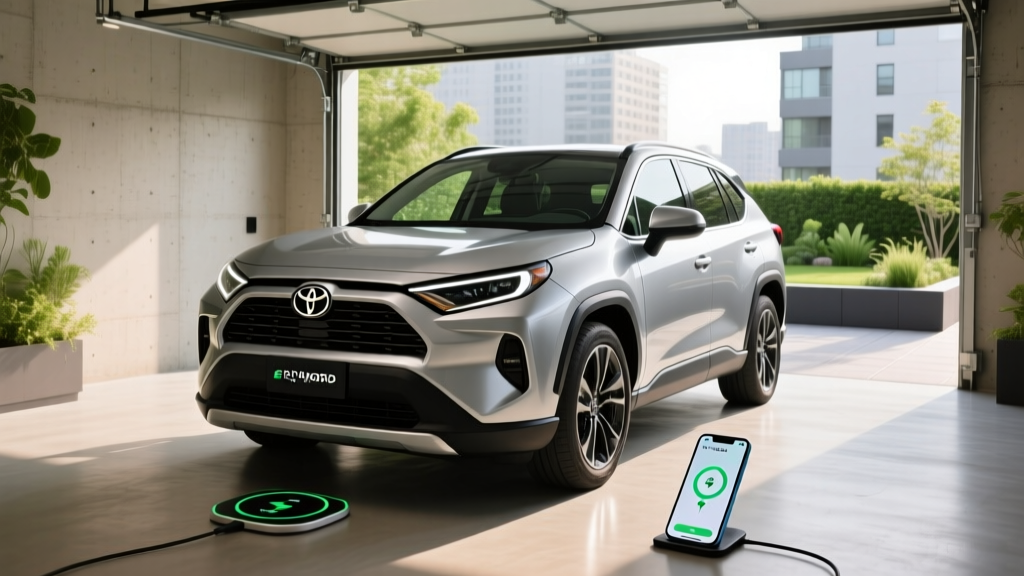
Quick Verdict: The RAV4 Hybrid Remains the Compact SUV Benchmark
Toyota's RAV4 Hybrid continues into the 2025 model year as one of the most compelling electrified vehicles for buyers who aren't ready to commit to a full battery-electric vehicle (BEV). With EPA ratings reaching 41 MPG combined, standard all-wheel drive, and a starting MSRP around $33,000, it delivers genuine fuel savings without range anxiety, charging infrastructure dependence, or the premium pricing of a plug-in hybrid or EV.
But the RAV4 lineup also includes the RAV4 Prime—a plug-in hybrid (PHEV) with 42 miles of electric-only range. Understanding the difference between the conventional hybrid (HEV) and the plug-in variant is critical before you visit a dealer. This guide breaks down both powertrains with exact specs, real-world expectations, and a clear decision framework.
RAV4 Hybrid (HEV) vs RAV4 Prime (PHEV): What's the Difference?
The most common confusion among RAV4 shoppers is conflating the standard hybrid with the plug-in hybrid. They are fundamentally different vehicles with different use cases.
| Feature | RAV4 Hybrid (HEV) | RAV4 Prime (PHEV) |
|---|---|---|
| Plug-in Required? | No — self-charging via regenerative braking and engine | Yes — plug in to access electric-only driving |
| Battery Capacity | ~1.6 kWh (small, not plug-in capable) | 18.1 kWh usable |
| Electric-Only Range | None (EV assist only at low speeds) | 42 miles EPA |
| Combined Horsepower | 219 hp | 302 hp |
| EPA Combined MPG (hybrid mode) | 39–41 MPG | 38 MPG (after battery depleted) |
| MPGe (charge-sustaining + electric) | N/A | 94 MPGe combined |
| 0-60 mph | ~7.4 seconds | ~5.7 seconds |
| Starting MSRP (2025) | ~$33,000 | ~$44,500 |
| Federal Tax Credit (§30D) | Not eligible | Up to $7,500 (subject to eligibility rules) |
Key takeaway: The conventional RAV4 Hybrid never plugs in. It captures energy through regenerative braking and the gasoline engine to charge its small battery. The RAV4 Prime has a much larger battery that you charge by plugging in, enabling genuine electric-only commuting before the gas engine takes over.
Fuel Economy: EPA Ratings and Real-World MPG
RAV4 Hybrid (HEV) MPG Breakdown
| Trim / Drivetrain | City MPG | Highway MPG | Combined MPG |
|---|---|---|---|
| LE AWD | 41 | 38 | 40 |
| XLE / XLE Premium AWD | 41 | 38 | 39 |
| SE / XSE AWD | 41 | 38 | 39 |
| Woodland Edition AWD | 38 | 35 | 37 |
| Limited AWD | 41 | 38 | 39 |
Source: EPA Fuel Economy
RAV4 Prime (PHEV) Efficiency
| Mode | City | Highway | Combined |
|---|---|---|---|
| Charge-Depleting (Electric + Gas) | — | — | 94 MPGe |
| Charge-Sustaining (Gas Only, Battery Depleted) | 40 | 36 | 38 |
| Electric-Only Range | 42 miles EPA | ||
Real-World MPG: What to Actually Expect
Toyota hybrids consistently perform close to—or even slightly above—their EPA city ratings in real-world driving because city conditions maximize regenerative braking opportunities. In our experience and owner reports:
- City driving: 40–43 MPG is achievable in stop-and-go traffic with moderate acceleration.
- Highway driving (70-80 mph): Expect 35–37 MPG. Aerodynamic drag at speed reduces hybrid advantage.
- Cold weather (below 35°F): MPG drops 5–10% as the engine runs more frequently for cabin heat and battery conditioning.
- Woodland Edition: The more aggressive all-terrain tires measurably reduce efficiency; expect 34–36 MPG combined in mixed driving.
The RAV4 Prime's 42-mile electric range is EPA-rated. In mild weather with gentle acceleration, some owners report 44–46 miles before the engine engages. In cold weather or at highway speeds, expect 32–36 miles of electric-only driving.
Powertrain Specs: Engine, Motors, and Performance
| Specification | RAV4 Hybrid (HEV) | RAV4 Prime (PHEV) |
|---|---|---|
| Engine | 2.5L 4-cylinder Atkinson cycle | 2.5L 4-cylinder Atkinson cycle |
| Engine Output | 176 hp / 163 lb-ft | 177 hp / 165 lb-ft |
| Front Electric Motor | 118 hp / 149 lb-ft | 180 hp / 199 lb-ft |
| Rear Electric Motor (AWD) | 54 hp / 89 lb-ft | 54 hp / 89 lb-ft |
| Net Combined Horsepower | 219 hp | 302 hp |
| Transmission | eCVT (planetary gearset) | eCVT (planetary gearset) |
| 0-60 mph | ~7.4 seconds | ~5.7 seconds |
| Drivetrain | AWD standard (electronic on-demand rear motor) | AWD standard |
| Towing Capacity | 1,750 lbs | 1,750 lbs |
Toyota's eCVT is not a traditional belt-driven CVT. It uses a planetary gearset that seamlessly blends engine and motor power with no fixed gear ratios and no rubber-band acceleration feel. The result is smooth, linear power delivery that most drivers find preferable to conventional automatics in city driving.
The RAV4 Prime's 302 combined horsepower makes it the quickest RAV4 Toyota sells—quicker than the gas-only Turbo variant and competitive with sport-tuned compact SUVs from European brands. In EV mode, it accelerates briskly for errands and commutes without engaging the engine.
RAV4 Prime Charging: Battery Size, Charge Times, and the DC Fast-Charge Gap
The RAV4 Prime's 18.1 kWh battery (usable capacity) is the largest in Toyota's current hybrid lineup. Here's how charging breaks down:
| Charging Method | Power | 0–100% Time | Notes |
|---|---|---|---|
| Level 1 (120V household outlet) | ~1.4 kW | ~12 hours | Trickle charge; impractical for daily full recharges |
| Level 2 (240V, 3.3 kW onboard charger — SE trim) | 3.3 kW | ~5.5 hours | Standard on SE trim |
| Level 2 (240V, 6.6 kW onboard charger — XSE trim) | 6.6 kW | ~2.5 hours | Available on XSE; recommended for daily use |
| DC Fast Charging | Not supported | N/A | No DC fast-charge capability |
Critical limitation: The RAV4 Prime cannot DC fast charge. This is a significant omission compared to competitors like the Hyundai Tucson PHEV or the now-discontinued Ford Escape PHEV, which offered DC capability. If you rely on public charging or take frequent long road trips where opportunistic top-ups would help, the RAV4 Prime's AC-only charging is a constraint.
For most PHEV owners, Level 2 home charging is the primary use case. A 6.6 kW home charger replenishes the battery overnight or during a work-from-home day easily. We recommend the 6.6 kW onboard charger option if you plan to charge daily.
Pricing, Trims, and Tax Credit Eligibility
RAV4 Hybrid (HEV) Pricing — 2025 Model Year
- LE: ~$33,000 MSRP
- XLE: ~$34,500 MSRP
- XLE Premium: ~$36,500 MSRP
- SE: ~$36,000 MSRP
- XSE: ~$37,500 MSRP
- Woodland Edition: ~$36,500 MSRP
- Limited: ~$40,000 MSRP
RAV4 Prime (PHEV) Pricing — 2025 Model Year
- SE: ~$44,500 MSRP
- XSE: ~$48,000 MSRP
Federal Tax Credit: §30D Eligibility
The conventional RAV4 Hybrid (HEV) does not qualify for the federal §30D clean vehicle credit. It is not a plug-in vehicle.
The RAV4 Prime (PHEV) may qualify for up to $7,500 under the current IRS §30D rules, but eligibility depends on multiple factors:
- MSRP cap: SUVs must have an MSRP at or below $80,000 — the RAV4 Prime clears this easily.
- Buyer income limits: Modified AGI must not exceed $150,000 (single), $225,000 (head of household), or $300,000 (joint filers).
- Battery sourcing requirements: Critical minerals and battery components must meet phased-in percentage thresholds from U.S. or free-trade-agreement partners. These requirements tighten annually.
- Point-of-sale transfer: As of 2024, eligible buyers can transfer the credit to the dealer at purchase, reducing the purchase price directly rather than waiting for a tax refund.
Important: Battery sourcing rules are subject to change, and the RAV4 Prime's eligibility may shift. Always verify current eligibility on IRS.gov and confirm with your tax professional before purchasing.
Battery Warranty, Reliability, and Replacement Costs
Toyota Hybrid Battery Warranty
- Coverage: 10 years / 150,000 miles (whichever comes first)
- Applies to: Hybrid battery pack and hybrid system components
- Applies in: All 50 states (California-emissions states had previously offered longer coverage, but Toyota standardized at 10/150k nationwide for current models)
- What's covered: Defects, excessive capacity loss below functional thresholds
Real-World Hybrid Battery Longevity
Toyota's hybrid battery track record is among the best in the industry. Data from Prius and RAV4 Hybrid fleets shows:
- Most Toyota hybrid batteries last 150,000–200,000+ miles before significant degradation.
- Failure before 100,000 miles is uncommon and typically covered under warranty.
- The RAV4 Hybrid's 1.6 kWh battery is small, operates in a narrow state-of-charge window (typically 40–80%), and uses mature nickel-metal hydride (NiMH) chemistry on some trims or lithium-ion on others—both proven durable.
- The RAV4 Prime's 18.1 kWh lithium-ion battery is more complex but benefits from Toyota's conservative thermal management and charge-buffering (the system never fully charges or fully depletes the pack, extending cycle life).
Battery Replacement Cost
If a hybrid battery does fail out of warranty:
- RAV4 Hybrid (HEV): Replacement battery packs cost approximately $2,000–$4,000 (parts), with labor adding $500–$1,000. Refurbished packs from third parties are available for $1,500–$2,500.
- RAV4 Prime (PHEV): The larger lithium-ion pack is more expensive—estimated $6,000–$9,000 for replacement. However, this battery is still under warranty for most original owners given the 10-year/150,000-mile coverage.
Overall Reliability
Toyota consistently ranks at or near the top in long-term reliability surveys (J.D. Power, Consumer Reports). The RAV4 Hybrid powertrain has fewer wear items than a conventional gas vehicle: no traditional starter motor, no alternator, the eCVT has no belts or clutches to replace, and regenerative braking extends brake pad life significantly (many owners report original pads at 80,000+ miles).
RAV4 Hybrid vs RAV4 Prime vs Full EV: Which Should You Choose?
Choose the RAV4 Hybrid (HEV) if:
- You cannot install a home charger (apartment, street parking, no garage).
- Your budget is under $38,000.
- You want maximum simplicity — no plug-in routine, no charging apps, no public charging dependence.
- You drive 200+ miles regularly and don't want to plan charging stops.
- You want the lowest total cost of ownership with proven reliability.
Choose the RAV4 Prime (PHEV) if:
- You have reliable Level 2 home charging and a commute under 40 miles round-trip.
- You want to drive on electricity most weekdays but take gas-powered road trips on weekends.
- You qualify for the $7,500 federal tax credit, bringing the effective price closer to a loaded RAV4 Hybrid Limited.
- You value the 302 hp performance upgrade.
- You want to reduce fuel consumption dramatically without any range anxiety.
Choose a Full EV (like the Toyota bZ4X, Tesla Model Y, or Hyundai Ioniq 5) if:
- You have home charging and your daily driving rarely exceeds 200 miles.
- You want zero tailpipe emissions and minimal maintenance (no oil changes, no engine).
- You're ready to use DC fast-charging networks for road trips.
- You want the lowest per-mile fuel cost (electricity is typically $0.04–$0.06/mile vs. $0.12–$0.16/mile for the RAV4 Hybrid at current gas prices).
Pros and Cons
Pros
- Excellent real-world MPG, especially in city driving (40–43 MPG achievable)
- Standard AWD across all trims with no fuel-economy penalty vs FWD
- Proven reliability with 10-year/150,000-mile hybrid battery warranty
- No charging infrastructure needed (HEV)
- Strong resale value — RAV4 Hybrids hold value well
- RAV4 Prime offers 42-mile EV range and 302 hp
- Comfortable ride quality and practical cargo space (37.6 cu ft behind rear seats)
Cons
- RAV4 Prime is expensive and frequently marked up above MSRP at dealers
- RAV4 Prime cannot DC fast charge — AC-only limits road-trip utility
- HEV is not eligible for any federal tax credit
- Woodland Edition sacrifices 3–4 MPG for all-terrain tires
- Infotainment system is functional but lags competitors in responsiveness
- No third-row seat option
Frequently Asked Questions
How many MPG does the 2025 RAV4 Hybrid get?
The 2025 RAV4 Hybrid achieves 41 city / 38 highway / 39–40 combined MPG on most trims (LE through XSE). The Woodland Edition rates slightly lower at 38/35/37 due to all-terrain tires. In real-world city driving, many owners report matching or slightly exceeding the EPA city number thanks to aggressive regenerative braking.
How far can the RAV4 Prime go on electric only?
The RAV4 Prime delivers 42 miles of EPA-rated electric-only range. In mild weather with gentle driving, 44–46 miles is possible. In cold weather or at sustained highway speeds, expect 32–36 miles before the gasoline engine engages. Total combined range (electric + full gas tank) exceeds 550 miles.
Does the RAV4 Hybrid need to be plugged in?
No. The conventional RAV4 Hybrid (HEV) never plugs in. It charges its small battery through regenerative braking and the gasoline engine. Only the RAV4 Prime (PHEV) requires plugging in to access its electric-only driving range. If you don't plug in the Prime, it simply operates as a conventional hybrid with 38 MPG combined.
Is the RAV4 Hybrid reliable, and what does battery replacement cost?
Toyota's hybrid system has an outstanding reliability record spanning two decades. The hybrid battery is covered by a 10-year/150,000-mile warranty. Out-of-warranty replacement costs approximately $2,000–$4,000 for the HEV and $6,000–$9,000 for the Prime's larger lithium-ion pack. Most batteries last well beyond 150,000 miles.
Does the 2025 RAV4 Hybrid qualify for any tax credit?
The conventional RAV4 Hybrid (HEV) does not qualify for the federal §30D clean vehicle credit because it is not a plug-in vehicle. The RAV4 Prime (PHEV) may qualify for up to $7,500, subject to buyer income limits, battery-sourcing requirements, and MSRP caps. Check current eligibility at IRS.gov before purchasing.
Is the RAV4 Hybrid better than a full EV like the Tesla Model Y?
It depends on your situation. If you have home charging, a predictable commute, and access to DC fast charging for road trips, a full EV offers lower operating costs and zero tailpipe emissions. If you lack home charging, regularly drive 300+ miles in a day, live in an area with unreliable public charging, or want the lowest upfront cost, the RAV4 Hybrid is the more practical choice. The RAV4 Prime bridges both worlds for commuters with home charging.