Quick Verdict: The Prius Prime Bridges Gas and Electric
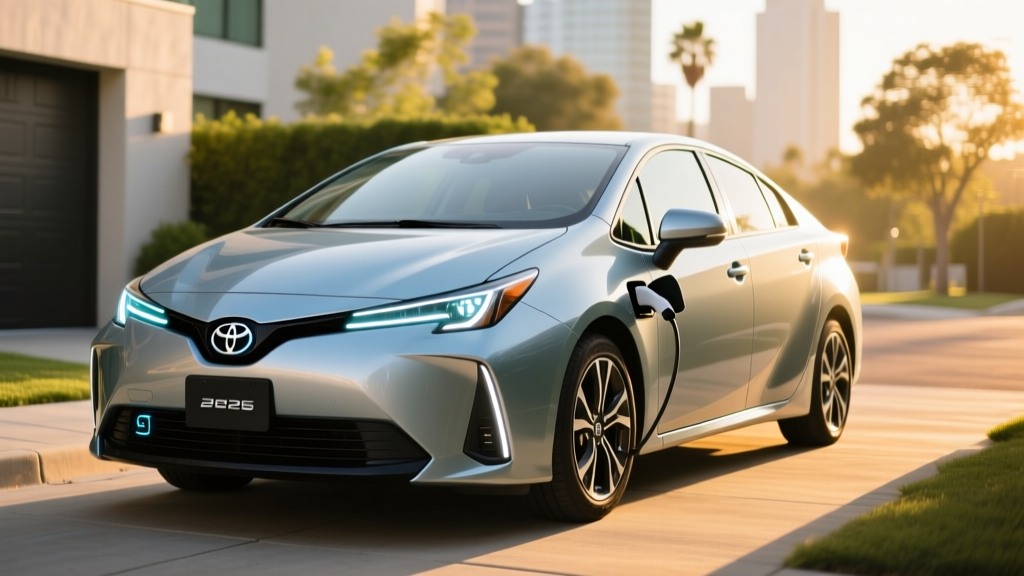
If you've searched for a prius plug hybrid, you're looking at the Toyota Prius Prime — Toyota's plug-in hybrid (PHEV) variant of the iconic Prius. For 2026, the Prius Prime remains one of the most practical electrified vehicles on the market: 44 miles of electric-only driving for daily commutes, 52 MPG combined once the gas engine kicks in, and no range anxiety whatsoever. It's a vehicle that rewards home charging without punishing road-trippers.
But the Prius Prime isn't for everyone. If you can charge at home and your commute stays under 40 miles, a full battery-electric vehicle (BEV) may save you more. If you lack charging access, the conventional Prius HEV delivers nearly identical highway efficiency without needing a plug. This guide breaks down exactly where the Prius Prime fits — with real numbers, not marketing gloss.
HEV vs PHEV: What's the Difference on a Prius?
Toyota sells two electrified Prius models, and buyers frequently confuse them. Here's the essential distinction:
| Feature | Prius HEV (Conventional Hybrid) | Prius Prime (Plug-In Hybrid / PHEV) |
|---|---|---|
| Needs to plug in? | No — regenerates its own charge | Yes — plug in for max electric range |
| Battery size | ~0.9 kWh (small buffer) | 13.6 kWh usable |
| Electric-only range | ~1 mile at low speed | 44 miles (EPA) |
| Combined MPG (gas mode) | 57 MPG | 52 MPG |
| Starting MSRP (2026) | ~$28,350 | ~$33,445 |
| Federal tax credit | Not eligible | Up to $3,750 (§30D) |
The conventional Prius HEV generates electricity through regenerative braking and its gasoline engine — you never plug it in. The Prius Prime PHEV has a much larger battery you charge via a standard outlet or Level 2 charger, giving you a meaningful electric-only driving buffer before the gas engine engages.
Fuel Economy and Electric Range: The Numbers
| Metric | EPA Rating | Real-World Expectation |
|---|---|---|
| Electric-only range | 44 miles | 38–46 mi (varies with temp, terrain, speed) |
| MPGe (electric mode) | 127 MPGe | 110–130 MPGe |
| Combined MPG (hybrid/gas) | 52 MPG | 48–56 MPG |
| City MPG (gas mode) | 53 MPG | 50–58 MPG (hybrids excel in stop-and-go) |
| Highway MPG (gas mode) | 51 MPG | 46–52 MPG |
| Total combined range | ~440 miles | 400–460 miles |
Real-world note: Hybrid and PHEV efficiency behaves opposite to gas cars in city driving. Regenerative braking recaptures energy at every stop, so the Prius Prime often exceeds its EPA city rating in stop-and-go traffic. Highway driving at 75+ mph reduces efficiency due to aerodynamic drag — expect 46–48 MPG on long interstate runs.
Electric-only range drops in cold weather (below 40°F) by roughly 15–25% due to cabin heating demands and reduced battery efficiency. In winter, plan for 33–38 electric miles instead of 44.
Powertrain, Battery, and Charging Specs
| Specification | 2026 Prius Prime |
|---|---|
| Combined horsepower | 220 hp |
| Gas engine | 2.0L 4-cylinder (150 hp) |
| Electric motor (front) | 161 hp / 149 lb-ft torque |
| Battery chemistry | Lithium-ion (NMC) |
| Battery capacity (usable) | 13.6 kWh |
| 0–60 mph | 6.6 seconds |
| Drivetrain | FWD (AWD not available on Prime) |
| DC fast charging | Not supported |
| Level 2 charging (240V) | ~4 hours (3.3 kW onboard charger) |
| Level 1 charging (120V outlet) | ~11 hours |
| Charge port | J1772 (Level 2 AC) |
Charging reality: The Prius Prime does not support DC fast charging. The 3.3 kW onboard charger means a full Level 2 charge takes about 4 hours. This is perfectly adequate for overnight home charging — plug in when you get home, wake up to a full battery every morning. But if you were hoping to rapid-charge at a highway rest stop, that's not an option here. The Prius Prime is designed for home-and-destination charging, not road-trip fast-charging.
Battery Warranty & Longevity
Toyota covers the Prius Prime's hybrid battery for 10 years or 150,000 miles (whichever comes first), transferable to subsequent owners. This is one of the strongest hybrid battery warranties in the industry. Toyota's hybrid batteries have a proven track record of lasting 150,000–200,000+ miles with minimal degradation. Replacement cost, if needed out of warranty, runs approximately $3,500–$5,500 depending on source (new OEM vs. refurbished). According to Toyota's official specifications, the battery management system limits charge extremes to prolong cell life.
Pricing, Trims, and Tax Credit Eligibility
The 2026 Toyota Prius Prime is offered in three trims:
- SE: ~$33,445 MSRP — 17-inch wheels, Toyota Safety Sense 3.0, 8-inch touchscreen
- XSE: ~$36,745 MSRP — 19-inch wheels, heated front seats, 12.3-inch display, wireless CarPlay/Android Auto
- XSE Premium: ~$40,445 MSRP — Panoramic roof, JBL audio, digital rearview mirror, advanced park assist
Federal Tax Credit (§30D) for the Prius Prime
- Credit amount: Up to $3,750 (the Prius Prime qualifies for the critical minerals portion but not the full battery-component portion under current sourcing rules)
- MSRP cap: Vehicle must be under $55,000 (sedan cap) — all Prius Prime trims qualify
- Buyer income cap: AGI must not exceed $150,000 (single), $225,000 (head of household), or $300,000 (joint)
- Point-of-sale transfer: You can apply the credit as a down-payment reduction at the dealer, or claim it on your tax return
- Source: Verify current eligibility on IRS.gov §30D page — battery sourcing requirements change periodically
Important: Tax credit rules under IRS §30D are subject to change based on updated battery-sourcing and critical-minerals requirements. The $3,750 figure reflects the partial credit the Prius Prime qualifies for under current rules. Always confirm with a tax professional before purchasing.
Who Should Buy the Prius Prime vs. a Full EV or Gas Car?
Pros
- 44-mile electric range covers most daily commutes gas-free
- 52 MPG combined eliminates range anxiety on road trips
- No dependence on public charging infrastructure
- 220 hp makes it genuinely quick for a Prius (6.6s 0–60)
- 10-year / 150,000-mile hybrid battery warranty
- Strong resale value and Toyota reliability reputation
- Qualifies for partial federal tax credit
Cons
- No DC fast charging — not ideal if you can't charge at home
- 3.3 kW onboard charger is slow for Level 2 (4-hour fill)
- FWD only — no AWD option on the Prime
- Back seat and cargo space slightly reduced vs. conventional Prius
- $5,000+ premium over the conventional Prius HEV
- Tax credit is partial ($3,750), not the full $7,500
Decision Framework
Choose the Prius Prime (PHEV) if: You can charge at home (Level 1 or 2), your daily driving is under 45 miles, but you regularly take road trips exceeding 300 miles and don't want to plan around charging stops.
Choose a full EV (BEV) if: You have reliable home Level 2 charging, your daily driving stays under 250 miles, you want zero gas-engine maintenance, and you qualify for the full $7,500 federal credit on a BEV.
Choose the conventional Prius (HEV) if: You cannot charge at home (apartment, street parking), you want the lowest purchase price, or your daily commute is long enough that the PHEV's 44-mile electric range wouldn't make a meaningful difference.
Real-World Ownership: What the EPA Numbers Don't Tell You
Based on owner reports and testing data compiled by fueleconomy.gov, the Prius Prime delivers consistent real-world results:
- City commuting in EV mode: Owners regularly report 40–46 electric miles in mild weather, enough to cover a round-trip commute without burning a drop of gas.
- Highway road trips: Expect 46–50 MPG at 70–75 mph with the battery depleted — slightly below the 51 MPG EPA highway rating due to aerodynamic drag at sustained speed.
- Cold-weather impact: Below 35°F, electric range drops to 33–38 miles as the cabin heater draws from the battery. Gas-mode MPG also dips to 45–48 as the engine runs more frequently for heat.
- Charging cost: At the US average electricity rate of ~$0.17/kWh, fully charging the 13.6 kWh battery costs roughly $2.31 — equivalent to about $0.05/mile in electric mode. Compare that to $0.12–$0.15/mile for a 30 MPG gas car at $3.50/gallon.
- Oil changes: When driven mostly in EV mode, the gas engine runs infrequently. Toyota still recommends oil changes every 10,000 miles or 12 months, but some owners stretch intervals with synthetic oil and light engine use. Follow your manual.
Reliability and Long-Term Battery Costs
Toyota's hybrid system is among the most proven in the automotive industry. The Prius lineage spans over 25 years, and the hybrid synergy drive components (planetary gearset, motor-generators, power electronics) are exceptionally durable. The Prius Prime's larger PHEV battery uses the same fundamental architecture with additional capacity.
Battery degradation data: Toyota's hybrid batteries typically retain 85–90% capacity after 100,000 miles. The Prius Prime's battery management system maintains a buffer — you never truly use 100% or 0% of the cells — which significantly extends cycle life. Out-of-warranty replacement costs range from $3,500 (refurbished) to $5,500 (new OEM), but most Prius batteries outlast the vehicle itself.
General reliability: The 2026 Prius Prime carries Toyota's standard 3-year/36,000-mile bumper-to-bumper warranty and 5-year/60,000-mile powertrain warranty, plus the 10-year/150,000-mile hybrid battery warranty. Toyota consistently ranks in the top tier of J.D. Power and Consumer Reports reliability surveys, and the Prius specifically has one of the lowest cost-of-ownership figures in its class.
Frequently Asked Questions
How many MPG does the Prius Prime get?
The 2026 Toyota Prius Prime achieves an EPA-rated 52 MPG combined (53 city / 51 highway) when operating in hybrid mode after the battery is depleted. In electric-only mode, it earns 127 MPGe. Real-world results typically range from 48–56 MPG depending on driving conditions, with city driving often exceeding the EPA rating thanks to regenerative braking.
How far can the Prius Prime go on electric only?
The EPA rates the 2026 Prius Prime at 44 miles of electric-only range. In real-world driving, expect 38–46 miles depending on temperature, speed, and terrain. Cold weather (below 40°F) reduces this to approximately 33–38 miles due to heating demands and reduced battery efficiency.
Does the Prius Prime qualify for a tax credit?
Yes, the Prius Prime qualifies for up to $3,750 under the federal §30D Clean Vehicle Credit, subject to buyer income limits ($150K single / $300K joint AGI) and the $55,000 MSRP cap for sedans. The credit can be applied at point of sale as a down-payment reduction. Verify current eligibility at IRS.gov as battery-sourcing requirements are updated periodically.
Can I charge the Prius Prime at a DC fast charger?
No. The Prius Prime does not support DC fast charging. It charges via AC only — Level 1 (120V household outlet, ~11 hours for a full charge) or Level 2 (240V, ~4 hours via its 3.3 kW onboard charger). The charge port uses the standard J1772 connector.
Is the Prius Prime reliable, and what does a battery replacement cost?
Toyota's hybrid system is among the most reliable powertrains in the industry. The hybrid battery is covered by a 10-year / 150,000-mile warranty. Out-of-warranty replacement runs $3,500–$5,500 depending on whether you use a refurbished or new OEM battery. Most Prius hybrid batteries last 150,000–200,000+ miles before needing replacement.
Prius Prime vs. full EV — which should I buy?
Choose the Prius Prime if you want electric commuting but regularly drive 300+ miles without reliable fast-charging access. Choose a full EV (like a Tesla Model 3, Hyundai Ioniq 6, or Chevy Equinox EV) if you have home Level 2 charging, drive under 250 miles daily, and want zero gas-engine maintenance. Choose the conventional Prius HEV if you can't charge at home at all.
Do I need to plug in the Prius Prime every night?
For maximum benefit, yes — plugging in nightly ensures you start each day with a full 44-mile electric range. However, the Prius Prime functions perfectly as a conventional hybrid if you forget to plug in or lack access. You'll simply get 52 MPG instead of electric-only miles. There's no penalty for not charging; you just miss the electric savings.