Quick Verdict: The Prius Plug-In Hybrid Still Sets the PHEV Benchmark
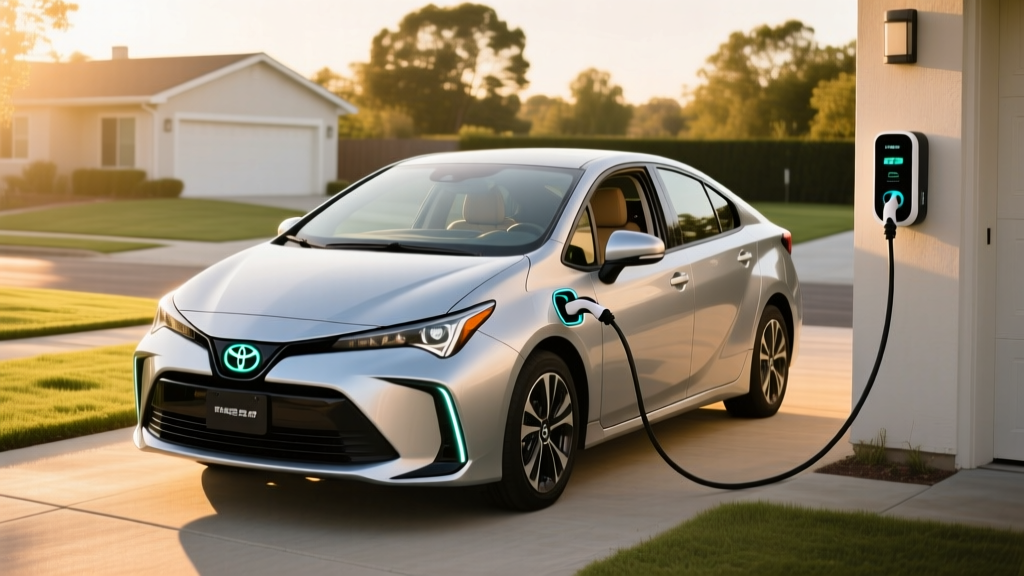
The Toyota Prius Plug-In Hybrid — marketed as the Prius Prime — remains one of the most compelling electrified vehicles for buyers who want meaningful electric-only commuting without range anxiety on road trips. For 2026, the Prius Prime carries over the redesigned platform introduced in 2023 with its 220-horsepower powertrain, 44-mile EPA electric-only range, and up to 52 MPG combined once the battery depletes. Starting at $33,445, it occupies a narrow sweet spot: more electric capability than any conventional hybrid, fewer compromises than a full EV for apartment dwellers or single-car households.
This review breaks down the real-world efficiency, charging practicalities, powertrain behavior, and tax-credit eligibility you need to evaluate whether the Prius Prime fits your commute — or whether a full BEV or conventional HEV makes more sense.
HEV vs. PHEV: What's the Actual Difference in the Prius Lineup?
Toyota sells two Prius variants, and confusing them is the most common buyer mistake. Here is the fundamental distinction:
Prius (Conventional HEV)
- No plug. The 1.0 kWh battery charges solely through regenerative braking and the gasoline engine.
- Electric assist only. The electric motor supplements the engine; pure-electric driving is limited to very low speeds for brief distances.
- EPA rating: 57 city / 56 highway / 57 combined MPG.
- Starting MSRP: ~$28,545 (2026 LE trim).
- No federal tax credit.
Prius Prime (Plug-In Hybrid / PHEV)
- Plug-in capable. The 13.6 kWh lithium-ion battery charges via Level 1 or Level 2 AC charging (no DC fast charging).
- 44 miles electric-only. Full EV mode handles most commutes with zero gasoline use.
- EPA rating: 52 combined MPG (hybrid mode) + 127 MPGe (electric mode).
- Starting MSRP: ~$33,445 (2026 SE trim).
- May qualify for up to $3,750 federal tax credit (subject to §30D sourcing and income rules).
The conventional Prius HEV is ideal for drivers who want maximum fuel efficiency with zero behavior change — just gas up and drive. The Prius Prime targets drivers with home or workplace charging access who want to eliminate daily gasoline use while retaining a gas engine for longer trips.
Electric-Only Range, Total Range, and Charging Specs
| Specification | 2026 Prius Prime |
|---|---|
| Battery capacity (usable) | 13.6 kWh (lithium-ion) |
| EPA electric-only range | 44 miles (SE trim); 40 miles (XSE/XSE Premium) |
| EPA MPGe (electric mode) | 127 MPGe |
| Total combined range (EV + gas) | ~440 miles |
| Gas tank capacity | 10.6 gallons |
| Level 1 charging (120V, 12A) | ~4 hours (0–100%) |
| Level 2 charging (240V, 32A) | ~2 hours (0–100%) |
| DC fast charging | Not available |
| Charge port | J1772 (AC only) |
Real-World Electric Range Expectations
The EPA rates the Prius Prime SE at 44 miles electric-only. In real-world testing, expect 38–44 miles in mild weather (55–75°F) on mixed city/suburban routes. Highway-heavy driving at 70+ mph reduces this to roughly 32–36 miles. In cold weather (below 32°F), plan for 28–34 miles due to cabin heating demands and reduced battery efficiency. The XSE trim's larger 19-inch wheels and additional weight drop the EPA rating to 40 miles — a meaningful 4-mile penalty.
A critical limitation: the Prius Prime does not support DC fast charging. The maximum charge rate is approximately 6.6 kW on Level 2 AC. This is standard for PHEVs — the battery is small enough that overnight Level 2 charging fully replenishes it — but it means you cannot top up quickly at a highway rest stop. For a 13.6 kWh battery, however, DC fast charging would be unnecessary infrastructure cost.
Powertrain: 220 HP Makes This the Most Powerful Prius Ever
The current-generation Prius Prime pairs a 2.0-liter four-cylinder Atkinson-cycle engine with two motor-generators through Toyota's planetary-gear hybrid transaxle. Combined system output is 220 horsepower — a dramatic increase from the previous generation's 121 HP.
| Powertrain Component | Specification |
|---|---|
| Engine | 2.0L 4-cylinder Atkinson cycle |
| Engine output | 150 HP / 139 lb-ft torque |
| Electric motor output | 161 HP (combined motor-generators) |
| Combined system horsepower | 220 HP |
| 0–60 mph | 6.6 seconds |
| Drivetrain | Front-wheel drive (FWD) |
| Transmission | Electronically controlled CVT (eCVT) |
The 6.6-second 0–60 time places the Prius Prime ahead of most compact crossovers and makes highway merging effortless. EV mode acceleration is responsive up to about 45 mph; beyond that, the engine engages seamlessly. The transition between electric and hybrid operation is nearly imperceptible — a hallmark of Toyota's hybrid synergy drive system refined over 25 years.
Fuel Economy: EPA Numbers and Real-World MPG
| Driving Mode | City | Highway | Combined |
|---|---|---|---|
| Hybrid mode (battery depleted) | 50 MPG | 54 MPG | 52 MPG |
| Electric mode (MPGe) | 131 MPGe | 122 MPGe | 127 MPGe |
Source: EPA Fuel Economy
Real-World MPG vs. EPA Estimates
Toyota hybrids, including the Prius Prime in hybrid mode, frequently meet or exceed EPA estimates in city driving — the opposite of most gasoline vehicles. This is because regenerative braking recaptures energy during stop-and-go traffic that conventional vehicles waste as heat. Expect 52–58 MPG in urban driving once the battery is depleted.
Highway driving is where the Prius Prime, like all hybrids, falls slightly below its EPA number. At sustained 75 mph, expect 48–52 MPG. Aerodynamic drag dominates at highway speeds, and the hybrid system has fewer opportunities to recapture energy. Cold weather and short trips (where the engine runs to heat the cabin) can push hybrid-mode consumption to 42–46 MPG in winter conditions.
If you charge nightly and commute under 44 miles, your actual gasoline consumption may approach zero for months at a time. Owners who charge diligently report using 2–4 tanks of gas per year, limited to road trips.
Pricing, Trims, and Tax Credit Eligibility
| 2026 Trim | MSRP | EPA EV Range | Key Features |
|---|---|---|---|
| SE | $33,445 | 44 miles | 17" alloy wheels, 8" touchscreen, wireless CarPlay/Android Auto, TSS 3.0 |
| XSE | $36,745 | 40 miles | 19" alloy wheels, SofTex seats, 12.3" touchscreen, heated front seats |
| XSE Premium | $40,195 | 40 miles | Panoramic glass roof, JBL audio, digital rearview mirror, parking assist |
Federal Tax Credit (§30D) — Up to $3,750
The 2026 Prius Prime may qualify for a partial federal tax credit of up to $3,750 under IRS §30D rules. Full $7,500 credit eligibility depends on battery critical-mineral and component sourcing requirements that change annually. Key eligibility criteria:
- MSRP cap: Vehicle MSRP must not exceed $55,000 (sedan classification). All Prius Prime trims qualify.
- Buyer income cap: Modified AGI must not exceed $150,000 (single) / $300,000 (joint). Check your tax return.
- Battery sourcing: Critical mineral and battery component percentages must meet annual thresholds set by the IRS. The Prius Prime's battery sourcing has historically met partial thresholds, yielding $3,750 rather than the full $7,500.
- Point-of-sale transfer: As of 2024, eligible buyers can transfer the credit to the dealer at purchase, reducing the sale price directly rather than waiting for a tax refund.
Source: IRS Clean Vehicle Credits
Credit rules are subject to change. Consult a tax professional and verify current sourcing requirements on the IRS website before purchasing.
Battery Longevity, Warranty, and Replacement Cost
Toyota Hybrid Battery Warranty
- Hybrid battery: 10 years / 150,000 miles (whichever comes first), transferable to subsequent owners.
- Capacity retention guarantee: Toyota warrants the hybrid battery against defects and abnormal loss of capacity. There is no published minimum capacity-retention percentage (unlike BEV warranties that specify 70% over 8 years).
- Powertrain warranty: 5 years / 60,000 miles.
- Basic warranty: 3 years / 36,000 miles.
How Long Will the Prius Prime Battery Last?
Toyota's hybrid battery track record is among the best in the industry. The Prius has been in production since 1997 (Japan) and 2000 (US), and data from millions of vehicles shows that hybrid batteries routinely last 150,000–200,000+ miles before significant degradation. The Prius Prime's 13.6 kWh battery operates within a conservative state-of-charge window — Toyota never charges it to true 100% or drains it to true 0%, which dramatically extends cycle life.
The PHEV battery is larger than the HEV battery and undergoes deeper daily cycling (full EV driving depletes more of the usable buffer). Even so, real-world reports from 2023+ Prius Prime owners show minimal degradation in the first 60,000 miles. Toyota's switch to lithium-ion (from the prior generation's nickel-metal hydride) provides better energy density and more predictable degradation curves.
Battery Replacement Cost
If the hybrid battery fails outside warranty coverage, a replacement from Toyota costs approximately $2,500–$4,000 including parts and labor at a dealership. Independent hybrid specialists often offer refurbished or reconditioned batteries for $1,500–$2,500. This is far less expensive than BEV battery replacement, which can exceed $10,000–$20,000, because the PHEV battery is significantly smaller.
Who Should Buy the Prius Prime — and Who Shouldn't?
Choose the Prius Prime (PHEV) if:
- Your daily commute is under 44 miles round-trip and you can charge at home or work.
- You take road trips regularly and don't want to plan around charging infrastructure.
- You live in a single-car household and need one vehicle that does everything efficiently.
- You want to reduce gasoline consumption without committing to full electric.
- You live in an apartment or area with limited public charging infrastructure.
Choose a Full EV (BEV) if:
- You have reliable home Level 2 charging and your daily driving is under 200 miles.
- You want zero gasoline use and zero oil changes, permanently.
- You want access to the full $7,500 federal tax credit (available on qualifying BEVs like the Tesla Model 3, Hyundai Ioniq 5, or Chevrolet Equinox EV).
- You prioritize instant torque, one-pedal driving, and the lowest per-mile energy cost.
Choose the Conventional Prius (HEV) if:
- You cannot charge at home or work — there's no benefit to a PHEV without plug-in access.
- You want the lowest purchase price and simplest ownership experience.
- Your driving is mostly long-distance highway, where the PHEV's electric range provides minimal benefit.
Pros
- 44-mile electric range covers most daily commutes gas-free
- 52 MPG combined in hybrid mode — best-in-class for PHEVs
- 220 HP and 6.6s 0–60 — genuinely quick for an efficiency car
- 440+ mile total range eliminates road-trip range anxiety
- 10-year/150,000-mile hybrid battery warranty
- Proven Toyota reliability with low maintenance costs
- Charges fully overnight on a standard 120V outlet
Cons
- No DC fast charging — can't quick-charge on road trips
- Only $3,750 partial federal tax credit (not the full $7,500)
- XSE trim loses 4 miles of EV range due to larger wheels
- Cargo space (20.3 cu ft) is modest; no spare tire
- FWD only — no AWD option for snow-belt buyers
- Higher starting price than the conventional Prius HEV
Charging at Home: What You Need to Know
The Prius Prime's 13.6 kWh battery is small enough that a standard 120V household outlet (Level 1) fully recharges it in approximately 4 hours. This is a genuine advantage over full EVs, which require 240V Level 2 charging for practical daily use. If you can park near an outlet, you may not need any electrical work at all.
| Charging Level | Voltage / Amperage | Power (kW) | 0–100% Time | Cost to Install |
|---|---|---|---|---|
| Level 1 (included cord) | 120V / 12A | ~1.4 kW | ~4 hours | $0 (use existing outlet) |
| Level 2 (home charger) | 240V / 32A | ~6.6 kW | ~2 hours | $500–$2,000 (charger + electrician) |
For faster replenishment — useful if you make multiple short trips per day and want the battery full between drives — a Level 2 home charger cuts charge time to about 2 hours. Installation costs vary widely: a simple 240V outlet near the panel may cost $500–$800, while running conduit 50+ feet to a detached garage can push $1,500–$2,000. A licensed electrician should assess your panel capacity; most homes with 200A service can accommodate a 32A charger without a panel upgrade.
Note: Always hire a licensed electrician for any 240V installation. Local permit requirements vary by jurisdiction.
Ownership Costs: Prius Prime vs. Gas vs. Full EV
| Cost Factor (5 years / 75,000 mi) | Prius Prime (PHEV) | Toyota Camry (Gas, 32 MPG) | Tesla Model 3 RWD (BEV) |
|---|---|---|---|
| Purchase price (after credit) | ~$29,695* | ~$28,400 | ~$31,490* |
| Fuel / electricity | ~$2,100 | ~$7,500 | ~$2,800 |
| Maintenance | ~$2,000 | ~$3,500 | ~$1,200 |
| Insurance (avg) | ~$7,500 | ~$6,800 | ~$9,200 |
| Estimated depreciation | ~$12,000 | ~$13,500 | ~$15,000 |
| 5-year total | ~$53,295 | ~$59,700 | ~$59,690 |
*Assumes $3,750 federal tax credit for Prius Prime and $7,500 for Model 3. Actual costs vary by region, driving habits, electricity/gas prices, and insurance provider. Fuel estimates assume 60% electric-mode driving for the Prime. Source: Author estimates using EPA data and national average fuel/electricity prices.
The Prius Prime's 5-year ownership cost is competitive with both a conventional midsize sedan and a full EV. Its advantage over the gas car comes from dramatically lower fuel costs and reduced maintenance (fewer brake replacements due to regen, no transmission fluid changes). Its advantage over a BEV comes from lower insurance premiums, lower depreciation, and lower purchase price — though the BEV has the lowest per-mile energy cost.
Frequently Asked Questions
How many MPG does the Prius Plug-In Hybrid get?
The 2026 Prius Prime achieves 50 city / 54 highway / 52 combined MPG in hybrid mode (battery depleted). In electric mode, it earns 127 MPGe combined. Real-world city driving often yields 52–58 MPG thanks to aggressive regenerative braking. Highway driving at 75 mph typically returns 48–52 MPG.
How far can the Prius Prime go on electric only?
The EPA rates the SE trim at 44 miles electric-only and the XSE/XSE Premium at 40 miles. In real-world conditions, expect 38–44 miles in mild weather, 32–36 miles at highway speeds, and 28–34 miles in freezing temperatures. Once the battery depletes, the gas engine engages and the car operates as a conventional hybrid with 52 MPG combined.
Hybrid vs. PHEV vs. EV — which is right for me?
If you can charge at home and your daily driving is under 44 miles, the Prius Prime (PHEV) lets you commute on electricity while keeping a gas engine for longer trips. If you drive more than 200 miles daily or can't charge at home, a conventional hybrid (HEV) like the standard Prius offers 57 MPG with zero behavior change. If you have home charging, drive under 250 miles daily, and want zero gasoline use, a full EV (BEV) offers the lowest per-mile cost and strongest tax incentives.
Is the Prius Prime reliable, and what does battery replacement cost?
Toyota's hybrid powertrains have a 25-year reliability track record with millions of vehicles on the road. The hybrid battery is warrantied for 10 years / 150,000 miles. Replacement costs outside warranty range from $1,500–$2,500 (refurbished) to $2,500–$4,000 (new from Toyota). Most Prius hybrid batteries last 150,000–200,000+ miles based on long-term fleet data.
Does the Prius Prime qualify for a federal tax credit?
The 2026 Prius Prime may qualify for a partial federal tax credit of up to $3,750 under IRS §30D, depending on battery sourcing requirements, your income level (under $150K single / $300K joint), and the vehicle's MSRP (under $55,000). The credit can be transferred to the dealer at point of sale to reduce your purchase price. Verify current eligibility on the IRS website and consult a tax professional, as sourcing rules update annually.
Can I charge the Prius Prime on a regular household outlet?
Yes. The Prius Prime comes with a Level 1 charging cord that plugs into a standard 120V household outlet and fully recharges the battery in approximately 4 hours. This is sufficient for overnight charging for most owners. A Level 2 (240V) home charger reduces charge time to about 2 hours but requires professional electrical installation.
Does the Prius Prime have all-wheel drive?
No. The 2026 Prius Prime is front-wheel drive only. If AWD is essential for your climate, consider the conventional Prius HEV (available with electronic AWD) or look at PHEV SUVs like the Toyota RAV4 Prime or Subaru Crosstrek Hybrid.