Why the Prius Still Matters in 2026
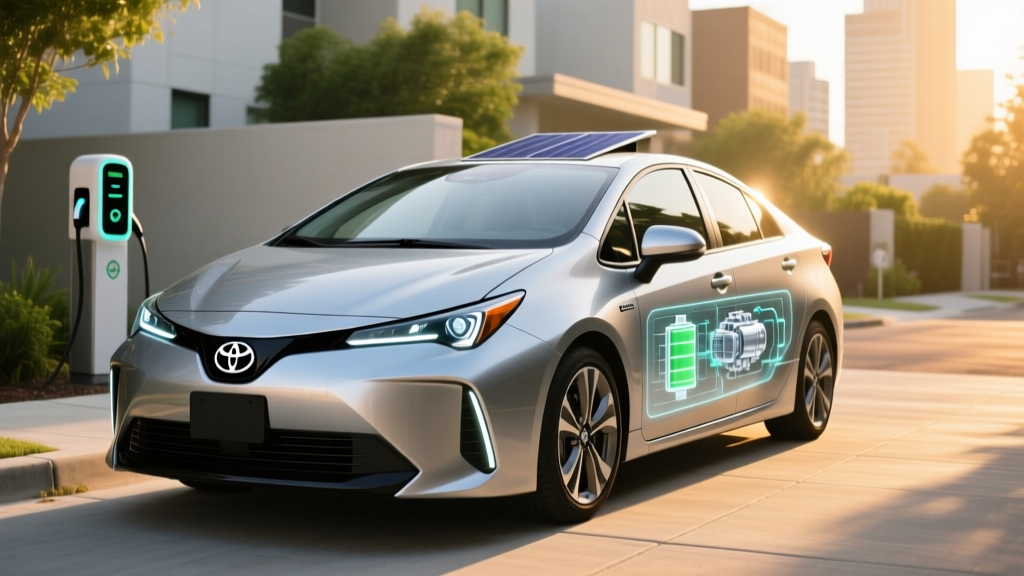
When the Toyota Prius launched in the U.S. for the 2001 model year, it became the first hybrid car most Americans had ever seen. A quarter-century later, the Prius nameplate is not only still in production — it remains one of the most efficient vehicles you can buy, gasoline or otherwise. The current fifth-generation Prius (redesigned for 2023 and refreshed since) pairs a striking fastback design with a hybrid powertrain that delivers up to 57 MPG combined on the EPA cycle, putting it ahead of nearly every non-plug-in vehicle on the market.
For 2026, Toyota continues to offer the Prius in two distinct flavors: the conventional hybrid electric vehicle (HEV), which never needs to be plugged in, and the Prius Prime plug-in hybrid (PHEV), which adds a larger battery and meaningful electric-only driving range. Understanding the difference between the two — and which one fits your driving pattern — is the single most important decision you'll make as a Prius shopper.
HEV vs. PHEV: Which Prius Are You Looking At?
| Attribute | Prius (HEV) | Prius Prime (PHEV) |
|---|---|---|
| Powertrain type | Conventional hybrid — no plug | Plug-in hybrid — charges via outlet or station |
| Battery capacity | ~0.9 kWh (lithium-ion) | 13.6 kWh usable (lithium-ion) |
| Electric-only range | N/A (EV assist only, ~1 mi) | 44 miles EPA (SE trim); 40 mi (XSE) |
| Total combined range | ~590 miles | ~440 miles (EV + gas combined) |
| Plugging in required? | No — regenerative braking recharges | No, but plugging in unlocks full EV range |
| DC fast charging | No | No (Level 2 AC only) |
| Federal tax credit (§30D) | Not eligible | Not eligible (MSRP & sourcing rules) |
The distinction is straightforward. The standard Prius HEV uses a small battery charged entirely by the gasoline engine and regenerative braking. You fuel it like any other car and never think about charging. The Prius Prime PHEV carries a substantially larger 13.6 kWh battery that you can charge from a wall outlet or Level 2 station, giving you up to 44 miles of pure electric driving before the gas engine seamlessly takes over. If you can charge at home and your daily commute falls within that 40–44 mile electric window, the Prime effectively operates as an EV for most weekday driving — with a gas engine as an unlimited-range backup for road trips.
Fuel Economy: Real EPA Numbers and What to Expect
| Model / Trim | City MPG | Highway MPG | Combined MPG | MPGe (PHEV EV mode) |
|---|---|---|---|---|
| Prius LE (FWD) | 57 | 56 | 57 | N/A |
| Prius XLE / Limited (FWD) | 52 | 52 | 52 | N/A |
| Prius AWD-e (LE) | 53 | 54 | 54 | N/A |
| Prius Prime SE | 53 (gas only) | 51 (gas only) | 52 (gas only) | 127 MPGe |
| Prius Prime XSE | 50 (gas only) | 47 (gas only) | 48 (gas only) | 117 MPGe |
Source: fueleconomy.gov (EPA estimates).
Real-world MPG reality check: Toyota hybrids tend to meet or slightly exceed their EPA city ratings because stop-and-go traffic maximizes regenerative braking and electric-motor assist. On the highway, however, expect a 3–5 MPG drop from the sticker at sustained 75+ mph speeds. In our experience and consistent owner reports, the Prius LE delivers roughly 54–58 MPG in mixed city driving and 50–53 MPG on long highway trips. Cold weather (below 35°F) can knock 5–8 MPG off combined figures as the engine runs more frequently for cabin heat.
For the Prius Prime, the economics shift dramatically if you charge regularly. Drivers with a 30-mile round-trip commute and nightly home charging may go weeks without visiting a gas station. Once the battery is depleted, the Prime reverts to its hybrid mode at roughly 48–52 MPG combined — still excellent, but slightly below the standard Prius LE because of the extra battery weight.
Powertrain Specs: 196 HP Is No Longer Slow
| Specification | Prius (HEV) | Prius Prime (PHEV) |
|---|---|---|
| Engine | 2.0L 4-cylinder Atkinson cycle | 2.0L 4-cylinder Atkinson cycle |
| Engine output | 150 hp / 139 lb-ft | 150 hp / 139 lb-ft |
| Electric motor output | 83 hp (front) | 120 hp (front) |
| Net combined horsepower | 194 hp (FWD) / 196 hp (AWD-e) | 220 hp |
| 0–60 mph | 7.2 sec (FWD) / 7.0 sec (AWD-e) | 6.6 sec |
| Transmission | eCVT (planetary gearset) | eCVT (planetary gearset) |
| Drivetrain | FWD or AWD-e (electronic rear motor) | FWD only |
| Curb weight | ~3,032 lbs (LE FWD) | ~3,461 lbs (SE) |
The fifth-generation Prius put the "slow hybrid" stereotype to rest. With 194–196 horsepower in the HEV and 220 hp in the Prime, this is a genuinely responsive car that merges onto freeways and passes without drama. The 2.0-liter Dynamic Force engine is one of the most thermally efficient production engines Toyota has ever built, and the eCVT — which is not a belt-and-cone CVT but a planetary gearset — delivers smooth, linear power without the rubber-band drone associated with older hybrids.
Prius Prime Charging: What PHEV Owners Need to Know
If you opt for the Prius Prime, charging logistics are simpler than a full EV but still require planning:
- Level 1 (120V household outlet): Approximately 11 hours for a full charge using the included cordset. Fine for overnight if you arrive home by early evening.
- Level 2 (240V home or public station): Approximately 4 hours for a full charge at 3.3 kW. This is the practical sweet spot — plug in when you get home, wake up to a full battery every morning.
- DC fast charging: Not available. The Prius Prime uses a J1772 AC inlet only. Toyota omitted DC fast-charge capability, which is common among PHEVs given the small battery size.
The 13.6 kWh battery pack in the Prime is sized deliberately: large enough to cover most daily commutes on electricity, small enough that a standard 120V outlet can replenish it overnight. If you cannot charge at home or at work, the Prime still functions as a conventional hybrid — you simply lose the electric-range benefit and pay a weight penalty for carrying an uncharged battery.
Pricing, Trims, and Tax Credit Eligibility
Here is the 2026 model-year pricing structure (MSRP, excluding destination):
- Prius LE (FWD): ~$28,350
- Prius LE (AWD-e): ~$29,750
- Prius XLE (FWD): ~$31,700
- Prius Limited (FWD): ~$35,570
- Prius Prime SE: ~$33,445
- Prius Prime XSE: ~$36,695
- Prius Prime XSE Premium: ~$39,670
Federal tax credit (§30D): As of current IRS guidelines, the Prius Prime does not qualify for the up-to-$7,500 federal clean vehicle credit. The credit requires vehicles to meet battery-component and critical-minerals sourcing thresholds, and the Prius Prime's supply chain does not currently satisfy these requirements. The standard Prius HEV is also ineligible, as conventional hybrids are excluded from §30D entirely. State and local incentives may apply — check your state's energy office or AFDC's state incentive database for details.
Hybrid Battery Warranty: What Toyota Covers
Toyota provides a 10-year / 150,000-mile hybrid battery warranty (whichever comes first) on all 2026 Prius and Prius Prime models, transferable to subsequent owners. This covers the traction battery against defects and excessive capacity loss. In states adopting California emissions standards (currently 15 states plus D.C.), the warranty extends to 10 years / 150,000 miles as well under PZEV provisions.
Replacement cost if out of warranty: A new OEM hybrid battery pack for the Prius HEV runs approximately $2,500–$3,500 installed at a Toyota dealer. The Prius Prime's larger pack is more expensive, typically $5,000–$7,000 installed. Third-party refurbished packs are available for roughly $1,500–$2,500 for the HEV. In practice, modern Toyota hybrid batteries regularly exceed 200,000 miles before significant degradation, and many original first- and second-generation Prius packs lasted well beyond 15 years.
Reliability, Ownership Costs, and the Long Game
The Prius is one of the most studied vehicles in automotive history when it comes to long-term reliability. Toyota's Hybrid Synergy Drive system has no traditional starter motor, no alternator, no accessory belt, and no conventional transmission — all common failure points in gas cars that simply don't exist here. The eCVT planetary gearset has no clutch packs or bands to wear out. Brake pads last far longer than in conventional cars because regenerative braking handles most deceleration.
According to owner-survey data and reliability indices, the fifth-generation Prius rates above average for its segment. The primary maintenance items are routine: oil changes (0W-16 synthetic, typically every 10,000 miles), cabin air filter, tire rotation, and coolant service at 100,000-mile intervals. Annual maintenance costs average $300–$400, substantially below the industry average.
Pros
- Class-leading 57 MPG combined (LE trim)
- 196 hp — genuinely quick for a hybrid
- No plug-in required (HEV); no range anxiety
- 10-year / 150k-mile hybrid battery warranty
- Low cost of ownership and strong resale value
- Striking fastback design with practical hatchback cargo
Cons
- Rear headroom is tight for taller passengers
- No DC fast charging on Prime (limits road-trip EV use)
- AWD-e only available on HEV, not Prime
- No federal tax credit for either variant
- Infotainment is functional but not class-leading
- Road noise is noticeable at highway speeds
Hybrid vs. PHEV vs. EV: Which Powertrain Fits You?
Choosing between the standard Prius, the Prius Prime, and a full battery-electric vehicle comes down to three questions:
1. Can you charge at home? If the answer is no — you live in an apartment, park on the street, or lack access to a 120V or 240V outlet — the standard Prius HEV is the clear winner. It requires zero infrastructure changes and delivers outstanding efficiency regardless. The Prime's electric-range advantage evaporates without regular charging.
2. Is your daily round-trip commute under 44 miles? If yes and you can charge at home, the Prius Prime lets you drive on electricity alone most days while retaining the gas engine for weekend road trips. You get EV-like daily operating costs (roughly $0.04–$0.06 per mile on electricity vs. $0.09–$0.11 per mile on gasoline at 52 MPG) with zero range anxiety.
3. Are you ready for full EV ownership? If you can charge at home, your commute is predictable, and you're comfortable planning around DC fast charging for long trips, a full BEV like the Tesla Model 3, Hyundai Ioniq 6, or Chevrolet Equinox EV offers even lower per-mile costs, zero tailpipe emissions, and less drivetrain complexity. However, you'll pay a higher upfront price ($35,000–$45,000+), may face higher insurance premiums, and will need to manage charging logistics on road trips.
The Prius occupies a pragmatic middle ground: dramatically lower fuel costs than a gas car, none of the charging infrastructure requirements of a full EV, and a purchase price thousands of dollars below most BEVs.
Frequently Asked Questions
How many MPG does the 2026 Prius get in the real world?
The EPA rates the Prius LE at 57 city / 56 highway / 57 combined. In real-world mixed driving, owners consistently report 54–58 MPG, with city driving often matching or exceeding the EPA number thanks to regenerative braking. Sustained highway driving at 75+ mph typically yields 50–53 MPG. Cold weather reduces fuel economy by roughly 5–8 MPG due to increased engine runtime for cabin heating.
How far can the Prius Prime go on electric only?
The EPA rates the Prius Prime SE at 44 miles of electric-only range and the XSE at 40 miles (the heavier wheels and equipment reduce range slightly). In mild weather at moderate speeds, some drivers report 46–48 miles. In cold weather or at highway speeds, expect 32–38 miles before the gas engine engages.
Is the Prius hybrid reliable, and what does a battery replacement cost?
The Prius has one of the strongest long-term reliability records of any vehicle sold in the U.S. Toyota's hybrid battery warranty covers 10 years / 150,000 miles. Out-of-warranty replacement runs approximately $2,500–$3,500 for the HEV and $5,000–$7,000 for the Prime at a dealer, with refurbished options available for less. Many first- and second-generation Prius batteries have exceeded 200,000 miles without replacement.
Does the 2026 Prius qualify for any tax credits?
Neither the Prius HEV nor the Prius Prime currently qualifies for the federal §30D clean vehicle tax credit. The HEV is excluded as a conventional hybrid. The Prime does not meet the current battery-component and critical-minerals sourcing requirements. Some states offer their own incentives for PHEVs — check your state's energy office or the AFDC incentive database for local programs.
Do I need to plug in the standard Prius?
No. The standard Prius HEV charges its small battery entirely through the gasoline engine and regenerative braking. You simply fill it with gasoline like any conventional car. Only the Prius Prime benefits from being plugged in.
Is the Prius a good choice for someone who can't charge at home?
The standard Prius HEV is one of the best vehicles available for drivers without home charging access. It delivers 50+ MPG in all conditions, requires no plug-in infrastructure, has low maintenance costs, and carries a purchase price well below most electrified alternatives. If you cannot charge at home, choose the HEV over the Prime — the Prime's larger battery is dead weight without regular charging.