Quick Verdict: A Performance SUV That Plugs In
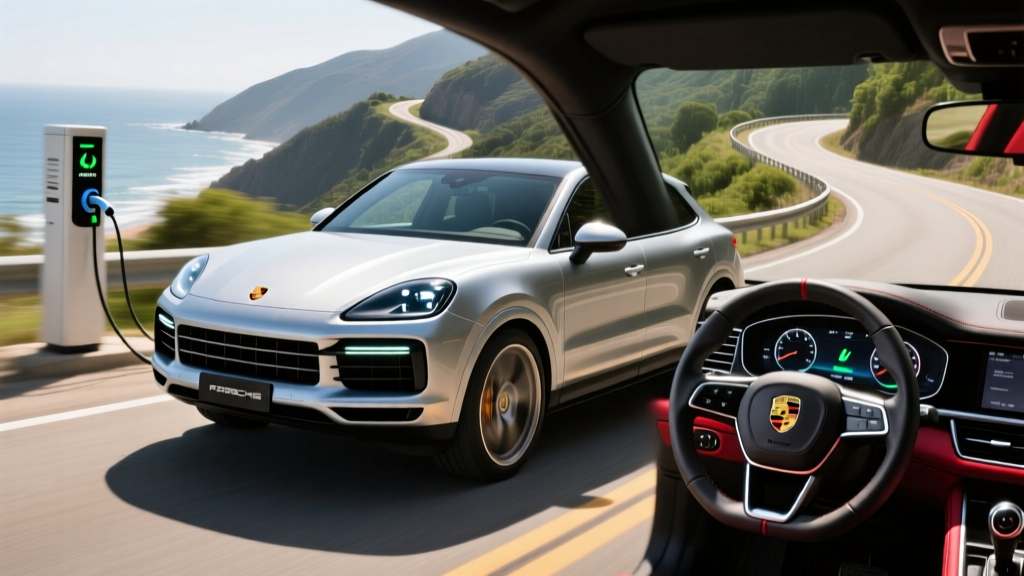
The Porsche Cayenne E-Hybrid occupies a narrow but compelling lane: a luxury performance SUV that can handle daily commutes on electric power alone while delivering sports-car acceleration when you want it. For 2026, Porsche continues the fourth-generation E-Hybrid with a 25.9 kWh battery pack, a turbocharged V6, and a combined 463 horsepower. It is not a full electric vehicle, and it is not a conventional hybrid — it is a plug-in hybrid (PHEV) that demands you understand its strengths and limitations before signing a $93,000+ check.
This guide breaks down exactly what the Cayenne E-Hybrid delivers in real-world driving, what it costs to own, and whether it makes more sense than a full BEV or the gas-only Cayenne for your specific situation.
HEV vs PHEV: Where the Cayenne E-Hybrid Fits
Before diving into specs, it is critical to understand what the Cayenne E-Hybrid is — and is not.
Conventional Hybrid (HEV) vs Plug-In Hybrid (PHEV)
| Feature | Conventional Hybrid (HEV) | Plug-In Hybrid (PHEV) — Cayenne E-Hybrid |
|---|---|---|
| Battery size | 1–2 kWh (small) | 25.9 kWh (large) |
| Electric-only range | 0–2 miles at low speed | EPA-est. 27 miles |
| Plugs in? | No — charges via regenerative braking and engine | Yes — Level 1 or Level 2 AC charging |
| DC fast charging? | No | No (AC only) |
| Gas engine | Always available | Always available after EV range depletes |
The Cayenne E-Hybrid is a PHEV. You get meaningful electric-only driving when you charge it, but it operates like a conventional hybrid once the battery depletes.
Unlike a Toyota RAV4 Hybrid (an HEV that never plugs in), the Cayenne E-Hybrid has a substantially larger battery and a charge port. Unlike a Tesla Model X (a BEV with no gas engine), it always has a turbocharged V6 ready to take over. Think of it as a bridge: electric for short trips, gas-powered for long ones, with performance on demand.
Powertrain and Performance Specs
| Specification | 2026 Porsche Cayenne E-Hybrid |
|---|---|
| Engine | 3.0L turbocharged V6 |
| Electric motor | Integrated into 8-speed Tiptronic transmission |
| Combined horsepower | 463 hp |
| Combined torque | 479 lb-ft |
| 0–60 mph | 4.4 seconds (with Sport Chrono) |
| Top speed | 157 mph |
| Battery capacity | 25.9 kWh (gross) |
| Drivetrain | All-wheel drive (AWD) |
| Transmission | 8-speed Tiptronic automatic |
| Curb weight | ~5,200 lbs |
| Towing capacity | 7,700 lbs (with factory hitch) |
The 3.0L turbo V6 produces roughly 348 hp on its own. The electric motor adds approximately 174 hp (130 kW), but combined output is rated at 463 hp because peak outputs do not occur at the same RPM. The result is instant electric torque off the line and sustained V6 power at highway speeds. The 4.4-second 0–60 time places it firmly in performance territory — quicker than a BMW X5 xDrive45e and nearly matching the gas-only Cayenne S.
Electric-Only Range and Charging
Real-world expectation: 20–24 miles in mixed driving; 16–19 miles in cold weather or sustained highway use above 70 mph
The 25.9 kWh battery pack (gross capacity) provides an EPA-estimated 27 miles of electric-only driving. In practice, expect to see 20–24 miles in moderate temperatures with mixed city/highway driving. Cold weather (below 40°F) and aggressive highway speeds will pull that down to the high teens. The Cayenne E-Hybrid uses an NMC (nickel-manganese-cobalt) lithium-ion chemistry, which offers strong energy density but is more sensitive to extreme temperatures than LFP.
Once the battery depletes, the V6 seamlessly takes over and the vehicle operates as a conventional hybrid, with regenerative braking recapturing small amounts of energy.
Charging Times and Connector
| Charge Level | Power (kW) | 0–100% Time | Connector |
|---|---|---|---|
| Level 1 (120V household) | ~1.4 kW | ~18–20 hours | J1772 |
| Level 2 (240V home/public) | 7.2 kW (onboard charger max) | ~3.5–4 hours | J1772 |
| DC Fast Charge | Not supported | N/A | N/A |
The Cayenne E-Hybrid uses a standard J1772 connector for AC charging. Its onboard charger is capped at 7.2 kW, meaning even if you plug into a 48-amp Level 2 station capable of 11.5 kW, the vehicle will only accept 7.2 kW. A full charge from empty on a Level 2 home charger takes roughly 3.5 to 4 hours — easily achievable overnight.
No DC fast charging. This is a deliberate engineering choice by Porsche. The relatively small battery does not require rapid charging, and adding DC hardware would increase weight and cost. If you need fast public charging, a full BEV is the better option.
Fuel Economy: EPA Ratings and Real-World MPG
| Mode | City | Highway | Combined |
|---|---|---|---|
| Charge-depleting (EV + hybrid blend) | — | — | 46 MPGe |
| Charge-sustaining (gas-only hybrid mode) | ~20 MPG | ~24 MPG | ~21 MPG |
Understanding these two numbers is essential for PHEV ownership:
- 46 MPGe (combined) reflects the blended efficiency when you start with a full charge and drive through both the EV range and subsequent hybrid operation. This is the number on the window sticker. Source: fueleconomy.gov.
- ~21 MPG combined (charge-sustaining) is what you will see on longer road trips once the battery is depleted and the Cayenne operates purely as a hybrid. A 5,200-lb performance SUV with a turbo V6 was never going to rival a Prius.
Real-World MPG Observations
In real-world driving, PHEV efficiency depends heavily on your commute pattern and charging discipline:
- Daily commute under 25 miles with nightly charging: You may use almost zero gasoline for weeks. Effective "MPG" is essentially infinite for those trips.
- Mixed driving without regular charging: Expect 19–22 MPG combined, as the added battery weight (~300 lbs more than the gas Cayenne) works against efficiency when the electric motor is not contributing.
- Highway road trips: 22–24 MPG at 70–75 mph is typical. Hybrids generally do not see the city-MPG advantage on open highways where regenerative braking opportunities are minimal.
Owners who charge daily and have short commutes will see dramatically lower fuel bills than the EPA sticker suggests. Owners who never plug in are carrying dead battery weight and would be better served by the gas-only Cayenne.
Pricing, Trims, and Tax Credit Eligibility
| Trim | Base MSRP | Federal §30D Credit Eligible? |
|---|---|---|
| Cayenne E-Hybrid | ~$93,200 | No — exceeds MSRP cap and fails battery sourcing |
| Cayenne E-Hybrid Coupé | ~$97,500 | No |
| Cayenne S E-Hybrid | ~$107,000 | No |
Some states offer separate PHEV incentives. California's CVRP rebate, for example, has historically covered qualifying PHEVs, but the Cayenne's price typically exceeds state program caps as well. Check your state's energy office for current programs.
Options add up quickly on a Porsche. A moderately equipped Cayenne E-Hybrid with Premium Package, adaptive air suspension, and the Sport Chrono Package will land in the $105,000–$115,000 range before destination charges.
Battery Warranty, Reliability, and Replacement Cost
8 years / 100,000 miles (whichever comes first)
Covers: defects and capacity loss below 70% of original capacity
Chemistry: NMC (nickel-manganese-cobalt)
Porsche backs the Cayenne E-Hybrid's 25.9 kWh battery with an 8-year/100,000-mile warranty, which is standard for the luxury PHEV segment. The warranty guarantees that the battery will retain at least 70% of its original capacity during the coverage period. If degradation drops usable range below roughly 19 miles within that window, Porsche will repair or replace the pack.
Reliability
Porsche's hybrid powertrains have proven reasonably reliable since the Panamera E-Hybrid debuted in 2017. The 8-speed Tiptronic and integrated electric motor are well-established components. The primary risk areas for PHEVs are:
- Onboard charger failure: The 7.2 kW charger is a wear component that can fail outside warranty. Replacement runs $1,500–$2,500.
- Cooling system complexity: The E-Hybrid has separate thermal management circuits for the battery, motor, and engine. More hoses and pumps mean more potential leak points over 10+ years.
- 12V auxiliary battery: Like all modern PHEVs, a dead 12V battery can prevent the vehicle from starting, even if the high-voltage pack is charged.
Battery Replacement Cost
If the high-voltage battery requires replacement outside of warranty, expect a cost between $12,000 and $18,000 including parts and labor at a Porsche dealer. Individual module replacement may be possible for partial failures, reducing cost to $3,000–$6,000. However, out-of-warranty high-voltage battery replacements remain rare for vehicles under 10 years old, based on industry-wide PHEV data.
Who Should Buy the Cayenne E-Hybrid?
✔ Pros
- 463 hp and 4.4s 0–60 with electric torque fill
- 27-mile EV range covers most daily commutes
- Quiet, emission-free school runs and neighborhood driving
- 7,700-lb towing capacity (rare for a PHEV)
- No range anxiety — gas engine for road trips
- Porsche build quality and driving dynamics
✘ Cons
- No DC fast charging
- No federal tax credit (exceeds MSRP and sourcing caps)
- 21 MPG gas-only is mediocre for a hybrid
- $93K+ base price; $110K+ as typically equipped
- 7.2 kW onboard charger is slow for a 25.9 kWh pack
- Added weight hurts handling vs gas Cayenne
Hybrid vs PHEV vs EV: Which Cayenne Should You Choose?
| Scenario | Best Choice | Why |
|---|---|---|
| Commute <25 mi, home charging, road trips 2–3×/year | Cayenne E-Hybrid (PHEV) | Electric daily, gas for trips — best of both |
| No home charging, long commutes, frequent road trips | Gas-only Cayenne | Carrying dead battery weight without EV benefit |
| Home charging, commute <200 mi, rarely tow | Full BEV (e.g., Tesla Model X, BMW iX) | Lower running costs, no oil changes, smoother powertrain |
| Performance priority, track days, weight-sensitive driving | Gas Cayenne S or GTS | ~300 lbs lighter, better weight distribution |
| Want tax credit, under $80K budget | BMW X5 xDrive50e or RAV4 Prime | Qualify for incentives; Cayenne does not |
Decision Framework
Choose the Cayenne E-Hybrid if: You have Level 2 home charging, your daily driving is under 25 miles, you value Porsche performance and badge, you tow occasionally, and you want one vehicle for commuting and road trips without buying a second car.
Choose a full BEV instead if: You drive under 250 miles daily, have reliable home and workplace charging, want minimal maintenance, and prioritize lower per-mile energy costs and available tax credits.
Choose the gas Cayenne if: You cannot charge at home, your commute exceeds 40 miles one way, you prioritize driving dynamics over fuel savings, or you simply want a lower purchase price.
Frequently Asked Questions
How many MPG does the Porsche Cayenne E-Hybrid get?
When charged, the Cayenne E-Hybrid achieves an EPA-estimated 46 MPGe combined. Once the battery depletes and it operates in gas-only hybrid mode, expect approximately 20 MPG city, 24 MPG highway, and 21 MPG combined. Real-world results vary significantly based on how often you charge and your driving pattern.
How far can the Cayenne E-Hybrid go on electric only?
The EPA rates it at 27 miles of electric-only range. Real-world results typically fall between 20 and 24 miles in moderate weather, dropping to 16–19 miles in cold conditions or at sustained highway speeds. Total combined range (electric + gas) exceeds 440 miles with the 19.8-gallon fuel tank.
Does the Cayenne E-Hybrid qualify for a federal tax credit?
No. The Cayenne E-Hybrid does not qualify for the federal §30D clean vehicle credit. Its MSRP exceeds the $80,000 SUV cap, and its battery does not meet the critical-mineral and component-sourcing requirements mandated by the Inflation Reduction Act. Verify current rules at IRS.gov.
Is the Cayenne E-Hybrid reliable, and what does a battery replacement cost?
Porsche's hybrid system has been in production since 2017 and is generally reliable. The high-voltage battery is warranted for 8 years/100,000 miles with a 70% capacity retention guarantee. Out-of-warranty battery replacement costs $12,000–$18,000 for a full pack, though partial module repairs can cost less. The main long-term concerns are cooling system complexity and onboard charger durability.
Can the Cayenne E-Hybrid DC fast charge?
No. The Cayenne E-Hybrid supports only AC charging via a J1772 connector, at a maximum rate of 7.2 kW on Level 2. A full charge takes about 3.5–4 hours on a home Level 2 charger. DC fast charging is not available on any current Cayenne E-Hybrid variant.
Hybrid vs PHEV vs EV — which is right for me?
If you can charge at home and your daily driving is under 30 miles, a PHEV like the Cayenne E-Hybrid lets you drive electric most days while keeping a gas engine for road trips. If you never want to buy gas and have reliable charging access, a full BEV offers lower operating costs and available tax credits. If you cannot charge at home, a conventional hybrid (HEV) or gas vehicle avoids the dead-weight penalty of an uncharged PHEV battery.