Quick Verdict: The Hypercar That Redefined Hybrid Performance
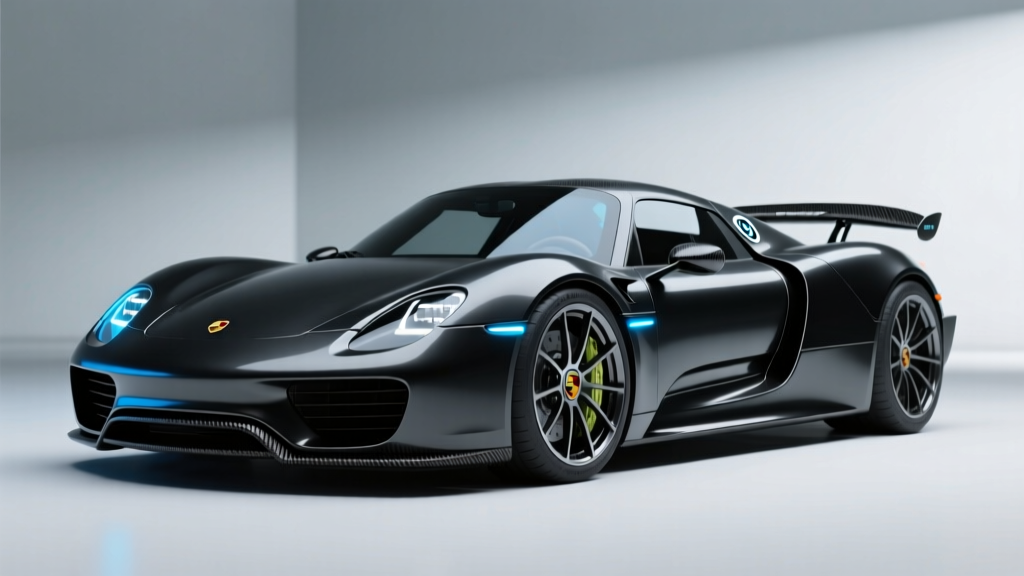
The Porsche 918 Spyder isn't just a hybrid — it's the benchmark that proved electrification could outperform pure internal combustion at the highest level. With a combined 887 horsepower from its 4.6-liter V8 and twin electric motors, the 918 set a Nürburgring lap record (6:57) in 2013 that stood for years. But beyond the headline numbers, the 918's hybrid architecture offers a fascinating case study in plug-in hybrid engineering. This guide covers every Porsche 918 hybrid spec you need, from real-world MPG to battery longevity and what ownership looks like today.
| Spec | Value |
|---|---|
| Powertrain | 4.6L V8 + 2 electric motors (PHEV) |
| Combined Output | 887 hp / 944 lb-ft torque |
| V8 Engine Output | 608 hp @ 8,750 rpm |
| Front Electric Motor | 154 hp (115 kW) |
| Rear Electric Motor | 127 hp (95 kW) |
| Battery Capacity | 6.8 kWh (liquid-cooled lithium-ion) |
| EPA Electric-Only Range | 12 miles |
| Total Combined Range | ~340 miles |
| EPA MPG (combined) | 67 MPGe (hybrid mode) / 22 MPG (gas-only) |
| 0-60 mph | 2.5 seconds |
| Top Speed | 214 mph |
| DC Fast Charge | No — Level 1/Level 2 AC only |
| AC Charge Time (Level 2) | ~2.5 hours (full) |
| Original MSRP (2014-2015) | $848,000 (base) / $929,000 (Weissach) |
| Current Market Value (2026) | $1.4M – $2.0M+ |
HEV vs PHEV: Where the Porsche 918 Fits
The Porsche 918 Spyder is a plug-in hybrid (PHEV), not a conventional hybrid (HEV). This distinction matters for how you fuel and drive it:
| Feature | Conventional Hybrid (HEV) | Plug-In Hybrid (PHEV) — 918 Spyder |
|---|---|---|
| Battery Size | 1–2 kWh | 6.8 kWh |
| Electric-Only Range | 0.5–2 miles (assist only) | 12 miles EPA |
| Plug-In Charging | No — regenerative braking only | Yes — Level 1 (120V) or Level 2 (240V) |
| Gas Engine Role | Primary propulsion + regen | Primary propulsion + range extension |
| Tax Credit Eligibility | No | Originally eligible (expired for new purchases) |
Unlike a Toyota Prius (HEV), the 918 can drive meaningful distances on electricity alone. Unlike a full EV like the Taycan, it carries a V8 for extended range and track use. It occupies a unique middle ground: a hypercar with a plug.
Fuel Economy: EPA MPG and Real-World Numbers
The 918's fuel economy depends entirely on how you drive it and whether the battery is charged. The EPA rates it in two modes:
| Mode | City | Highway | Combined |
|---|---|---|---|
| Charge-Depleting (Electric + Gas) | — | — | 67 MPGe |
| Charge-Sustaining (Gas Engine Only) | 21 MPG | 24 MPG | 22 MPG |
Real-world expectations: Owners who charge daily and drive short commutes report 50–60 MPGe in mixed driving. On long highway trips where the battery depletes within the first 12 miles, expect 20–23 MPG — reasonable for a mid-engine V8 hypercar but not Prius territory. Track use drops this to 12–15 MPG under hard driving. The 918's hybrid system recovers significant energy under braking (up to 200 kW of regen), which helps in stop-and-go traffic but offers less benefit at sustained highway speeds.
Electric-Only Range and Charging Details
The 918's 6.8 kWh liquid-cooled lithium-ion battery pack delivers an EPA-rated 12 miles of electric-only range. In real-world conditions, expect 9–11 miles at moderate speeds and as little as 7–8 miles if you're aggressive with the throttle or driving in cold weather (below 40°F reduces lithium-ion efficiency).
Electric-only top speed is limited to 95 mph — enough for most commuting, and genuinely quick off the line thanks to the front motor's instant torque.
Charging the 918:
- Level 1 (120V household): ~7 hours from empty to full
- Level 2 (240V, 3.6 kW): ~2.5 hours from empty to full
- DC Fast Charging: Not supported. The 918's small battery pack and 2013-era architecture predate modern DC fast-charge capability.
The charge port is located on the passenger-side front fender. Porsche included a portable charge cord with both Level 1 and Level 2 adapters. There is no preconditioning system for the battery — a limitation of the era's thermal management compared to modern EVs like the Taycan.
Battery Warranty and Longevity
Porsche originally warranted the 918's hybrid battery for 8 years / 100,000 miles with a capacity retention threshold of 70%. For the 2014–2015 model years, this factory warranty has now expired as of 2022–2023.
Battery replacement cost: A new OEM battery pack runs approximately $30,000–$40,000 including labor at a Porsche dealer. Third-party rebuild services (replacing individual cells) are emerging in the collector-car market for $15,000–$22,000.
Real-world degradation: Owner reports and specialist inspections show most 918 battery packs retain 80–90% capacity at 30,000–50,000 miles when stored properly (kept between 20–80% SoC, not left fully depleted for months). Cars that sat uncharged for extended periods show accelerated degradation. The liquid-cooling system helps, but the NMC chemistry in this generation is more sensitive to deep-discharge storage than modern LFP packs.
Powertrain Architecture: V8 Meets Twin Electric Motors
The 918's hybrid powertrain is a masterpiece of packaging and performance engineering:
- 4.6L naturally aspirated V8 mounted mid-ship, producing 608 hp and redlining at 9,150 rpm. This engine was derived from Porsche's RS Spyder LMP2 race car.
- Rear electric motor (127 hp) is integrated between the engine and the 7-speed PDK dual-clutch transmission, driving the rear wheels through the same gearbox.
- Front electric motor (154 hp) drives the front axle independently with a single-speed reduction gear, giving the 918 electric all-wheel-drive capability.
- Combined system output: 887 hp and 944 lb-ft of torque. The torque figure is especially remarkable — electric motors deliver peak torque at 0 rpm, which is why the 918 hits 60 mph in 2.5 seconds despite weighing 3,700 lbs.
The 918 offers five drive modes that manage the interplay between gas and electric power:
- E-Power: Electric-only, front-wheel drive, up to 12 miles
- Hybrid: System optimizes gas/electric blend for efficiency
- Sport Hybrid: V8 runs continuously, electric motors provide boost
- Race Hybrid: Maximum combined output, aggressive throttle mapping
- Hot Lap: Depletes the entire battery for maximum lap performance
Pricing, Tax Credits, and the Collector-Car Market
The Porsche 918 Spyder was produced in limited numbers (918 units worldwide) between September 2013 and June 2015. It is no longer available new.
Original MSRP:
- Base 918 Spyder: $848,000
- 918 Spyder Weissach Package: $929,000 (lightweight components, magnesium wheels, reduced sound deadening — saves ~90 lbs)
Federal tax credit (historical): When new, the 918 qualified for the full $7,500 federal plug-in hybrid tax credit under the original IRS §30D rules (which had no MSRP cap or income limit prior to the Inflation Reduction Act of 2022). This credit is no longer available for new purchases since production ended. Used purchases do not qualify for the used-EV credit (§25E) because the $25,000 price cap makes the 918 ineligible.
2026 collector-car market: According to Hagerty market data, 918 Spyder values have appreciated significantly:
- Base model: $1.4M – $1.7M
- Weissach Package: $1.6M – $2.0M+
- Low-mileage examples (<5,000 miles) with full service history: $2.0M+
Insurance costs run $8,000–$15,000 annually depending on coverage level and driver profile. Storage and maintenance add another $5,000–$10,000 per year for collector-grade care.
Who Should Consider the 918 vs a Full EV or Gas Hypercar?
Pros
- Historic significance — the hypercar that proved hybrid performance
- 887 hp with 22 MPG possible on highway cruising
- Limited production (918 units) — strong collector appreciation
- Usable daily: 12-mile electric commute + V8 for weekends
- Nürburgring record-holder with genuine track capability
Cons
- $1.4M+ entry price — collector-market pricing
- No DC fast charging; 2.5-hour Level 2 charge time
- Battery warranty expired; replacement costs $30K–$40K
- Small 6.8 kWh battery limits electric-only utility
- Maintenance complexity — hybrid system + high-revving V8
- No modern ADAS features (2013-era tech)
Decision Framework
Choose the Porsche 918 Spyder if: You want a historically significant, appreciating hypercar with genuine hybrid engineering credentials, plan to drive it regularly (not just store it), and can absorb the collector-market entry price and maintenance costs.
Choose a modern EV (Taycan Turbo GT, Rimac Nevera) if: You want cutting-edge electric performance with modern charging infrastructure, warranty coverage, ADAS features, and don't need the collector-car provenance.
Choose a gas hypercar (McLaren 750S, Ferrari 296 GTB) if: You prioritize lightweight dynamics and simplicity over hybrid efficiency, though note the Ferrari 296 GTB is itself a PHEV with a more modern system.
Reliability and Long-Term Ownership
The 918's reliability profile is better than most expect for a limited-production hybrid hypercar, but it requires disciplined maintenance:
- V8 engine: The 4.6L is derived from a race-proven design. With regular oil changes and proper warm-up procedures, these engines have shown excellent durability past 60,000 miles.
- PDK transmission: Porsche's 7-speed dual-clutch is well-proven. Service intervals are critical — fluid changes every 20,000 miles or 2 years.
- Hybrid system: The power electronics and electric motors have proven robust. The main risk is the battery pack (see warranty section above) and the cooling system's water pump, which some owners report needing replacement at 40,000–60,000 miles (~$2,000–$3,000).
- Common issues: 12V auxiliary battery failures (standard for any car with complex electronics), coolant sensor faults, and infotainment screen delamination on early-build cars.
Porsche specialist shops report that 918s driven regularly (2,000+ miles/year) tend to have fewer issues than garage-kept examples. The hybrid system and V8 both benefit from regular thermal cycling.
Frequently Asked Questions
How many MPG does the Porsche 918 hybrid get?
The EPA rates the 918 at 67 MPGe in charge-depleting mode (using both battery and gas) and 22 MPG combined in charge-sustaining mode (gas engine only). Real-world results vary: 50–60 MPGe for short charged commutes, 20–23 MPG on highway trips, and 12–15 MPG under track use.
How far can the Porsche 918 go on electric only?
The EPA rates the 918 at 12 miles of electric-only range. Real-world results are typically 9–11 miles at moderate speeds, dropping to 7–8 miles in cold weather or under hard acceleration. Electric-only top speed is 95 mph.
Is the Porsche 918 hybrid reliable?
Yes, relative to its complexity. The V8 and PDK are proven designs, and the hybrid electronics have been robust. The main long-term risk is the high-voltage battery pack (now out of warranty) and cooling system components. Regular driving and proper storage (20–80% SoC) significantly improve longevity.
What does a Porsche 918 battery replacement cost?
An OEM battery pack replacement costs approximately $30,000–$40,000 at a Porsche dealer. Third-party cell-level rebuilds are available for $15,000–$22,000. Most packs retain 80–90% capacity at 30,000–50,000 miles with proper care.
Does the Porsche 918 qualify for any tax credit?
When new (2014–2015), the 918 qualified for the full $7,500 federal plug-in hybrid tax credit under pre-IRA rules. This credit is no longer available for new purchases since production ended. The used-EV credit (§25E) does not apply because the vehicle far exceeds the $25,000 price cap. Consult a tax professional regarding current IRS rules.
Hybrid vs PHEV vs EV — which fits me?
The 918 is a PHEV. If you want electric commuting with gas-engine range extension and don't mind plugging in, a PHEV fits. If you want maximum simplicity with no plug, a conventional HEV (like a Prius) works but offers minimal electric-only driving. If you want zero tailpipe emissions and can charge at home, a full BEV (like a Taycan) eliminates gas entirely but requires range planning for long trips.
Can the Porsche 918 DC fast charge?
No. The 918 supports only AC charging: Level 1 (120V, ~7 hours) or Level 2 (240V, ~2.5 hours). Its 6.8 kWh battery and 2013-era architecture predate modern DC fast-charging standards like CCS or NACS.
Sources: EPA Fuel Economy — Porsche 918 Spyder, IRS Clean Vehicle Credits, Porsche AG press archives.