The Hybrid 911 Is Here — And It's Not What You Think
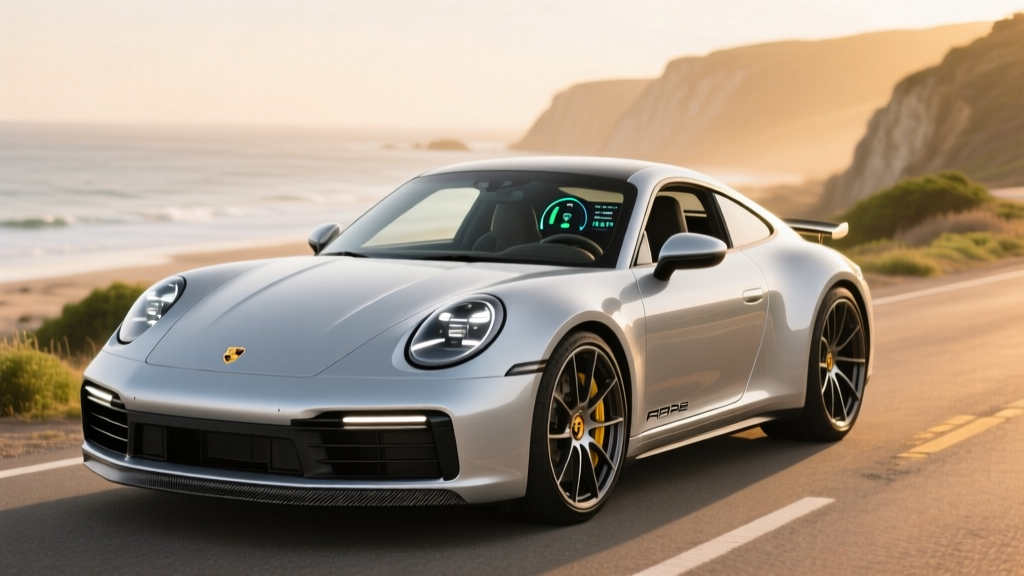
When Porsche confirmed the 992.2-generation 911 would adopt hybrid power, enthusiasts braced for compromise. The result, the 2026 Porsche 911 Carrera GTS T-Hybrid, is not a plug-in efficiency play. It is a performance-first mild-hybrid system that uses a 400-volt architecture and an electric motor integrated into the eight-speed PDK transmission to sharpen throttle response, enable brief electric-only maneuvering, and claw back fuel economy lost to ever-tightening emissions standards. This is Porsche's first production hybrid 911, and it fundamentally changes how the sports car benchmark delivers power.
This guide breaks down the T-Hybrid system architecture, real-world and EPA fuel economy data, powertrain specifications, pricing, and whether the hybrid 911 makes sense against a full EV sports car or a conventional gas alternative.
HEV vs PHEV: Where the 911 T-Hybrid Fits
Before analyzing specs, it is essential to classify this powertrain correctly. The 911 T-Hybrid is a conventional hybrid (HEV), not a plug-in hybrid (PHEV). You cannot plug it in, and it has no meaningful electric-only driving range.
| Feature | 911 T-Hybrid (HEV) | Typical PHEV (e.g., Cayenne E-Hybrid) |
|---|---|---|
| Plug-in charging | No | Yes (Level 2 AC) |
| Electric-only range | ~0.6 mi at low speed | 20–45 mi typical |
| Battery size | 1.9 kWh (usable) | 17–25 kWh typical |
| DC fast charging | No | Rarely (most PHEVs are AC-only) |
| Primary purpose | Performance boost + efficiency | Electric commuting + gas range |
| Federal §30D tax credit | Not eligible | Potentially eligible (if new, PHEV) |
The T-Hybrid system recovers energy under braking and deceleration, storing it in a compact high-voltage battery mounted under the rear parcel shelf. That energy deploys through an electric motor sandwiched between the new 3.6-liter flat-six engine and the PDK gearbox, adding torque fill before the turbo spools and enabling silent, short-distance maneuvering in parking situations.
Powertrain Specs: The T-Hybrid System Explained
Porsche engineered an entirely new engine for the 992.2 hybrid 911 — a 3.6-liter twin-turbocharged flat-six replacing the previous 3.0-liter unit. The electric motor, high-voltage battery, and revised turbocharger system work together in ways that fundamentally change the car's power delivery.
| Specification | Value |
|---|---|
| Engine | 3.6L twin-turbo flat-six |
| Engine output | 478 hp / 420 lb-ft |
| Electric motor output | 54 hp (40 kW) / 110 lb-ft |
| Combined system output | 532 hp / 450 lb-ft |
| Transmission | 8-speed PDK (dual-clutch) |
| High-voltage battery | 1.9 kWh usable, 400V architecture |
| 0–60 mph | 2.9 seconds (coupé, Launch Control) |
| Top speed | 194 mph |
| Curb weight | ~3,560 lb (coupé) |
| Drivetrain | Rear-wheel drive (GTS); AWD available (GTS 4) |
The key engineering insight: the electric motor sits before the turbocharger in the exhaust flow path. This means the electric motor can spool the turbo almost instantly — what Porsche calls an "e-turbo" — eliminating the lag inherent in conventional turbocharged engines. The result is throttle response that feels closer to a naturally aspirated engine, with turbo torque arriving from as low as 1,500 rpm.
Fuel Economy: EPA Ratings and Real-World MPG
The hybrid 911's efficiency gains are meaningful for a 532-hp sports car, but context matters. This is not a Prius competitor — it is a performance car that happens to sip less fuel than its predecessor.
| Model | City MPG | Highway MPG | Combined MPG |
|---|---|---|---|
| 911 Carrera GTS (RWD) | 20 | 27 | 23 |
| 911 Carrera GTS 4 (AWD) | 19 | 26 | 22 |
| Prior-gen 911 GTS 3.0L (RWD) | 17 | 24 | 20 |
According to fueleconomy.gov, the T-Hybrid powertrain delivers roughly a 3-MPG combined improvement over the outgoing 3.0-liter 911 GTS — a 15% efficiency gain while adding 68 horsepower.
Real-World MPG Expectations
In mixed driving that includes city errands, highway cruising at 70–80 mph, and occasional spirited back-road runs, expect 21–24 MPG combined in the RWD GTS. The hybrid system's benefits concentrate in stop-and-go traffic, where regenerative braking and electric torque fill reduce the engine's workload. On sustained highway drives, the engine operates largely unassisted, and real-world highway economy tracks close to the EPA's 27 MPG estimate.
Drive the car aggressively — which, with 532 hp on tap, is tempting — and economy drops to the mid-to-high teens. The hybrid system recovers energy more effectively during performance driving than a conventional powertrain, but physics still governs: moving 3,560 pounds at high speed burns fuel.
Pricing, Trims, and Tax Credit Eligibility
The T-Hybrid powertrain debuted exclusively on the Carrera GTS trim for the 992.2 generation. Porsche has since expanded availability to the Carrera and Carrera 4 trims for the 2026 model year.
| Trim | Body Style | MSRP (incl. destination) |
|---|---|---|
| 911 Carrera T-Hybrid | Coupé | $126,595 |
| 911 Carrera 4 T-Hybrid | Coupé | $131,895 |
| 911 Carrera GTS T-Hybrid | Coupé | $166,895 |
| 911 Carrera GTS 4 T-Hybrid | Coupé | $172,195 |
| 911 Carrera GTS T-Hybrid | Cabriolet | $179,595 |
Federal and State Tax Credits
The 911 T-Hybrid does not qualify for the federal §30D new clean vehicle tax credit. That credit applies only to plug-in electric vehicles (BEVs and PHEVs) meeting specific battery sourcing, MSRP cap, and buyer income requirements, as outlined by the IRS. Because the 911 T-Hybrid cannot be plugged in and has a battery under 4 kWh, it falls outside the credit's scope entirely.
Some states offer incentives for conventional hybrids, but these are uncommon and typically modest ($250–$500 rebates where available). Check your state's energy or environmental agency for current programs. Do not expect meaningful purchase incentives for this vehicle.
Battery Warranty, Reliability, and Long-Term Costs
Hybrid battery longevity is the top concern for any hybrid buyer. Porsche addresses this with warranty coverage that aligns with industry standards for hybrid components.
Warranty Coverage — 2026 Porsche 911 T-Hybrid
- High-voltage battery: 8 years / 100,000 miles (whichever comes first), covering defects and capacity loss below 70% of original capacity
- Hybrid components (e-motor, power electronics): 8 years / 100,000 miles
- New vehicle limited warranty: 4 years / 50,000 miles
- Corrosion warranty: 12 years / unlimited miles
Battery Replacement Cost
The 1.9 kWh high-voltage battery in the T-Hybrid is far smaller and less expensive to replace than a full EV traction pack. Based on current Porsche parts pricing for comparable hybrid components, a replacement high-voltage battery module is estimated at $3,000–$5,000 including labor — a fraction of the $15,000–$25,000 cost associated with large EV batteries.
The 400-volt architecture and compact cell design mean the battery generates less thermal stress than larger packs. Porsche's e-turbo system also uses the battery in frequent, shallow charge-discharge cycles rather than deep cycling, which historically correlates with longer cell life. Expect the battery to outlast the 8-year warranty period under normal use.
Reliability Considerations
The 992.2 is the first hybrid 911, so long-term reliability data specific to the T-Hybrid system does not yet exist. However, Porsche has deployed similar hybrid architectures in the Cayenne E-Hybrid and Panamera E-Hybrid lineups since 2019, with no widespread battery or e-motor failure patterns reported by NHTSA or major reliability surveys. The added complexity of the e-turbo and integrated e-motor does introduce more potential failure points than a conventional 911 powertrain, and out-of-warranty repair costs for hybrid-specific components will be premium-priced at Porsche dealerships.
Who Should Choose the Hybrid 911 — and Who Shouldn't
The T-Hybrid is not trying to be an efficiency champion. It is a performance enhancement that happens to improve fuel economy as a secondary benefit.
Choose the Hybrid 911 If:
- You want the sharpest throttle response in any production 911 — the e-turbo eliminates lag
- You daily-drive your sports car and value the 3-MPG combined improvement over the prior GTS
- You want 532 hp with a 2.9-second 0–60 time without stepping to the Turbo S ($230K+)
- You appreciate the engineering novelty of Porsche's first hybrid flat-six
- You drive in stop-and-go traffic where regen braking and electric torque fill shine
Look Elsewhere If:
- You want plug-in electric commuting — this is not a PHEV
- You want federal tax credits — the T-Hybrid qualifies for none
- Weight sensitivity is paramount — the hybrid system adds ~110 lb over the prior GTS
- You prefer the simplicity and lower repair risk of a non-hybrid powertrain
- Your priority is maximum fuel economy above performance
Hybrid 911 vs Full EV Sports Car vs Gas 911
Against a full EV sports car like the Porsche Taycan GTS (233 mi EPA range, 590 hp, $138K+), the hybrid 911 trades electric-only range and instant torque for lighter weight (3,560 vs 5,100 lb), a higher top speed, and zero charging dependency. Against the base gas-only 911 Carrera (now also T-Hybrid for 2026), the GTS T-Hybrid justifies its $40K premium with 140 additional horsepower, standard rear-axle steering, and PASM sport suspension.
Frequently Asked Questions
How many MPG does the hybrid 911 get?
The 2026 Porsche 911 Carrera GTS T-Hybrid (RWD) achieves an EPA-rated 20 city / 27 highway / 23 combined MPG. Real-world mixed driving typically yields 21–24 MPG combined, with aggressive driving dropping to the mid-teens. The base Carrera T-Hybrid trims rate slightly higher at approximately 21/28/24.
How far can the hybrid 911 go on electric only?
Essentially zero meaningful distance. The T-Hybrid can creep at very low speeds (under 15 mph) for roughly 0.6 miles using battery power alone — useful for silent parking-lot maneuvering but not for driving. This is a conventional hybrid, not a plug-in, and was never designed for electric-only commuting.
Does the hybrid 911 qualify for any tax credit?
No. The 911 T-Hybrid does not qualify for the federal §30D new clean vehicle tax credit because it is a conventional hybrid (HEV), not a plug-in vehicle (BEV or PHEV). The credit requires a plug-in vehicle with a battery capacity of at least 7 kWh and meeting sourcing and MSRP requirements. The 911 T-Hybrid's 1.9 kWh battery and non-plug-in architecture disqualify it entirely.
Is the hybrid 911 reliable, and what does a battery replacement cost?
Long-term data is limited since the T-Hybrid is new for the 992.2 generation, but Porsche's existing hybrid systems in the Cayenne and Panamera have shown no systemic failure patterns. The high-voltage battery is warrantied for 8 years / 100,000 miles. Replacement cost is estimated at $3,000–$5,000 — far less than a full EV battery — due to the small 1.9 kWh capacity. The added complexity of the e-turbo and e-motor does increase the number of potential failure points versus a non-hybrid 911.
Can I plug in the hybrid 911 to charge?
No. The 911 T-Hybrid is a self-charging conventional hybrid. The 1.9 kWh battery charges exclusively through regenerative braking and engine-driven generation. There is no charge port and no plug-in capability.
Why did Porsche make the 911 a hybrid?
Two reasons: emissions compliance and performance. The EU's increasingly strict CO₂ fleet targets pushed Porsche toward electrification across its lineup. But the T-Hybrid system was engineered as a performance tool first — the e-turbo eliminates turbo lag, the e-motor provides instant torque fill, and the result is a 911 GTS that accelerates harder and responds faster than any non-hybrid predecessor while consuming less fuel.