Quick Verdict: The Plug-In Prius Hits a Sweet Spot
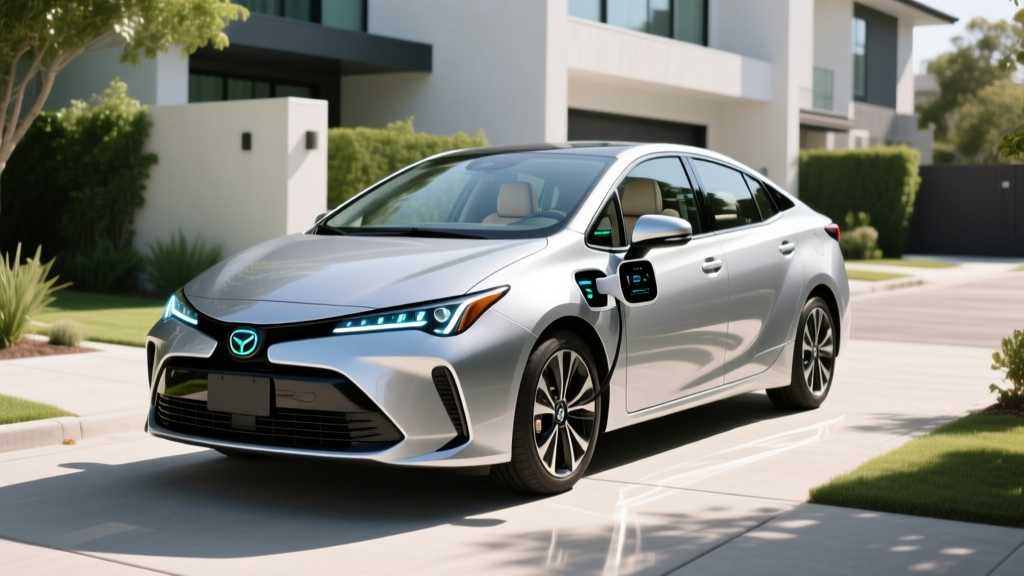
The Toyota Prius Prime — Toyota's name for the plug-in Prius — remains one of the most practical electrified vehicles on the market for buyers who want meaningful electric-only commuting without range anxiety on longer trips. With an EPA-rated 44 miles of electric-only range, 52 MPG combined once the gas engine kicks in, and a starting MSRP around $33,445 for the 2026 model year, the Prius Prime occupies a narrow but valuable lane: it's a daily EV commuter that moonlights as a hyper-efficient road-trip hybrid.
This generation (introduced for 2023 and carried forward into 2026) shed the bland styling and sluggish performance of its predecessor. The result is a plug-in hybrid that actually looks good, hits 60 mph in roughly 6.6 seconds, and delivers real-world efficiency that often beats its EPA sticker in stop-and-go driving. If you can charge at home and your commute falls within that 44-mile electric envelope, you may go weeks without visiting a gas station — while retaining the freedom to drive 400+ miles on a single tank when needed.
HEV vs PHEV: What Makes the Plug-In Prius Different
Toyota sells two versions of the Prius, and confusing them is the most common mistake shoppers make. Here's the breakdown:
| Feature | Prius (Standard Hybrid / HEV) | Prius Prime (Plug-In Hybrid / PHEV) |
|---|---|---|
| Plug-in charging | No — charges via regenerative braking and engine | Yes — plug in to charge the larger battery |
| Battery capacity | ~1.0 kWh (small buffer) | 13.6 kWh usable lithium-ion |
| Electric-only range | Less than 1 mile at low speed | EPA 44 miles (up to ~84 mph) |
| EPA combined MPG (gas mode) | 57 MPG | 52 MPG |
| Combined horsepower | 194 hp (AWD) / 194 hp (FWD) | 220 hp |
| 0-60 mph | ~7.0 seconds | ~6.6 seconds |
| Starting MSRP (2026) | ~$28,345 | ~$33,445 |
| Federal tax credit eligible | No | Potentially — see details below |
The standard Prius HEV never needs to be plugged in. It uses a small battery and regenerative braking to assist the gasoline engine, delivering outstanding fuel economy with zero behavioral change. The Prius Prime PHEV adds a much larger battery pack, an onboard charger, and a charge port — enabling that 44-mile electric-only envelope that effectively makes it a short-range EV for daily use, with a gas engine as backup.
Electric-Only Range and Total Driving Range
The 2026 Prius Prime's 13.6 kWh usable battery delivers an EPA-rated 44 miles of electric-only range on a full charge. Toyota rates the combined MPGe (miles per gallon equivalent, measuring electricity consumption in gas-equivalent terms) at 127 MPGe in EV mode.
Real-World Range Expectation: In mild weather (55-75°F) with mixed city/suburban driving, expect 38-46 miles on a charge. Highway driving at 70+ mph will drop that to roughly 32-36 miles. In freezing temperatures with cabin heat running, plan for 28-34 miles. The Prius Prime uses a heat pump on higher trims, which helps mitigate cold-weather range loss compared to resistive heating.
Once the battery is depleted, the 2.0-liter four-cylinder engine and hybrid system take over seamlessly — you won't feel a transition. The 11.4-gallon fuel tank combined with 52 MPG gas mode yields a total combined range of approximately 480-500 miles (electric + gasoline), which exceeds nearly every BEV and most conventional gas cars.
Fuel Economy: EPA Numbers and Real-World MPG
According to fueleconomy.gov, the 2026 Prius Prime returns the following figures:
| Mode | City | Highway | Combined |
|---|---|---|---|
| Gasoline (hybrid mode) | 50 MPG | 54 MPG | 52 MPG |
| Electric (MPGe) | — | — | 127 MPGe |
Real-world MPG note: Toyota's hybrid system excels in city and suburban driving, where regenerative braking recovers energy at every stop. Many Prius Prime owners report 54-58 MPG in city-heavy commutes once the battery is depleted — slightly exceeding the EPA city figure. Highway driving at sustained high speeds is where the aerodynamic penalty and engine load reduce efficiency closer to 48-50 MPG. If your driving is predominantly urban, expect the real-world combined number to land at or slightly above the 52 MPG sticker.
Powertrain, Performance, and Charging Specs
| Specification | 2026 Toyota Prius Prime |
|---|---|
| Engine | 2.0L 4-cylinder Atkinson-cycle |
| Combined system horsepower | 220 hp |
| Electric motor output | 161 hp (front motor) |
| 0-60 mph | ~6.6 seconds |
| Drivetrain | Front-wheel drive (eCVT) |
| Battery (usable) | 13.6 kWh lithium-ion |
| EV-only range (EPA) | 44 miles |
| EV-only top speed | ~84 mph |
| Onboard charger (Level 2) | 3.5 kW (J1772 connector) |
| Level 2 charge time (0-100%) | ~4 hours |
| Level 1 charge time (120V) | ~11 hours |
| DC fast charging | Not available |
| Fuel tank | 11.4 gallons |
| Total range (EV + gas) | ~480-500 miles |
| Cargo volume (rear seats up) | 20.3 cu ft |
| Base MSRP (SE trim) | $33,445 |
| Battery warranty | 10 years / 150,000 miles |
The Prius Prime's 220-horsepower combined output is a significant upgrade from the previous generation's 121 hp. The 0-60 time of 6.6 seconds puts it in the company of many turbocharged compact sedans — a welcome change for a nameplate long associated with sluggish acceleration. The eCVT (electronically controlled continuously variable transmission) is smooth and virtually imperceptible, though it lacks the stepped gear feel of a traditional automatic.
Charging limitations: The Prius Prime does not support DC fast charging. This is a deliberate engineering choice — the 13.6 kWh battery is small enough that Level 2 charging at 3.5 kW fully replenishes it in about 4 hours, which covers overnight home charging and workplace top-ups. If you need DC fast charging, you're looking at a full BEV, not a PHEV. The J1772 connector is standard, and a Level 1 (120V household outlet) charge takes roughly 11 hours — viable for overnight if you don't install a Level 2 station.
Pricing, Trims, and Tax Credit Eligibility
The 2026 Prius Prime is offered in three trims:
- SE: ~$33,445 MSRP — best efficiency (44-mile EV range), 17-inch wheels
- XSE: ~$36,445 MSRP — sport-tuned suspension, 19-inch wheels, heated front seats, slightly lower EV range (~40 miles due to larger wheels)
- XSE Premium: ~$39,445 MSRP — panoramic fixed-glass roof, digital rearview mirror, advanced park assist, JBL audio
Federal Tax Credit (§30D) — 2026 Rules: The Prius Prime may qualify for a partial or full federal tax credit, but eligibility depends on several factors that change frequently under the Inflation Reduction Act:
- MSRP cap: PHEV sedans must be under $55,000 MSRP — all Prius Prime trims qualify
- Buyer income cap: Modified AGI must not exceed $150,000 (single) / $300,000 (joint)
- Battery sourcing: Critical minerals and battery components must meet escalating domestic-content thresholds — this is where eligibility gets complicated and changes year to year
- Point-of-sale transfer: As of 2024+, qualifying buyers can transfer the credit to the dealer for an immediate price reduction at purchase
Check the IRS qualified vehicle list before purchasing, as sourcing compliance can shift mid-year. Consult a tax professional for your specific situation.
Battery Warranty, Reliability, and Replacement Costs
Toyota Hybrid Battery Warranty: The Prius Prime's traction battery is covered for 10 years or 150,000 miles (whichever comes first) in all 50 states. This warranty guarantees the battery will retain sufficient capacity to function as designed — Toyota defines the failure threshold as dropping below approximately 60% of original capacity during the warranty period.
Toyota's hybrid battery track record is among the best in the industry. The first-generation Prius batteries, introduced in the late 1990s, demonstrated that nickel-metal hydride and later lithium-ion hybrid packs can last 15-20 years with gradual degradation. The Prius Prime's lithium-ion pack is larger than the standard Prius HEV battery, but it benefits from Toyota's conservative battery management — the system maintains a buffer at both the top and bottom of the charge range to minimize stress on the cells.
Replacement cost: If the hybrid battery needs replacement out of warranty (rare before 150,000+ miles based on historical data), expect to pay between $3,500 and $5,500 for a new OEM battery pack including labor at a Toyota dealership. Third-party refurbished battery options exist for roughly $2,000-$3,000. Individual module replacement (if only a few cells fail) can reduce cost further. For context, most Prius owners never replace the hybrid battery during typical ownership.
Overall reliability ratings from sources like Consumer Reports and J.D. Power consistently place the Prius and Prius Prime near the top of their segments. The powertrain has fewer wear items than a conventional gas car (no traditional transmission, no starter motor, regenerative braking reduces brake pad wear).
Who Should Buy the Plug-In Prius — and Who Shouldn't
Choose the Prius Prime (PHEV) if:
- Your daily round-trip commute is under 40 miles and you can charge at home or work
- You want EV-like daily driving but take road trips where charging infrastructure is sparse
- You live in a cold climate where BEV range loss is a concern — the gas engine provides heat and unlimited range
- You want to reduce fuel consumption dramatically without committing to full electrification
- You're a single-vehicle household that needs one car to do everything efficiently
Choose the standard Prius (HEV) if:
- You cannot charge at home (apartment, street parking, no garage outlet)
- Your budget is tighter and the $5,000 PHEV premium doesn't pencil out
- You want maximum MPG and don't care about electric-only driving
Choose a full BEV (like a Tesla Model 3 or Hyundai Ioniq 6) if:
- You have reliable home charging and your daily driving is under 250 miles
- You want zero tailpipe emissions and minimal maintenance (no oil changes, no engine)
- You qualify for the full $7,500 federal tax credit on a BEV and want maximum incentive value
- You want DC fast charging for road trips and access to networks like Tesla Supercharger or Electrify America
Pros and Cons at a Glance
Pros
- 44 miles EV range covers most commutes entirely on electricity
- 52 MPG in hybrid mode — among the best of any vehicle, period
- 220 hp makes it genuinely quick (6.6s to 60 mph)
- ~500-mile total range eliminates range anxiety entirely
- 10-year/150,000-mile hybrid battery warranty
- Charges on a standard 120V outlet overnight (no Level 2 required)
- Lower starting price than most PHEVs and all long-range BEVs
Cons
- No DC fast charging — not viable for electric-only road trips
- 3.5 kW onboard charger is slow compared to BEV standards
- Cargo space (20.3 cu ft) is modest — less than a compact crossover
- Rear seat headroom is tight for taller passengers due to sloping roofline
- XSE and Premium trims reduce EV range by ~4 miles
- AWD is not available on the Prime (only on the standard Prius HEV)
- Federal tax credit eligibility is uncertain due to battery sourcing rules
Frequently Asked Questions
How many MPG does the plug-in Prius get?
The 2026 Prius Prime gets an EPA-rated 52 MPG combined (50 city / 54 highway) when operating as a hybrid after the battery is depleted. In electric-only mode, it's rated at 127 MPGe. Real-world city driving often yields 54-58 MPG thanks to aggressive regenerative braking in stop-and-go traffic.
How far can the Prius Prime go on electric only?
The EPA rates the Prius Prime at 44 miles of electric-only range on the SE trim (XSE trims with 19-inch wheels get approximately 40 miles). In real-world conditions, expect 38-46 miles in mild weather and 28-34 miles in freezing temperatures. The electric motor can propel the car up to about 84 mph in EV mode, so highway driving is possible on electricity alone.
Does the plug-in Prius qualify for a federal tax credit?
It may, but eligibility under IRS §30D depends on battery component and critical mineral sourcing requirements that change over time, plus buyer income limits ($150K single / $300K joint) and the $55,000 MSRP cap for sedans. The Prius Prime meets the MSRP cap on all trims. Check the IRS qualified clean vehicle list for current status before purchasing, and consult a tax professional.
Is the Prius Prime reliable, and what does battery replacement cost?
Toyota's hybrid systems have decades of proven reliability, and the Prius Prime's battery is warrantied for 10 years / 150,000 miles. Out-of-warranty battery replacement costs approximately $3,500-$5,500 at a dealer, though this is rarely needed before 150,000+ miles. The hybrid powertrain has fewer wear components than a conventional gas car.
Do I need to install a home charger for the Prius Prime?
No. The Prius Prime can charge on a standard 120V household outlet (Level 1) in about 11 hours — sufficient for overnight charging if your daily EV range use is under 40 miles. A 240V Level 2 home station reduces charge time to roughly 4 hours and costs $500-$1,500 installed (depending on electrical panel capacity). The Prius Prime does not support DC fast charging.
Should I get the Prius Prime or just buy a full electric vehicle?
If you can charge at home and your daily driving stays under 40 miles, the Prius Prime gives you EV-like commuting with the safety net of a 500-mile total range for road trips — no charging infrastructure needed beyond your garage. A full BEV like the Tesla Model 3 or Hyundai Ioniq 6 offers lower running costs, zero tailpipe emissions, and DC fast charging for road trips, but requires confidence in public charging networks and a higher upfront investment. The PHEV is the pragmatic choice for single-vehicle households or those in areas with limited public charging.