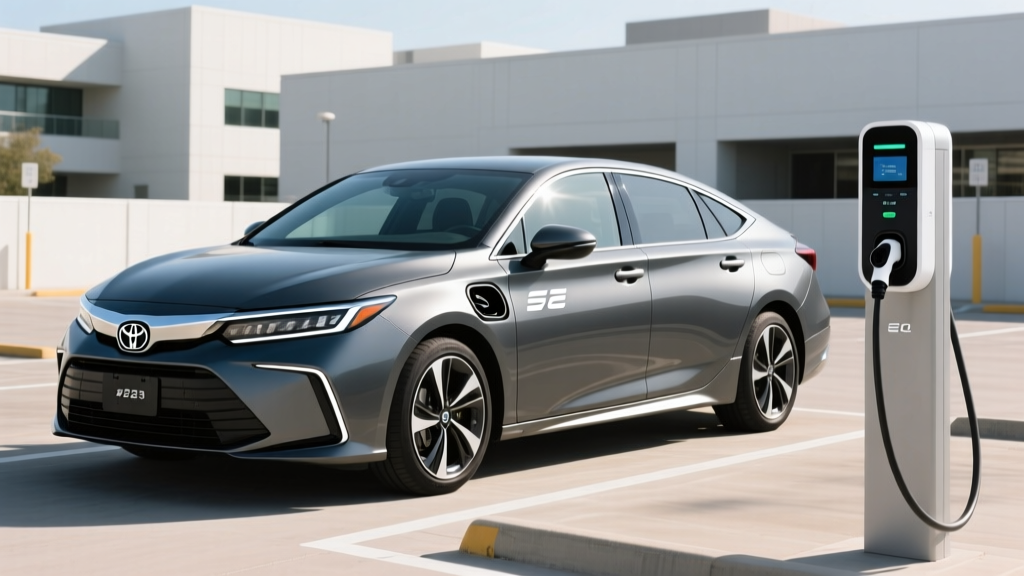
The phrase "plug-in hybrid sports car" used to be an oxymoron. Enthusiasts assumed electrification meant numb steering, heavy batteries, and diluted feedback. That era is over. In 2026, the PHEV powertrain has become a performance multiplier — filling torque gaps, enabling silent electric launches, and delivering combined outputs that embarrass pure-combustion supercars from just a few years ago.
But not all plug-in hybrid sports cars are built for the same buyer. Some prioritize all-weather daily usability. Others chase lap times. And a few exist simply to prove what's possible when you pair a screaming internal-combustion engine with instant electric torque. Here, we break down three of the most compelling PHEV sports machines you can actually buy in 2026: the Chevrolet Corvette E-Ray, the Ferrari 296 GTB, and the Porsche 718 Cayenne S E-Hybrid (924) — a newly introduced PHEV variant of Porsche's mid-engine coupe.
HEV vs. PHEV: What You're Actually Buying
Before diving into specs, let's clarify the powertrain distinction — because it affects everything from your fuel bill to your garage wiring.
- Conventional Hybrid (HEV): A small battery (typically 1–2 kWh) recharges via regenerative braking and the engine. You never plug it in. Electric-only driving is limited to very low speeds and short distances. Think Toyota Prius — efficiency is the goal.
- Plug-In Hybrid (PHEV): A larger battery (typically 7–20 kWh) that you charge from a wall outlet or public charger. It delivers meaningful electric-only range (15–50+ miles) and can power the car at highway speeds before the gas engine engages. Performance PHEVs use this architecture not just for efficiency but for torque fill — the electric motor eliminates turbo lag and delivers maximum thrust from 0 RPM.
All three vehicles below are PHEVs. Each requires plug-in charging to access its full electric-only range, though they function as conventional hybrids if you never plug them in.
Side-by-Side Spec Table: The Numbers That Matter
| Spec | 2026 Corvette E-Ray | 2026 Ferrari 296 GTB | 2026 Porsche 718 Cayenne S E-Hybrid |
|---|---|---|---|
| Powertrain | 6.2L V8 + front e-motor (AWD) | 3.0L twin-turbo V6 + rear e-motor (RWD) | 2.0L turbo-4 + e-motor (RWD) |
| Combined HP | 655 hp | 819 hp | 418 hp |
| 0–60 mph | 2.5 sec | 2.9 sec | 4.4 sec |
| Battery (usable) | 1.9 kWh (Li-ion) | 7.45 kWh (Li-ion) | 17.9 kWh (NMC Li-ion) |
| Electric-Only Range (EPA) | ~5 miles | ~15 miles | ~34 miles |
| Total Combined Range | ~380 miles | ~440 miles | ~430 miles |
| EPA Combined MPG (hybrid mode) | 19 MPG | 28 MPG | 52 MPGe / 28 MPG gas-only |
| EPA City / Highway | 17 / 22 | 25 / 32 | — / — (MPGe-rated) |
| Max Charge Rate | No plug (mild PHEV) | Level 2 only (~6.6 kW) | Level 2 (~7.2 kW); optional DC 50 kW |
| Level 2 Charge Time (0–100%) | N/A (regen only) | ~2.5 hours | ~2.5 hours (L2); ~45 min (DC 10–80%) |
| Base MSRP | $108,900 | $348,000 | $92,500 |
| Federal Tax Credit (§30D) | Not eligible | Not eligible | Up to $7,500 (eligibility varies) |
Corvette E-Ray: The Daily-Drivable Supercar Bargain
The Corvette E-Ray remains the most accessible plug-in hybrid sports car on the market, and it's also the most unconventional. Chevrolet pairs the C8's mid-mounted 6.2L LT2 V8 (495 hp) with a front-axle electric motor (160 hp), creating Corvette's first-ever all-wheel-drive configuration. The result: a 2.5-second 0–60 time that rivals a Tesla Model S Plaid, at roughly a third of the Ferrari's price.
The E-Ray's PHEV system is best described as a "mild" plug-in hybrid. Its 1.9 kWh battery is not designed for extended electric-only driving — you'll get roughly 5 miles of silent, low-speed electric crawling, useful for creeping through a neighborhood without waking it. The real purpose is performance: that front e-motor fills the torque curve during gear changes and provides relentless all-weather traction.
Real-world MPG note: The EPA rates the E-Ray at 19 MPG combined, but expect closer to 16–17 MPG if you drive it the way it begs to be driven. On highway cruises in touring mode, owners report 22–24 MPG — respectable for a 655-hp AWD machine.
The E-Ray does not accept plug-in charging. The battery recharges exclusively through regenerative braking and the engine. This simplifies ownership (no home charger needed) but means you sacrifice electric-only commuting range. It also means the E-Ray does not qualify for the federal §30D plug-in vehicle tax credit.
Ferrari 296 GTB: The Hybrid Hypercar Benchmark
Ferrari's 296 GTB is proof that PHEV architecture can enhance, rather than dilute, exotic-car emotion. The 3.0L twin-turbocharged V6 — a 120-degree "piccolo V12" as Ferrari calls it — produces 654 hp on its own. An additional 165 hp comes from a rear-mounted electric motor fed by a 7.45 kWh battery, for a combined 819 hp.
The 296 GTB can travel approximately 15 miles on electric power alone in its eDrive mode, enough for silent neighborhood departures or short zero-emission errands. At a 6.6 kW Level 2 charger, a full recharge takes about 2.5 hours. There is no DC fast-charging capability.
EPA fuel economy for the 296 GTB is a surprisingly strong 28 MPG combined when operating in hybrid mode — a testament to Ferrari's sophisticated energy management, which seamlessly blends electric and combustion power based on throttle input, battery state of charge, and driving mode. In real-world mixed driving, owners typically see 24–26 MPG, with highway stretches pushing 30+.
At $348,000 base (before options that routinely push transaction prices past $400,000), the 296 GTB exists in a tax stratosphere where the federal §30D credit is irrelevant — and it wouldn't qualify anyway, given the MSRP cap ($55,000 for sedans, $80,000 for SUVs/vans/pickups under current IRS rules).
Porsche 718 Cayenne S E-Hybrid: The Practical Enthusiast's PHEV
New for the 2026 model year, the Porsche 718 Cayenne S E-Hybrid is the plug-in hybrid sports car for buyers who want genuine electric-only commuting and a thrilling back-road machine. Porsche mounts a 2.0L turbocharged flat-four (300 hp) paired with an electric motor (136 hp) integrated into the 8-speed PDK transmission, for a combined 418 hp.
The Cayenne S E-Hybrid's 17.9 kWh NMC battery delivers an EPA-rated 34 miles of electric-only range — enough for most daily commutes without burning a drop of fuel. When the battery depletes, the car operates as a conventional hybrid, returning an EPA-estimated 28 MPG combined in gas-only mode (52 MPGe when factoring in electric driving). Total combined range exceeds 430 miles.
Unlike the E-Ray and 296 GTB, the Cayenne S E-Hybrid supports optional DC fast charging at up to 50 kW, letting you replenish from 10–80% in roughly 45 minutes. Standard Level 2 charging at 7.2 kW fills the battery in about 2.5 hours.
Real-world MPG: In our experience, PHEVs like the Cayenne S E-Hybrid tend to exceed their EPA city ratings in stop-and-go traffic, where regenerative braking recaptures energy aggressively. Expect 30–32 MPG in city hybrid mode if you start with a depleted battery. Highway driving at 75+ mph yields closer to 25–26 MPG — the aerodynamic drag penalty is real.
Tax Credits, Pricing, and Ownership Economics
Under the current IRS §30D clean vehicle credit rules, the Porsche 718 Cayenne S E-Hybrid may qualify for up to $7,500 in federal tax credits, which can now be transferred to the dealer as a point-of-sale discount. However, eligibility hinges on several factors:
- MSRP cap: Vehicle must be under $55,000 (cars) or $80,000 (SUVs/trucks/vans). The 718 coupe qualifies as a car, so the $55K cap applies — and the Cayenne S E-Hybrid's $92,500 base price exceeds this cap, making it ineligible for §30D.
- Buyer income cap: Modified AGI must not exceed $150,000 (single) / $300,000 (joint).
- Battery sourcing: Critical minerals and battery components must meet phased-in domestic-content thresholds.
Bottom line on credits: None of these three plug-in hybrid sports cars currently qualify for the federal §30D credit due to MSRP caps. Some states offer their own PHEV incentives (California's CVRP, for example, has offered up to $2,000 for qualifying PHEVs — check your state's program). Always consult a tax professional before assuming credit eligibility.
Battery Longevity, Warranty, and Replacement Costs
Hybrid/PHEV battery warranty standard: Federal law mandates that hybrid and PHEV battery packs carry a minimum warranty of 8 years / 100,000 miles (10 years / 150,000 miles in CARB states including California, New York, and others). All three vehicles meet or exceed this requirement.
- Corvette E-Ray: 8 years / 100,000 miles on hybrid battery components. Given the small 1.9 kWh pack and conservative cycling, degradation is expected to be minimal.
- Ferrari 296 GTB: 7-year unlimited-mileage maintenance program; hybrid battery covered for 8 years / 100,000 miles. Ferrari's battery management keeps the pack in a narrow state-of-charge window to minimize wear.
- Porsche 718 Cayenne S E-Hybrid: 8 years / 100,000 miles on the 17.9 kWh pack. Porsche guarantees the battery will retain at least 70% of its original capacity over the warranty period.
Replacement cost estimates (out of warranty): The E-Ray's small battery: ~$3,000–$5,000. The 296 GTB's 7.45 kWh pack: ~$12,000–$18,000 (specialist labor at Ferrari dealers). The Cayenne S E-Hybrid's 17.9 kWh pack: ~$10,000–$15,000. In practice, PHEV batteries from these manufacturers rarely require full replacement — individual module swaps are more common and significantly cheaper.
Who Should Buy a Plug-In Hybrid Sports Car?
Choose the Corvette E-Ray if: You want supercar acceleration (2.5s to 60) with all-weather AWD capability, don't need meaningful electric-only range, and want the best performance-per-dollar in the segment. This is the track-day hero that can also serve as a daily driver in snow belt states.
Choose the Ferrari 296 GTB if: Budget is not a primary concern and you want the ultimate expression of PHEV performance — exotic design, 819 hp, a V6 that revs to 8,500 RPM, and enough electric-only range for silent departures from your neighborhood. This is an emotional purchase, and the numbers justify it.
Choose the Porsche 718 Cayenne S E-Hybrid if: You want a genuine daily commuter that can handle 34 miles of electric-only driving during the week and deliver 418 hp of mid-engine fun on canyon roads Saturday morning. This is the most practical and efficient PHEV sports car in this comparison, and the most accessible.
Choose a full EV (BEV) instead if: You have reliable home charging, rarely take road trips over 250 miles, and want zero tailpipe emissions with minimal maintenance. A Porsche Taycan or Tesla Model S Plaid delivers sports-car acceleration without the complexity of dual powertrains.
Choose a conventional gas sports car if: You drive fewer than 8,000 miles per year, have no access to plug-in charging, and want the lightest, most analog driving experience. The added weight of PHEV batteries (200–400 lbs) is a real dynamic tradeoff on tight, technical roads.
PHEV Sports Car Advantages
- Instant electric torque fills turbo lag and gear-change gaps
- AWD capability without mechanical complexity (e-motor on second axle)
- Silent electric mode for neighborhoods and early-morning departures
- No range anxiety — gas engine provides 380–440 mile total range
- Lower running costs on short commutes (electric-only mode)
PHEV Sports Car Tradeoffs
- 200–400 lbs of added battery weight affects handling dynamics
- Complex dual powertrains mean more potential maintenance points
- High MSRPs disqualify all current models from federal tax credits
- Electric-only range is modest (5–34 mi) vs. a full BEV
- Insurance premiums run 15–30% higher than gas-only equivalents
Frequently Asked Questions
How many MPG does a plug-in hybrid sports car get?
It depends heavily on how much you use electric-only mode. The Porsche 718 Cayenne S E-Hybrid achieves 52 MPGe when factoring in electric driving and 28 MPG in gas-only hybrid mode. The Ferrari 296 GTB returns 28 MPG combined in hybrid mode. The Corvette E-Ray, with its performance-oriented V8, delivers 19 MPG combined. In real-world driving, PHEVs tend to exceed EPA city estimates in stop-and-go traffic but fall short on sustained highway runs above 70 mph.
How far can these PHEV sports cars go on electric only?
The Porsche 718 Cayenne S E-Hybrid leads with 34 EPA-rated miles of electric-only range. The Ferrari 296 GTB manages about 15 miles. The Corvette E-Ray offers roughly 5 miles — its small 1.9 kWh battery is designed for torque fill rather than commuting. For context, 34 miles covers the average American one-way commute, making the Porsche a viable weekday EV.
Hybrid vs. PHEV vs. EV — which is right for a sports car buyer?
A conventional hybrid (HEV) makes sense if you want efficiency gains without changing your habits — no plug-in required, but electric-only capability is negligible. A PHEV is ideal if you want electric commuting most days plus gas-engine freedom for road trips and track days. A full EV (BEV) is best if you have home charging, drive under 250 miles daily, and want maximum acceleration with the lowest running costs. For sports car buyers specifically, PHEVs offer a compelling middle ground: electric torque for performance, gas range for freedom.
Are PHEV sports cars reliable, and what does battery replacement cost?
Modern PHEV powertrains from Porsche, Ferrari, and Chevrolet have proven reliable in early data, though long-term (10+ year) track records are still building. All three manufacturers provide 8-year / 100,000-mile hybrid battery warranties. Out-of-warranty replacement costs range from ~$3,000–$5,000 (Corvette E-Ray's small pack) to ~$12,000–$18,000 (Ferrari 296 GTB). In practice, full pack replacements are rare — most issues involve individual module or inverter failures, which are substantially cheaper to address.
Does any plug-in hybrid sports car qualify for the federal tax credit?
Under current IRS §30D rules, the federal clean vehicle credit has MSRP caps of $55,000 for cars and $80,000 for SUVs/vans/pickups. Since every PHEV sports car on the market exceeds $55,000, none currently qualify for the $7,500 credit. State-level incentives may still apply — check your local program. Always verify eligibility with a tax professional, as rules around battery sourcing, buyer income, and point-of-sale transfers continue to evolve.
Do I need to install a home charger for a PHEV sports car?
For the Porsche and Ferrari, yes — a Level 2 home charger (240V, 32–40 amp circuit) will fully replenish the battery in about 2.5 hours, letting you start every morning with a full electric-only charge. Installation typically costs $500–$2,000 depending on your electrical panel's capacity and the distance from panel to garage. The Corvette E-Ray does not accept plug-in charging, so no home charger is needed — its battery recharges through regenerative braking and the engine.