Quick Verdict: What to Expect From the Palisade Hybrid
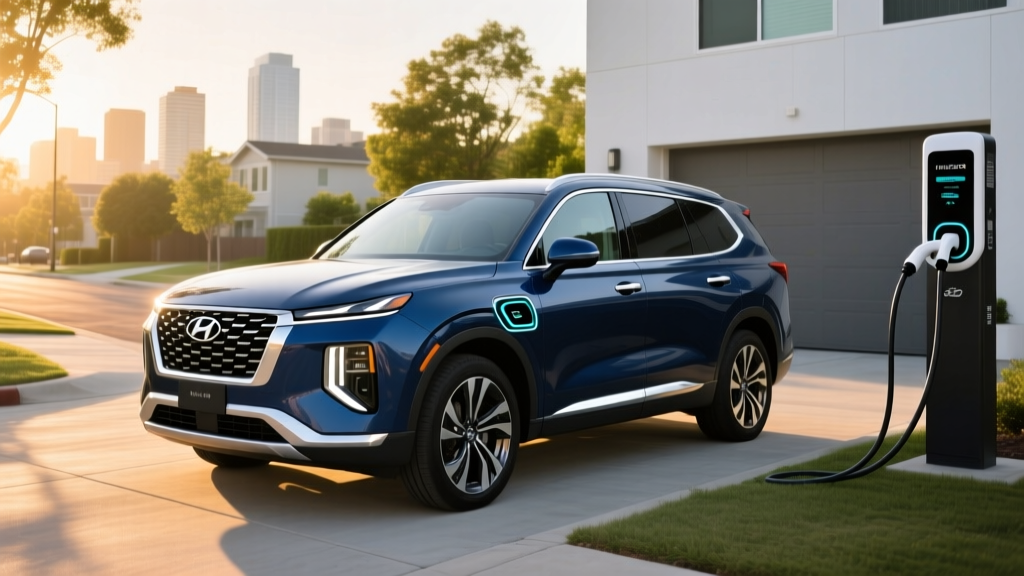
The 2026 Hyundai Palisade arrives with a new turbocharged 2.5-liter hybrid powertrain that fundamentally changes the three-row SUV's efficiency story. If you've been searching for Palisade hybrid MPG data to decide whether this family hauler justifies the upgrade from the turbocharged gas model, the numbers tell a clear story: roughly 27–34 MPG combined depending on whether you choose the conventional hybrid (HEV) or the plug-in hybrid (PHEV) variant. Both flavors use Hyundai's proven hybrid architecture, but they serve very different driving patterns and charging situations.
This guide breaks down the EPA-rated fuel economy, real-world expectations, powertrain specs, pricing, and tax-credit eligibility so you can make a spec-driven decision.
HEV vs PHEV: Which Palisade Hybrid Are You Looking At?
Before diving into the MPG numbers, the distinction between the two Palisade hybrid variants is critical — they have different batteries, different electric-only capabilities, and different fuel-economy profiles.
| Feature | Palisade HEV (Conventional Hybrid) | Palisade PHEV (Plug-In Hybrid) |
|---|---|---|
| Needs to plug in? | No — charges via engine & regen | Yes — plug in for electric-only driving |
| Battery size | ~1.5 kWh (small buffer) | ~22.8 kWh usable |
| Electric-only range | N/A (motor assists engine only) | ~33 miles EPA est. |
| DC fast charging | No | No (Level 2 AC only) |
| EPA combined MPG | ~27 MPG | ~34 MPG combined (hybrid mode) / 79 MPGe |
| Best for | No home charging access, long highway trips | Home charging, short daily commutes |
The conventional HEV operates like a Toyota Highlander Hybrid — the electric motor supplements the gas engine, and regenerative braking recaptures energy. You never plug it in. The PHEV, by contrast, gives you roughly 33 miles of pure electric driving for daily errands and school runs, then seamlessly transitions to hybrid mode once the battery depletes. If you can charge at home overnight, the PHEV effectively functions as an EV for most weekday driving.
Palisade Hybrid MPG: EPA Ratings Breakdown
Here are the official EPA fuel-economy figures for the 2026 Palisade hybrid lineup, sourced from fueleconomy.gov:
| Model | City MPG | Highway MPG | Combined MPG | MPGe (PHEV only) |
|---|---|---|---|---|
| Palisade HEV (FWD) | 28 | 26 | 27 | — |
| Palisade HEV (AWD) | 27 | 25 | 26 | — |
| Palisade PHEV (AWD) | 35* | 33* | 34* | 79 MPGe |
*PHEV MPG figures represent charge-sustaining (hybrid) mode after the battery is depleted. In charge-depleting (electric) mode, the vehicle operates at 79 MPGe.
Real-World MPG vs EPA Sticker: What Owners Actually See
EPA ratings are a baseline, not a guarantee. Hybrid SUVs in the Palisade's class often exceed EPA city ratings in real-world stop-and-go driving because regenerative braking recaptures energy that a gas-only vehicle wastes as heat. Here's what to expect:
Real-World Palisade Hybrid MPG Expectations:
- City driving (HEV): 28–31 MPG — hybrids shine here. Expect to beat the EPA city number in moderate-traffic conditions.
- Highway driving (HEV): 24–26 MPG — aerodynamic drag at 70+ mph works against a boxy 4,800-lb SUV. Highway is where hybrids lose their advantage.
- Mixed commute (PHEV, charged nightly): If your daily round-trip is under 33 miles, you may use zero gas on weekdays. Weekend road trips revert to ~34 MPG hybrid mode.
- Cold weather (both): Expect a 10–15% MPG reduction below freezing. The engine runs more often to provide cabin heat, and battery chemistry is less efficient in cold temps.
- Towing (both): With the Palisade's ~5,000-lb max tow rating, fuel economy drops to roughly 15–18 MPG under load — typical for the class.
The key insight: if your driving is predominantly urban and suburban, the Palisade HEV will likely deliver 28–30 MPG in practice. If you're a highway-dominant commuter covering 40+ miles at speed, expect figures closer to 24–25 MPG. The PHEV's advantage is most dramatic when you charge daily and drive less than 33 miles — in that scenario, your effective "MPG" is essentially infinite for weekday driving.
Powertrain Specs: Engine, Motor, and Combined Output
| Specification | Palisade HEV | Palisade PHEV |
|---|---|---|
| Engine | 2.5L turbo 4-cyl | 2.5L turbo 4-cyl |
| Engine output | ~258 hp / 260 lb-ft | ~258 hp / 260 lb-ft |
| Electric motor | ~47 kW (63 hp) | ~74 kW (99 hp) |
| Combined system output | ~329 hp | ~367 hp |
| Transmission | 6-speed automatic | 6-speed automatic |
| Drivetrain | FWD or AWD | AWD standard |
| 0–60 mph (est.) | ~7.2 sec | ~6.5 sec |
| Towing capacity | 5,000 lbs | 5,000 lbs |
| Hybrid battery | ~1.5 kWh (lithium-ion) | ~22.8 kWh (lithium-ion polymer) |
| Level 2 charge time (PHEV) | N/A | ~3.5 hrs at 7.2 kW (240V) |
| DC fast charge (PHEV) | N/A | Not available |
| Total range (PHEV est.) | ~530 miles | ~480+ miles (33 mi EV + ~450 mi hybrid) |
Both variants pair Hyundai's turbocharged 2.5-liter four-cylinder with an electric motor integrated into the transmission housing. The PHEV gets a larger, more powerful motor and the 22.8 kWh battery pack, giving it stronger electric-only acceleration and the ability to sustain highway speeds (up to ~75 mph) on battery power alone. Neither hybrid variant offers DC fast charging — the PHEV tops up via Level 2 (240V) AC, which is standard practice for PHEVs in this class. A full charge in roughly 3.5 hours means you can replenish during a workday or overnight.
Pricing, Trims, and Tax Credit Eligibility
The 2026 Palisade hybrid lineup carries a premium over the standard turbocharged V6 model. Based on Hyundai's announced pricing:
- Palisade HEV SEL: ~$45,500 MSRP
- Palisade HEV Limited: ~$51,000 MSRP
- Palisade HEV Calligraphy: ~$54,500 MSRP
- Palisade PHEV SEL: ~$52,000 MSRP
- Palisade PHEV Limited: ~$57,500 MSRP
- Palisade PHEV Calligraphy: ~$61,000 MSRP
Does the Palisade PHEV Qualify for a Federal Tax Credit?
Under current IRS §30D rules, the Palisade PHEV may qualify for a partial or full federal clean vehicle credit — but eligibility depends on several factors that change annually:
- MSRP cap: SUVs must be under $80,000 — all Palisade trims clear this threshold.
- Buyer income cap: Modified AGI must not exceed $150,000 (single), $225,000 (head of household), or $300,000 (joint). Check your prior-year or current-year MAGI.
- Battery sourcing: The credit splits into two halves ($3,750 for critical minerals + $3,750 for battery component assembly). The Palisade PHEV's battery sourcing determines whether you receive $3,750 or the full $7,500. Hyundai's supply chain has been shifting toward North American sourcing, but verify current-year eligibility on the IRS qualified vehicles list before purchasing.
- Point-of-sale transfer: You can transfer the credit to the dealer at purchase, reducing your out-of-pocket cost immediately rather than waiting for a tax refund.
The conventional HEV does not qualify for the §30D federal credit — only plug-in hybrids and full EVs with sufficient battery capacity are eligible. Consult a tax professional for your specific situation, as state-level incentives (California, Colorado, New York, and others) may stack on top of the federal credit.
Battery Warranty, Reliability, and Replacement Cost
Hyundai Hybrid Battery Warranty:
- HEV battery: 10 years / 100,000 miles (whichever comes first)
- PHEV battery: 10 years / 100,000 miles
- Hybrid system components: 10 years / 100,000 miles (inverter, motor, control unit)
- Capacity retention threshold: Warranty covers failure or significant capacity loss below ~70% of original capacity
Hyundai's 10-year hybrid battery warranty is among the best in the segment, matching the coverage Kia and Toyota offer. For context, the federal government mandates a minimum of 8 years / 80,000 miles for hybrid and EV battery packs — Hyundai exceeds that by two years and 20,000 miles.
Is the Palisade Hybrid Reliable?
Hyundai's hybrid systems have demonstrated strong reliability across the Tucson Hybrid, Santa Fe Hybrid, and Ioniq lineup. The 2.5-liter turbo engine is shared with other Hyundai-Kia products and has a proven track record. The most common hybrid-related issues across the brand have been minor — software calibration updates and occasional inverter cooling system service. Major battery failures under warranty are rare based on industry data.
Battery Replacement Cost
If the hybrid battery fails outside warranty coverage (typically 10+ years into ownership):
- HEV battery replacement: $2,000–$3,500 (small 1.5 kWh pack — relatively affordable)
- PHEV battery replacement: $8,000–$12,000 (larger 22.8 kWh pack — comparable to other PHEVs in the class)
Most hybrid batteries outlast the vehicle itself. Data from long-term hybrid ownership across the industry shows average degradation of roughly 1–2% per year, meaning a PHEV battery at year 10 might retain 85–90% of its original capacity — still providing ~28 miles of electric range from the original 33.
Who Should Choose the Palisade Hybrid vs a Full EV or Gas Model?
Choose the Palisade HEV if:
- You don't have access to home or workplace charging
- You want better fuel economy without changing your fueling habits
- You take frequent long road trips (no charging stops needed)
- You want a ~$5,000 lower entry price than the PHEV
- Your driving is a mix of city and highway, and 27 MPG combined works for your budget
Choose the Palisade PHEV if:
- You can install a Level 2 charger at home (240V outlet or hardwired station)
- Your daily round-trip commute is under 33 miles (you'll rarely use gas on weekdays)
- You want EV-like driving feel for local trips but gas-engine range for road trips
- You qualify for the federal tax credit, which can offset the PHEV's ~$6,500 price premium over the HEV
- You want the extra combined horsepower (367 hp vs 329 hp) for towing or passing
Choose the gas-only Palisade (2.5T) if:
- Upfront cost is your primary concern (base gas model starts ~$7,000 less than the HEV)
- You drive very low annual miles (fuel savings won't offset the hybrid premium)
- You plan to trade the vehicle in within 3–4 years
Consider a full EV (e.g., Kia EV9, Hyundai Ioniq 9) if:
- You have reliable home Level 2 charging
- Your daily driving rarely exceeds 250 miles
- You want to eliminate gas costs entirely and minimize maintenance
- You qualify for the full $7,500 federal EV tax credit
Pros and Cons at a Glance
Pros
- HEV achieves 27 MPG combined — strong for a 3-row, 4,800-lb SUV
- PHEV offers 33 miles electric-only — covers most daily commutes
- 10-year / 100,000-mile hybrid battery warranty
- PHEV qualifies for partial or full federal tax credit (income/sourcing dependent)
- 367 hp combined (PHEV) gives confident acceleration and towing
- No range anxiety — gas engine provides 450+ miles of backup range
- Three-row seating with hybrid efficiency — rare combination
Cons
- Highway MPG drops to 25–26 (HEV) — aerodynamics hurt at speed
- PHEV has no DC fast charging — Level 2 only
- ~$6,500 price premium for PHEV over HEV
- Hybrid premium may not pay back for low-mileage drivers
- Cold weather reduces PHEV electric range by 15–25%
- Towing drops fuel economy to ~15–18 MPG regardless of hybrid type
- HEV does not qualify for federal tax credit
Frequently Asked Questions
How many MPG does the Palisade Hybrid get?
The 2026 Palisade HEV is EPA-rated at 28 city / 26 highway / 27 combined MPG (FWD). The PHEV delivers 35 city / 33 highway / 34 combined MPG in hybrid mode after the battery depletes, plus 79 MPGe when operating on battery power. In real-world driving, city MPG often exceeds EPA estimates thanks to regenerative braking, while sustained highway driving at 70+ mph may return 24–25 MPG.
How far can the Palisade PHEV go on electric only?
The Palisade PHEV is EPA-estimated at approximately 33 miles of electric-only range on its 22.8 kWh battery pack. Real-world electric range varies: expect 30–35 miles in mild weather with moderate speeds, dropping to 25–28 miles in cold weather or at sustained highway speeds above 65 mph. Once the battery depletes, the gas engine engages seamlessly and the vehicle operates as a conventional hybrid.
Hybrid vs PHEV vs full EV — which Palisade should I buy?
If you lack home charging access, the HEV is the clear choice — it requires zero behavior change and delivers 27 MPG combined. If you can charge at home and your daily driving is under 33 miles, the PHEV gives you electric commuting with gas-engine backup for road trips — the best of both worlds. If you have reliable home charging, rarely drive more than 250 miles in a day, and want to eliminate gas entirely, consider a full EV like the Kia EV9 or Hyundai Ioniq 9 instead. See the decision framework above for a detailed breakdown.
Is the Palisade Hybrid reliable, and what does battery replacement cost?
Hyundai's hybrid powertrains have demonstrated strong reliability across their lineup, backed by a 10-year / 100,000-mile hybrid battery and component warranty — one of the longest in the industry. The HEV battery replacement runs $2,000–$3,500 out of warranty, while the PHEV's larger pack costs $8,000–$12,000. In practice, most hybrid batteries last well beyond 10 years with gradual degradation of 1–2% annually. Major failures during the warranty period are uncommon.
Does the Palisade Hybrid qualify for a tax credit?
The conventional Palisade HEV does not qualify for the federal §30D clean vehicle credit — only plug-in hybrids and full battery EVs are eligible. The Palisade PHEV may qualify for up to $7,500 depending on your income (AGI caps: $150K single / $300K joint), the vehicle's battery sourcing compliance, and the SUV MSRP cap ($80K — all trims qualify). The credit can be transferred to the dealer at point of sale. Always verify current eligibility on the IRS qualified vehicles list before purchasing, as sourcing requirements tighten annually. State incentives may also apply — check your state's energy office for details.
Does the Palisade PHEV support DC fast charging?
No. Like most plug-in hybrids in its class (Toyota RAV4 Prime, Jeep Grand Cherokee 4xe), the Palisade PHEV charges via AC only — Level 1 (120V, ~8 hours) or Level 2 (240V at 7.2 kW, ~3.5 hours). DC fast charging is not available. Given the 22.8 kWh battery, Level 2 charging is sufficient for overnight replenishment.
How long does it take to charge the Palisade PHEV at home?
On a 240V Level 2 home charger delivering 7.2 kW, the Palisade PHEV charges from empty to full in approximately 3.5 hours. On a standard 120V Level 1 household outlet, expect roughly 8–10 hours for a full charge — still practical for overnight charging if you don't have a Level 2 station installed. Level 2 home charger installation typically costs $500–$2,000 depending on your electrical panel capacity and wiring distance.