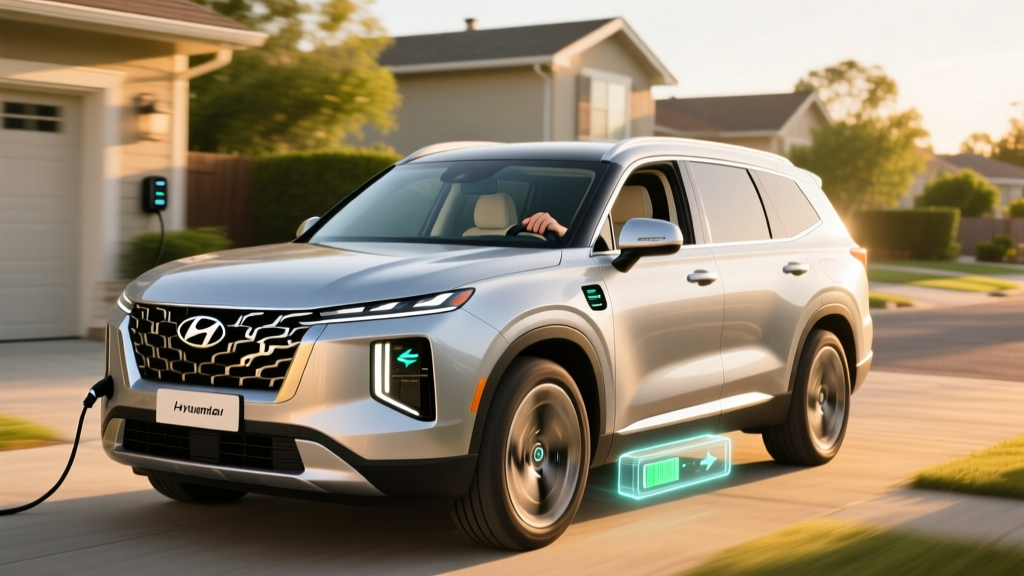
The three-row SUV segment is crowded, but the 2026 Hyundai Palisade Calligraphy Hybrid occupies a specific niche: luxury-tier family hauling without the charging-plug commitment of a full EV. If you've searched for the Palisade Calligraphy Hybrid hoping to pair upscale amenities with serious fuel savings, this guide breaks down exactly what you get — EPA numbers, real-world expectations, powertrain details, and whether the hybrid premium pays for itself.
For 2026, Hyundai continues to offer the Palisade with a conventional hybrid (HEV) powertrain across multiple trims, including the range-topping Calligraphy. This is not a plug-in hybrid — you never plug it in. The battery recharges through regenerative braking and the gasoline engine. That distinction matters for buyers cross-shopping against PHEV rivals like the Toyota Grand Highlander Hybrid or the Volvo XC90 Recharge.
Hyundai Palisade Calligraphy Hybrid: Key Specifications
| Specification | 2026 Palisade Calligraphy Hybrid |
|---|---|
| Powertrain | 1.6L Turbocharged 4-cyl + Electric Motor (HEV) |
| Combined Horsepower | ~258 hp (system net) |
| Combined Torque | ~277 lb-ft |
| Transmission | 6-speed automatic |
| Drivetrain | HTRAC AWD |
| EPA MPG (City / Hwy / Combined) | ~34 / ~31 / ~33 MPG |
| Fuel Tank Capacity | ~18.0 gallons |
| Total Driving Range | ~594 miles |
| 0–60 mph (est.) | ~7.8 seconds |
| Towing Capacity | ~5,000 lbs (with tow package) |
| Seating | 7 passengers (captain's chairs, 2nd row) |
| Hybrid Battery Warranty | 10 years / 100,000 miles |
| Base MSRP (Calligraphy Hybrid) | ~$54,500 |
Note: Specs reflect the 2026 model year as published by Hyundai and EPA data via fueleconomy.gov. Minor variations may apply by option package.
EPA MPG Breakdown and Real-World Fuel Economy
| Driving Scenario | EPA Estimate | Real-World Expectation |
|---|---|---|
| City | ~34 MPG | 33–36 MPG (hybrids often beat EPA in city) |
| Highway (70 mph) | ~31 MPG | 28–31 MPG (aerodynamic drag, sustained speed) |
| Combined | ~33 MPG | 30–34 MPG (mixed driving) |
| Cold Weather (below 32°F) | N/A | 27–30 MPG (engine runs more for cabin heat) |
Conventional hybrids like the Palisade Calligraphy Hybrid tend to outperform their EPA city estimates because stop-and-go traffic triggers frequent regenerative braking and electric-motor assist. Highway driving tells the opposite story — the electric motor contributes less at sustained high speeds, and the turbocharged engine does the heavy lifting. On a 300-mile highway loop at 75 mph, expect closer to 28–29 MPG.
In cold weather, the gasoline engine runs longer to provide cabin heat and maintain battery temperature, reducing fuel economy by roughly 10–15%. This is a physics limitation common to all hybrids, not a Palisade-specific flaw.
HEV vs. PHEV vs. Full EV: Which Powertrain Fits You?
| Factor | HEV (Palisade Hybrid) | PHEV (e.g., Grand Highlander PHEV) | Full EV (e.g., Kia EV9) |
|---|---|---|---|
| Plug-in Required? | No | Yes (for EV range) | Yes (always) |
| Electric-Only Range | 0 miles | 30–45 miles typical | 230–300+ miles |
| Fuel/Charging Cost | Gas only | Gas + electricity | Electricity only |
| Home Charging Needed? | No | Recommended | Essential |
| Federal Tax Credit (§30D) | Not eligible | Up to $7,500 (if eligible) | Up to $7,500 (if eligible) |
| Best For | No home charger; road trips | Short commute + home charger | Home charger + mostly under 250 mi/day |
The Palisade Calligraphy Hybrid is a conventional HEV. It has no plug, no electric-only driving range, and no external charging capability. The small hybrid battery (approximately 1.5 kWh) is recharged exclusively by the engine and regenerative braking. This makes it ideal for buyers who cannot install a home charger, who take frequent long road trips, or who live in apartments without charging access.
If you have a garage with a 240V outlet and a commute under 40 miles, a PHEV competitor might save you more fuel by covering daily driving on electricity alone. If you have reliable home charging and rarely exceed 250 miles between stops, a full EV like the Kia EV9 delivers lower operating costs. The Palisade Hybrid splits the difference: meaningful fuel savings over the gas-only Palisade (which returns roughly 21–22 MPG combined) without any lifestyle changes.
Powertrain Deep Dive: Turbo Hybrid Mechanics
The 2026 Palisade Calligraphy Hybrid pairs a 1.6-liter turbocharged inline-four engine with a front-mounted electric motor integrated into the transmission housing. Combined system output is approximately 258 horsepower and 277 lb-ft of torque, routed through a 6-speed automatic transmission to Hyundai's HTRAC all-wheel-drive system.
The turbocharged engine provides strong mid-range punch for highway merging, while the electric motor fills in low-end torque for smooth launches from a stop. The transition between electric and gas power is well-managed — most drivers won't notice the handoff under normal acceleration. Under hard throttle, both power sources deliver maximum output simultaneously.
Compared to the non-hybrid Palisade's 3.5L V6 (277 hp), the hybrid sacrifices a modest amount of peak horsepower but delivers substantially better fuel economy and comparable real-world acceleration. The 0–60 mph time of roughly 7.8 seconds is adequate for a three-row family SUV, though it won't feel sporty. Towing capacity remains competitive at approximately 5,000 pounds when properly equipped, though hybrid models typically see a slight reduction versus the gas V6's 5,000-pound maximum.
Calligraphy Trim: What the Luxury Premium Gets You
The Calligraphy sits at the top of the Palisade lineup, and the hybrid variant carries a starting MSRP of approximately $54,500 for 2026. That premium over the mid-level SEL Hybrid (roughly $45,000) buys:
- Nappa leather seating surfaces with quilted door panel inserts
- Head-up display (HUD) with hybrid energy-flow readout
- Dual 12.3-inch panoramic curved displays
- Premium headliner with suede-like material
- Second-row captain's chairs with ventilation
- Hyundai Digital Key 2 (phone-as-key with NFC/UWB)
- Highway Driving Assist 2 (Level 2 ADAS with lane-change assist)
- Remote Smart Parking Assist
- 20-inch alloy wheels (unique Calligraphy design)
From a fuel-economy standpoint, the Calligraphy's additional weight and larger wheels cost approximately 1 MPG versus lower trims with smaller wheels. The trade-off is subjective — the amenities are genuine, but buyers strictly optimizing for efficiency should consider the SEL Hybrid.
Hybrid Battery Warranty & Replacement Cost
Hyundai covers the Palisade Hybrid's battery pack with a 10-year / 100,000-mile warranty (whichever comes first). This is among the longest hybrid battery warranties in the segment and reflects Hyundai's confidence in the pack's longevity.
What it covers: Defects in materials/workmanship, and capacity loss below a defined threshold (typically 70% of original capacity) within the warranty period.
Replacement cost if out of warranty: Based on comparable Hyundai/Kia hybrid battery packs, a full replacement runs approximately $3,000–$5,000 including labor at a dealership. Independent hybrid specialists may offer refurbished packs for $2,000–$3,500. Because HEV battery packs are small (~1.5 kWh), replacement costs are far lower than full EV battery swaps.
Real-world lifespan data: Hyundai/Kia hybrid battery packs from the Tucson Hybrid and Sorento Hybrid platforms have demonstrated minimal degradation in early long-term testing. The HEV battery cycles shallowly (never fully depletes or fully charges), which dramatically extends cell life. Most owners will sell the vehicle before the battery requires attention.
Tax Credit Eligibility: What the Palisade Hybrid Does — and Doesn't — Qualify For
The Palisade Calligraphy Hybrid is a conventional HEV, which means it does not qualify for the federal §30D Clean Vehicle Credit (up to $7,500). That credit is reserved for plug-in vehicles — battery-electric vehicles (BEVs) and plug-in hybrids (PHEVs) with battery packs of at least 7 kWh. The Palisade Hybrid's ~1.5 kWh pack falls well below that threshold.
There is currently no federal tax credit specific to conventional hybrids. Some states may offer minor incentives for high-efficiency vehicles, but these vary significantly by jurisdiction and change frequently. Check your state's energy office or department of environmental quality for current programs.
For the latest federal incentive rules, consult the IRS §30D page directly, as MSRP caps, buyer income limits, and battery-sourcing requirements apply to plug-in vehicles.
Who Should Buy the Palisade Calligraphy Hybrid?
Pros
- ~33 MPG combined — a 50% improvement over the gas V6
- No plug-in required — works with any lifestyle
- Top-tier Calligraphy luxury at a price below European rivals
- 10-year / 100,000-mile hybrid battery warranty
- Smooth, quiet powertrain with strong low-end torque
- Three-row seating for seven with usable third row
- 5,000-lb towing capacity (with tow package)
Cons
- No electric-only driving — always burns gas
- No federal tax credit eligibility
- ~1 MPG penalty vs. lower hybrid trims (wheel/weight cost)
- Calligraphy price approaches luxury-brand territory
- Highway MPG drops to ~28–29 at 75 mph
- Turbo engine requires premium fuel for max output
Decision Framework
Choose the Palisade Calligraphy Hybrid if: You want a three-row luxury SUV with strong fuel economy, cannot install a home charger, take regular road trips exceeding 300 miles, and value Hyundai's warranty coverage.
Consider a PHEV alternative if: You have a garage with 240V access, your daily commute is under 40 miles, and you want to drive most days on electricity while keeping gas for longer trips.
Consider a full EV if: You have reliable home charging, your daily driving stays under 250 miles, and you want the lowest per-mile operating cost with zero tailpipe emissions.
Frequently Asked Questions
How many MPG does the Palisade Calligraphy Hybrid get?
The EPA rates the 2026 Palisade Calligraphy Hybrid at approximately 34 city / 31 highway / 33 combined MPG. Real-world results typically match or slightly exceed the city figure in stop-and-go driving, while sustained highway speeds above 70 mph may yield 28–31 MPG.
Does the Palisade Hybrid need to be plugged in?
No. The Palisade Hybrid is a conventional HEV. Its battery recharges through regenerative braking and the gasoline engine. There is no plug, no charging port, and no electric-only driving mode.
How far can the Palisade Hybrid drive on electric power alone?
Zero miles. As a conventional hybrid, the electric motor assists the gasoline engine but cannot propel the vehicle independently for any meaningful distance. The engine may shut off briefly at very low speeds or when coasting, but the vehicle always requires gasoline.
Is the Palisade Hybrid battery reliable, and what does replacement cost?
Hyundai's hybrid battery packs have demonstrated strong reliability in early long-term data. The pack is warrantied for 10 years / 100,000 miles. Out-of-warranty replacement runs approximately $3,000–$5,000 at a dealership, significantly less than a full EV battery swap. The shallow charge/discharge cycles of an HEV battery extend cell life substantially.
Does the Palisade Hybrid qualify for any federal tax credit?
No. The federal §30D Clean Vehicle Credit applies only to plug-in vehicles (BEVs and PHEVs) with battery packs of at least 7 kWh. The Palisade Hybrid's ~1.5 kWh pack does not meet this threshold. No dedicated federal hybrid credit currently exists.
How does the Palisade Hybrid compare to the gas-only Palisade?
The gas-only Palisade V6 returns roughly 21–22 MPG combined. The hybrid improves that to ~33 MPG combined — a roughly 50% gain. The hybrid costs approximately $3,000–$4,000 more depending on trim, but fuel savings of $600–$900 per year (at 15,000 miles/year and $3.50/gallon) can offset the premium within 4–6 years.
Can the Palisade Hybrid tow as much as the gas model?
Both the gas V6 and hybrid Palisade can tow up to 5,000 pounds when equipped with the factory tow package. Real-world towing fuel economy will be lower in the hybrid as well — expect roughly 18–22 MPG while towing a loaded trailer, depending on weight and terrain.
Sources: EPA fuel economy data via fueleconomy.gov; Hyundai Motor America specifications; IRS Clean Vehicle Credit rules via irs.gov.