Quick Verdict: The 2018 Outlander PHEV in 2026
The 2018 Mitsubishi Outlander PHEV occupies a specific niche in the used electrified-vehicle market: it's one of the few plug-in hybrid SUVs from that era offering DC fast charging (CHAdeMO), all-wheel drive, and a usable electric-only range of 22 miles. In 2026, it appeals to budget-conscious buyers who need AWD capability, have short commutes, and want to reduce gas consumption without committing to a full battery-electric vehicle. But at roughly $12,000–$16,000 on the used market today, buyers must weigh aging battery health against the potential §25E used-EV tax credit of up to $4,000.
| Spec | Value |
|---|---|
| EPA Electric-Only Range | 22 miles |
| EPA Combined MPGe (EV mode) | 74 MPGe |
| EPA Combined MPG (gas hybrid mode) | 25 MPG (26 city / 24 hwy) |
| Total Combined Range | ~310 miles |
| Battery Capacity | 12.0 kWh total / ~10.0 kWh usable (NMC) |
| Combined System Horsepower | 197 hp |
| Engine | 2.0L inline-4 (117 hp) + twin electric motors (80 hp front / 94 hp rear) |
| Level 2 AC Charge Time (0–100%) | ~3.5 hours at 3.3 kW |
| DC Fast Charge (CHAdeMO, 0–80%) | ~25 minutes at ~22 kW peak |
| Drivetrain | AWD (S-AWC) |
| 0–60 mph | ~9.7 seconds |
| Cargo Volume | 30.4 cu ft (rear seats up) / 63.3 cu ft (folded) |
| Original MSRP (2018 SEL) | ~$35,595 |
| 2026 Used Price Range | $12,000–$16,000 |
| Battery Warranty (original) | 10 years / 100,000 miles |
HEV vs PHEV: What the Outlander Actually Is
A common source of confusion among used-car shoppers is the difference between a conventional hybrid (HEV) and a plug-in hybrid (PHEV). The Outlander PHEV is firmly a PHEV, meaning it has a larger battery you can plug in to charge and a meaningful electric-only driving range.
| Feature | Conventional Hybrid (HEV) | Plug-In Hybrid (PHEV) |
|---|---|---|
| Battery Size | ~1–2 kWh | ~8–20 kWh |
| Electric-Only Range | 0–2 miles at low speed | 15–40+ miles |
| Plug-In Charging | No — charges via regenerative braking only | Yes — Level 1, Level 2, sometimes DC fast |
| Gas Engine | Always assists; cannot drive EV-only far | Drives electric-only until battery depletes, then switches to hybrid |
| Federal Tax Credit (new) | None (expired) | Up to $7,500 under §30D (when eligible, new purchase) |
| Best For | Drivers without charging access | Drivers with home/work charging + short commutes |
The 2018 Outlander PHEV operates in three modes: EV mode (pure electric up to ~22 miles), series hybrid mode (engine acts as a generator to feed the motors), and parallel hybrid mode (engine directly drives the front wheels at highway speeds). This multi-mode system is more sophisticated than most PHEVs from its era.
Real-World MPG and Electric Range
The EPA rates the 2018 Outlander PHEV at 25 MPG combined (26 city / 24 highway) when operating as a hybrid after the battery is depleted. In EV mode, it achieves 74 MPGe.
EPA Electric-Only Range: 22 miles
Real-world expectation: In mild weather (55–75°F) with mixed city/highway driving, expect 18–22 miles on a full charge. In cold weather (below 30°F), that figure drops to 14–17 miles due to battery chemistry limitations and cabin heating demands. Highway driving at 70+ mph will also reduce electric range to roughly 15–18 miles. On a 2018 model in 2026, battery degradation may further reduce this by 10–20% depending on the vehicle's charge history and mileage.
| Mode | EPA Rating | Real-World Expectation |
|---|---|---|
| EV Mode (electric only) | 74 MPGe / 22 mi range | 18–22 mi (mild), 14–17 mi (cold) |
| Hybrid Mode — City | 26 MPG | 25–28 MPG (regen braking helps in stop-and-go) |
| Hybrid Mode — Highway | 24 MPG | 22–25 MPG (less regen benefit at sustained speed) |
| Hybrid Mode — Combined | 25 MPG | 23–27 MPG depending on conditions |
For context, a conventional gas-only 2018 Outlander AWD with the 2.4L engine gets 23 MPG combined. The PHEV advantage is most pronounced if you can charge daily and keep most trips within that 22-mile electric envelope — effectively eliminating gas use for errands and short commutes.
Charging: Levels, Speeds, and the CHAdeMO Question
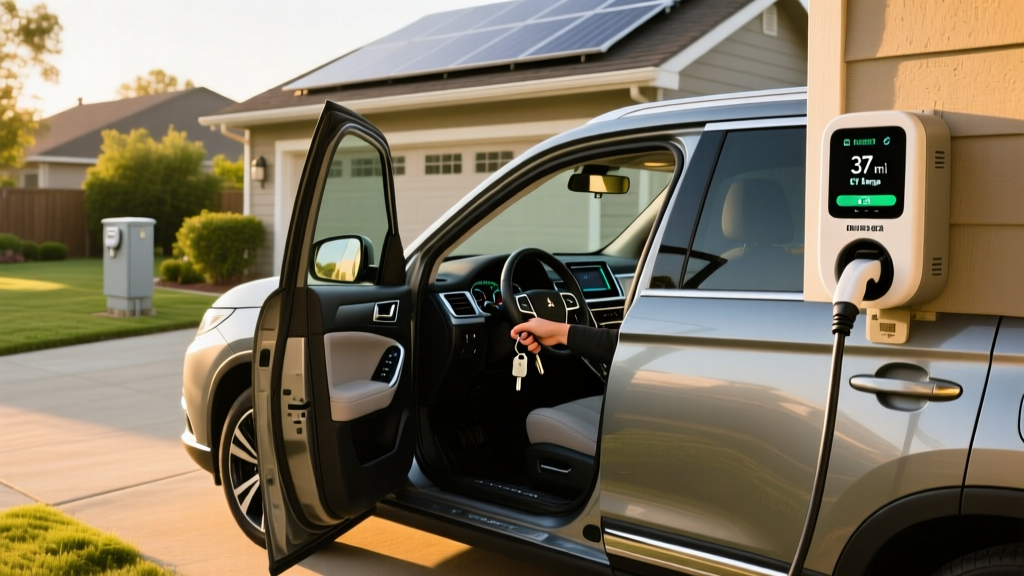
The 2018 Outlander PHEV supports three charging levels, which is unusual for a PHEV of its era:
| Level | Power | Time (0–100%) | Miles of Range Added per Hour |
|---|---|---|---|
| Level 1 (120V household) | ~1.4 kW | ~8 hours | ~3 mi/hr |
| Level 2 (240V, J1772) | 3.3 kW | ~3.5 hours | ~7 mi/hr |
| DC Fast Charge (CHAdeMO) | ~22 kW peak | ~25 min to 80% | N/A (session-based) |
The CHAdeMO caveat in 2026: The Outlander PHEV uses the CHAdeMO DC fast-charging standard. While CHAdeMO stations were once common (Nissan Leaf's primary standard), the North American charging infrastructure has overwhelmingly shifted to CCS1 and the Tesla NACS connector. Electrify America and most newer networks prioritize CCS/NACS. CHAdeMO chargers are increasingly rare at new installations, though legacy stations still exist. Before buying, check PlugShare for CHAdeMO availability along your regular routes.
On Level 2, a 3.3 kW onboard charger means a full charge in about 3.5 hours — adequate for overnight home charging but slower than modern PHEVs like the Toyota RAV4 Prime (which charges at 6.6 kW). For daily use, most owners plug in overnight on Level 1 or Level 2 and wake up to a full battery every morning.
Powertrain and Performance
The Outlander PHEV's powertrain pairs a 2.0-liter inline-4 gasoline engine (117 hp, 137 lb-ft) with two electric motors — an 80 hp motor driving the front axle and a 94 hp motor driving the rear. Combined system output is rated at 197 horsepower. Mitsubishi's S-AWC (Super All-Wheel Control) system manages torque distribution between all four wheels.
Acceleration is adequate but unhurried: 0–60 mph takes approximately 9.7 seconds. The electric motors provide instant torque from a stop, which makes city driving feel peppier than the 0–60 time suggests. Highway passing power is modest, especially once the battery is depleted and the 2.0L engine must handle both propulsion and generator duties.
One engineering advantage: the Outlander PHEV can operate as a series hybrid (engine generating electricity for the motors) or a parallel hybrid (engine mechanically driving the wheels at higher speeds). This flexibility helps efficiency across different driving scenarios — something simpler PHEV systems lack.
Battery Health, Warranty, and Replacement Cost
Original Battery Warranty: 10 years / 100,000 miles (capacity retention above 70% of original, per Mitsubishi's definition)
2026 Status for a 2018 Model: The 10-year / 100,000-mile warranty may still be active depending on the vehicle's mileage and the in-service date. The warranty is transferable to subsequent owners. Always verify remaining coverage with a Mitsubishi dealer using the VIN.
The 2018 Outlander PHEV uses a 12.0 kWh (total) / approximately 10.0 kWh (usable) lithium-ion NMC battery pack manufactured by Lithium Energy Japan (a joint venture of GS Yuasa and Mitsubishi). Mitsubishi programmed a conservative buffer — the system never fully charges or fully depletes the pack, which protects longevity.
Degradation reality in 2026: An 8-year-old PHEV battery that was regularly DC fast-charged or frequently charged to 100% and left sitting in hot climates may have lost 15–25% of its original capacity. This translates to an electric-only range of perhaps 16–19 miles instead of the original 22. A well-maintained example (mostly Level 2 charged, moderate climate) may still deliver 19–22 miles.
Battery replacement cost: If the pack falls below warranty threshold, Mitsubishi covers replacement. Out of warranty, a replacement 12 kWh PHEV battery typically costs $4,000–$7,000 including labor at a dealer, though availability of new OEM packs for a 2018 model should be confirmed before purchase. Third-party refurbishment options may exist for less.
Pricing, Tax Credits, and Total Cost
As of early 2026, used 2018 Outlander PHEV examples typically list between $12,000 and $16,000 depending on mileage, condition, and trim (SE or SEL). The original MSRP was approximately $34,595 (SE) to $35,595 (SEL), plus a $995 destination charge — meaning these vehicles have depreciated significantly.
§25E Used Clean Vehicle Credit — Eligibility Checklist:
- Sale price must be $25,000 or below (✓ — the Outlander PHEV qualifies)
- Buyer AGI limits: $75,000 single / $112,500 head of household / $150,000 joint (verify on irs.gov)
- Credit amount: 30% of sale price, up to $4,000 maximum
- Vehicle must be at least 2 model years old (✓ — 2018 qualifies)
- Must purchase from a licensed dealer (private-party sales do not qualify)
- Credit can be transferred to the dealer as a point-of-sale discount
- Buyer can claim the credit once every 3 years
Note: Tax credit rules are subject to change. Consult a tax professional and verify current eligibility at irs.gov before purchasing.
On a $14,000 purchase, the §25E credit could provide up to $4,000 (30% of $14,000 = $4,200, capped at $4,000), bringing the effective cost to around $10,000. This makes the 2018 Outlander PHEV one of the most affordable AWD plug-in hybrids on the used market after the credit.
Who Should Buy the 2018 Outlander PHEV?
Choose the 2018 Outlander PHEV if:
- Your daily commute is under 20 miles round-trip and you can charge at home
- You need AWD for snow or light off-road conditions
- You want to reduce gas consumption but can't install a Level 2 charger for a full EV (Level 1 overnight charging is sufficient here)
- You're on a budget and the §25E credit brings the price into attractive territory
- You take occasional long road trips where EV charging infrastructure is sparse
Look elsewhere if:
- You want 30+ miles of electric range (consider a used RAV4 Prime or newer Outlander PHEV)
- You rely on DC fast charging — CHAdeMO infrastructure is declining in 2026
- You prioritize modern infotainment, ADAS features, or a refined interior (the 2018 Outlander's cabin and tech feel dated)
- You need third-row seating (the PHEV battery eliminates the third row available on the gas Outlander)
Pros and Cons
Pros
- DC fast charging capability (rare for PHEVs of this era)
- AWD standard with twin-motor S-AWC system
- 22-mile electric range covers most short commutes
- Eligible for up to $4,000 used-EV tax credit (§25E)
- Conservative battery management aids longevity
- Transferable 10-year battery warranty may still apply
Cons
- CHAdeMO DC fast-charging standard is declining in North America
- Only 3.3 kW Level 2 charging (slower than modern PHEVs)
- Modest 197 hp and ~9.7-second 0–60 time
- No third-row seating (battery occupies that space)
- Dated interior materials and infotainment system
- Battery degradation on 8-year-old pack may reduce electric range
- 2.0L engine feels strained on highway grades when battery is depleted
Frequently Asked Questions
How many MPG does the 2018 Outlander PHEV get?
The EPA rates it at 25 MPG combined (26 city / 24 highway) in hybrid mode after the battery is depleted, and 74 MPGe when operating on electricity. Real-world hybrid-mode MPG typically falls between 23 and 27 depending on driving style, terrain, and temperature.
How far can the 2018 Outlander PHEV go on electric only?
The EPA rates it at 22 miles of electric-only range. In real-world conditions, expect 18–22 miles in mild weather and 14–17 miles in cold weather. On an 8-year-old vehicle in 2026, battery degradation may reduce these figures by 10–20% depending on the battery's history.
Hybrid vs PHEV vs EV — which fits me?
A conventional hybrid (HEV) is best if you have no access to plug-in charging and want better MPG with zero behavior change. A PHEV like the Outlander is ideal if you can charge at home or work and want electric-only commuting with a gas backup for road trips. A full EV (BEV) suits drivers with reliable charging access who want the lowest operating costs and zero tailpipe emissions. The PHEV is the compromise — less electric range than a BEV, but no range anxiety on long trips.
Is the 2018 Outlander PHEV reliable and what does battery replacement cost?
Mitsubishi's PHEV system has proven generally reliable, with the conservative battery management strategy (large top and bottom buffers) protecting long-term health. The powertrain is simpler than a traditional automatic transmission since the Outlander PHEV has no conventional gearbox — the electric motors handle most propulsion. Out-of-warranty battery replacement runs $4,000–$7,000 at a dealer. Before purchasing, have the battery's State of Health (SoH) checked by a Mitsubishi dealer or request a battery health report.
Does the 2018 Outlander PHEV qualify for any tax credit?
It no longer qualifies for the new-vehicle §30D credit (that applied only to original purchasers when new). However, as a used vehicle purchased from a dealer for $25,000 or less, it can qualify for the §25E Used Clean Vehicle Credit — up to $4,000 or 30% of the sale price, whichever is less. Eligibility depends on buyer income limits, dealer purchase, and the once-every-three-years rule. Always verify current rules at irs.gov and consult a tax professional.
Can I charge the Outlander PHEV at home on a regular outlet?
Yes. Level 1 charging on a standard 120V household outlet adds about 3 miles of range per hour, fully charging the 12 kWh battery in roughly 8 hours. For most owners who drive under 22 miles daily and plug in overnight, Level 1 is sufficient. A Level 2 (240V) home charger reduces charge time to about 3.5 hours and is recommended if you make multiple trips per day or want faster turnaround.
What happened to CHAdeMO charging stations?
CHAdeMO was the dominant DC fast-charging standard alongside CCS1 in the early 2010s. Since Tesla's NACS connector was adopted by most major automakers starting in 2023–2024, and CCS1 became the standard for non-Tesla EVs, new CHAdeMO installations have slowed dramatically. Existing CHAdeMO stations (many at older Electrify America, EVgo, and independent locations) continue to operate, but the network is not growing. Outlander PHEV owners should not rely on DC fast charging for regular use and should primarily depend on Level 1 or Level 2 home/work charging.