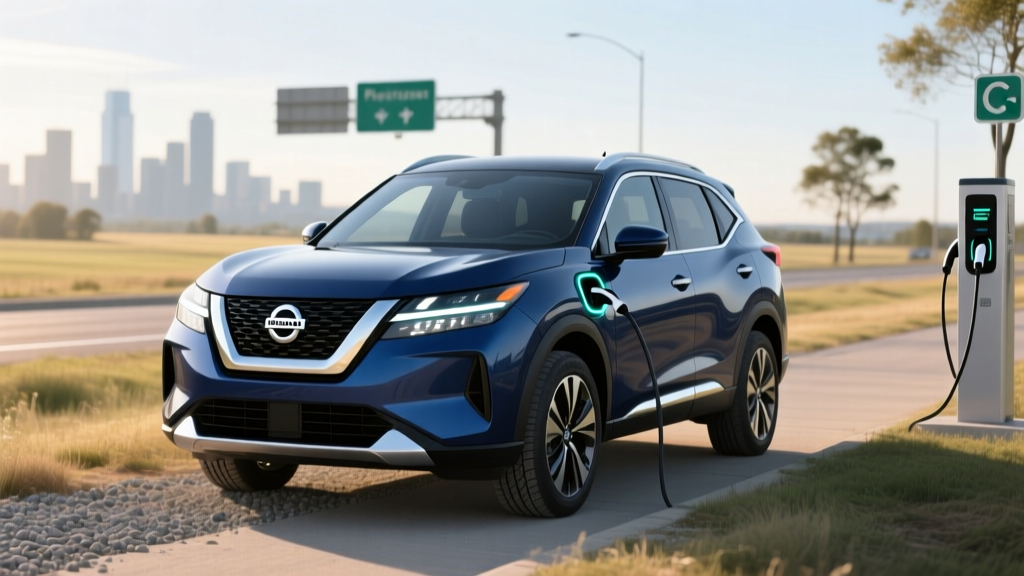
If you've been searching for a Nissan plug-in hybrid SUV, the landscape in 2026 requires some honest navigation. Nissan's current U.S. SUV lineup — the Rogue, Pathfinder, Kicks, and Ariya — spans conventional hybrids, pure electric vehicles, and gasoline models. But the plug-in hybrid (PHEV) category, where a larger battery delivers meaningful electric-only driving before a gas engine kicks in, remains conspicuously thin for American buyers.
This guide breaks down exactly what Nissan offers stateside in the electrified SUV space, explains why the PHEV gap exists, and helps you determine whether a Nissan hybrid, a Nissan EV, or a competitor's PHEV is the right call for your garage.
The 2026 Nissan Electrified SUV Lineup: What's Actually Available
Before diving into specs, let's clarify what Nissan sells in the U.S. for the 2026 model year that involves any form of electrification:
| Model | Powertrain Type | EPA Combined MPG / MPGe | Electric-Only Range | Starting MSRP |
|---|---|---|---|---|
| Nissan Rogue (gas) | 1.5L Turbo 3-cyl (VC-Turbo) | 30 MPG combined | N/A | ~$29,230 |
| Nissan Ariya | BEV (full electric) | 101 MPGe combined | Up to 304 mi (EPA) | ~$39,590 |
| Nissan Kicks (2026 redesign) | Gas / e-Power (market-dependent) | ~31 MPG (gas) | N/A (gas) | ~$22,340 |
| Nissan Pathfinder | Gas V6 | 24 MPG combined | N/A | ~$37,070 |
The critical takeaway: Nissan does not currently sell a plug-in hybrid SUV in the United States. The Rogue is a conventional gas vehicle. The Ariya is a full battery-electric vehicle (BEV). There is no Nissan PHEV SUV available for U.S. purchase as of the 2026 model year.
HEV vs PHEV vs BEV: Understanding the Difference
Part of the confusion around a "Nissan plug-in hybrid SUV" stems from the overlap in terminology. Here's what each powertrain actually means:
| Feature | HEV (Conventional Hybrid) | PHEV (Plug-In Hybrid) | BEV (Full Electric) |
|---|---|---|---|
| Plugs in to charge? | No — charges via regenerative braking and engine | Yes — has a larger battery you charge from an outlet | Yes — only energy source |
| Electric-only range | 1-2 miles at low speed | 20-45 miles typical | 200-400+ miles |
| Gas engine | Yes — primary propulsion with electric assist | Yes — kicks in after battery depletes | None |
| Battery size | 1-2 kWh | 12-22 kWh | 60-100+ kWh |
| Federal tax credit (§30D) | No | Up to $7,500 (if eligible) | Up to $7,500 (if eligible) |
| Example (Nissan) | Not currently in U.S. SUV lineup | Not currently in U.S. SUV lineup | Nissan Ariya |
Nissan does sell an e-Power series-hybrid system in markets like Japan and Europe, where a gasoline engine acts solely as a generator while an electric motor drives the wheels. However, e-Power is a conventional hybrid (HEV) — it does not plug in, and it does not qualify as a PHEV. As of 2026, Nissan has not brought e-Power to U.S. SUV models.
Closest Nissan Option: The 2026 Ariya (Full Electric SUV)
If your goal is a plug-in Nissan SUV and you have home charging access, the 2026 Nissan Ariya is the only vehicle that fits the bill — but it's a BEV, not a PHEV. Here's what the Ariya delivers:
| Spec | Ariya Venture+ (FWD) | Ariya Evolve+ (FWD) | Ariya Platinum+ e-4ORCE (AWD) |
|---|---|---|---|
| Battery (usable) | 63 kWh | 87 kWh | 87 kWh |
| EPA Range | 216 mi | 289 mi | 267 mi |
| Horsepower | 214 hp | 238 hp | 389 hp |
| 0-60 mph | ~7.0 sec | ~4.8 sec | |
| Peak DC Fast Charge | 130 kW | 130 kW | 130 kW |
| 10-80% DC Charge | ~35 min | ~40 min | ~40 min |
| Level 2 Charge Rate | 7.2 kW | 7.2 kW | 7.2 kW |
| MPGe (combined) | 104 MPGe | 101 MPGe | 97 MPGe |
| Starting MSRP | ~$39,590 | ~$43,190 | ~$54,590 |
The Ariya's 130 kW peak DC fast charging is modest compared to rivals like the Hyundai Ioniq 5 (which peaks at 240 kW on its 800V architecture). On a road trip, that translates to roughly 35-40 minutes at a fast charger to go from 10% to 80% — workable, but not class-leading. According to fueleconomy.gov, the Ariya's real-world highway range can drop 15-20% below the EPA sticker in cold weather or sustained 75+ mph driving.
Competitor PHEV SUVs: What You're Comparing Against
Since Nissan doesn't offer a PHEV SUV in the U.S., here's how the segment leaders stack up — the vehicles a Nissan-intender would actually cross-shop:
| Spec | Toyota RAV4 Prime | Hyundai Tucson PHEV | Mitsubishi Outlander PHEV |
|---|---|---|---|
| Battery | 18.1 kWh | 13.8 kWh | 20.0 kWh |
| Electric-Only Range (EPA) | 42 mi | 33 mi | 38 mi |
| Combined HP | 302 hp | 261 hp | 248 hp |
| MPG (after battery depleted) | 38 MPG combined | 35 MPG combined | 28 MPG combined |
| DC Fast Charge? | No (Level 2 only) | No (Level 2 only) | Yes (CHAdeMO, 22 kW) |
| Level 2 Charge Time (0-100%) | ~2.5 hrs (240V, 16A) | ~2 hrs | ~3.5 hrs |
| Starting MSRP | ~$44,500 | ~$39,500 | ~$41,000 |
| Federal Tax Credit (§30D) | Not eligible (MSRP/sourcing) | Not eligible (sourcing) | Not eligible (sourcing) |
A key reality for PHEV shoppers in 2026: most compact PHEV SUVs no longer qualify for the federal §30D tax credit due to battery component and critical mineral sourcing requirements enforced by the IRS. Always verify current eligibility before assuming a $7,500 credit applies.
Nissan e-Power Technology: A Hybrid That Feels Electric (But Isn't a PHEV)
Nissan's e-Power drivetrain, available in the X-Trail and Qashqai sold in Europe and Japan, is worth understanding because it sometimes gets mislabeled as a plug-in hybrid. Here's how it works:
- Series hybrid architecture: The gasoline engine never drives the wheels directly. It only generates electricity to feed the motor or charge the small battery.
- Battery size: Typically 2-3 kWh — far too small for meaningful electric-only range.
- No plug: You never charge e-Power from an outlet. All energy comes from gasoline.
- Driving feel: Because the electric motor always drives the wheels, acceleration feels linear and EV-like, with strong regenerative braking.
If Nissan were to bring e-Power to the U.S. Rogue or Pathfinder, it would compete with the Toyota RAV4 Hybrid and Honda CR-V Hybrid — both conventional HEVs getting 38-40 MPG combined. But as of 2026, Nissan has not announced U.S. e-Power plans for any SUV.
Tax Credits and Incentives: What Applies to Nissan Electrified SUVs
- Nissan Ariya (BEV): Eligibility depends on battery component and critical mineral sourcing requirements. As of early 2026, the Ariya's Japan-built battery supply chain has faced challenges meeting §30D thresholds. Buyers must verify current eligibility at the point of sale — the dealer's IRS-compliant certification determines whether the credit applies.
- Nissan Rogue (gas): Not eligible — no electrified powertrain.
- Any Nissan PHEV: Does not exist in the U.S. market.
Income caps apply: $150,000 single / $300,000 joint AGI. MSRP cap for SUVs: $80,000. Always consult a tax professional and check the latest IRS guidance before purchase.
Battery Warranty and Reliability: What Nissan Owners Can Expect
Whether you're considering the Ariya BEV or hoping for a future Nissan PHEV, battery longevity is a legitimate concern. Here's what Nissan covers:
| Coverage | Nissan Ariya (BEV) | Typical PHEV (Industry Standard) |
|---|---|---|
| Battery Capacity Warranty | 8 years / 100,000 miles | 8-10 years / 100,000-150,000 miles |
| Capacity Retention Threshold | ~70% (warranty triggers below) | ~65-70% |
| Powertrain Warranty | 5 years / 60,000 miles | 5-10 years / 60,000-100,000 miles |
| Estimated Battery Replacement Cost | $12,000-$18,000 (out of warranty) | $8,000-$14,000 (out of warranty) |
Nissan's experience with the Leaf — which suffered notable battery degradation in early model years due to passive air-cooling — is relevant context. The Ariya uses a liquid-cooled battery thermal management system, which substantially improves longevity and sustained charging performance. Most modern liquid-cooled packs from major manufacturers show 5-10% degradation over 100,000 miles based on fleet data, well within warranty thresholds.
Who Should Choose What: A Decision Framework
Choose the Nissan Ariya (BEV) if:
- You have reliable Level 2 home charging (240V outlet or hardwired station)
- Your daily commute is under 200 miles round-trip
- You want zero tailpipe emissions and minimal maintenance
- You rarely take road trips exceeding 250 miles without a planned charging stop
Choose a competitor PHEV (RAV4 Prime, Tucson PHEV) if:
Wait for a potential Nissan PHEV if:
- You're loyal to the Nissan brand and willing to wait 1-3 years for a possible U.S. PHEV offering
- Nissan announces e-Power or a true PHEV variant for the Rogue or a new model
The Bottom Line: Nissan's Electrified SUV Gap
The honest answer for anyone searching for a Nissan plug-in hybrid SUV in 2026 is that the product doesn't exist in the U.S. market. Nissan has committed to electrification through the Ariya BEV and its global e-Power hybrid technology, but the American SUV lineup lacks a true PHEV option that combines plug-in electric range with gasoline backup.
This isn't unique to Nissan — several automakers have been slow to bring PHEVs to the U.S. while focusing on full EVs. But it means buyers who want plug-in hybrid versatility in a compact SUV need to look at the Toyota RAV4 Prime (42 miles electric, 302 hp, ~$44,500), Hyundai Tucson PHEV (33 miles electric, ~$39,500), or Mitsubishi Outlander PHEV (38 miles electric, DC fast charging, ~$41,000).
If you're open to full electric and can charge at home, the Ariya at ~$39,590 with up to 289 miles of EPA range is a legitimate option — just understand that its 130 kW peak charging speed means longer fast-charging stops than Hyundai or Kia's 800V platforms.
Pros: Nissan Ariya (Closest Electrified Nissan SUV)
- Comfortable, quiet ride with spacious interior
- Up to 289 miles EPA range (87 kWh battery)
- Strong ProPILOT Assist 2.0 driver-assistance system
- Competitive starting price at ~$39,590
- Liquid-cooled battery for better longevity
Cons: Nissan Ariya (and the Missing PHEV)
- No Nissan PHEV SUV available in the U.S.
- 130 kW peak DC charging is slower than key rivals
- §30D tax credit eligibility uncertain due to sourcing rules
- No e-Power hybrid option for U.S. buyers
- AWD Platinum+ trim drops to 267 miles range
Frequently Asked Questions
Does Nissan make a plug-in hybrid SUV in 2026?
No. Nissan does not sell a plug-in hybrid (PHEV) SUV in the United States for the 2026 model year. The Rogue is gasoline-only, and the Ariya is a full battery-electric vehicle. Nissan's e-Power hybrid technology, sold in other markets, is a conventional hybrid that does not plug in.
What is the closest Nissan vehicle to a plug-in hybrid SUV?
The 2026 Nissan Ariya is Nissan's only plug-in SUV for the U.S. market, but it's a full EV (BEV), not a PHEV. It offers up to 289 miles of EPA range with the 87 kWh battery in the Venture+ and Evolve+ trims, starting at approximately $39,590.
How much does it cost to charge the Nissan Ariya at home?
Charging the Ariya's 87 kWh battery from empty to full on a Level 2 home charger (at the U.S. average electricity rate of ~$0.16/kWh) costs approximately $13.92. That translates to roughly 4.8 cents per mile for the 289-mile range variant — about one-third the per-mile cost of a gas vehicle getting 28 MPG at $3.50/gallon.
Is the Nissan Ariya battery reliable and what does replacement cost?
The Ariya uses a liquid-cooled lithium-ion battery covered by an 8-year/100,000-mile capacity warranty (triggering at approximately 70% state of health). Out-of-warranty replacement is estimated at $12,000-$18,000. Liquid cooling significantly reduces degradation compared to Nissan's earlier passively-cooled Leaf batteries.
Does the Nissan Ariya qualify for the federal EV tax credit?
Eligibility for the §30D federal tax credit (up to $7,500) depends on battery component and critical mineral sourcing requirements that change periodically. The Ariya's Japan-sourced battery supply chain has faced compliance challenges. Always verify current eligibility with your dealer at the point of sale and consult the IRS clean vehicle credit page for the latest rules. Income caps ($150K single / $300K joint) and MSRP caps ($80K for SUVs) also apply.
What competitor PHEV SUV should I consider instead?
The Toyota RAV4 Prime (42 mi electric range, 302 hp, ~$44,500) leads the segment in electric range and performance. The Hyundai Tucson PHEV (33 mi range, ~$39,500) offers strong value. The Mitsubishi Outlander PHEV (38 mi range, ~$41,000) is the only compact PHEV SUV offering DC fast charging (via CHAdeMO). None currently qualify for the full federal tax credit due to battery sourcing rules.
Will Nissan release a PHEV SUV in the U.S. in the future?
Nissan has not announced a plug-in hybrid SUV for the U.S. market as of early 2026. The company's global strategy includes expanding e-Power (conventional hybrid) offerings and BEVs. Any future PHEV would likely be announced 12-24 months before availability. We recommend monitoring Nissan's U.S. press site for official announcements.