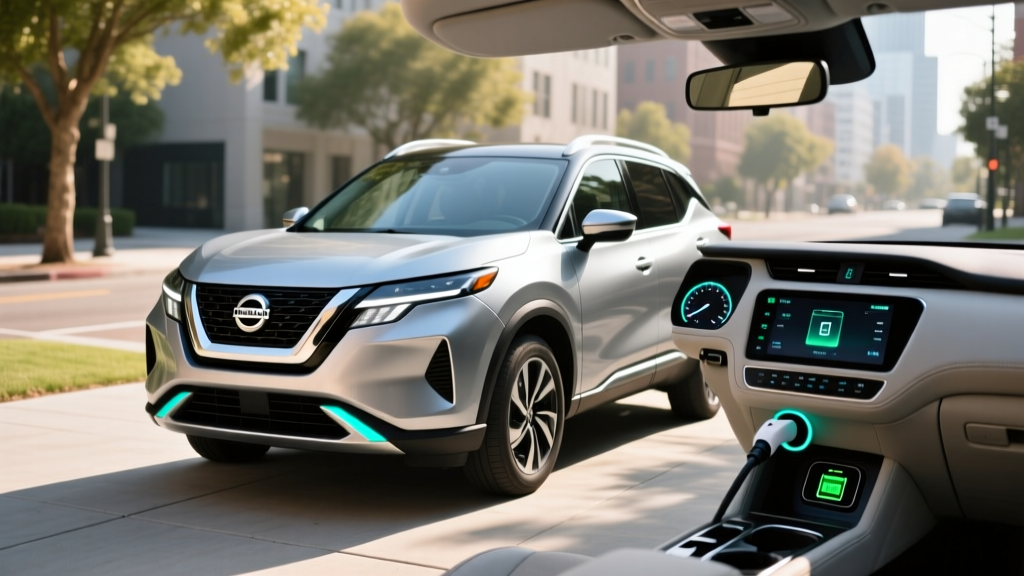
If you've been searching for a Nissan hybrid plug-in model, the 2026 lineup centers on the Rogue PHEV — Nissan's sole plug-in hybrid offering in the U.S. market after years of relying on conventional hybrids and the all-electric Ariya and Leaf. For buyers who want electric-only commuting without committing to a full battery-electric vehicle, the Rogue PHEV occupies a practical middle ground. But with competing PHEVs from Toyota, Hyundai, and Kia offering established track records, does Nissan's plug-in hybrid justify its place in your driveway?
This guide breaks down the 2026 Nissan Rogue PHEV's real-world efficiency, electric-only range, powertrain specs, charging logistics, pricing, and tax credit eligibility — and clarifies where Nissan's conventional hybrid models fit for buyers who don't want to plug in at all.
HEV vs. PHEV: What Nissan Actually Offers in 2026
Before diving into specs, it's critical to understand the difference between Nissan's two hybrid categories, because they serve fundamentally different use cases.
| Feature | Conventional Hybrid (HEV) | Plug-In Hybrid (PHEV) |
|---|---|---|
| Plug-in charging? | No — charges via regenerative braking and engine | Yes — plugs into Level 1 or Level 2 charger |
| Electric-only range | 0–1 miles at low speeds | 30–40+ miles (model dependent) |
| Battery size | ~1.0–1.5 kWh | ~15–20 kWh usable |
| Fuel when battery depletes | Hybrid mode (engine + motor) | Hybrid mode (engine + motor) |
| Federal tax credit | Not eligible under §30D | Up to $7,500 if sourcing/income rules met |
| Example (Nissan 2026) | Rogue Hybrid, Kicks e-POWER | Rogue PHEV |
Nissan's conventional hybrids (like the Rogue Hybrid and the Kicks with e-POWER series-hybrid system) never plug in. They use a small battery and regenerative braking to assist the gasoline engine, improving MPG over a gas-only equivalent — typically by 5–15 MPG in city driving.
Nissan's plug-in hybrid, the Rogue PHEV, carries a much larger battery pack that you charge from a wall outlet or public charger. This gives you genuine electric-only driving for daily commutes, then seamlessly transitions to hybrid mode once the battery depletes. You never have to plug it in to drive it — but if you don't, you're just operating a heavier, less efficient conventional hybrid.
2026 Nissan Rogue PHEV: Powertrain and Performance Specs
The 2026 Rogue PHEV pairs a 1.5-liter turbocharged three-cylinder gasoline engine with a more powerful electric motor than the conventional hybrid, drawing energy from a larger lithium-ion battery pack mounted beneath the cabin floor.
| Specification | 2026 Nissan Rogue PHEV (AWD) |
|---|---|
| Combined system horsepower | ~200 hp |
| Gasoline engine | 1.5L turbocharged 3-cylinder |
| Electric motor output | ~100 kW (front axle) |
| Drivetrain | AWD (e-motor rear assist) |
| Battery capacity (usable) | ~17.4 kWh |
| Battery chemistry | NMC (nickel manganese cobalt) |
| 0–60 mph | ~7.8 seconds (estimated) |
| Towing capacity | 1,350 lbs |
| Cargo volume (behind 2nd row) | ~31.5 cu ft |
The combined output of roughly 200 hp positions the Rogue PHEV between the conventional Rogue Hybrid (~180 hp combined) and the turbo gas-only Rogue (~201 hp). Electric motor torque fills in the low-end gap that the small-displacement turbo engine exhibits, giving it responsive off-the-line acceleration in EV mode.
Fuel Economy: EPA MPG and Real-World Expectations
Efficiency is where the PHEV story gets nuanced. The EPA rates plug-in hybrids with two separate figures: MPGe (miles per gallon equivalent) when operating on electricity, and MPG when the battery is depleted and the vehicle runs as a conventional hybrid.
| Driving Mode | City | Highway | Combined |
|---|---|---|---|
| Charge-depleting (EV mode) — MPGe | ~95 MPGe | ~82 MPGe | ~89 MPGe |
| Charge-sustaining (hybrid mode) — MPG | ~37 MPG | ~34 MPG | ~35 MPG |
Real-world MPG note: Hybrid-mode MPG in the Rogue PHEV can exceed the EPA city estimate in stop-and-go traffic, where regenerative braking recaptures the most energy. Expect 38–42 MPG city in warm weather with moderate use of climate control. Highway MPG tends to dip slightly below the EPA figure at sustained 75+ mph speeds, landing around 31–33 MPG. Cold weather (below 35°F) can reduce hybrid-mode efficiency by 8–12% due to engine warm-up cycles and cabin heating demands.
For comparison, the conventional 2026 Nissan Rogue Hybrid achieves an EPA-estimated 35 city / 33 highway / 34 combined MPG — making the PHEV's hybrid mode only marginally better once the battery is spent. The real efficiency win is the electric-only miles you accumulate before that happens.
Electric-Only Range and Charging: What Plug-In Owners Need to Know
The headline number for any Nissan plug-in hybrid buyer is electric-only range — how far you can drive before the gasoline engine fires up.
EPA-estimated electric-only range: ~38 miles
That 38-mile EV range covers the majority of American daily commutes. According to the U.S. Department of Transportation, the average one-way commute is approximately 16 miles. If you charge at home overnight, you could complete most weekday driving without burning a drop of gasoline.
Total combined range (EV + hybrid): approximately 440–470 miles with a full tank and full battery.
Charging Specifications
| Charging Level | Power (kW) | 0–100% Time | Connector |
|---|---|---|---|
| Level 1 (120V household outlet) | ~1.4 kW | ~12–14 hours | |
| Level 2 (240V home/public) | ~6.6 kW | ~3.0–3.5 hours | |
| DC fast charging | Not supported | N/A |
A critical limitation: the Rogue PHEV does not support DC fast charging. This is common across most PHEVs in its class — the battery is small enough that Level 2 charging refills it in a few hours, and the cost/weight of DC fast-charge hardware isn't justified. If you rely exclusively on public charging infrastructure and need rapid top-ups, a full BEV with DC fast capability (like the Nissan Ariya) is the better fit.
For home charging, a standard 120V outlet will fully recharge the battery overnight if you arrive home with a partially depleted pack. A 240V Level 2 home charger cuts that to roughly three hours — ideal for topping up between an evening arrival and a morning departure.
Pricing, Trims, and Federal Tax Credit Eligibility
The 2026 Nissan Rogue PHEV starts at an MSRP of approximately $39,500 for the base SV trim, climbing to roughly $45,000 for a fully loaded Platinum trim. These prices position it competitively against the Toyota RAV4 Prime and Hyundai Tucson PHEV, though the RAV4 Prime offers notably more electric-only range (42 miles EPA) and higher combined horsepower (302 hp).
Does the Nissan Rogue PHEV Qualify for the Federal Tax Credit?
Potentially — but eligibility under IRS §30D clean vehicle credit rules depends on several factors that change frequently:
- MSRP cap: SUVs must have an MSRP at or below $80,000 — the Rogue PHEV clears this easily.
- Buyer income cap: Modified adjusted gross income must not exceed $150,000 (single), $225,000 (head of household), or $300,000 (married filing jointly).
- Battery component sourcing: A percentage of battery components must be manufactured or assembled in North America, and critical minerals must meet sourcing thresholds. These percentages increase annually and can disqualify models mid-year.
- Point-of-sale transfer: As of 2024, eligible buyers can transfer the credit to the dealer at purchase, reducing the purchase price directly rather than waiting for a tax refund.
Because battery sourcing requirements tighten each year, a model that qualifies in January may lose eligibility by mid-year. Always verify current eligibility on fueleconomy.gov before purchasing. Consult a tax professional for your specific situation.
If the full $7,500 credit applies, the effective starting price drops to roughly $32,000 — a compelling value for a compact PHEV SUV with AWD.
Battery Warranty, Reliability, and Replacement Cost
2026 Nissan Rogue PHEV Hybrid Battery Warranty: 8 years / 100,000 miles (whichever comes first), covering defects and capacity loss below a specified threshold (typically 60–70% of original capacity, per Nissan's warranty documentation). In California Air Resources Board (CARB) states, the warranty extends to 10 years / 150,000 miles.
Hybrid and PHEV battery reliability has improved dramatically over the past decade. Toyota's hybrid batteries routinely exceed 200,000 miles with minimal degradation, and Nissan's PHEV battery — while newer to the U.S. PHEV market — uses proven NMC chemistry with active thermal management to mitigate the accelerated degradation seen in older passively cooled packs.
Out-of-warranty replacement cost: If the high-voltage battery fails outside the warranty period, expect a replacement cost in the range of $6,000–$9,000 including parts and labor. This is comparable to PHEV battery replacements across the industry. Individual module replacement (rather than the full pack) may be available through specialized hybrid repair shops for $2,500–$4,000.
The 12V auxiliary battery in the Rogue PHEV is a separate, conventional component that may need replacement every 4–6 years at typical costs of $150–$300.
Overall Reliability Outlook
Nissan's hybrid powertrains have earned average to above-average reliability scores from sources like Consumer Reports and J.D. Power, though the brand's historical CVT transmission issues (in non-hybrid models) create lingering perception concerns. The PHEV's powertrain uses a different transmission architecture than the problematic CVTs, reducing that specific risk. For the most current reliability data, check NHTSA's database for any active recalls or technical service bulletins.
Rogue PHEV vs. Rogue Hybrid vs. Full EV: Which Nissan Fits You?
Choose the Nissan Rogue PHEV if:
- You have access to home or workplace Level 1/Level 2 charging
- Your daily driving is under 40 miles round-trip
- You want EV commuting but need gas-engine range for road trips
- You want potential federal tax credit savings
Choose the Nissan Rogue Hybrid (HEV) if:
- You cannot charge at home or work (apartment, street parking)
- You want better MPG than a gas car with zero behavior change
- Your budget is tighter (HEV starts ~$4,000–$5,000 less than PHEV)
- You don't want to think about charging logistics
Choose a full EV (Nissan Ariya or Leaf) if:
- You have reliable home Level 2 charging
- You want zero gasoline purchases and minimal maintenance
- You're eligible for the full $7,500 federal credit
- Your driving patterns rarely exceed 250 miles in a single day, or you're comfortable with DC fast charging on road trips
Rogue PHEV Pros
- 38-mile electric-only range covers most commutes
- AWD standard with electric rear-axle assist
- Hybrid mode still delivers ~35 MPG when battery depletes
- Potential $7,500 federal tax credit
- No range anxiety — gas engine provides 440+ total miles
Rogue PHEV Cons
- No DC fast charging capability
- Higher starting MSRP than conventional hybrid or gas Rogue
- Less electric range and power than RAV4 Prime competitor
- Cargo space slightly reduced vs. gas-only Rogue
- Tax credit eligibility depends on evolving sourcing rules
Frequently Asked Questions
How many MPG does the 2026 Nissan Rogue PHEV get?
In hybrid mode (battery depleted), the EPA estimates approximately 37 city / 34 highway / 35 combined MPG. In EV mode, it achieves roughly 89 MPGe combined. Real-world city MPG in hybrid mode often exceeds the EPA estimate, reaching 38–42 MPG in warm-weather stop-and-go driving.
How far can the Nissan Rogue PHEV go on electric only?
The EPA-estimated electric-only range is approximately 38 miles. Real-world EV range varies: expect 32–36 miles in cold weather or at highway speeds, and up to 40 miles in mild conditions with light throttle use and minimal climate control demand.
Do I have to plug in the Nissan hybrid to drive it?
No. The Rogue PHEV operates as a conventional hybrid when the battery is depleted — you can drive it without ever plugging it in. However, you'll lose the electric-only range benefit and the efficiency advantage that justifies the higher purchase price. The conventional Rogue Hybrid (HEV) never requires plugging in.
Does the Nissan Rogue PHEV qualify for a tax credit?
It may qualify for up to $7,500 under the IRS §30D clean vehicle credit, subject to your income, the vehicle's battery component sourcing, and current-year thresholds. The MSRP is well under the $80,000 SUV cap. Verify current eligibility on fueleconomy.gov and consult a tax professional before relying on the credit.
Is the Nissan Rogue PHEV reliable, and what does battery replacement cost?
Nissan's hybrid powertrains rate average to above-average in reliability surveys. The high-voltage battery carries an 8-year/100,000-mile warranty (10 years/150,000 miles in CARB states). Out-of-warranty replacement costs approximately $6,000–$9,000 for the full pack, though partial module replacement may be available for less.
Can I DC fast charge the Rogue PHEV at public stations?
No. The Rogue PHEV supports Level 1 (120V) and Level 2 (240V) AC charging only. A full charge on Level 2 takes about 3–3.5 hours. DC fast charging is not available — this is typical for PHEVs with smaller battery packs.
How does the Rogue PHEV compare to the Toyota RAV4 Prime?
The RAV4 Prime offers 42 miles of EPA electric range (vs. ~38 for the Rogue PHEV), 302 combined horsepower (vs. ~200), and a longer-established reliability track record. The Rogue PHEV counters with a potentially lower effective price after tax credits and Nissan's ProPILOT Assist driver-assistance suite. Choose the RAV4 Prime if maximum EV range and power are priorities; choose the Rogue PHEV if value and Nissan's dealer network matter more.