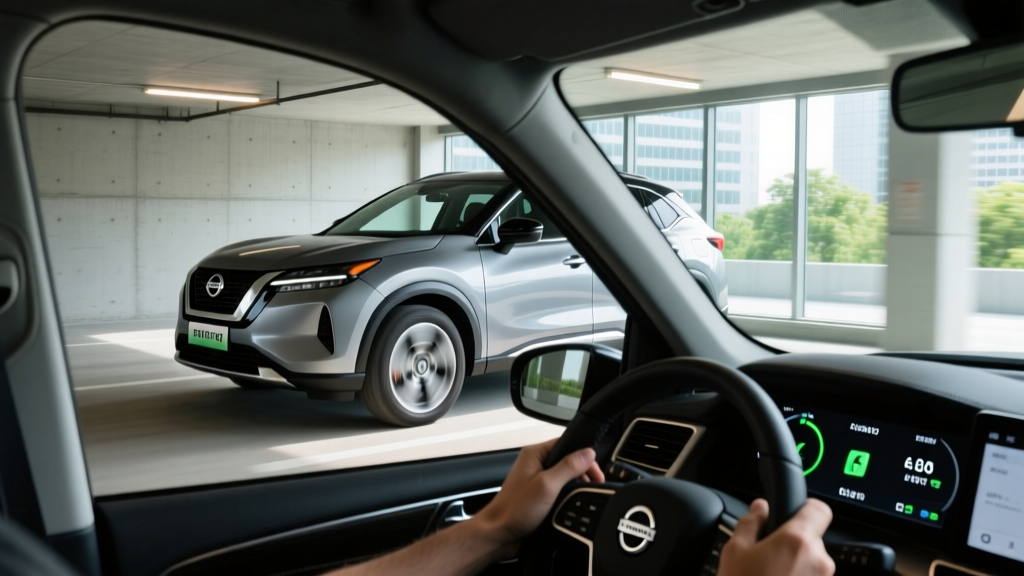
The compact SUV segment is one of the most competitive spaces in the American market, and for 2026 Nissan is leaning into electrification with the Rogue PHEV—a plug-in hybrid variant that promises electric-only commuting paired with gas-powered road-trip flexibility. But does it deliver enough electric range and real-world efficiency to justify its premium over the conventional Rogue? We break down every spec that matters.
What Is the 2026 Nissan Rogue PHEV?
The 2026 Nissan Rogue PHEV pairs a 1.5-liter turbocharged three-cylinder engine with a more powerful electric motor and a larger battery pack than the standard hybrid. Unlike a conventional hybrid (HEV), which charges its small battery solely through regenerative braking and the engine, the Rogue PHEV can be plugged in to charge a bigger battery, enabling a meaningful stretch of pure electric driving before the gas engine kicks in.
HEV vs PHEV: Key Differences
| Feature | Conventional Hybrid (HEV) | Plug-in Hybrid (PHEV) |
|---|---|---|
| Plug-in charging | No | Yes (Level 1 or Level 2) |
| Battery size | ~1.5-2.0 kWh | ~14-20 kWh |
| Electric-only range | Less than 1 mile | Typically 25-45 miles |
| Gas engine role | Primary power, always running | Backup after battery depletes |
| Tax credit eligibility | Generally no | Potentially yes (up to $7,500) |
This distinction matters for buyers weighing fuel savings against upfront cost. If your daily commute is under 35 miles and you can charge at home, the PHEV operates mostly as an EV during the week, with the gas engine reserved for longer weekend trips.
EPA Fuel Economy and Electric Range
For the 2026 model year, Nissan has updated the Rogue PHEV's powertrain calibration and battery capacity. Here are the official EPA figures:
| Metric | 2026 Rogue PHEV |
|---|---|
| Electric-only range | 38 miles (EPA est.) |
| Combined MPGe (electric mode) | 92 MPGe |
| Gas-only city MPG | 35 MPG |
| Gas-only highway MPG | 37 MPG |
| Gas-only combined MPG | 36 MPG |
| Total combined range | ~470 miles |
The 38-mile electric range positions the Rogue PHEV competitively against rivals like the Toyota RAV4 Prime (42 miles) and the Hyundai Tucson PHEV (33 miles). For most commuters, this covers a full day of driving without burning a drop of gas, provided you charge overnight.
Battery, Charging, and Powertrain Specs
| Specification | 2026 Nissan Rogue PHEV |
|---|---|
| Battery capacity | 18.1 kWh (usable) |
| Battery chemistry | NMC (Nickel Manganese Cobalt) |
| Level 1 charging (120V) | ~12 hours (0-100%) |
| Level 2 charging (240V, 32A) | ~3.5 hours (0-100%) |
| DC fast charging | Not available |
| Engine | 1.5L turbocharged 3-cylinder |
| Engine power | 201 hp |
| Electric motor power | 134 hp |
| Combined system output | 248 hp |
| Drivetrain | AWD (e-AWD, rear motor) |
| Transmission | CVT |
| 0-60 mph | 6.8 seconds (est.) |
The 18.1 kWh battery pack uses NMC chemistry, which offers good energy density for packaging within the Rogue's platform. Unlike some competitors, the Rogue PHEV does not offer DC fast charging—a limitation that means public charging infrastructure is largely irrelevant for this vehicle. You'll charge at home (Level 2) or via a standard outlet (Level 1) if you're in a pinch.
The combined 248 horsepower represents a meaningful bump over the gas-only Rogue (201 hp) and gives the PHEV confident acceleration for highway merging and passing. The e-AWD system uses a dedicated rear electric motor rather than a mechanical driveshaft, providing responsive all-wheel-drive traction without the efficiency penalty of a traditional AWD system.
Pricing and Tax Credit Eligibility
| Trim Level | MSRP (2026) |
|---|---|
| SV PHEV | $38,990 |
| SL PHEV | $42,490 |
| Platinum PHEV | $46,990 |
The 2026 Rogue PHEV starts at $38,990 for the SV trim, which includes the 18.1 kWh battery, AWD, and Nissan's ProPILOT Assist driver-assistance suite. The Platinum trim adds premium features like a panoramic moonroof, quilted leather seats, and a 12.3-inch digital instrument cluster.
Federal Tax Credit Eligibility (§30D)
The 2026 Rogue PHEV may qualify for up to $7,500 in federal tax credits, but eligibility depends on several factors:
- MSRP cap: SUVs must be under $80,000 (all Rogue PHEV trims qualify)
- Buyer income limits: $150,000 single / $300,000 joint filers
- Battery sourcing: Critical minerals and battery components must meet phased-in domestic content requirements (check current-year IRS guidance)
- Point-of-sale transfer: Eligible buyers can transfer the credit to the dealer for an upfront price reduction
Always verify current eligibility on IRS.gov before purchasing, as battery sourcing rules change annually.
With the full $7,500 credit, the SV PHEV effectively drops to $31,490—making it competitive with well-equipped gas-only compact SUVs while offering dramatically lower fuel costs for commuters who can charge at home.
Reliability and Battery Warranty
Nissan has extensive experience with hybrid and electric powertrains, dating back to the Leaf (one of the first mass-market EVs) and the earlier Rogue Hybrid. The 2026 Rogue PHEV benefits from this institutional knowledge, though long-term reliability data for this specific powertrain is still accumulating.
Battery and Powertrain Coverage
| Component | Warranty |
|---|---|
| Hybrid battery | 8 years / 100,000 miles |
| Hybrid system components | 8 years / 100,000 miles |
| Powertrain (engine, transmission) | 5 years / 60,000 miles |
| Battery capacity retention | Minimum 70% over warranty period |
Nissan warrants the hybrid battery to retain at least 70% of its original capacity over 8 years or 100,000 miles. If capacity falls below this threshold due to a defect, Nissan will repair or replace the battery at no cost. This coverage is standard for the industry and provides peace of mind for long-term ownership.
Hybrid battery replacement costs, if needed out of warranty, typically range from $4,000 to $8,000 depending on labor rates and whether you choose a new or refurbished unit. However, modern hybrid batteries are designed to last the life of the vehicle under normal use, and premature failures are rare.
For reliability data, consult NHTSA.gov for safety recalls and IIHS.org for crash-test ratings as they become available for the 2026 model year.
Real-World MPG: What Owners Actually See
EPA estimates are a useful baseline, but real-world fuel economy depends heavily on driving patterns, climate, and how consistently you charge the PHEV's battery. Here's what to expect:
- Daily commuters (under 35 miles, nightly charging): You'll use minimal gas, potentially achieving 80-100 MPGe equivalent over a month of mostly electric driving
- Mixed drivers (occasional long trips, regular charging): Expect combined efficiency around 50-60 MPGe when factoring in both electric and gas miles
- Gas-only drivers (never charging): You'll see 34-36 MPG combined, similar to a conventional hybrid but without the electric savings
- Cold-climate drivers: Winter reduces battery efficiency by 20-30%, so electric range drops to 26-30 miles, and the engine runs more frequently for cabin heat
The key insight: a PHEV only delivers its full efficiency advantage if you charge it regularly. If you lack home or workplace charging access, the Rogue PHEV becomes a slightly more expensive conventional hybrid. In that scenario, you might save money by choosing the gas-only Rogue or waiting for broader charging infrastructure.
Who Should Buy the 2026 Rogue PHEV?
Choose the Rogue PHEV If:
- Your daily commute is under 35 miles round-trip
- You have reliable home or workplace Level 2 charging access
- You want EV-like daily driving without range anxiety on road trips
- You qualify for the federal tax credit, bringing the effective price below $32,000
- You live in a region with cold winters where pure EV range drops significantly
Consider a Full EV Instead If:
- Your daily driving is under 250 miles and you rarely take long road trips
- You want zero tailpipe emissions and minimal maintenance (no oil changes, fewer moving parts)
- You have access to DC fast charging for road trips
- You prefer the instant torque and one-pedal driving experience of a pure EV
Stick with Gas or Conventional Hybrid If:
- You lack reliable charging access at home or work
- Your budget is tight and you can't absorb the PHEV premium
- You drive mostly highway miles where the electric motor provides less benefit
- You plan to keep the vehicle for only 2-3 years (harder to recoup the upfront cost)
The 2026 Nissan Rogue PHEV occupies a specific niche: drivers who want electric efficiency for daily commuting but aren't ready to commit to a full EV due to range concerns, charging infrastructure gaps, or cold-weather performance. It's a bridge technology, and it executes that role competently.
Pros and Cons at a Glance
Pros
- 38-mile electric range covers most daily commutes
- AWD standard with responsive e-AWD system
- 248 hp provides confident acceleration
- Competitive pricing after tax credit
- No range anxiety on long trips
- Strong battery warranty (8 yr / 100k mi)
Cons
- No DC fast charging capability
- Electric range drops significantly in cold weather
- Premium over gas-only Rogue requires charging access to justify
- CVT can feel sluggish under hard acceleration
- Limited real-world reliability data for this specific powertrain
Frequently Asked Questions
How many MPG does the 2026 Nissan Rogue PHEV get?
In gas-only mode, the Rogue PHEV achieves 35 city / 37 highway / 36 combined MPG. When operating in electric mode, it earns 92 MPGe. Your actual efficiency depends on how often you charge and drive electrically.
How far can the Rogue PHEV go on electric only?
The EPA estimates 38 miles of electric-only range. In real-world conditions, expect 30-38 miles in moderate weather and 26-30 miles in cold weather or at sustained highway speeds.
Does the 2026 Rogue PHEV qualify for a tax credit?
It may qualify for up to $7,500 in federal tax credits under §30D, depending on your income, the vehicle's battery sourcing compliance, and current IRS rules. Verify eligibility on IRS.gov before purchasing.
Is the hybrid battery reliable and what does replacement cost?
Nissan warranties the hybrid battery for 8 years or 100,000 miles with a 70% capacity retention guarantee. Out-of-warranty replacement costs $4,000-$8,000, though premature failures are rare in modern hybrids.
Can I charge the Rogue PHEV at a public DC fast charger?
No. The 2026 Rogue PHEV supports Level 1 (120V) and Level 2 (240V) charging only. DC fast charging is not available, which is typical for most plug-in hybrids.
How does the Rogue PHEV compare to a full EV?
The PHEV offers lower upfront cost, no range anxiety, and flexibility for long trips, but requires regular charging to maximize efficiency. A full EV offers zero emissions, lower maintenance, and a smoother driving experience, but requires access to charging infrastructure and acceptance of range limitations.
What's the difference between the Rogue Hybrid and Rogue PHEV?
The conventional Rogue Hybrid (HEV) has a smaller battery, cannot be plugged in, and offers minimal electric-only driving. The Rogue PHEV has a larger 18.1 kWh battery, can be plugged in, and provides 38 miles of electric range. The PHEV is more expensive but offers greater fuel savings if you charge regularly.
The 2026 Nissan Rogue PHEV is a pragmatic choice for buyers who want electric efficiency without fully committing to a battery-electric vehicle. Its 38-mile electric range, competitive pricing after tax credits, and standard AWD make it a strong contender in the compact PHEV SUV segment. Just ensure you have charging access to unlock its full potential.