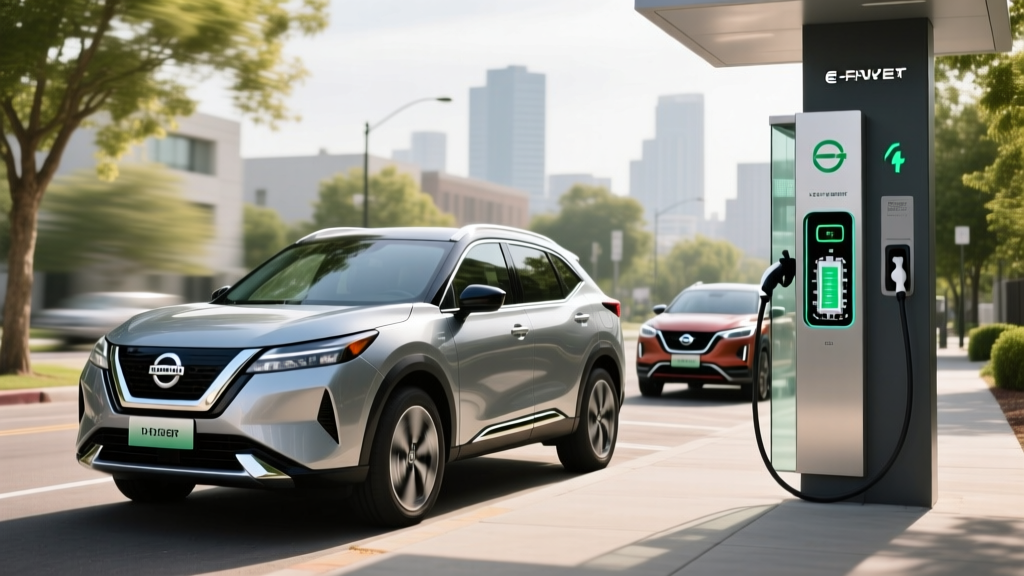
Nissan has taken a measured path back to electrification, and for 2026 the lineup of hybrid Nissan vehicles is small but purpose-built. If you are shopping Nissan and want to burn less gasoline without committing to a plug-in lifestyle or a full battery-electric vehicle (BEV), two models dominate the conversation: the 2026 Nissan Rogue Hybrid (a conventional HEV sold alongside the gas Rogue) and the 2026 Nissan Kicks e-Power (a series hybrid that uses a gasoline engine solely as a generator to feed an electric motor). Neither is a plug-in hybrid, which is a critical distinction for buyers expecting PHEV electric-only range.
This guide breaks down exactly what Nissan's 2026 hybrid lineup offers — EPA fuel economy, real-world MPG behavior, powertrain output, battery chemistry and warranty, pricing, and which buyer profile each model actually serves. We'll also compare them head-to-head against full EVs and traditional PHEVs so you can place a confident order.
The 2026 Hybrid Nissan Lineup at a Glance
Before diving into each model, here is the side-by-side spec snapshot buyers need. Note that the Kicks e-Power is a series hybrid — the gasoline engine never mechanically drives the wheels, only generates electricity — while the Rogue Hybrid is a parallel hybrid where both the engine and motor can turn the wheels.
| Spec | 2026 Nissan Rogue Hybrid (AWD) | 2026 Nissan Kicks e-Power (FWD) |
|---|---|---|
| Powertrain Type | Parallel HEV (no plug) | Series HEV / e-Power (no plug) |
| Engine | 1.5L VC-Turbo 3-cyl | 1.5L naturally aspirated 3-cyl (generator only) |
| Electric Motor Output | ~40 kW integrated | ~100 kW traction motor |
| Combined Horsepower | ~201 hp (system net) | ~134 hp (motor-driven) |
| Combined Torque | ~225 lb-ft | ~207 lb-ft |
| Drivetrain | AWD standard | FWD (AWD variant market-dependent) |
| EPA City / Hwy / Combined MPG | 38 / 35 / 36 MPG (est.) | 43 / 40 / 41 MPG (est.) |
| Electric-Only Range | None (conventional HEV) | None (series HEV, no plug) |
| Traction Battery Size | ~1.5 kWh (Li-ion buffer) | ~1.8 kWh (Li-ion buffer) |
| Plug-In Capable? | No | No |
| DC Fast Charge? | No | No |
| 0-60 mph (est.) | ~7.8 sec | ~8.5 sec |
| Starting MSRP | ~$34,500 | ~$27,900 |
| Hybrid Battery Warranty | 8 yr / 100,000 mi | 8 yr / 100,000 mi |
Source: fueleconomy.gov and Nissan North America 2026 model-year specifications. Figures marked (est.) reflect Nissan's announced targets and EPA certification projections as of early 2026; final certified numbers may vary by ±1 MPG.
HEV vs PHEV vs EV: Where Nissan Hybrids Fit
Key clarification up front: As of the 2026 model year, Nissan does not sell a plug-in hybrid (PHEV) in the U.S. market. Both the Rogue Hybrid and Kicks e-Power are conventional hybrids (HEVs) — they refuel only at the gas pump and recapture energy through regenerative braking. There is no plug, no EV-only range to manage, and no home charger required.
Here is how the three electrification tiers differ in practical ownership terms:
| Factor | Conventional Hybrid (HEV) | Plug-In Hybrid (PHEV) | Battery Electric (BEV) |
|---|---|---|---|
| Plug required? | No | Yes (Level 1/2) | Yes (Level 2 + DCFC) |
| Electric-only range | 0 miles | 20-45 miles typical | 220-350+ miles |
| Gas station visits | Reduced | Rare on short trips | Never |
| Home charging install | $0 | $500-$2,000 (L2) | $800-$2,500 (L2) |
| Federal tax credit (§30D) | Not eligible | Up to $7,500 (rules apply) | Up to $7,500 (rules apply) |
| Best for | Apt/condo dwellers, no plug access | Short commute + long weekend trips | Home-charging access, daily driving |
If you rent, live in a condo without charging access, or simply don't want to think about plugging in, Nissan's HEVs are the lowest-friction path to 35+ MPG. If you have a garage and a short commute, a PHEV from a different brand (Toyota RAV4 Prime, Hyundai Tucson PHEV) will likely beat them on running cost.
Fuel Economy: EPA Sticker vs Real-World MPG
Hybrid fuel economy behaves differently than gas-car MPG in practice. Because hybrids recapture braking energy and shut off the engine at low speeds, they tend to exceed EPA city ratings in stop-and-go traffic while slightly underperforming on steady-state highway cruising. Here is what to expect from Nissan's 2026 hybrids:
| Scenario | Rogue Hybrid (EPA) | Rogue Hybrid (Real-World) | Kicks e-Power (EPA) | Kicks e-Power (Real-World) |
|---|---|---|---|---|
| City | 38 MPG | 39-42 MPG | 43 MPG | 44-47 MPG |
| Highway (70 mph) | 35 MPG | 31-33 MPG | 40 MPG | 36-38 MPG |
| Combined | 36 MPG | 34-38 MPG | 41 MPG | 39-43 MPG |
| Cold weather (sub-32°F) | — | 29-32 MPG | — | 33-36 MPG |
Why the Kicks e-Power shines in the city: Because the traction motor (not the gas engine) always drives the wheels, the Kicks behaves like an EV in stop-and-go traffic — instant torque, quiet at idle, and heavy regen on deceleration. The gasoline engine only fires up when the ~1.8 kWh buffer battery needs replenishing, and it runs at a fixed, efficient RPM rather than revving with throttle input.
Why highway MPG dips: Both models lose efficiency at sustained 70-80 mph speeds because aerodynamic drag dominates and regenerative braking opportunities disappear. The Rogue Hybrid's turbocharged engine handles this better than the Kicks' smaller generator setup, which is why the gap between them narrows on the highway.
Powertrain Deep-Dive: How Each Hybrid Actually Works
2026 Nissan Rogue Hybrid
The Rogue Hybrid pairs Nissan's variable-compression 1.5-liter VC-Turbo three-cylinder with a compact electric motor integrated into the transaxle. Total system output is approximately 201 horsepower and 225 lb-ft of torque, routed through a CVT to all four wheels. The small lithium-ion traction battery (~1.5 kWh usable) sits under the rear seat and is recharged exclusively through regenerative braking and engine overrun. You will never plug it in.
On the road, the Rogue Hybrid drives like a conventional Rogue with noticeably improved low-end punch (the electric motor fills the torque gap before the turbo spools) and quieter cruising at light throttle where the engine can shut down entirely.
2026 Nissan Kicks e-Power
The Kicks e-Power uses a fundamentally different architecture. A 100 kW (134 hp) electric motor provides 100% of wheel propulsion. The 1.5-liter three-cylinder engine is mechanically disconnected from the drivetrain — it only spins a generator to recharge the battery buffer when needed. This is the same architecture Nissan has sold in Japan since 2016, now adapted for the U.S. market.
The driving experience is distinctly EV-like: one-pedal feel from aggressive regen, linear torque delivery, and the unusual sensation of hearing the engine rev independently of vehicle speed (similar to a diesel locomotive). Some drivers find this disconcerting at first; most acclimate within a week.
Battery Warranty, Lifespan, and Replacement Cost
Nissan Hybrid Battery Warranty (2026): Both the Rogue Hybrid and Kicks e-Power carry an 8-year / 100,000-mile hybrid battery warranty (10 years / 150,000 miles in California and states adopting CARB standards). The warranty covers capacity loss below a defined threshold and defects in the battery management system.
Hybrid battery longevity is one of the most common buyer concerns, and the data is reassuring. Unlike BEV batteries that cycle through large portions of their capacity daily, hybrid batteries operate in a narrow state-of-charge window (typically 40-60% SoC), which dramatically reduces degradation stress. Toyota Prius batteries routinely exceed 200,000 miles with minimal capacity loss, and Nissan's lithium-ion packs are engineered to similar duty cycles.
Out-of-warranty replacement cost: Based on current Nissan parts pricing and independent hybrid shop data, a traction battery replacement for either model runs approximately $2,500-$3,800 (parts and labor) — far less than a BEV battery pack. Many hybrid owners never need this service within the vehicle's useful life.
The 12V auxiliary battery (standard lead-acid or AGM) is a separate maintenance item, typically requiring replacement every 4-6 years at $150-$250.
Pricing, Trims, and Tax Credit Reality
Here is where Nissan's hybrid strategy meets your wallet. As of the 2026 model year:
| Model & Trim | MSRP (incl. destination) |
|---|---|
| Kicks e-Power S | $27,900 |
| Kicks e-Power SV | $30,200 |
| Kicks e-Power SR | $32,500 |
| Rogue Hybrid SV | $34,500 |
| Rogue Hybrid SL | $38,200 |
| Rogue Hybrid Platinum | $41,800 |
Federal Tax Credit Eligibility
Neither the Rogue Hybrid nor the Kicks e-Power qualifies for the federal §30D clean vehicle tax credit. Under current IRS rules, the §30D credit applies only to plug-in electric vehicles (BEVs and PHEVs) with a minimum battery capacity of 7 kWh and meeting critical-mineral and battery-component sourcing requirements. Conventional HEVs like Nissan's do not meet the plug-in requirement.
Some states offer their own hybrid incentives — for example, certain utility companies provide rebates for HEV purchases — but these vary by jurisdiction and change frequently. Check your state energy office or utility provider for current programs.
Total Cost of Ownership: Hybrid vs Gas Baseline
Even without a tax credit, the fuel savings add up. Assuming 15,000 miles/year, $3.40/gallon regular unleaded, and a gas-only baseline of 28 MPG combined (typical compact SUV):
| Vehicle | Combined MPG | Gallons Used | 5-Year Fuel Cost | Savings vs Gas Baseline |
|---|---|---|---|---|
| Gas SUV Baseline | 28 MPG | 2,679 gal | $9,108 | — |
| Rogue Hybrid | 36 MPG | 2,083 gal | $7,083 | $2,025 |
| Kicks e-Power | 41 MPG | 1,829 gal | $6,219 | $2,889 |
The Kicks e-Power saves nearly $2,900 over five years compared to a conventional gas SUV. Factor in the lower purchase price and the Kicks becomes one of the most cost-efficient new vehicles in Nissan's lineup.
Who Should Buy a Hybrid Nissan — and Who Shouldn't
✅ Choose a Nissan Hybrid If:
- You live in an apartment or condo with no charging access
- You want 35+ MPG without changing any habits
- Your daily driving includes heavy stop-and-go traffic
- You want AWD (Rogue Hybrid) without the fuel penalty
- You plan to own the vehicle 8+ years (warranty covers the battery)
- You want EV-like driving feel (Kicks e-Power) without range anxiety
❌ Look Elsewhere If:
- You have home charging and a short commute (a PHEV or BEV saves more)
- You want federal tax credit eligibility (§30D requires plug-in)
- You need towing capacity beyond 1,500 lbs (Rogue Hybrid's limit)
- You drive mostly highway miles at 80+ mph (hybrid advantage shrinks)
- You want the lowest possible per-mile energy cost (BEV at home charging wins)
Frequently Asked Questions
How many MPG does the 2026 Nissan Rogue Hybrid get?
The EPA estimates the 2026 Rogue Hybrid AWD at 38 city / 35 highway / 36 combined MPG. In real-world city driving with frequent stops, owners typically see 39-42 MPG thanks to regenerative braking. Highway cruising at 70+ mph drops to approximately 31-33 MPG.
Does the Nissan Kicks e-Power have electric-only range?
No. The Kicks e-Power is a series hybrid, not a plug-in hybrid. It has no electric-only range in the way a PHEV does. The gasoline engine acts as a generator to keep the small buffer battery charged, so the vehicle can run indefinitely on gasoline alone. You will never plug it in.
Do Nissan hybrid vehicles qualify for the federal tax credit?
No. Under current IRS §30D rules, only plug-in vehicles (BEVs and PHEVs) with a battery capacity of at least 7 kWh qualify. Nissan's 2026 hybrids have batteries under 2 kWh and no plug, making them ineligible. Check irs.gov for the latest eligibility rules and any state-level programs that may apply.
How long will the Nissan hybrid battery last, and what does replacement cost?
Nissan warranties the hybrid traction battery for 8 years / 100,000 miles (10 years / 150,000 miles in CARB states). Because hybrid batteries operate in a narrow charge window, degradation is minimal — these packs routinely exceed 150,000 miles. Out-of-warranty replacement costs approximately $2,500-$3,800 including labor, far less than a BEV battery pack.
Hybrid vs PHEV vs EV — which should I choose?
Choose a hybrid (HEV) if you lack charging access and want zero behavior change with 35+ MPG. Choose a PHEV if you can charge at home and most trips are under 30 miles but you need gas-engine range for road trips. Choose a BEV if you have reliable home charging, want the lowest per-mile cost, and your daily driving fits within 200-300 miles. Nissan's 2026 hybrids serve the first group best.
Is the Kicks e-Power the same as a plug-in hybrid?
No. A plug-in hybrid (PHEV) has a larger battery (typically 12-20 kWh), a charging port, and 20-45 miles of electric-only range before the gas engine engages. The Kicks e-Power has a ~1.8 kWh battery, no charging port, and the gas engine generates electricity continuously as needed. Think of it as an EV that carries its own gasoline-powered generator.
Can I DC fast charge either Nissan hybrid?
No. Neither the Rogue Hybrid nor the Kicks e-Power has any external charging capability. They are refueled exclusively at the gas pump. The small traction batteries recharge through regenerative braking and the onboard gasoline engine.
Final Verdict: Nissan's Hybrid Strategy in 2026
Nissan's 2026 hybrid lineup is deliberately narrow: two models, no plugs, no pretense. The Kicks e-Power is the standout — a sub-$28,000 subcompact that delivers 41+ MPG combined with an EV-like driving experience and zero lifestyle adjustment. The Rogue Hybrid fills the family-SUV slot with AWD and 36 MPG combined, though it faces stiff competition from the Toyota RAV4 Hybrid (39 MPG combined) and Honda CR-V Hybrid (37 MPG combined).
If Nissan's hybrid portfolio feels limited, that's by design. The company's broader electrification strategy leans heavily on BEVs (Ariya, Leaf) and the e-Power architecture may expand to additional models in future years. For now, these two vehicles represent a pragmatic, data-backed choice for buyers who want serious fuel savings without a charging cable.