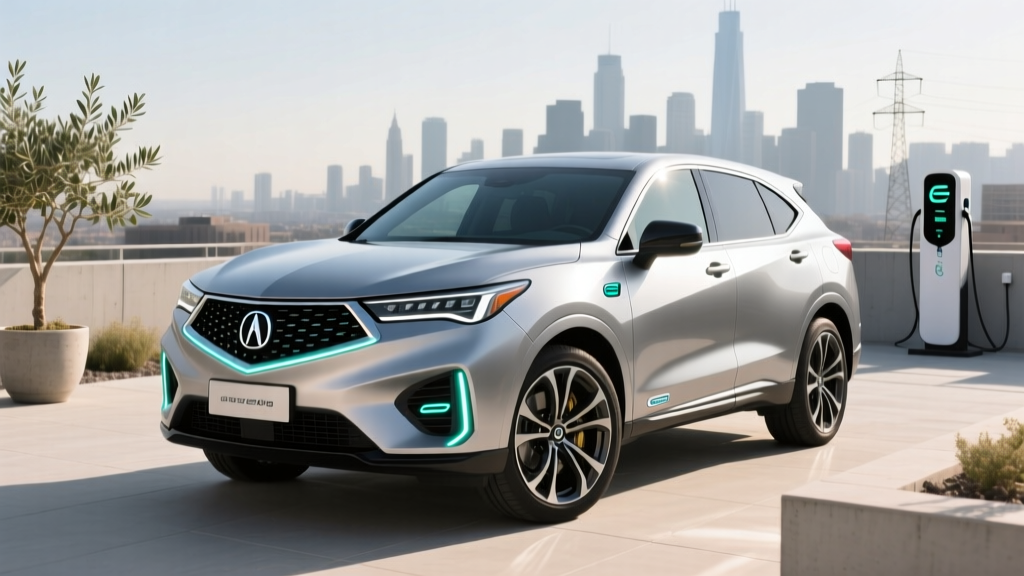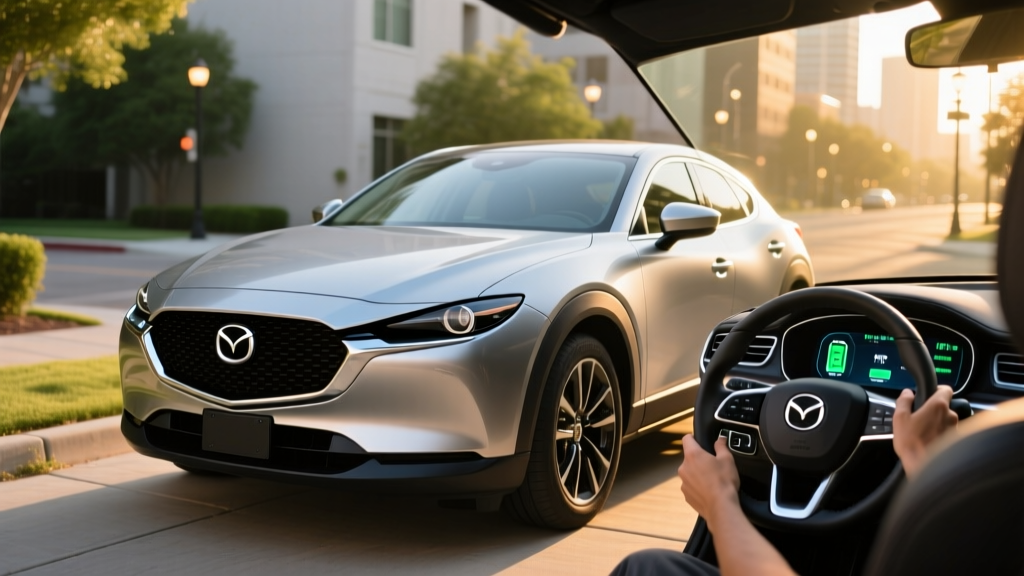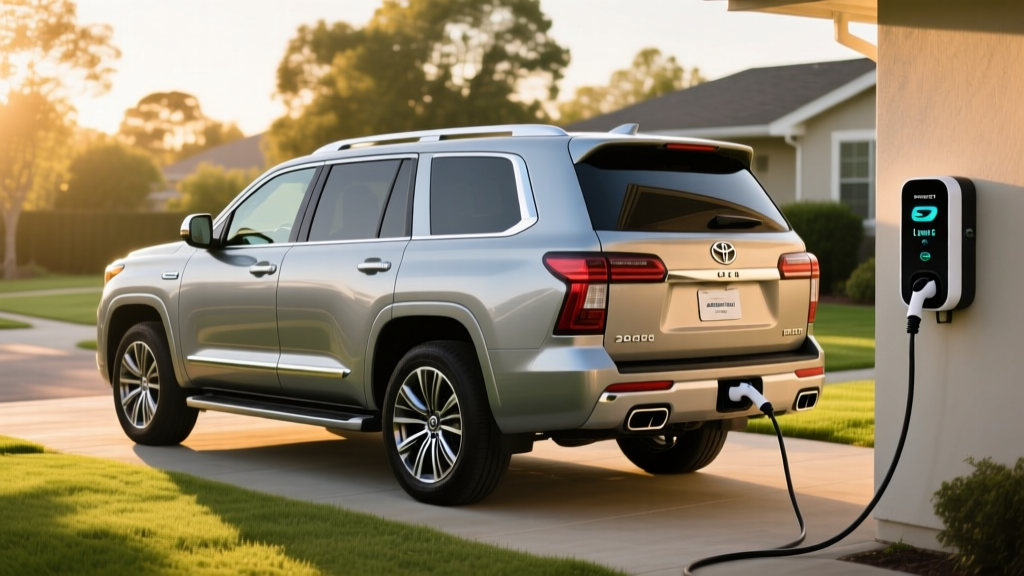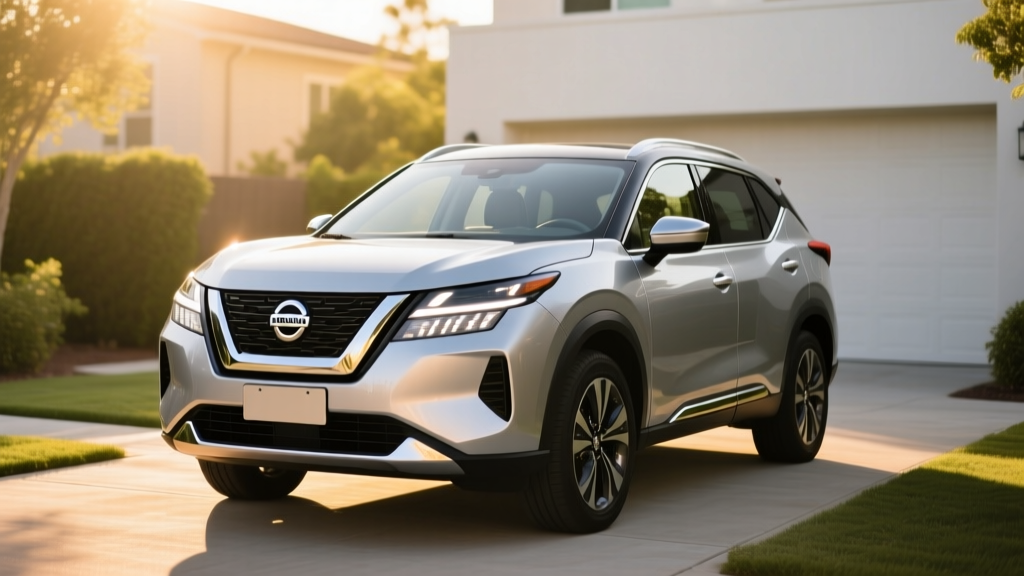
If you've been searching for a Nissan Rogue hybrid SUV, you've likely noticed something confusing: Nissan's current U.S. lineup doesn't include a traditional hybrid or plug-in hybrid version of its best-selling compact crossover. For the 2026 model year, Nissan continues to offer the Rogue exclusively with a 1.5-liter VC-Turbo three-cylinder gasoline engine — no electrified variant is available in the American market.
That doesn't mean Nissan has abandoned hybrid technology. The company sells the Rogue e-POWER (a series hybrid) in Japan and Australia, and the X-Trail e-POWER in Europe. But U.S. buyers looking for a Nissan Rogue hybrid SUV are currently out of luck domestically. This guide covers what exists globally, what the e-POWER system actually does, why it hasn't come stateside, and — most importantly — what you should buy instead if you want hybrid efficiency in a compact SUV.
What Is the Nissan Rogue e-POWER (Series Hybrid)?
The closest thing to a Nissan Rogue hybrid SUV is the Rogue e-POWER, sold in select international markets. Unlike a conventional parallel hybrid (like the Toyota RAV4 Hybrid) where both the gas engine and electric motor can drive the wheels, the e-POWER system is a series hybrid: the gasoline engine never directly turns the wheels. Instead, it acts solely as a generator to produce electricity, which either charges a small battery or feeds the electric motor that actually drives the vehicle.
A conventional hybrid (HEV) like the RAV4 Hybrid uses both engine and motor to drive wheels, recharging its small battery through regenerative braking and the engine — no plug required. A plug-in hybrid (PHEV) like the Toyota RAV4 Prime adds a larger battery you can charge from a wall outlet, giving 30-40 miles of electric-only range before the gas engine kicks in. A series hybrid like Nissan's e-POWER is engine-on-the-wheels-off: the gas engine only generates electricity, and the motor handles 100% of propulsion. None of these are full battery-electric vehicles (BEVs).
Global Rogue e-POWER Specs: MPG, Powertrain, and Battery
Because the Rogue e-POWER isn't sold in the U.S., there are no EPA ratings for it. The figures below come from Nissan's international specifications and WLTP testing, which tends to rate efficiency more optimistically than the EPA cycle.
| Spec | Value |
|---|---|
| Powertrain Type | Series hybrid (e-POWER) |
| Gas Engine | 1.5L VC-Turbo 3-cylinder (generator only) |
| Electric Motor Output | ~150 kW (201 hp) front / up to 250 kW (335 hp) AWD combined |
| Battery Capacity | ~1.8 kWh (small buffer, not plug-in) |
| Plug-In Capable? | No — self-charging HEV only |
| Electric-Only Range | ~1-2 miles (low-speed/creep only) |
| WLTP Fuel Economy | ~5.3 L/100 km (~44 MPG) — FWD variant |
| Estimated EPA Equivalent | ~36-39 MPG combined (estimated, not EPA-tested) |
| 0-100 km/h (0-62 mph) | ~7.9 seconds (FWD) |
| U.S. Availability | Not available — no announced plans |
The e-POWER's tiny 1.8 kWh battery means this is emphatically not a plug-in hybrid. You cannot charge it from a wall outlet, and it offers no meaningful electric-only range. Its advantage is that the gas engine can run at its most efficient RPM since it's decoupled from road speed — functioning purely as a generator. The result is fuel economy that's competitive with parallel hybrids, with driving feel closer to an EV (instant electric torque, no traditional gear shifts).
Why Isn't the Rogue e-POWER Sold in the United States?
Nissan has not officially detailed why e-POWER hasn't come to the U.S. Rogue lineup, but several factors are likely at play:
- U.S. emissions and OBD compliance: Series hybrids have unique certification requirements with the EPA and CARB. The engine runs at fixed RPMs as a generator, which complicates emissions testing protocols designed around conventional powertrains.
- Market positioning: Nissan's U.S. strategy has pivoted toward full battery-electric vehicles (the Ariya crossover) rather than investing in hybrid certification for a single model.
- Competitive disadvantage: The U.S. compact hybrid SUV segment is dominated by the Toyota RAV4 Hybrid (~40 MPG EPA combined), Honda CR-V Hybrid (~40 MPG combined), and Ford Escape Hybrid (~39 MPG combined). Nissan's e-POWER, at an estimated 36-39 MPG, wouldn't lead the segment.
- No tax credit advantage: Because e-POWER isn't a PHEV, it wouldn't qualify for the federal §30D plug-in vehicle credit, removing a key purchase incentive that PHEV competitors can leverage.
U.S. Alternatives: Compact Hybrid SUVs That Actually Exist
If you want a hybrid compact SUV you can actually buy in the U.S. right now, here's how the top contenders stack up against what the Rogue e-POWER would offer:
| Model | City MPG | Hwy MPG | Combined MPG | Combined HP | Base MSRP |
|---|---|---|---|---|---|
| Toyota RAV4 Hybrid | 41 | 38 | 40 | 219 | ~$33,500 |
| Honda CR-V Hybrid | 43 | 36 | 40 | 204 | ~$35,500 |
| Ford Escape Hybrid | 42 | 36 | 39 | 198 | ~$34,000 |
| Hyundai Tucson Hybrid | 38 | 38 | 38 | 226 | ~$34,200 |
| Nissan Rogue e-POWER (est.) | ~38* | ~36* | ~37* | 201 | N/A |
* Estimated EPA-equivalent figures based on WLTP data. Not EPA-certified. Source for U.S. models: fueleconomy.gov.
The data is clear: every established hybrid compact SUV in the U.S. market matches or beats the Rogue e-POWER's estimated efficiency while offering full EPA certification, established dealer service networks, and proven long-term reliability data.
The 2026 Nissan Rogue Gas Model: What You Can Actually Buy
For U.S. buyers committed to the Nissan brand, the 2026 Rogue is available with a 1.5-liter VC-Turbo three-cylinder engine producing 201 hp and 225 lb-ft of torque, paired with a CVT. Here's how the gas-only Rogue stacks up:
| Drivetrain | City MPG | Hwy MPG | Combined MPG |
|---|---|---|---|
| FWD | 30 | 37 | 33 |
| AWD | 28 | 35 | 31 |
Source: fueleconomy.gov — EPA estimates for 2025-2026 model year Nissan Rogue.
The gas Rogue's 31-33 MPG combined trails the hybrid competition by 6-9 MPG. Over 15,000 annual miles at $3.40/gallon, that's roughly $250-$400 more per year in fuel costs compared to a RAV4 Hybrid or CR-V Hybrid. Over a typical 7-year ownership period, you're looking at $1,750-$2,800 in additional fuel expense — enough to offset much of the Rogue's competitive base pricing.
Hybrid vs PHEV vs Full EV: Which Should You Choose?
If you came here researching a Nissan Rogue hybrid SUV, you're clearly interested in reducing fuel costs and emissions. Here's a practical decision framework:
- You don't have access to home or workplace charging
- You want zero change to your fueling routine — just fill up at gas stations
- You drive 12,000-20,000 miles/year and want 38-40 MPG without thinking about it
- Your budget is $33,000-$38,000 and you want proven reliability
Top picks: Toyota RAV4 Hybrid, Honda CR-V Hybrid
- You can install a Level 2 charger at home (240V, ~$500-$1,500 installation)
- Your daily commute is under 35 miles round-trip — you could drive mostly on electricity
- You still want gas-engine range for road trips without range anxiety
- You want to qualify for the federal §30D tax credit (up to $7,500 for eligible PHEVs with sufficient battery capacity)
Top picks: Toyota RAV4 Prime (42 mi electric range), Hyundai Tucson PHEV (33 mi electric range)
- You have reliable home charging (Level 2 strongly recommended)
- Your daily driving is predictable and within the vehicle's real-world range
- You want to eliminate gas station visits entirely and minimize maintenance
- You can take advantage of the full $7,500 federal tax credit (subject to MSRP caps, income limits, and battery sourcing requirements per IRS §30D rules)
Top picks: Tesla Model Y, Hyundai Ioniq 5, Nissan Ariya
Reliability and Battery Warranty: What Hybrid Buyers Need to Know
Since the Nissan Rogue hybrid (e-POWER) isn't available in the U.S., we can't speak to its domestic reliability record. However, Nissan's hybrid system has been in use in Japan since 2016 (first in the Note e-POWER), and the technology is mechanically simpler than parallel hybrids — there's no traditional transmission, and the engine operates within a narrow, optimized RPM band, reducing wear.
For the U.S. hybrid alternatives, federal law mandates that hybrid battery packs carry a minimum warranty of 8 years/100,000 miles (extended to 10 years/150,000 miles in CARB states including California, New York, Massachusetts, and others). Toyota, Honda, Hyundai, and Ford all meet or exceed this standard.
Hybrid battery replacement costs for compact SUVs typically range from $2,000 to $4,500 depending on the model, but real-world data shows most hybrid batteries last well beyond 150,000 miles with minimal degradation, since the battery is small and rarely cycles through full charge/discharge.
The Nissan Ariya (Nissan's all-electric crossover sold in the U.S.) carries an 8-year/100,000-mile battery warranty with a capacity retention threshold of 66% — but this is a full EV with a large traction battery, not comparable to the small buffer battery in a hybrid system.
Tax Credit Eligibility: Does Any Nissan Qualify?
The gas-only Nissan Rogue does not qualify for any federal electrified vehicle tax credit. It is a conventional internal combustion vehicle with no hybrid or plug-in capability.
For context on what does qualify under the current IRS §30D Clean Vehicle Credit:
- PHEVs with at least 7 kWh of battery capacity may qualify for up to $7,500, subject to MSRP caps ($80,000 for SUVs), buyer income limits ($300,000 joint / $150,000 individual), and critical mineral/battery component sourcing requirements.
- Conventional hybrids (HEVs) like the RAV4 Hybrid do not qualify — the credit is exclusively for plug-in vehicles.
- The credit can now be transferred to the dealer at point of sale, effectively reducing your purchase price upfront rather than waiting for a tax refund.
The Nissan Ariya (all-electric) may qualify for partial or full §30D credit depending on trim, your income, and current battery sourcing compliance — but eligibility shifts frequently. Always verify current status on the IRS website or with a tax professional before purchasing.
The Bottom Line: What Should You Buy?
The Nissan Rogue hybrid SUV (e-POWER) is a competent series hybrid available internationally, offering roughly 37-44 MPG (depending on test cycle) with EV-like driving feel. However, it is not available in the United States, and Nissan has not announced plans to bring it to the U.S. market.
U.S. buyers who want hybrid efficiency in a compact SUV should look to the Toyota RAV4 Hybrid (40 MPG combined, ~$33,500), Honda CR-V Hybrid (40 MPG combined, ~$35,500), or Ford Escape Hybrid (39 MPG combined, ~$34,000). If you want plug-in capability and potential tax credit eligibility, the Toyota RAV4 Prime (42 miles electric-only, PHEV) is the segment benchmark — if you can find one in stock.
If you're loyal to Nissan and want to reduce fuel consumption, the Nissan Ariya all-electric crossover is the brand's current electrified offering, with up to 304 miles of EPA range and available federal tax credit eligibility.
Frequently Asked Questions
Is there a hybrid Nissan Rogue available in the U.S.?
No. As of the 2026 model year, Nissan does not sell a hybrid or plug-in hybrid version of the Rogue in the United States. The Rogue e-POWER series hybrid is available in Japan, Australia, and some other markets, but not in North America.
How many MPG does the Nissan Rogue get?
The 2026 Nissan Rogue with the 1.5L VC-Turbo engine gets an EPA-estimated 30 city / 37 highway / 33 combined MPG with front-wheel drive, or 28/35/31 MPG with all-wheel drive. These figures are 6-9 MPG lower than competing hybrid compact SUVs.
Does the Nissan Rogue qualify for any tax credit?
No. The gas-only Nissan Rogue does not qualify for the federal §30D Clean Vehicle Credit, which is reserved for plug-in electric vehicles (PHEVs and BEVs). There is no hybrid or plug-in Rogue variant available in the U.S. that would qualify.
What is the best hybrid compact SUV to buy instead?
Based on EPA fuel economy, reliability history, and value, the Toyota RAV4 Hybrid (40 MPG combined, 219 hp, starting ~$33,500) and Honda CR-V Hybrid (40 MPG combined, 204 hp, starting ~$35,500) are the top choices. Both carry 8-year/100,000-mile hybrid battery warranties (10 years/150,000 miles in CARB states).
Will Nissan bring the e-POWER hybrid to the U.S.?
Nissan has not announced any plans to introduce the e-POWER system in the U.S. Rogue lineup. The company's American electrification strategy has focused on the Ariya all-electric crossover. While future product plans could change, there is no confirmed timeline for a U.S.-market Rogue hybrid.
Is a series hybrid better than a parallel hybrid?
Not inherently — they're different engineering approaches. A series hybrid (like e-POWER) offers smoother, EV-like acceleration since only the electric motor drives the wheels, and the engine can run at peak efficiency as a generator. A parallel hybrid (like the RAV4 Hybrid) can be more efficient at sustained highway speeds because the engine can directly drive the wheels without the energy conversion loss of generating electricity first. In real-world mixed driving, both systems deliver comparable fuel economy in the 37-42 MPG range for compact SUVs.