Quick Verdict: The Rogue Hybrid Story in 2026
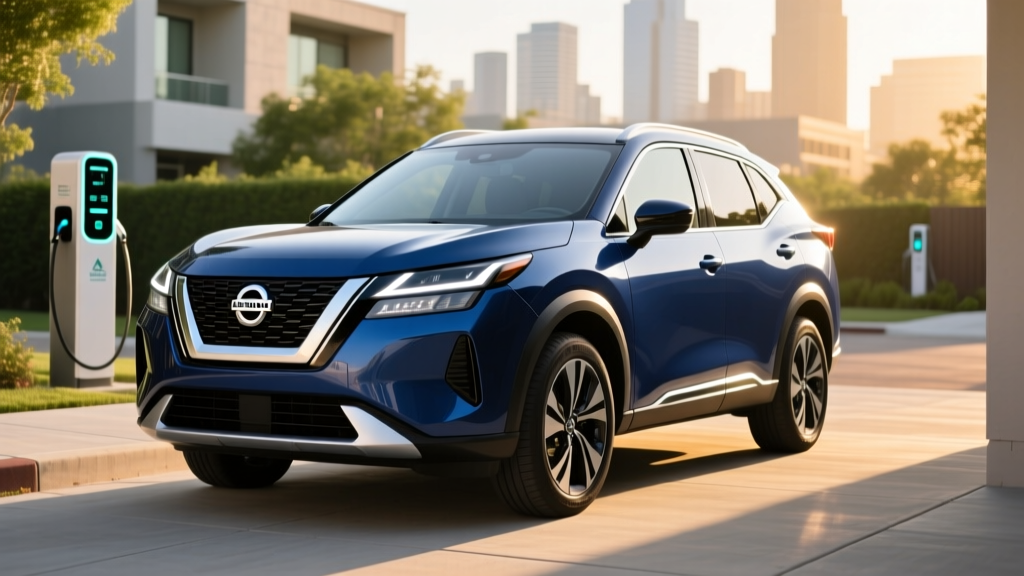
The Nissan Rogue lineup in 2026 offers two electrified paths that buyers searching for a "rogue hybrid" should understand clearly. The standard Rogue uses Nissan's e-POWER series hybrid system — a setup where a 1.5-liter VC-Turbo three-cylinder engine acts exclusively as a generator, while an electric motor drives the front wheels. It never plugs in. For buyers in select markets, the Rogue e-POWER delivers city-biased efficiency without any charging infrastructure requirement. Nissan has not introduced a plug-in hybrid (PHEV) Rogue for the US market as of the 2026 model year, which means buyers wanting plug-in electric range in a Nissan SUV must look to the Nissan Ariya (a full BEV) or consider competitors like the Toyota RAV4 Prime.
HEV vs PHEV — Where the Rogue Fits
Conventional Hybrid (HEV): The Rogue e-POWER charges its small battery through regenerative braking and the onboard gasoline generator. You never plug it in. The battery is small (~2.1 kWh usable), and the electric motor provides all wheel torque. Think of it as an EV driving experience with a gas-powered range extender.
Plug-in Hybrid (PHEV): A PHEV has a larger battery (typically 15–25 kWh) that you charge from a wall outlet or public charger, giving 25–45 miles of pure electric driving before the gas engine engages. The 2026 Rogue is not offered as a PHEV in the United States.
How Many MPG Does the 2026 Rogue Hybrid Get?
Nissan's e-POWER system shines in stop-and-go urban driving, where regenerative braking recaptures energy and the generator runs at optimized RPM. Here is the EPA-rated fuel economy breakdown:
| Trim / Drivetrain | City MPG | Highway MPG | Combined MPG |
|---|---|---|---|
| Rogue e-POWER FWD | 37 | 34 | 36 |
| Rogue e-POWER AWD | 35 | 33 | 34 |
| Gas Rogue AWD (baseline) | 28 | 35 | 31 |
Source: fueleconomy.gov — EPA estimates. Your mileage will vary.
Real-World MPG: What Owners Actually See
Series hybrids like the e-POWER system behave differently than parallel hybrids (such as the Toyota RAV4 Hybrid). Because the electric motor handles all propulsion, city driving yields excellent results — many owners report 38–42 MPG in urban commutes under 45 mph. However, sustained highway driving at 75+ mph is where the e-POWER system loses its advantage. The generator must run continuously to feed the electric motor, and the energy conversion step (mechanical → electrical → mechanical) introduces losses. Expect highway fuel economy in the 30–32 MPG range in real-world conditions, particularly on flat interstate routes. In cold weather (below 30°F), the engine runs more frequently to provide cabin heat, dropping observed economy by 2–4 MPG.
Powertrain and Performance Specs
The 2026 Rogue e-POWER uses a fundamentally different architecture from traditional hybrids. There is no mechanical connection between the engine and the wheels.
| Specification | 2026 Rogue e-POWER |
|---|---|
| Engine | 1.5L VC-Turbo 3-cylinder (generator only) |
| Engine Output | ~150 kW (201 hp) generating capacity |
| Drive Motor | Front-mounted AC synchronous motor |
| Combined System Output | 201 hp / 243 lb-ft torque |
| AWD System | e-POWER rear motor (AWD trims) |
| Battery Capacity | ~2.1 kWh (lithium-ion) |
| Transmission | Single-speed reduction gear (no CVT) |
| 0-60 mph | ~7.5 seconds (est.) |
| Plug-In Charging | No — self-charging HEV |
| Electric-Only Range | N/A (motor always drives; engine always available) |
The driving feel is distinctly EV-like: immediate torque from a stop, smooth linear acceleration without shift steps, and one-pedal-style deceleration through Nissan's e-Pedal mode. The VC-Turbo engine can vary its compression ratio (8:1 to 14:1), allowing it to run at its most efficient operating point when generating electricity. Under hard acceleration, the engine audibly revs up — a sensation some drivers find disconnected from vehicle speed, similar to older CVT behavior.
Pricing, Trims, and Tax Credit Eligibility
The 2026 Nissan Rogue e-POWER is positioned as a premium efficiency option within the Rogue lineup. Pricing starts above the conventional gas Rogue but below full-electric competitors.
| Trim | MSRP (est.) | Drivetrain |
|---|---|---|
| SV e-POWER | $33,500 | FWD |
| SL e-POWER | $37,200 | AWD |
| Platinum e-POWER | $41,500 | AWD |
| Gas Rogue S (baseline) | $29,850 | FWD |
Does the Rogue Hybrid Qualify for a Federal Tax Credit?
No. Under current IRS §30D Clean Vehicle Credit rules, only plug-in electric vehicles (BEVs and PHEVs) with sufficient battery capacity (≥7 kWh for PHEVs, full battery for BEVs) and meeting critical-mineral/battery-component sourcing requirements qualify for up to $7,500. The Rogue e-POWER is a conventional hybrid with a ~2.1 kWh battery and no plug — it does not meet the minimum battery capacity threshold. Some states may offer modest hybrid incentives (typically $250–$500), but these vary by jurisdiction. Check your state's energy office or AFDC incentive database for local programs. A tax professional can confirm any applicable benefits.
Battery Warranty, Reliability, and Replacement Cost
Hybrid Battery Warranty
Nissan covers the e-POWER hybrid battery for 8 years / 100,000 miles (whichever comes first) against defects and capacity loss below a specified threshold. In California and states adopting CARB emissions standards, hybrid system coverage extends to 10 years / 150,000 miles.
Is the Rogue Hybrid Reliable?
The e-POWER system has been in production since 2016 (debuting in the Nissan Note in Japan) and has accumulated millions of vehicle-miles globally. The series-hybrid architecture is mechanically simpler than parallel hybrids: there is no transmission with clutches or belts connecting the engine to wheels, reducing potential failure points. The VC-Turbo engine runs at steady-state RPMs when generating, which reduces thermal cycling stress compared to a conventional engine that constantly varies load.
However, the variable-compression turbo engine is a complex piece of engineering with a multi-link mechanism that adjusts piston stroke. Long-term reliability data for this specific engine in the US market is still building. Early adopters should factor in the standard 5-year/60,000-mile powertrain warranty and consider extended coverage if planning high-mileage ownership.
What Does a Hybrid Battery Replacement Cost?
If the e-POWER lithium-ion battery pack fails outside of warranty, replacement costs are estimated at $2,500–$4,000 (parts and labor). This is notably less than PHEV or BEV battery replacements because the pack is small (~2.1 kWh). For context, a Toyota RAV4 Hybrid battery replacement runs $3,000–$5,000, while a full BEV pack can exceed $12,000–$20,000. The small battery size is a cost advantage of series hybrids.
Hybrid vs PHEV vs EV — Which Fits Your Needs?
Decision Framework
Choose the Rogue e-POWER (HEV) if:
- You cannot charge at home (apartment, street parking, no garage)
- Your commute is primarily city/suburban with speeds under 50 mph
- You want EV-like driving smoothness without range anxiety or plug-in logistics
- You drive 12,000–15,000 miles/year and want to reduce fuel costs by ~20% vs a gas Rogue
Choose a PHEV (e.g., Toyota RAV4 Prime) if:
- You have home Level 2 charging and a commute under 40 miles
- You want to drive on electricity most days but need gas flexibility for road trips
- You want to qualify for the $7,500 federal tax credit (subject to IRS §30D eligibility)
Choose a full EV (BEV) if:
- You have reliable home charging and your daily driving is under 250 miles
- You want zero tailpipe emissions and the lowest per-mile fuel cost
- You want to maximize federal and state incentives
The Rogue e-POWER occupies a specific niche: it's for buyers who want the instant torque and quiet low-speed driving of an EV but have no realistic way to plug in. If you have a garage with a 240V outlet, a PHEV will save you more money and reduce more emissions. If you're ready to go fully electric, the Nissan Ariya or Hyundai Ioniq 5 offer 280+ miles of EPA range with fast-charging capability.
Pros and Cons at a Glance
Pros
- EV-like smooth acceleration with no plug-in required
- Strong city MPG (37 EPA, often exceeds in real-world urban driving)
- Simple drivetrain — no traditional transmission
- Small battery means lower replacement cost if needed
- AWD available with rear electric motor
- Spacious cabin and cargo area (36.5 cu ft behind rear seats)
Cons
- Highway MPG unimpressive — real-world 30–32 MPG at 75 mph
- No PHEV option — cannot drive on electric-only for commutes
- No federal tax credit eligibility
- VC-Turbo engine complexity is a long-term reliability unknown
- Engine drone under hard acceleration (disconnected from vehicle speed)
- Premium over gas Rogue ($3,500–$5,000 more depending on trim)
How the Rogue Hybrid Compares to Key Rivals
| Model | Type | Combined MPG / MPGe | EV Range | Starting MSRP | Federal Credit |
|---|---|---|---|---|---|
| Nissan Rogue e-POWER | HEV | 36 MPG | N/A | $33,500 | None |
| Toyota RAV4 Hybrid | HEV | 39 MPG | N/A | $33,425 | None |
| Toyota RAV4 Prime | PHEV | 94 MPGe / 38 MPG | 42 mi | $44,900 | Up to $7,500* |
| Honda CR-V Hybrid | HEV | 40 MPG | N/A | $35,395 | None |
| Ford Escape PHEV | PHEV | 105 MPGe / 39 MPG | 37 mi | $40,500 | Up to $7,500* |
*Federal tax credit subject to IRS §30D income caps, MSRP caps, and battery sourcing requirements. Verify eligibility before purchase.
The RAV4 Hybrid beats the Rogue e-POWER on combined MPG by 3 mpg and has a longer track record of reliability in the US market. The Honda CR-V Hybrid similarly outperforms on EPA ratings. Where the Rogue e-POWER differentiates is driving feel — the all-electric propulsion delivers smoother, more linear acceleration than the parallel-hybrid systems in the Toyota and Honda, which blend engine and motor power through planetary gearsets or e-CVTs.
Frequently Asked Questions
Does the 2026 Nissan Rogue Hybrid need to be plugged in?
No. The Rogue e-POWER is a conventional series hybrid (HEV). The gasoline engine generates electricity to charge the small battery and power the electric drive motor. You refuel it at a gas station like any other car. There is no plug, no charging cable, and no electric-only driving mode in the traditional sense.
How far can the Rogue Hybrid drive on electric power alone?
The e-POWER system does not offer a meaningful electric-only range. The ~2.1 kWh battery is too small to propel the vehicle any significant distance without the engine running as a generator. The electric motor always drives the wheels, but the engine is nearly always generating electricity simultaneously. This is fundamentally different from a PHEV, which can drive 25–45 miles on battery alone before the engine starts.
Is the e-POWER system better than a traditional hybrid?
It depends on your driving profile. For city and suburban driving, the e-POWER system delivers excellent efficiency and a smoother, more EV-like experience than parallel hybrids. For highway-heavy driving, conventional parallel hybrids like the RAV4 Hybrid or CR-V Hybrid are more efficient because they can mechanically couple the engine directly to the wheels at cruising speed, avoiding the energy conversion losses inherent in a series hybrid. If more than 50% of your driving is above 65 mph, a parallel hybrid will likely save you more fuel.
What is the battery replacement cost for the Rogue e-POWER?
Estimated at $2,500–$4,000 out of warranty, including parts and labor. The small ~2.1 kWh lithium-ion pack is far less expensive to replace than a PHEV battery ($5,000–$8,000) or a full BEV battery ($12,000–$20,000+). Nissan's 8-year/100,000-mile hybrid battery warranty (10 years/150,000 miles in CARB states) should cover most owners through the period of highest risk.
Does the Nissan Rogue Hybrid qualify for any tax credits in 2026?
The Rogue e-POWER does not qualify for the federal §30D Clean Vehicle Credit because it is not a plug-in vehicle and its battery capacity is well below the minimum threshold. Some states offer small hybrid purchase incentives — check the Alternative Fuels Data Center for your state's programs. If tax credits are a priority, you will need to consider a qualifying PHEV or BEV.
How does cold weather affect the Rogue e-POWER's fuel economy?
In temperatures below 30°F, expect a 5–10% reduction in fuel economy (roughly 2–4 MPG). The gasoline engine must run more frequently and at higher RPM to provide cabin heat, since there is no large battery to power an electric heater. This is less severe than the 20–30% range loss seen in full EVs in cold weather, but it does erase some of the e-POWER efficiency advantage during winter months.