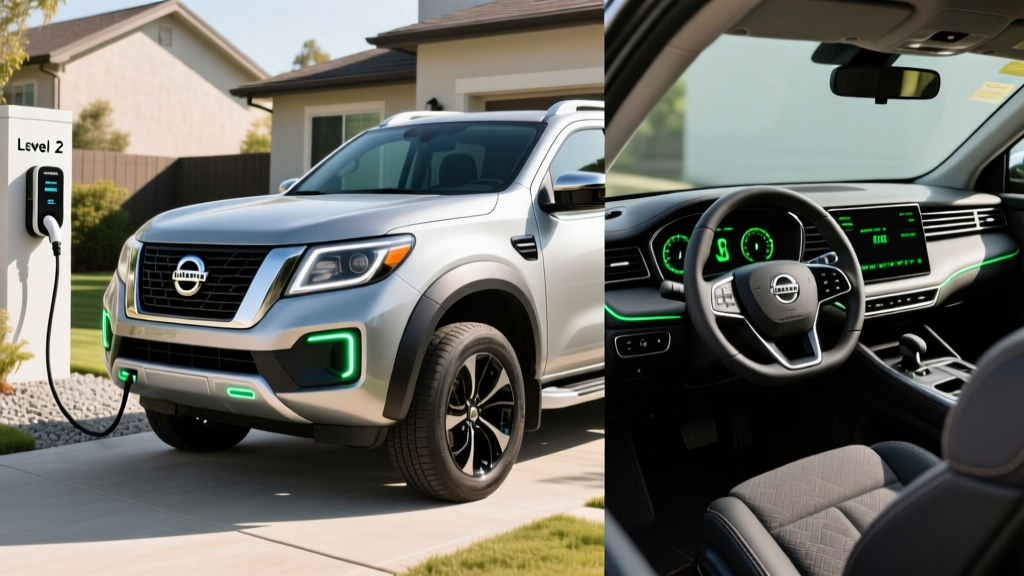
The midsize pickup segment has been slow to embrace electrification, and for buyers eyeing the Nissan Frontier hybrid, patience has been the prevailing strategy. As of the 2026 model year, Nissan continues to offer the Frontier exclusively with its 3.8-liter V6 gasoline engine—no factory hybrid or plug-in hybrid variant is currently on sale in the United States. That hasn't stopped intense speculation and aftermarket interest, so this guide cuts through the noise with hard data on what exists, what's been rumored, and what your real alternatives are if you want an electrified midsize truck.
Does a Nissan Frontier Hybrid Actually Exist in 2026?
Let's be direct: Nissan does not currently sell a hybrid or PHEV Frontier in the U.S. market. The 2026 Nissan Frontier is powered solely by a naturally aspirated 3.8L V6 producing 310 horsepower and 281 lb-ft of torque, paired with a 9-speed automatic transmission. This is confirmed across Nissan's official U.S. lineup and the EPA's Fuel Economy guide.
Nissan has invested heavily in its e-POWER series-hybrid system globally (available in the Note and X-Trail in Japan and Europe), but that technology has not been adapted for the body-on-frame Frontier platform sold in North America. Industry analysts have speculated about a Frontier hybrid arriving in the next generation (potentially 2027-2028), but nothing has been officially announced.
HEV vs. PHEV: What a Frontier Hybrid Would Look Like
When Nissan eventually introduces hybrid tech to the Frontier, it will likely take one of two forms. Understanding the difference is essential for any truck buyer planning ahead:
| Feature | HEV (Conventional Hybrid) | PHEV (Plug-In Hybrid) |
|---|---|---|
| Needs to plug in? | No — charges via regenerative braking and engine | Yes — plug in for electric-only range |
| Battery size | ~1–2 kWh | ~15–25 kWh |
| Electric-only range | None (motor assists engine only) | 20–40 miles typical |
| Fuel economy benefit | +3–8 MPG combined vs. gas equivalent | Significant if you charge daily; otherwise similar to HEV |
| Federal tax credit | None | Up to $7,500 under IRS §30D (if eligible) |
| Charging hardware needed | None | Level 2 home charger recommended |
For a body-on-frame truck like the Frontier, a conventional HEV setup would be the simpler, more likely first step—similar to the Toyota Tacoma's i-FORCE MAX hybrid powertrain. A PHEV variant would add weight, cost, and complexity, but would unlock electric-only commuting and potential tax credits.
Current 2026 Frontier Fuel Economy: The Baseline
Since no hybrid exists, here are the actual EPA figures for the 2026 Nissan Frontier with its standard 3.8L V6:
| Drivetrain | City MPG | Highway MPG | Combined MPG |
|---|---|---|---|
| 4x2 (RWD) | 18 | 24 | 20 |
| 4x4 (AWD) | 17 | 22 | 19 |
Source: fueleconomy.gov
What a Frontier Hybrid Powertrain Could Look Like
Based on Nissan's existing e-POWER architecture and the competitive landscape (Toyota Tacoma i-FORCE MAX, Ford Maverick hybrid), a plausible Frontier hybrid would feature:
- Engine: Turbocharged 2.0L–2.5L inline-4 paired with an electric motor integrated into the transmission bell housing
- Combined output: Estimated 300–340 horsepower and 350–400 lb-ft of torque (matching or exceeding the current V6)
- Transmission: 6-speed or 9-speed automatic with hybrid-optimized shift mapping
- Battery: ~1.5–2.0 kWh lithium-ion pack (HEV) or ~18–22 kWh (if PHEV)
- Regenerative braking: Multi-level regen with one-pedal driving capability in city conditions
Nissan's global e-POWER system is a series hybrid—the gasoline engine acts solely as a generator and never directly drives the wheels. This gives EV-like acceleration feel without range anxiety. However, adapting this to a 4,500+ lb truck platform with towing requirements presents engineering challenges that may push Nissan toward a parallel-hybrid design (engine + motor both drive wheels) instead.
Hybrid vs. PHEV vs. Full EV: Which Truck Fits You?
If you're shopping for an electrified midsize truck today, here's a practical decision framework:
Choose a Hybrid (HEV) if:
- You want better MPG with zero behavior change
- You don't have home charging access
- You tow regularly and want proven simplicity
- You drive 15,000+ miles/year in mixed city/highway
Choose a PHEV if:
- You have a garage or driveway for a Level 2 charger
- Your daily commute is under 30 miles round-trip
- You want EV-like commuting but need gas range for weekends
- You qualify for the §30D federal tax credit
Choose a Full EV if:
- You have reliable home Level 2 charging
- Your daily driving is under 200 miles
- You want minimal maintenance (no oil changes, fewer moving parts)
- You prioritize instant torque and low running costs
For Frontier buyers specifically: if you need a midsize truck today and want hybrid efficiency, the Toyota Tacoma i-FORCE MAX (EPA 24 MPG combined, 4x4) is the only hybrid option in the segment. The Ford Maverick hybrid is smaller (compact class) but delivers an EPA-estimated 42 MPG city for those who don't need body-on-frame capability.
Tax Credits: What to Expect from a Future Frontier Hybrid
Under current IRS §30D rules, only plug-in hybrids (PHEVs) and full battery-electric vehicles qualify for the federal clean vehicle credit—conventional hybrids (HEVs) do not. Key eligibility requirements include:
- MSRP cap: Vans, SUVs, and pickups must be under $80,000
- Buyer income cap: AGI must not exceed $150,000 (single), $225,000 (head of household), or $300,000 (joint)
- Battery sourcing: Critical minerals and battery components must meet escalating domestic-sourcing thresholds that tighten each year through 2030
- Point-of-sale transfer: Eligible buyers can transfer the credit to the dealer for an immediate price reduction
If Nissan introduces a Frontier PHEV, a $3,750–$7,500 credit would be plausible depending on battery sourcing compliance. A conventional HEV Frontier would receive no federal credit, though some states offer modest hybrid rebates (typically $500–$1,500). Always verify current-year rules with a tax professional before relying on incentive projections.
Reliability and Battery Warranty Expectations
Nissan's track record with hybrid systems is limited in the U.S.—the company focused on full EVs (Leaf, Ariya) rather than hybrids domestically. However, Nissan's global e-POWER vehicles have shown strong reliability in Japanese and European markets.
As for replacement cost: hybrid battery packs in midsize trucks typically run $3,000–$6,000 for the battery module itself, plus $500–$1,200 in labor. However, hybrid battery failure rates remain very low within the warranty period. Data from Consumer Reports and J.D. Power consistently show hybrid powertrains matching or exceeding conventional powertrain longevity when maintained per the manufacturer schedule.
2026 Nissan Frontier Pricing and Trim Overview
| Trim | Cab/Bed | Drivetrain | Starting MSRP |
|---|---|---|---|
| S | King Cab 6' bed | 4x2 | ~$31,790 |
| SV | Crew Cab 5' bed | 4x2 | ~$34,990 |
| SV | Crew Cab 5' bed | 4x4 | ~$37,990 |
| PRO-4X | Crew Cab 5' bed | 4x4 | ~$41,290 |
| PRO-X | Crew Cab 5' bed | 4x2 | ~$38,590 |
Prices are approximate MSRP excluding $1,490 destination charge. Verify with Nissan USA for current pricing.
If a hybrid variant arrives, expect a $3,000–$5,000 premium over the equivalent gas trim, consistent with the hybrid upcharges seen on the Tacoma i-FORCE MAX and Ford F-150 PowerBoost. That premium typically pays back in fuel savings within 4–6 years for drivers covering 15,000+ miles annually.
Alternatives: Electrified Trucks You Can Buy Now
Toyota Tacoma i-FORCE MAX (HEV)
- Type: Conventional hybrid
- Powertrain: 2.4L turbo-4 + electric motor, 326 hp, 465 lb-ft
- EPA MPG: 23 city / 27 hwy / 24 combined (4x4)
- Starting MSRP: ~$42,000 (TRD Off-Road)
- Tax credit: None (HEV)
Ford Maverick Hybrid (HEV)
- Type: Conventional hybrid
- Powertrain: 2.5L inline-4 + electric motor, 191 hp combined
- EPA MPG: 42 city / 35 hwy / 38 combined (FWD)
- Starting MSRP: ~$27,000
- Tax credit: None (HEV)
- Limitation: FWD only, unibody compact — not a direct Frontier competitor
Ford F-150 PowerBoost (HEV)
- Type: Conventional hybrid (full-size, not midsize)
- Powertrain: 3.5L EcoBoost V6 + electric motor, 430 hp, 570 lb-ft
- EPA MPG: 22 city / 24 hwy / 23 combined (4x4)
- Starting MSRP: ~$58,000
- Tax credit: None (HEV)
Chevrolet Silverado EV / Ford F-150 Lightning
- Type: Full battery-electric (full-size)
- EPA range: 230–400+ miles depending on trim/battery
- Starting MSRP: ~$55,000–$100,000+
- Tax credit: Up to $7,500 under §30D (eligibility varies by sourcing)
- Limitation: Full-size, significantly larger and pricier than Frontier
Frequently Asked Questions
How many MPG does the Nissan Frontier hybrid get?
A Nissan Frontier hybrid does not currently exist. The 2026 gas-only Frontier achieves an EPA-estimated 18 city / 24 highway / 20 combined MPG (4x2) or 17/22/19 MPG (4x4). If a hybrid variant launches, expect approximately 24–27 MPG combined based on comparable hybrid trucks like the Toyota Tacoma i-FORCE MAX.
Will Nissan make a Frontier PHEV with electric-only range?
Nissan has not announced a Frontier PHEV. The company's global e-POWER technology is a series-hybrid system (no plug-in capability). A PHEV Frontier would require a larger battery pack (~18–22 kWh) and charging port, which would add weight and cost. This remains possible for the next-generation Frontier but is not confirmed.
Does the Nissan Frontier qualify for any tax credit?
The current gasoline-only Nissan Frontier does not qualify for the federal §30D clean vehicle credit, which is limited to plug-in hybrids and full electric vehicles. Some states may offer minor incentives for fuel-efficient vehicles, but these vary by jurisdiction. Check IRS.gov for current federal rules and your state's energy office for local programs.
Is the Nissan Frontier reliable, and what would hybrid battery replacement cost?
The current V6 Frontier uses a proven naturally aspirated engine and conventional 9-speed automatic with average-to-above-average reliability ratings from J.D. Power and Consumer Reports. If a hybrid variant is introduced, the hybrid battery would be covered by a minimum 8-year/100,000-mile federal warranty. Replacement costs for midsize truck hybrid batteries typically range from $3,000 to $6,000 plus labor, though failures within the warranty period are rare.
Should I wait for a Frontier hybrid or buy now?
If you need a truck now and fuel economy is a priority, the Toyota Tacoma i-FORCE MAX is the only hybrid midsize truck available, offering 24 MPG combined with 326 hp and strong off-road capability. If you're committed to the Frontier specifically, the current V6 is a capable truck, but you'll pay a fuel-economy penalty versus hybrid competitors. Waiting for a possible Frontier hybrid means a timeline of 2027 at the earliest with no guarantees.