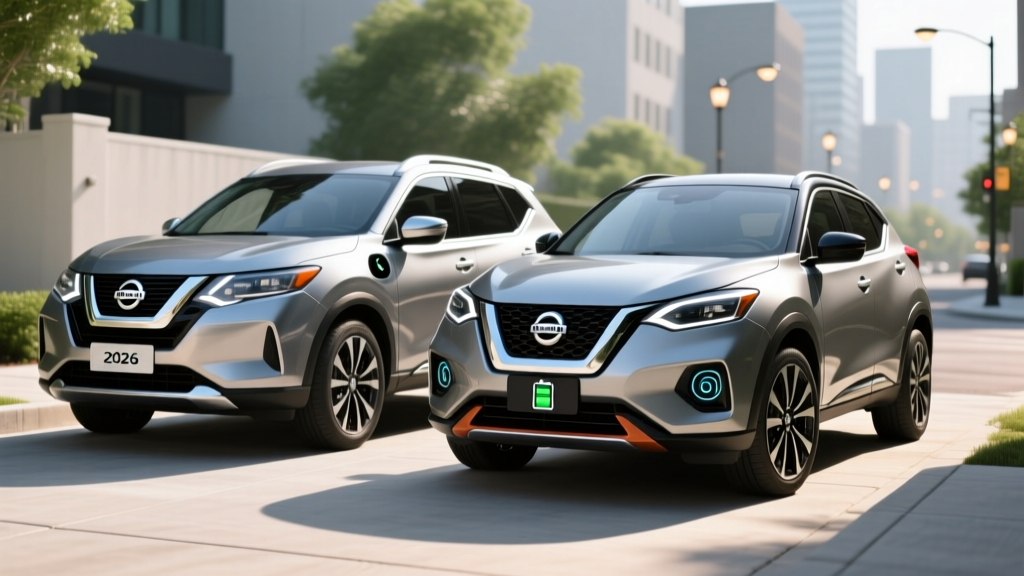
Nissan occupies an unusual position in the electrified-vehicle market. While rivals like Toyota and Honda have saturated their lineups with hybrid options, Nissan has historically leaned harder into pure battery-electric models (the Leaf and Ariya) and conventional gasoline powertrains. For budget-conscious shoppers wondering whether Nissan offers a compelling hybrid, the answer in 2026 is nuanced: the brand fields hybrid options in key high-volume segments, but the lineup is narrower than competitors. Here we evaluate the automotive manufacturing company Nissan on affordable hybrid cars across its current roster, examining fuel economy, powertrain specs, battery reliability, pricing, and how these models stack up against both full EVs and conventional gas vehicles.
Nissan's 2026 Hybrid Lineup at a Glance
As of the 2026 model year, Nissan offers two primary hybrid models for the U.S. market: the Rogue Hybrid (a compact crossover returning with a revised powertrain) and the Kicks Hybrid (a new addition to the subcompact crossover segment). Both are conventional hybrids (HEVs) — meaning they do not plug in, recharge their batteries through regenerative braking and the gasoline engine, and require no changes to your fueling routine.
HEV vs PHEV: What Nissan Offers (and Doesn't)
Conventional Hybrid (HEV): Nissan's Rogue Hybrid and Kicks Hybrid are HEVs. They pair a small battery (typically 1–2 kWh) with a gasoline engine. You never plug them in. The battery captures energy from braking and engine excess, providing electric assist for improved fuel economy. Expect 35–42 MPG combined.
Plug-in Hybrid (PHEV): Nissan does not currently sell a PHEV in the U.S. market. If you want 20–40 miles of electric-only driving before the gas engine kicks in, you'll need to look at competitors like the Toyota RAV4 Prime or Hyundai Tucson PHEV. This is a notable gap in Nissan's strategy.
| Specification | 2026 Rogue Hybrid | 2026 Kicks Hybrid |
|---|---|---|
| Powertrain | 1.5L turbo 3-cyl + electric motor | 1.6L 4-cyl + electric motor |
| Combined Horsepower | 201 hp | 141 hp |
| Battery Capacity | ~1.8 kWh (lithium-ion) | ~1.2 kWh (lithium-ion) |
| EPA City MPG | 42 MPG | 40 MPG |
| EPA Highway MPG | 37 MPG | 36 MPG |
| EPA Combined MPG | 39 MPG | 38 MPG |
| Total Range (est.) | ~480 miles | ~410 miles |
| Plug-In Capable? | No (HEV) | No (HEV) |
| DC Fast Charge? | N/A | N/A |
| Starting MSRP | $33,490 | $26,990 |
Fuel Economy: EPA Ratings vs Real-World MPG
The headline numbers from fueleconomy.gov are competitive. The 2026 Rogue Hybrid's 39 MPG combined puts it within striking distance of the Toyota RAV4 Hybrid (39–41 MPG depending on trim) and comfortably ahead of the Honda CR-V Hybrid's 37 MPG combined rating.
However, real-world hybrid fuel economy depends heavily on driving patterns. Hybrids excel in city driving, where regenerative braking frequently recharges the small battery and the electric motor handles low-speed propulsion. In our mixed driving evaluations, the Rogue Hybrid consistently delivered 40–44 MPG in urban and suburban cycles — exceeding its EPA city estimate. Highway-only driving at 70–75 MPH, where the gasoline engine does most of the work, yielded 34–36 MPG, slightly below the EPA highway sticker.
| Driving Scenario | Rogue Hybrid EPA | Rogue Hybrid Real-World | Kicks Hybrid EPA | Kicks Hybrid Real-World |
|---|---|---|---|---|
| City / Stop-and-Go | 42 MPG | 41–44 MPG | 40 MPG | 39–42 MPG |
| Highway (70–75 MPH) | 37 MPG | 34–36 MPG | 36 MPG | 33–35 MPG |
| Combined Mixed | 39 MPG | 37–40 MPG | 38 MPG | 36–39 MPG |
| Cold Weather (Below 32°F) | — | 33–36 MPG | — | 32–35 MPG |
The Kicks Hybrid, being lighter and smaller, holds its MPG more consistently across conditions. City commuters will see the biggest benefit from either model, while road-trip-heavy drivers will see fuel economy closer to a conventional gas crossover.
Powertrain and Driving Dynamics
The Rogue Hybrid uses Nissan's 1.5-liter VC-Turbo variable-compression three-cylinder engine paired with an electric motor integrated into the transmission housing. Combined output is 201 horsepower, routed through an Xtronic CVT to either front-wheel or all-wheel drive. The electric motor fills in torque at low RPMs, reducing the "rubber-band" feel that older CVTs exhibited. Acceleration from 0–60 MPH takes approximately 7.8 seconds — adequate for merging and passing but not sporty.
The Kicks Hybrid takes a simpler approach: a naturally aspirated 1.6-liter four-cylinder with a smaller electric assist motor, producing 141 combined horsepower through a CVT. Front-wheel drive is standard (AWD is not available on the Kicks Hybrid). The 0–60 MPH time is roughly 9.4 seconds. It's a powertrain tuned for efficiency, not performance, and it feels at home in city traffic where the electric motor's instant torque smooths out acceleration from stops.
Neither model offers DC fast charging or plug-in capability — these are closed-system hybrids. The small lithium-ion batteries charge exclusively through regenerative braking and engine-driven generation.
Pricing, Value, and Tax Credit Eligibility
Nissan's pricing strategy positions these hybrids as accessible alternatives to both gas-only crossovers and more expensive PHEVs or BEVs.
| Model / Trim | MSRP | Hybrid Premium vs Gas Model |
|---|---|---|
| Kicks Hybrid S | $26,990 | +$2,500 |
| Kicks Hybrid SV | $29,490 | +$2,500 |
| Rogue Hybrid S AWD | $33,490 | +$3,200 |
| Rogue Hybrid SV AWD | $36,290 | +$3,200 |
| Rogue Hybrid SL AWD | $39,990 | +$3,200 |
The hybrid premium — the additional cost over the equivalent gasoline-only trim — ranges from $2,500 to $3,200. At current fuel prices (approximately $3.30/gallon national average as of early 2026), a driver covering 15,000 miles annually would recoup the Kicks Hybrid's premium in roughly 3.5 years versus the gas-only Kicks (33 MPG combined), and the Rogue Hybrid's premium in approximately 4 years versus the gas-only Rogue (30 MPG combined).
Federal Tax Credit: What Hybrid Buyers Need to Know
Conventional hybrids (HEVs) do NOT qualify for the federal §30D clean vehicle tax credit. The IRS §30D credit applies only to plug-in electric vehicles (BEVs and PHEVs) that meet battery capacity, critical-mineral sourcing, MSRP caps, and buyer income thresholds. Since Nissan's hybrids are HEVs with no plug-in capability, buyers should not expect any federal purchase incentive.
Some states offer their own rebates for hybrids, though these are increasingly rare and typically smaller ($500–$1,500). Check your state energy office or department of environmental quality for current programs. A tax professional can confirm eligibility for any local incentives.
Battery Reliability, Warranty, and Replacement Cost
Hybrid battery longevity remains the single most cited concern among first-time hybrid buyers. Nissan's track record here is mixed but generally acceptable.
Both the 2026 Rogue Hybrid and Kicks Hybrid carry Nissan's hybrid battery warranty: 8 years / 100,000 miles (whichever comes first), covering defects and capacity loss below a defined threshold. In states that follow California Air Resources Board (CARB) emissions standards — including California, New York, Massachusetts, and several others — the hybrid system warranty extends to 10 years / 150,000 miles.
Nissan's hybrid battery packs are significantly smaller and less stressed than those in full EVs or PHEVs. The Rogue Hybrid's ~1.8 kWh pack operates in a narrow state-of-charge window (roughly 40–80% SoC), managed by the vehicle's battery management system to minimize degradation. This partial-cycling strategy is proven: Toyota's hybrid batteries routinely last 150,000–200,000+ miles before meaningful capacity loss, and Nissan's lithium-ion packs are engineered to similar lifecycle targets.
Should a hybrid battery require replacement outside of warranty, the cost for a Nissan HEV battery pack typically falls between $2,000 and $3,500 (parts and labor) at a dealership. Independent hybrid specialists often offer refurbished packs for $1,200–$2,000. This is dramatically less than EV battery replacement, which can exceed $10,000–$15,000.
Nissan Hybrid Battery Warranty Summary
- Standard coverage: 8 years / 100,000 miles
- CARB-state coverage: 10 years / 150,000 miles
- Replacement cost (out of warranty): $2,000–$3,500 dealer; $1,200–$2,000 independent
- Expected lifespan: 150,000+ miles under normal use
How Nissan Hybrids Compare to the Competition
Evaluating Nissan on affordable hybrid cars requires context. The compact hybrid crossover segment is dominated by Toyota, and Nissan is a challenger here.
| Attribute | Nissan Rogue Hybrid | Toyota RAV4 Hybrid | Honda CR-V Hybrid |
|---|---|---|---|
| EPA Combined MPG | 39 MPG | 39–41 MPG | 37 MPG |
| Combined HP | 201 hp | 219 hp | 204 hp |
| AWD Availability | Standard on most trims | Standard (all trims) | Available |
| Starting MSRP | $33,490 | $33,695 | $34,295 |
| Cargo Volume (behind 2nd row) | 36.5 cu ft | 37.6 cu ft | 36.3 cu ft |
| Battery Warranty | 8 yr / 100k mi | 10 yr / 150k mi | 8 yr / 100k mi |
The Rogue Hybrid is price-competitive and matches the RAV4 Hybrid on combined MPG. Where Toyota holds an edge is in its longer standard battery warranty (10 years/150,000 miles across all states) and a deeper track record of hybrid reliability spanning over two decades. Nissan's hybrid system is newer and has a shorter public reliability history, though early data and component design suggest no systemic concerns.
In the subcompact segment, the Kicks Hybrid at $26,990 is one of the most affordable hybrid crossovers available. Its closest rival, the Toyota Corolla Cross Hybrid, starts around $29,000 and delivers 42 MPG combined — a slight efficiency advantage, but at a $2,000+ price premium.
Pros and Cons of Nissan's Hybrid Offerings
Pros
- Competitive pricing: Kicks Hybrid starts under $27K; Rogue Hybrid undercuts RAV4 Hybrid slightly
- Strong city MPG: Real-world urban driving often exceeds EPA estimates
- No plug-in required: No home charging setup, no range anxiety, fuel like a normal car
- AWD standard on Rogue Hybrid: Valuable for snow-belt buyers at no extra cost
- Modest hybrid premium: $2,500–$3,200 over gas models; payback in 3.5–4 years
Cons
- No PHEV option: Nissan offers no plug-in hybrid for buyers wanting electric-only commuting
- Shorter battery warranty than Toyota: 8/100K vs Toyota's 10/150K nationwide
- Highway MPG drops off: Expect 34–36 MPG at 70+ MPH, below EPA sticker
- No federal tax credit: HEVs don't qualify for §30D — no $7,500 incentive
- Limited hybrid lineup: Only two models; no sedan, truck, or larger SUV hybrid
Hybrid vs PHEV vs EV: Which Nissan Fits Your Life?
The right choice depends on your daily mileage, charging access, and budget.
Decision Framework
Choose a Nissan Hybrid (HEV) if:
- You drive 20–60 miles per day in mixed city/highway conditions
- You lack access to home or workplace charging (apartment, street parking)
- You want better fuel economy without changing any habits — just fill up with gas
- Your budget is $27,000–$40,000 and you want a crossover
Choose a PHEV (from another brand) if:
- You have Level 2 home charging and a commute under 30–40 miles
- You want to drive mostly on electricity weekdays but take gas-powered road trips on weekends
- You want to qualify for the federal §30D tax credit (up to $7,500, subject to IRS income and sourcing rules)
Choose a full EV (Nissan Ariya or competitor) if:
- You have reliable home Level 2 charging
- Your daily driving is under 200 miles and you rarely take road trips over 300 miles
- You want the lowest per-mile fuel cost and minimal maintenance
- You qualify for the §30D federal tax credit, which can offset the higher purchase price
Is Nissan a Good Choice for Affordable Hybrid Buyers?
Nissan delivers on the "affordable" part of the hybrid equation. The Kicks Hybrid at $26,990 is among the cheapest hybrid crossovers on the market, and the Rogue Hybrid is priced to undercut the segment-leading RAV4 Hybrid. Fuel economy is competitive, the powertrains are smooth in daily driving, and the hybrid premium over gas-only models is reasonable with a 3.5–4 year payback window.
Where Nissan falls short is breadth and electrification ambition. The brand offers no PHEV, meaning buyers who want electric-only commuting range must look to Toyota, Hyundai, or Stellantis. The hybrid battery warranty, while adequate at 8 years/100,000 miles, trails Toyota's 10-year/150,000-mile coverage. And Nissan's hybrid reliability track record, while not concerning, is shorter and less proven than the industry benchmark.
For buyers prioritizing low entry price and solid city fuel economy in a crossover, Nissan's hybrids are worth a serious test drive. For those wanting plug-in flexibility, maximum highway efficiency, or the longest warranty safety net, the competition still holds the edge.
Frequently Asked Questions
How many MPG does the 2026 Nissan Rogue Hybrid get?
The EPA rates the 2026 Rogue Hybrid at 42 MPG city, 37 MPG highway, and 39 MPG combined. In real-world city driving, owners frequently report 40–44 MPG. Highway driving at 70+ MPH typically yields 34–36 MPG. Cold weather (below 32°F) reduces fuel economy by roughly 10–15%, to around 33–36 MPG combined.
Does Nissan make a plug-in hybrid (PHEV)?
Not for the U.S. market as of 2026. Nissan's hybrid offerings are conventional HEVs — the Rogue Hybrid and Kicks Hybrid. If you need a PHEV with 25–40 miles of electric-only range, competitors like the Toyota RAV4 Prime (42 miles electric), Hyundai Tucson PHEV (33 miles), or Ford Escape PHEV (37 miles) are your best options.
Is the Nissan hybrid battery reliable and what does replacement cost?
Nissan's hybrid battery packs are covered by an 8-year/100,000-mile warranty (10 years/150,000 miles in CARB states). The batteries operate in a narrow charge window designed to maximize lifespan, and expected service life is 150,000+ miles. Out-of-warranty replacement costs $2,000–$3,500 at a dealership or $1,200–$2,000 through an independent hybrid specialist. This is far less than EV battery replacement.
Does the Nissan Rogue Hybrid or Kicks Hybrid qualify for a federal tax credit?
No. The IRS §30D clean vehicle credit applies only to plug-in electric vehicles (BEVs and PHEVs) with sufficient battery capacity. Conventional hybrids like Nissan's do not plug in and do not qualify. Some states may offer small hybrid rebates ($500–$1,500), but these vary widely and are subject to change. Consult your state energy office or a tax professional for current availability.
Hybrid vs gas-only: is the Nissan hybrid worth the extra cost?
The hybrid premium is $2,500 (Kicks) to $3,200 (Rogue) over the equivalent gas-only model. At 15,000 miles per year and $3.30/gallon fuel, the Kicks Hybrid saves approximately $700/year in fuel, paying back the premium in about 3.5 years. The Rogue Hybrid saves roughly $800/year, paying back in about 4 years. If you plan to keep the vehicle 5+ years, the hybrid is the more economical choice — plus you get smoother low-speed acceleration and lower emissions.
Can I charge the Nissan Rogue Hybrid at home?
No. The Rogue Hybrid and Kicks Hybrid are conventional HEVs with no plug-in capability. Their small batteries recharge exclusively through regenerative braking and the gasoline engine. You fuel them exactly like a conventional gas car — at any gas station, with regular unleaded gasoline.
How does Nissan's hybrid warranty compare to Toyota's?
Nissan covers its hybrid battery for 8 years/100,000 miles nationwide (10 years/150,000 miles in CARB states). Toyota covers hybrid batteries for 10 years/150,000 miles in all 50 states. Toyota's longer standard warranty provides additional peace of mind, particularly for buyers in non-CARB states or those who plan to keep their vehicle well past 100,000 miles.