Why the Next Lexus RX Hybrid Refresh Matters in 2026
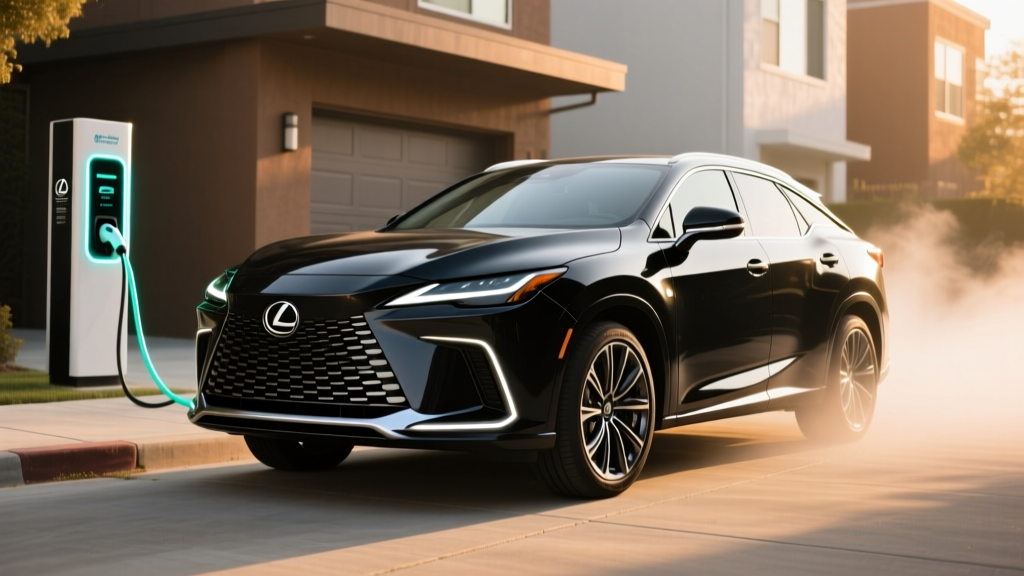
The Lexus RX has been the luxury midsize SUV benchmark since 1998, and its electrified variants — the RX 350h conventional hybrid and RX 450h+ plug-in hybrid — represent two distinct approaches to efficiency. As buyers search for details on the next Lexus RX hybrid refresh, it's critical to separate what's confirmed for the current generation from what Lexus has announced or is expected to update for upcoming model years.
The current fifth-generation RX (introduced for 2023, with the RX 450h+ arriving for 2024) rides on Toyota's GA-K platform and offers both HEV and PHEV powertrains. Lexus has not yet officially announced a mid-cycle refresh timeline, but industry patterns and supply-chain signals suggest updates could arrive for the 2027 model year. Until then, the 2026 lineup carries forward with proven specs. Here's exactly what the data tells us.
HEV vs. PHEV: Which RX Hybrid Are We Talking About?
The Lexus RX lineup currently offers two electrified paths, and confusing them is the most common buyer mistake:
RX 350h — Conventional Hybrid (HEV)
- No plug required — the battery charges via regenerative braking and the engine
- Smaller battery (~1.1 kWh usable)
- Optimized for consistent MPG in all conditions
- No electric-only driving beyond very low-speed creep
- Lower MSRP, no home charging infrastructure needed
RX 450h+ — Plug-In Hybrid (PHEV)
- Plugs into a Level 1 or Level 2 charger (J1772 connector)
- Larger 18.1 kWh lithium-ion battery pack
- 37 miles of EPA-rated electric-only range before the gas engine engages
- Functions as a conventional hybrid after battery depletion
- Higher MSRP, eligible for partial federal tax credit (see below)
The distinction matters for your daily routine. If you can charge at home and your commute is under 37 miles round-trip, the RX 450h+ can run almost entirely on electricity most days. If charging access is limited or you want simplicity, the RX 350h delivers strong MPG with zero behavioral change.
EPA Fuel Economy: Real MPG Numbers for the RX Hybrid Lineup
| Model | City MPG | Highway MPG | Combined MPG | MPGe (PHEV EV mode) |
|---|---|---|---|---|
| RX 350h AWD | 37 | 34 | 36 | N/A |
| RX 450h+ AWD (hybrid mode) | 35 | 33 | 34 | 83 MPGe |
Source: EPA Fuel Economy
Real-World MPG vs. EPA Sticker
Toyota's hybrid system is one of the few powertrains that frequently exceeds its EPA city rating in real-world driving. The series-parallel hybrid architecture recaptures energy aggressively during stop-and-go driving, meaning urban commuters often see 38-40 MPG in the RX 350h under moderate conditions. Highway driving is where hybrids lose their advantage — at sustained 70-80 mph speeds, expect the RX 350h to deliver closer to 30-32 MPG, slightly below its EPA highway estimate.
For the RX 450h+, once the battery is depleted, real-world hybrid-mode MPG typically lands between 31-34 combined depending on terrain and temperature. Cold weather (below 35°F) reduces both the battery's usable capacity and engine efficiency, cutting electric-only range to roughly 28-32 miles and hybrid MPG by 5-10%.
RX 450h+ Electric-Only Range and Total Range
The RX 450h+ carries an 18.1 kWh lithium-ion battery pack, delivering an EPA-rated 37 miles of electric-only range. That figure assumes moderate temperatures, flat terrain, and speeds under 65 mph. In practice:
- City commuting (35-45 mph): 35-39 miles achievable
- Highway driving (70+ mph): 28-32 miles before engine engagement
- Cold weather (below 30°F): 26-30 miles due to cabin heating draw and reduced battery output
After the battery depletes, the 17.4-gallon fuel tank combined with hybrid-mode efficiency yields a total system range of approximately 520-550 miles — competitive with the gas-only RX 350 and significantly more than most BEVs on a single charge.
Powertrain Specs: Horsepower, Engine, and Motors
| Specification | RX 350h | RX 450h+ |
|---|---|---|
| Engine | 2.5L 4-cyl Atkinson | 2.5L 4-cyl Atkinson |
| Electric Motors | Front + Rear (e-AWD) | Front + Rear (e-AWD) |
| Combined Net HP | 246 hp | 302 hp |
| 0-60 mph | 7.4 sec | 6.2 sec |
| Battery (usable) | ~1.1 kWh (NiMH-type) | 18.1 kWh (Li-ion) |
| Drivetrain | AWD (e-AWD) | AWD (e-AWD) |
| Towing Capacity | 3,500 lbs | 3,500 lbs |
The RX 450h+ uses a more powerful front electric motor and the larger battery to deliver 302 combined horsepower — a meaningful performance upgrade over the 350h. The additional electric torque also makes the PHEV variant feel more responsive in daily driving, particularly at lower speeds where electric motors deliver peak torque instantly.
PHEV Charging: What You Need to Know
The RX 450h+ charges via a J1772 connector (the standard for non-Tesla AC charging in North America):
- Level 1 (120V household outlet): ~1.4 kW — full charge in approximately 12 hours
- Level 2 (240V, 32A): ~6.6 kW onboard charger — full charge in approximately 2.5 hours
- DC Fast Charging: Not supported. The RX 450h+ does not have a CCS or CHAdeMO port.
This is typical for PHEVs — the smaller battery makes Level 2 charging practical overnight or during a workday, and the lack of DC fast charging is a non-issue when the battery only holds 18.1 kWh. A standard 240V Level 2 home charger (32-amp circuit) is the ideal setup and typically costs $500-$1,200 installed depending on your electrical panel's proximity to the parking spot.
Pricing and Tax Credit Eligibility
As of the 2026 model year, pricing for the RX hybrid lineup starts at:
- RX 350h: Starting at approximately $52,000 MSRP (base), with Luxury and Premium trims reaching $60,000+
- RX 450h+: Starting at approximately $62,500 MSRP, with fully loaded trims approaching $72,000
Federal Tax Credit: Does the RX 450h+ Qualify?
Under IRS §30D rules, the RX 450h+ has historically qualified for a partial credit of $3,750 (meeting critical minerals requirements but not the full battery-component sourcing threshold). However, eligibility depends on several factors that change annually:
- Buyer income caps: $150,000 single / $300,000 joint modified AGI
- MSRP cap: SUVs must be under $80,000 — all RX 450h+ trims currently qualify
- Point-of-sale transfer: As of 2024+, eligible buyers can transfer the credit to the dealer at purchase, reducing the out-of-pocket price immediately
- Battery sourcing rules: Critical mineral and component requirements tighten each year, and a vehicle's eligibility can change between model years
The RX 350h conventional hybrid does not qualify for the §30D federal EV tax credit — that credit applies only to plug-in vehicles with sufficient battery capacity. Always verify current eligibility at IRS.gov or via fueleconomy.gov before purchasing, as rules are subject to legislative change.
Battery Warranty, Reliability, and Replacement Cost
Lexus Hybrid Battery Warranty
Hybrid battery: 10 years / 150,000 miles (whichever comes first)
Hybrid system components: 8 years / 100,000 miles
Basic vehicle warranty: 4 years / 50,000 miles
Powertrain warranty: 6 years / 70,000 miles
Lexus (and parent company Toyota) has the longest track record in hybrid reliability of any automaker. The Prius hybrid system has demonstrated battery packs lasting 200,000+ miles with minimal degradation in fleet data. The RX 350h's smaller NiMH-type battery is proven technology with extremely low failure rates. The RX 450h+'s larger lithium-ion pack is newer to the RX lineup but uses Toyota's extensively validated PHEV architecture shared with the RAV4 Prime.
If replacement is needed out of warranty, Lexus hybrid battery replacement typically costs between $3,000-$5,000 for the RX 350h and $6,000-$9,000 for the RX 450h+'s larger pack, including labor. Third-party refurbishment options exist at lower cost. According to IIHS, Lexus consistently earns top safety ratings, and the RX has historically been among the most reliable vehicles in J.D. Power dependability studies.
What a Future RX Hybrid Refresh Could Bring
While Lexus has not confirmed a mid-cycle refresh, the next Lexus RX hybrid refresh is widely expected to address several areas based on competitive pressure and platform evolution:
- Increased PHEV battery capacity: Competitors like the BMW X5 xDrive50e offer 38-40 miles of electric range. A bump to 20+ kWh could push the RX 450h+ past 40 miles.
- Updated infotainment: The current 14-inch touchscreen runs Lexus Interface; a refresh could bring faster processing, wireless CarPlay/Android Auto improvements, and enhanced navigation with charging-route integration.
- ADAS upgrades: Lexus Safety System+ 3.0 is already strong, but expect expanded hands-free highway capability (still SAE Level 2 with driver monitoring) and improved automatic parking features.
- Styling revisions: Updated front fascia, lighting signatures, and potentially new wheel designs following Lexus's current design language evolution.
Any refresh would likely arrive as a 2027 or 2028 model year update. Buyers who need a vehicle now should not wait — the current RX hybrid lineup is mature, reliable, and well-equipped. Those with flexibility and a 12-18 month timeline may benefit from waiting to see what the refresh delivers.
Who Should Choose the RX Hybrid vs. a Full EV or Gas Car?
Choose the RX 350h (HEV) If:
- You want luxury-SUV comfort with no charging hassle
- Your daily driving is a mix of city and highway
- You don't have reliable home or workplace charging
- You want proven reliability with minimal complexity
- Budget is a priority — $10,000+ less than the PHEV
Choose the RX 450h+ (PHEV) If:
- You can install a Level 2 charger at home
- Your daily commute is under 35-37 miles round-trip
- You want EV-like daily driving with gas-engine road-trip freedom
- You value the extra 56 hp for passing and merging
- You qualify for the partial $3,750 federal credit
Hybrid vs. PHEV vs. Full EV — Which Fits You?
- Choose a conventional hybrid (RX 350h) if you lack home charging, drive long distances regularly, or want the lowest purchase price with strong efficiency.
- Choose a PHEV (RX 450h+) if you have home charging, commute under 40 miles daily, take occasional road trips where charging infrastructure is sparse, and want to reduce gas consumption without range compromise.
- Choose a full BEV (e.g., Tesla Model X, BMW iX, Genesis GV60) if you have reliable home charging, rarely drive more than 250 miles without stopping, want zero tailpipe emissions, and are comfortable planning DC fast-charge stops on road trips.
Frequently Asked Questions
How many MPG does the Lexus RX hybrid get?
The RX 350h achieves an EPA-rated 37 city / 34 highway / 36 combined MPG. The RX 450h+ achieves 35/33/34 MPG in hybrid mode after the battery is depleted, plus 83 MPGe when operating in electric mode. Real-world city driving in the RX 350h often exceeds 37 MPG due to Toyota's efficient regenerative braking system.
How far can the RX 450h+ go on electric only?
The EPA rates the RX 450h+ at 37 miles of electric-only range. In real-world conditions, expect 35-39 miles in city driving, 28-32 miles at highway speeds, and 26-30 miles in cold weather below 30°F. After depletion, the gas engine provides an additional 480+ miles of range.
Is the Lexus RX hybrid reliable, and what does battery replacement cost?
Lexus has one of the strongest reliability records in the industry, backed by 25+ years of hybrid powertrain experience. The hybrid battery is warranted for 10 years/150,000 miles. Out-of-warranty replacement costs range from $3,000-$5,000 (RX 350h) to $6,000-$9,000 (RX 450h+). Failures before 150,000 miles are uncommon based on fleet and owner data.
Does the Lexus RX hybrid qualify for a federal tax credit?
The RX 350h conventional hybrid does not qualify for any federal EV tax credit. The RX 450h+ plug-in hybrid has been eligible for a partial $3,750 credit under IRS §30D, subject to buyer income limits ($150K single / $300K joint), MSRP caps ($80K for SUVs), and battery sourcing requirements that change annually. Verify current eligibility at IRS.gov before purchase. Some states offer additional PHEV rebates — check your state's energy office for details.
When is the next Lexus RX hybrid refresh coming?
Lexus has not officially announced a mid-cycle refresh for the RX hybrid lineup. Based on typical Lexus product cycles (5-6 year generations with a refresh at year 3-4), an updated model could arrive for the 2027 or 2028 model year. Expected updates include increased PHEV battery capacity, refreshed styling, and upgraded infotainment and ADAS features. Current 2026 models remain fully competitive.
Can the RX 450h+ DC fast charge?
No. The RX 450h+ supports only AC charging via a J1772 connector at up to 6.6 kW (Level 2). A full charge takes approximately 2.5 hours on a 240V Level 2 charger. DC fast charging is not available on this PHEV — this is standard for plug-in hybrids, as the 18.1 kWh battery is small enough that Level 2 charging is practical.