The Case for the 2026 Toyota Prius as the Most Cost Effective Hybrid Car
When shoppers search for the most cost effective hybrid car, the answer almost always circles back to one nameplate: the Toyota Prius. For the 2026 model year, the Prius continues to offer a combination of high fuel economy, low starting price, proven reliability, and minimal maintenance that no competitor has fully matched. But "cost effective" means more than a low sticker price — it means total cost of ownership over five to ten years, factoring in fuel, insurance, maintenance, depreciation, and available tax incentives.
This guide breaks down the 2026 Toyota Prius (conventional HEV) and the Prius Prime (PHEV variant) with exact EPA figures, real-world MPG observations, powertrain specs, battery warranty details, and a head-to-head comparison of which version — or which alternative — actually delivers the lowest cost per mile for your driving profile.
HEV vs PHEV: Understanding the Two Prius Variants
Before diving into numbers, it's critical to distinguish the two flavors of Prius available in 2026, because they serve fundamentally different use cases and have different cost structures.
Conventional Hybrid (HEV) — Toyota Prius
- No plug required. The battery recharges through regenerative braking and the gasoline engine.
- Smaller battery: ~1.0 kWh lithium-ion pack.
- Electric-only driving: Very limited — short low-speed bursts only, not meaningful EV range.
- Best for: Drivers without home charging access, apartment dwellers, or those who want zero behavior change from a gas car.
Plug-In Hybrid (PHEV) — Toyota Prius Prime
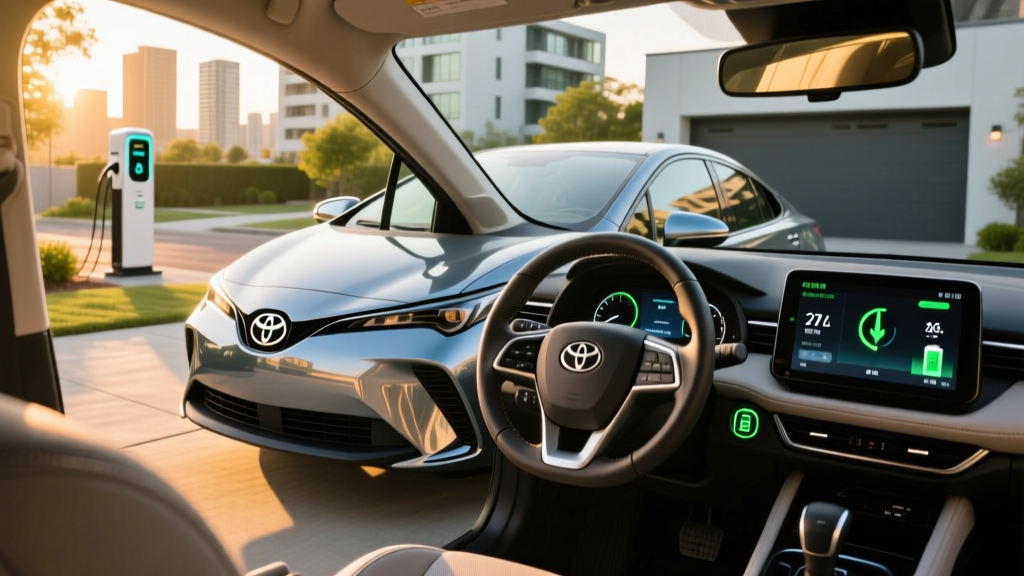
- Plugs in to charge. Can be charged via Level 1 (120V) or Level 2 (240V) home charging.
- Larger battery: 13.6 kWh lithium-ion pack.
- Electric-only range: EPA-rated 44 miles (SE trim), enough for most daily commutes without burning gas.
- Best for: Drivers with home or workplace Level 2 charging who commute under 40 miles round-trip and want EV-like daily driving with gas backup for road trips.
A conventional hybrid never needs to be plugged in. If you see a Prius at a gas station, it's an HEV refueling — or a Prime whose driver hasn't charged it. This distinction matters for cost calculations because a PHEV's savings multiply dramatically when you actually charge it regularly.
Fuel Economy: EPA Ratings and Real-World MPG
| Model / Trim | City MPG | Highway MPG | Combined MPG | MPGe (PHEV EV mode) |
|---|---|---|---|---|
| Prius LE (HEV) | 57 | 56 | 57 | — |
| Prius XLE / Limited (HEV) | 52 | 52 | 52 | — |
| Prius Prime SE (PHEV) | 52 (gas-only) | 48 (gas-only) | 50 (gas-only) | 127 MPGe |
| Prius Prime XSE (PHEV) | 50 (gas-only) | 47 (gas-only) | 48 (gas-only) | 114 MPGe |
Source: EPA Fuel Economy Guide.
Real-World MPG vs. EPA Sticker
Hybrids often exceed their EPA city ratings in real-world stop-and-go driving because regenerative braking recovers energy that a conventional car wastes as heat. In owner-reported data and independent testing, the Prius LE HEV routinely achieves 55–62 MPG in mixed city driving. Highway driving is a different story: at sustained 75+ mph speeds, expect 48–52 MPG, slightly below the EPA highway figure. Cold weather (below 30°F) reduces MPG by roughly 5–10% due to engine warm-up cycles and reduced battery efficiency.
For the Prius Prime, the real cost advantage appears when you charge daily. If your commute is 30 miles round-trip and you charge at home overnight, you may use gasoline only on weekend road trips — effectively achieving 100+ MPGe for weekday driving. Let the battery deplete and you're driving a 48–50 MPG hybrid, still excellent but no longer leveraging the plug-in advantage.
Powertrain Specs: What's Under the Hood
| Specification | Prius HEV | Prius Prime (PHEV) |
|---|---|---|
| Engine | 2.0L 4-cylinder Atkinson cycle | 2.0L 4-cylinder Atkinson cycle |
| Combined Net Horsepower | 194 hp (FWD) / 196 hp (AWD) | 220 hp |
| Electric Motor | Permanent magnet AC synchronous | Permanent magnet AC synchronous (higher output) |
| Battery Capacity | ~1.0 kWh (lithium-ion) | 13.6 kWh (lithium-ion) |
| EV-Only Range | N/A (minimal low-speed assist) | 44 mi (SE) / 40 mi (XSE) |
| Total Range (gas + electric) | ~600+ miles | ~440 miles (combined EV + gas) |
| 0–60 mph | 7.2 sec (FWD) | 6.6 sec |
| Drivetrain | FWD or AWD (electronic) | FWD only |
| Transmission | eCVT (planetary gearset) | eCVT (planetary gearset) |
The fifth-generation Prius uses Toyota's hybrid synergy drive, which pairs the 2.0L engine with one or two motor-generators through a planetary gearset — not a traditional belt-driven CVT. This means no belt to wear out, no rubber-band acceleration feel, and exceptional long-term durability. The Prime's larger battery and more powerful motor give it a meaningful 26 hp advantage, making it the quicker and more engaging car to drive.
Pricing, Tax Credits, and Total Cost of Ownership
2026 MSRP by Trim
- Prius LE (HEV): ~$29,445
- Prius XLE (HEV): ~$32,695
- Prius Limited (HEV): ~$36,195
- Prius Prime SE (PHEV): ~$34,595
- Prius Prime XSE (PHEV): ~$37,595
- Prius Prime XSE Premium (PHEV): ~$40,595
Federal Tax Credit Eligibility (§30D)
The conventional Prius HEV does not qualify for any federal tax credit — it has no plug and does not meet the definition of a plug-in electric vehicle under IRS §30D.
The Prius Prime (PHEV) may qualify for up to $3,750 under the current federal plug-in vehicle credit, but eligibility is subject to several constraints that change frequently:
- MSRP cap: The vehicle must have an MSRP below $55,000 (sedans) — all Prime trims clear this.
- Buyer income cap: Modified AGI must not exceed $150,000 (single), $225,000 (head of household), or $300,000 (joint).
- Battery sourcing requirements: Critical minerals and battery component sourcing must meet phased-in thresholds under the Inflation Reduction Act. Toyota's supply chain compliance varies by model year — verify current-year status on IRS.gov before purchasing.
- Point-of-sale transfer: As of 2024+, eligible buyers can transfer the credit to the dealer at purchase, reducing the out-of-pocket price directly rather than waiting for a tax refund.
Tax credit rules are subject to legislative change. Consult a tax professional and verify eligibility at IRS.gov before relying on credit amounts for purchase decisions.
Five-Year Fuel Cost Comparison
Assuming 15,000 miles/year, $3.50/gallon regular unleaded, and EPA combined figures:
| Vehicle | Combined MPG | Annual Fuel Cost | 5-Year Fuel Cost |
|---|---|---|---|
| Prius LE (HEV) | 57 | ~$921 | ~$4,605 |
| Prius Prime SE (charged daily, 80% EV) | ~127 MPGe avg | ~$450 | ~$2,250 |
| Toyota Corolla (gas, 33 MPG combined) | 33 | ~$1,591 | ~$7,955 |
| Honda Civic (gas, 35 MPG combined) | 35 | ~$1,500 | ~$7,500 |
The Prius HEV saves roughly $3,000–$3,350 in fuel over five years compared to a typical compact gas sedan. The Prius Prime, charged diligently, can save over $5,000 — but only if you actually plug it in. A Prime that's never charged is simply a heavier, more expensive Prius HEV with slightly worse gas-only MPG.
Battery Longevity, Warranty, and Replacement Cost
Toyota Hybrid Battery Warranty
- Coverage: 10 years / 150,000 miles (whichever comes first), applicable in all 50 states.
- Capacity threshold: Toyota warrants the hybrid battery against defects and excessive capacity loss. Specific retention thresholds are defined in the warranty booklet — typically coverage applies if the battery cannot hold sufficient charge to operate the hybrid system.
- Transferability: The hybrid battery warranty transfers to subsequent owners automatically.
How Long Do Prius Hybrid Batteries Last?
Real-world data from fleet operators, taxi services, and high-mileage owners shows that Toyota's hybrid batteries routinely last 150,000–200,000+ miles before needing replacement. The HEV's small ~1.0 kWh battery experiences shallow charge cycles (typically operating between 40%–80% state of charge), which dramatically reduces degradation compared to a full EV battery that cycles through deeper ranges.
The Prius Prime's larger 13.6 kWh battery also benefits from Toyota's conservative battery management — the system maintains a buffer at the top and bottom of the charge range, so you never use the full 13.6 kWh. Usable capacity is closer to 10.5 kWh, and this buffer management extends cycle life significantly.
Battery Replacement Cost
If replacement is needed outside warranty:
- Prius HEV battery: ~$2,000–$3,000 (new OEM), ~$1,000–$1,500 (remanufactured). Independent shops can often replace individual modules for $500–$800.
- Prius Prime battery: ~$4,000–$5,500 (new OEM). Fewer remanufactured options currently available due to lower volume.
For context, a conventional car's transmission replacement can cost $3,000–$5,000, and the Prius's eCVT planetary gearset has no comparable failure mode. The hybrid system's reliability is a key part of why the Prius consistently ranks at the top of long-term cost-of-ownership studies.
Reliability and Ownership Costs Beyond Fuel
Toyota's hybrid system has been in production since 1997 (over 25 years), and the Prius is one of the most studied vehicles for long-term reliability. Key ownership cost advantages:
- Brake pad life: Regenerative braking handles most deceleration, so friction brake pads often last 80,000–100,000+ miles.
- No traditional transmission: The eCVT planetary gearset has no clutches, belts, or torque converter to wear out.
- Engine longevity: The Atkinson-cycle engine runs at lower stress and lower RPM than conventional engines, contributing to 200,000+ mile lifespans with basic maintenance.
- Insurance: Prius insurance rates are typically average to below-average for the compact segment — no EV surcharge applies as it might with a full battery-electric vehicle.
According to IIHS, the current-generation Prius has earned strong crash-test ratings, and Toyota Safety Sense (TSS 3.0) comes standard across all trims, including pre-collision braking, lane tracing assist, and adaptive cruise control — features that some competitors charge extra for.
Who Should Choose the Prius vs. a Full EV or Gas Car?
Choose the Prius HEV If:
- You don't have access to home or workplace charging (apartment, street parking).
- You want maximum fuel savings with zero behavior change — just gas up and drive.
- Your budget is under $35,000 and you want the lowest total cost of ownership in the compact segment.
- You drive 15,000+ miles/year and want proven 200,000-mile durability.
- You live in a region with extreme cold where EV range loss would be a concern.
Choose the Prius Prime (PHEV) If:
- You have Level 2 charging at home or work and commute under 40 miles round-trip.
- You want EV-like daily driving (silent, instant torque, zero tailpipe emissions on commutes) with gas-engine backup for road trips.
- You qualify for the federal PHEV tax credit, bringing the effective price closer to the HEV.
- You're not ready for a full EV due to charging infrastructure gaps in your area but want to reduce gasoline consumption dramatically.
Quick Decision Framework
Choose the Prius HEV if your priority is the absolute lowest purchase price, you can't charge at home, or you drive long highway routes daily where the PHEV's electric range offers no advantage.
Choose the Prius Prime if you can charge daily, your commute is under 44 miles, and you want to eliminate most weekday gasoline use while keeping road-trip flexibility.
Choose a full EV (e.g., Hyundai Ioniq 6, Tesla Model 3) if you have reliable home charging, drive under 300 miles between charging opportunities, want zero gasoline expenses, and qualify for the full $7,500 federal EV credit.
Stick with a gas car (e.g., Corolla, Civic) only if your annual mileage is under 8,000 miles/year, where the fuel savings of a hybrid won't offset the price premium within your ownership period.
Prius vs. Competing Hybrids: Cost-Effectiveness Check
The Prius isn't the only cost-effective hybrid, but it consistently leads on combined MPG and total ownership cost. Here's how it compares to key rivals:
| Vehicle | Combined MPG | Starting MSRP | Hybrid Battery Warranty |
|---|---|---|---|
| Toyota Prius LE | 57 | ~$29,445 | 10 yr / 150,000 mi |
| Hyundai Elantra Hybrid | 54 | ~$29,250 | 10 yr / 100,000 mi |
| Honda Accord Hybrid | 48 | ~$33,655 | 8 yr / 100,000 mi |
| Toyota Camry Hybrid | 52 | ~$33,445 | 10 yr / 150,000 mi |
| Kia Niro Hybrid | 53 | ~$28,390 | 10 yr / 100,000 mi |
The Prius LE's 57 MPG combined and sub-$30,000 price give it the edge in pure cost-per-mile calculations. The Elantra Hybrid is close and offers a strong warranty. The Niro Hybrid starts slightly lower but falls short on highway MPG. The Camry and Accord hybrids offer more interior space but at a $3,000–$4,000 premium and lower fuel economy.
Frequently Asked Questions
How many MPG does the 2026 Toyota Prius get?
The Prius LE achieves an EPA-rated 57 city / 56 highway / 57 combined MPG. The XLE and Limited trims, which add weight and larger wheels, are rated at 52 combined. Real-world city driving often exceeds the EPA figure — many owners report 58–62 MPG in stop-and-go traffic thanks to aggressive regenerative braking.
How far can the Prius Prime go on electric only?
The 2026 Prius Prime SE is EPA-rated for 44 miles of electric-only range. The XSE trim, with larger wheels and additional equipment, is rated at 40 miles. This is sufficient for most daily commutes. Once the battery depletes, the Prime operates as a conventional hybrid at 48–50 MPG combined.
Does the Prius qualify for any tax credit?
The conventional Prius HEV does not qualify for any federal tax credit. The Prius Prime PHEV may qualify for up to $3,750 under the IRS §30D clean vehicle credit, subject to buyer income limits, battery sourcing requirements, and MSRP caps. Always verify current eligibility on IRS.gov before purchasing.
Is the Prius hybrid battery reliable and what does replacement cost?
Toyota's hybrid batteries are among the most reliable in the industry, routinely lasting 150,000–200,000+ miles. The battery is covered by a 10-year / 150,000-mile warranty in all states. Out-of-warranty replacement costs approximately $2,000–$3,000 for the HEV and $4,000–$5,500 for the Prime. Remanufactured options and individual cell-module repairs can reduce HEV replacement costs to $500–$1,500.
Should I get the Prius hybrid or the Prius Prime plug-in?
Get the HEV if you cannot charge at home or work — it requires zero infrastructure and delivers 57 MPG automatically. Get the Prime if you have Level 2 charging access and commute under 44 miles daily; the ability to drive on electricity alone for weekday commuting, combined with the potential $3,750 tax credit, makes the Prime's effective cost of ownership competitive with the HEV while eliminating most gasoline use.
Does the Prius need to be plugged in to charge?
The conventional Prius HEV never needs to be plugged in. It charges its small battery entirely through regenerative braking and the gasoline engine. Only the Prius Prime (PHEV) benefits from being plugged in, and it can charge via a standard 120V outlet (Level 1, ~4 hours from empty) or a 240V Level 2 charger (~2 hours). The Prime does not support DC fast charging.