Quick Verdict
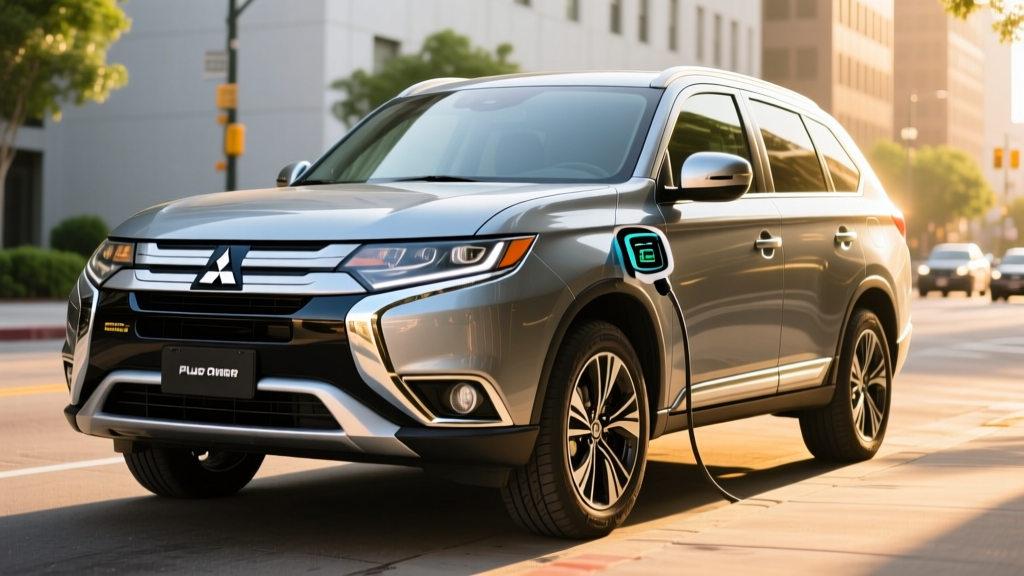
The Mitsubishi Outlander PHEV occupies a narrow but valuable slot: a three-row plug-in hybrid SUV that can handle most daily commutes on electricity alone, then seamlessly switch to hybrid mode for longer trips. With a 38-mile EPA electric-only range, standard all-wheel drive, and a combined 248 horsepower, it outguns most PHEV rivals in practicality — even if its highway fuel economy and charging speed leave room for improvement. For buyers who can charge at home and want EV-like daily driving without range anxiety, it's one of the most rational choices in the segment.
HEV vs PHEV: What the Outlander Actually Is
Before diving into specs, it's worth clarifying the distinction, because Mitsubishi sells both a conventional Outlander (gas-only) and this plug-in variant, and they behave very differently.
Conventional Hybrid (HEV)
A standard hybrid like the Toyota RAV4 Hybrid uses a small battery recharged only by the engine and regenerative braking. You never plug it in. It improves fuel economy — typically 35-40 MPG combined — but offers zero electric-only driving.
Plug-In Hybrid (PHEV)
The Outlander PHEV carries a much larger 20 kWh battery that you plug in to recharge. It delivers 38 miles of pure electric driving before the gasoline engine kicks in as a hybrid. Think of it as a short-range EV bolted to a hybrid powertrain.
The Outlander PHEV is strictly the plug-in model. If you see an Outlander listed without "PHEV" in the name, it's the gas-only version — a completely different vehicle with no electric capability.
EPA Range, MPGe, and MPG: The Numbers That Matter
The Outlander PHEV operates in two distinct modes, and each has its own efficiency rating:
| Metric | EPA Rating | Real-World Expectation |
|---|---|---|
| Electric-only range | 38 miles | 30–35 mi (highway/cold weather) |
| MPGe (electric + gas combined) | 64 MPGe | Varies heavily by charge frequency |
| MPG city (hybrid mode, battery depleted) | 25 MPG | 24–27 MPG |
| MPG highway (hybrid mode) | 27 MPG | 25–28 MPG |
| MPG combined (hybrid mode) | 26 MPG | 25–27 MPG |
| Total range (electric + gas tank) | ~420 miles | 370–420 mi depending on conditions |
How to interpret MPGe: MPGe (miles per gallon equivalent) converts electricity consumption into a gasoline-equivalent figure so you can compare EV-mode efficiency to gas cars. The 64 MPGe rating only applies when you're regularly charging and using that 38-mile electric buffer. If you never plug in, you're just driving a 26 MPG hybrid — and paying a premium for battery weight you're not utilizing.
Real-world note: According to fueleconomy.gov, the Outlander PHEV's electric range drops noticeably in cold weather (below 40°F) and at sustained highway speeds above 65 mph. Expect 30–33 miles of electric range in winter conditions with the heat running, and closer to the full 38 miles in mild weather around town.
Battery, Charging, and the DC Fast-Charging Advantage
The Outlander PHEV uses a 20 kWh lithium-ion battery pack (approximately 16.8 kWh usable, with the remainder held as a buffer to protect longevity). Here's what charging looks like in practice:
| Charging Method | Power | Time (0–100%) | Miles Added/Hour |
|---|---|---|---|
| Level 1 (120V household outlet) | ~1.4 kW | ~14 hours | ~3 mi/hr |
| Level 2 (240V home/public charger) | ~3.3 kW (onboard limit) | ~6.5 hours | ~6 mi/hr |
| DC Fast Charge (CHAdeMO) | Up to 22 kW | ~38 min (0–80%) | N/A |
The CHAdeMO caveat: The Outlander PHEV is one of the last new vehicles in the US market still using the CHAdeMO DC fast-charging connector. Nearly all new EVs have standardized on NACS (Tesla's connector) or CCS. This means finding a compatible DC fast charger on road trips is increasingly difficult — most Electrify America and EVgo stations prioritize CCS and NACS. Practically, this limits you to Level 2 charging at home, work, or shopping centers, which is fine for daily use but less convenient on longer trips where you'd want a quick top-up.
Level 2 charging is the sweet spot. A standard 240V Level 2 home charger (even a basic 16-amp unit) will fully replenish the battery overnight in about 6.5 hours. That's perfectly aligned with a typical evening-to-morning charging cycle. Most PHEV owners rarely need DC fast charging since the battery is small enough to refill overnight.
Powertrain: 248 HP and Standard AWD
| 2025 Mitsubishi Outlander PHEV Specifications | |
|---|---|
| Engine | 2.4L 4-cylinder Atkinson-cycle |
| Engine output | 126 hp / 144 lb-ft |
| Front electric motor | 114 hp / 188 lb-ft |
| Rear electric motor | 134 hp / 144 lb-ft |
| Combined system output | 248 hp |
| Battery capacity | 20 kWh total (~16.8 kWh usable) |
| Electric-only range | 38 miles (EPA) |
| Drivetrain | Standard AWD (twin-motor) |
| 0–60 mph | ~7.0 seconds |
| Towing capacity | 1,500 lbs |
| Seating | 3 rows / 7 passengers |
| Cargo (behind 3rd row) | 11.7 cu ft (all rows up) |
The Outlander PHEV's twin-motor AWD system is genuinely capable. Unlike many competitors that offer AWD as an option or use a mechanical driveshaft, the Outlander uses a dedicated rear electric motor to power the rear axle. This provides instant torque distribution and responsive traction control in rain, snow, and light off-road conditions. The 248 combined horsepower makes it feel adequately quick for merging and passing, and the ~7-second 0-60 time puts it ahead of the Toyota RAV4 Prime's feel in everyday driving despite that vehicle's higher peak output.
One practical note: the third row is best suited for children or very short trips. Cargo space behind the third row is tight at 11.7 cubic feet. Fold the third row down, and you get a more usable space, but if cargo is a priority, a two-row PHEV like the RAV4 Prime or Hyundai Tucson PHEV offers more flexibility.
Pricing, Trims, and Federal Tax Credit Eligibility
The 2025 Mitsubishi Outlander PHEV starts at an MSRP of approximately $41,440 (including destination) for the ES trim and climbs to around $49,000+ for the top SEL Platinum Edition. Here's the approximate trim breakdown:
| Trim | MSRP (approx.) | Key Features |
|---|---|---|
| ES | $41,440 | 8-inch display, heated front seats, AWD |
| SE | $44,040 | 9-inch display, power liftgate, roof rails |
| SEL | $47,040+ | Leather, panoramic roof, premium audio |
§30D Federal Tax Credit — PHEV Eligibility
The Outlander PHEV may qualify for a partial or full $7,500 federal tax credit under IRS §30D, but eligibility depends on several factors that change frequently:
- Battery sourcing: The vehicle must meet critical-mineral and battery-component requirements that tighten each year. Mitsubishi has historically sourced batteries from suppliers that may or may not meet current thresholds.
- MSRP cap: SUVs must have an MSRP at or below $80,000 — all Outlander PHEV trims clear this.
- Buyer income cap: Modified AGI must not exceed $150,000 (single) or $300,000 (joint filing).
- Point-of-sale transfer: As of 2024+, eligible buyers can transfer the credit to the dealer for an upfront price reduction at purchase.
Verify current eligibility before buying. The IRS updates the qualifying vehicle list periodically. Check the IRS qualifying vehicle list or consult a tax professional before counting on the credit in your purchase decision.
Battery Warranty, Reliability, and Replacement Costs
Battery & Powertrain Warranty
Main drive lithium-ion battery: 10 years / 100,000 miles (whichever comes first)
Powertrain warranty: 10 years / 100,000 miles
Bumper-to-bumper: 5 years / 60,000 miles
Capacity retention threshold: Mitsubishi warrants the battery against defects and excessive capacity loss, though the specific percentage threshold (typically 60-70% of original capacity) should be confirmed with your dealer at purchase.
Is the Outlander PHEV reliable? Mitsubishi's PHEV powertrain has been in production since 2013 globally (the original Outlander PHEV launched in Japan in 2012 and reached the US in 2017). The current-generation system, introduced for the 2023 model year, is a significant upgrade. Long-term reliability data on the new platform is still accumulating, but Mitsubishi's 10-year/100,000-mile battery and powertrain warranty is among the best in the industry and signals manufacturer confidence.
Battery replacement cost: If the main traction battery fails outside of warranty, replacement costs typically range from $8,000 to $12,000 including parts and labor for PHEV battery packs of this size. However, PHEV batteries experience less stress than full EV batteries because the engine supplements power and the battery cycles are shallower. Most PHEV batteries outlast the vehicle's practical lifespan when maintained within normal operating parameters.
For reliability ratings, check the latest IIHS safety assessments and owner surveys from Consumer Reports, as these are updated annually and reflect the most current data.
Outlander PHEV vs. the Competition
The Outlander PHEV competes in a small but growing segment. Here's how it stacks up against its closest rivals:
| Spec | Outlander PHEV | Toyota RAV4 Prime | Hyundai Tucson PHEV |
|---|---|---|---|
| EV range | 38 mi | 42 mi | 33 mi |
| Combined HP | 248 | 302 | 261 |
| Hybrid MPG (combined) | 26 | 38 | 35 |
| Rows / Seats | 3 / 7 | 2 / 5 | 2 / 5 |
| DC fast charge | CHAdeMO | None | None |
| Starting MSRP | ~$41,440 | ~$44,000 | ~$39,000 |
Where the Outlander wins: Three-row seating (no competitor offers this), standard AWD across all trims, and the ability to DC fast charge (even if CHAdeMO infrastructure is declining). If you need to carry more than four passengers even occasionally, the Outlander PHEV is essentially the only option in this class.
Where it falls short: Hybrid-mode fuel economy. At 26 MPG combined with a depleted battery, it trails the RAV4 Prime (38 MPG) and Tucson PHEV (35 MPG) significantly. If your commute exceeds 38 miles and you'll spend most of your time in hybrid mode, the Toyota and Hyundai are more efficient choices.
Who Should Buy the Outlander PHEV — and Who Shouldn't
Decision Framework
Choose the Outlander PHEV if:
- You need 3-row seating but want some electric driving
- Your daily commute is under 35 miles and you can charge at home
- You want AWD for snow/rain without the range anxiety of a full EV
- You take occasional long road trips and don't want to plan around charging stops
Choose the RAV4 Prime or Tucson PHEV instead if:
- You only need 2 rows and prioritize highway fuel economy
- Your commute regularly exceeds the electric range
- You want the lowest possible cost per mile in hybrid mode
Choose a full EV (like the Kia EV6 or Tesla Model Y) if:
- You have reliable home charging and your daily driving is under 250 miles
- You want zero gasoline maintenance (no oil changes, no engine)
- You want access to the full $7,500 tax credit (more EVs qualify than PHEVs)
- You want faster charging and access to the NACS/Supercharger network
Stick with a conventional HEV (like the RAV4 Hybrid) if:
- You cannot charge at home or work
- You want simplicity — no plug, no charging routine to manage
- Your budget is under $35,000
Pros and Cons
✓ Pros
- Only PHEV SUV with standard 3-row seating
- 38-mile electric range covers most daily commutes
- Standard twin-motor AWD on every trim
- Industry-leading 10-year/100k-mile powertrain warranty
- DC fast charging capability (rare for PHEVs)
- Smooth EV-mode driving with instant torque
✗ Cons
- 26 MPG hybrid-mode lags RAV4 Prime (38 MPG) significantly
- CHAdeMO connector — declining DC fast-charge infrastructure
- 3.3 kW Level 2 onboard charger is slow for public Level 2 stops
- Third row is cramped — best for children only
- Small cargo area with all three rows upright
- Starting price above $41K before any incentives
Frequently Asked Questions
How many MPG does the Outlander PHEV get?
In hybrid mode (after the battery is depleted), the Outlander PHEV gets an EPA-rated 25 MPG city, 27 MPG highway, and 26 MPG combined. When regularly charged, the combined rating is 64 MPGe. Real-world hybrid MPG typically falls within 1 MPG of EPA estimates, though highway-heavy driving at 75+ mph can dip to 23-24 MPG.
How far can the Outlander PHEV go on electric only?
The EPA rates the Outlander PHEV at 38 miles of electric-only range. In real-world driving, expect 30-35 miles in mixed conditions, and as low as 25-28 miles in cold weather (below 35°F) with the heater running. At highway speeds above 70 mph, electric range also drops faster due to aerodynamic drag.
Does the Outlander PHEV qualify for the $7,500 federal tax credit?
It may qualify for a partial or full credit under IRS §30D, but eligibility depends on current battery-sourcing and critical-mineral requirements, which tighten annually. The MSRP is well under the $80,000 SUV cap. Always verify on the IRS qualifying vehicles page before purchasing, as the list updates throughout the year. Point-of-sale transfer is available if eligible.
Is the Outlander PHEV reliable? What about battery replacement cost?
Mitsubishi backs the PHEV powertrain and main battery with a 10-year/100,000-mile warranty, one of the longest in the industry. The PHEV system has been in production since 2013 globally. Out-of-warranty battery replacement would likely cost $8,000-$12,000, but PHEV batteries tend to last well because the engine supplements power and charge cycles are shallower than in full EVs.
Can I charge the Outlander PHEV at a Tesla Supercharger?
No. The Outlander PHEV uses a CHAdeMO DC fast-charge connector and a J1772 Level 2 connector. Tesla Superchargers use the NACS connector and are not compatible without an adapter — and no reliable CHAdeMO-to-NACS adapter currently exists for DC fast charging. You can use any J1772 Level 2 public charger, which covers most ChargePoint, EVgo Level 2, and destination chargers.
Do I have to plug in the Outlander PHEV?
You don't have to, but you should. If you never plug it in, you're carrying 500+ pounds of battery dead weight and getting only 26 MPG combined — worse than many conventional hybrids. The PHEV's value proposition only works if you charge regularly to use that 38-mile electric buffer. If you can't charge at home or work, a conventional hybrid like the Outlander gas model or RAV4 Hybrid will cost less and deliver better fuel economy.
How long does it take to charge at home?
On a standard 120V household outlet (Level 1), a full charge takes about 14 hours — impractical for daily use. On a 240V Level 2 home charger, it takes approximately 6.5 hours. Most owners install a basic Level 2 charger (often a $300-$500 unit plus $500-$1,500 electrician installation) and charge overnight, waking to a full battery every morning.
Sources: EPA fuel economy data from fueleconomy.gov; federal tax credit rules from IRS §30D guidance; manufacturer specifications from Mitsubishi Motors North America. Pricing and incentive eligibility current as of 2025 model year and subject to change. Consult a tax professional for personal credit eligibility.